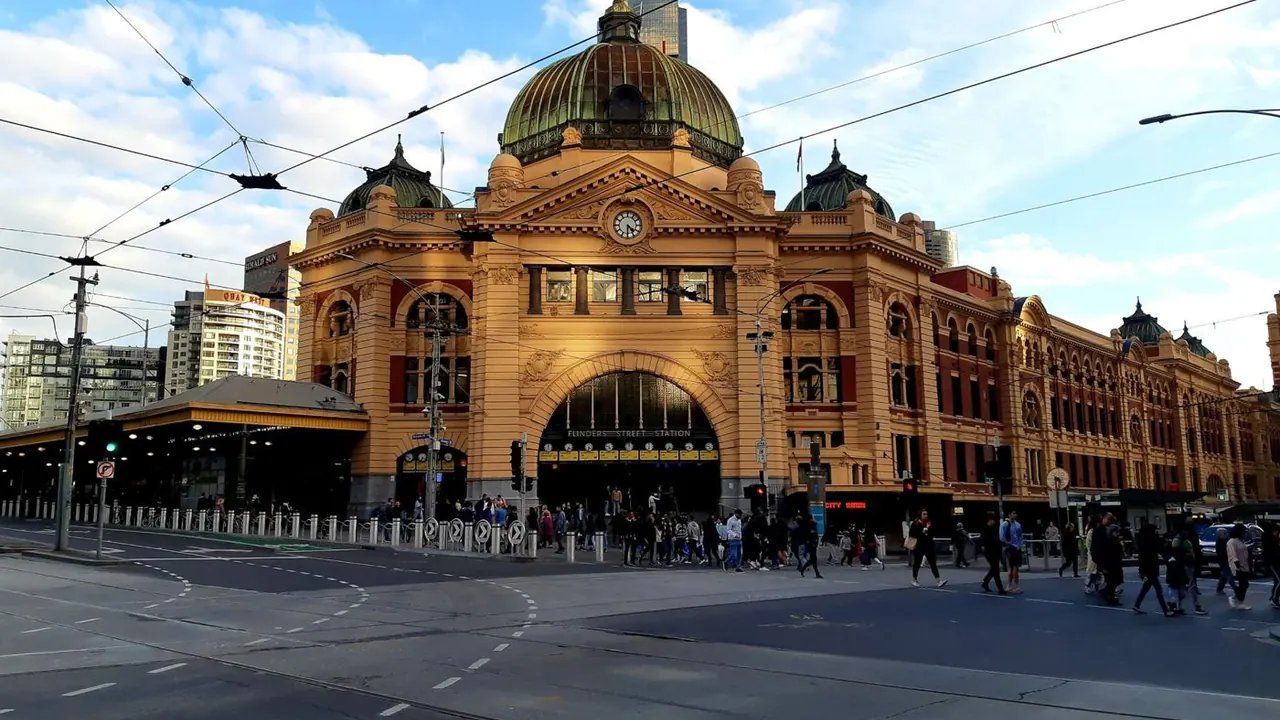
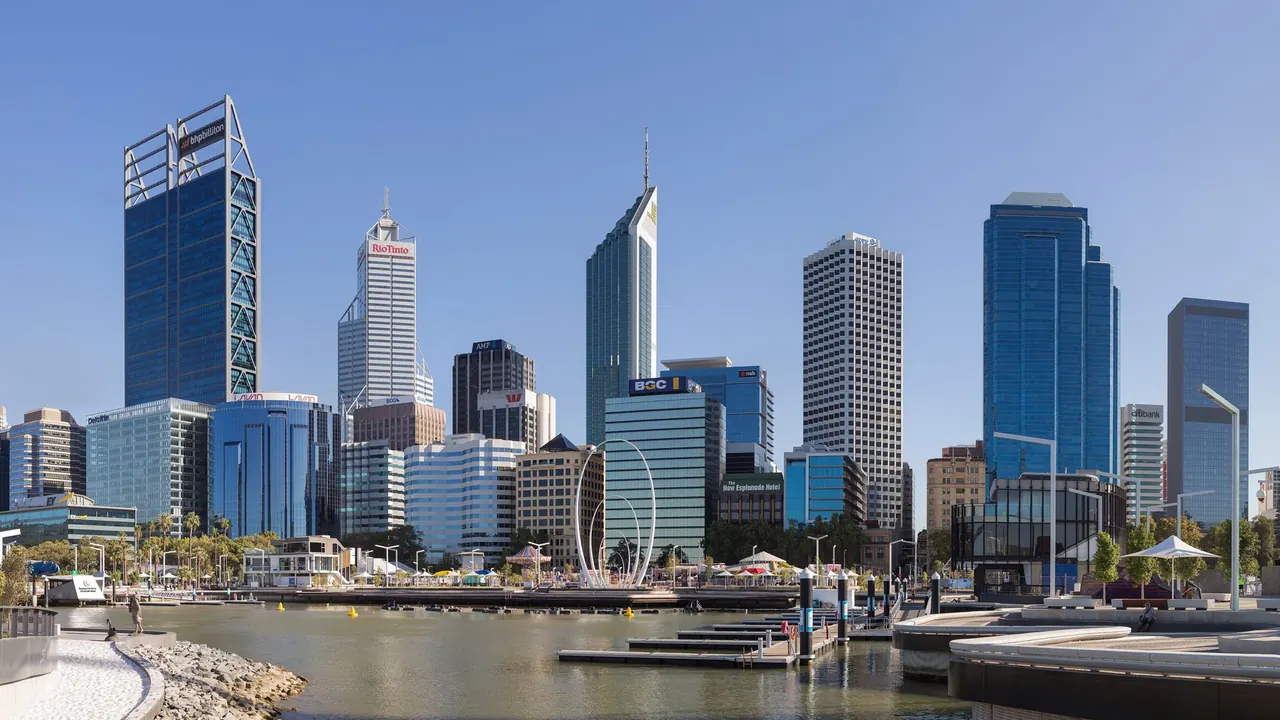
Photos: Melbourne by Medelam, CC BY-SA 4.0, cropped; Perth by Samuel Wiki, CC BY 4.0, cropped.
Melbourne or Perth?
Our verdict in twelve categories, each scored against the same fixed benchmark cities, and the climate month by month, so you can choose for your trip.
Choose Melbourne for
- nightlife
- shopping
- live music and the arts
Melbourne suits travellers who want a city to settle into for a few days: laneway coffee and small bars, a different cuisine every night, gigs in Fitzroy pubs, the National Gallery of Victoria and independent shops on Gertrude Street. Trams reach almost everywhere a visitor needs to go, and wine country and the gold rush towns make easy days out.
Choose Perth for
- beaches
- nature and the outdoors
- families
If the trip is built around sea and sun, pick Perth. Its Indian Ocean beaches are clear, patrolled and close to town, Rottnest Island is a ferry ride away, and the summers are long, dry and dependable. Evenings are quieter and there is less culture to see, so it suits people who get up early to swim more than people who stay out late.
Scoreboard
Twelve categories on one fixed scale from 0 to 100. The shaded stretch is the gap between the two.
Your match
Pick a travel style or drag the sliders, and both match scores follow your weighting.
Wins on nightlife and shopping with your weighting.
Wins on beaches and nature and the outdoors with your weighting.
What matters to you?
Category by category
What the scores mean for a trip.
Beaches & swimming
Beaches are Perth's clearest advantage. Pale sand faces the open Indian Ocean and runs north from Cottesloe through City Beach and Scarborough. The water is very clear and pleasantly warm from December to April, surf clubs patrol the main beaches, and there are calm river spots and sheltered Rottnest bays for snorkelling. The one catch is the afternoon sea breeze, so mornings are the time to swim.
Melbourne's bay beaches at St Kilda, Elwood and Brighton are calm and easy to reach by tram. The water is cooler, though, the swimming season is short and the weather unreliable. The better sand is on the Mornington Peninsula, a drive away.
Food & drink
Melbourne is the better city for eating out, and many visitors come for that alone. Coffee and brunch are a daily habit from the CBD laneways to Fitzroy and Brunswick. Generations of migration have left Greek, Italian, Vietnamese and Chinese neighbourhoods with enough choice to eat something different every night.
Perth's strength is its produce: rock lobster, Shark Bay prawns, marron, and the cellar doors of the Swan Valley. Northbridge has good cheap Asian food, but the restaurant scene is smaller and spread across the suburbs, and kitchens close early.
Culture & sights
Neither city has a world-famous landmark, but Melbourne gives the fuller visit. Gold rush money built a grand Victorian centre, which you see in the Royal Exhibition Building, the arcades and the State Library. The National Gallery of Victoria, the Australian Centre for the Moving Image and the Melbourne Museum can fill two days, with laneway street art in between.
Perth's centre is mostly modern towers, and its sights sit together in one small precinct, where WA Museum Boola Bardip and the Art Gallery of Western Australia, with its strong Indigenous collection, are the main stops. The richer history is in Fremantle, where the limestone port and the UNESCO-listed prison tell the colonial story well.
Nightlife
Melbourne is the place for a night out. In the CBD, small bars hide up stairwells and on rooftops. Brunswick and Smith streets have pubs and late bars with real character, Chapel Street has the clubs and St Kilda has a rougher scene by the beach, and somewhere is busy most nights of the week.
Perth's evenings are pleasant in summer, with beer gardens and after-work rooftop bars, but going out is concentrated in Northbridge and most other places are quiet by midnight. Fremantle's pubs and breweries are the relaxed alternative.
Nature & outdoors
The two cities are level here, but their outdoors are different. Melbourne's best nature is a drive away: the mountain ash and tree ferns of the Dandenongs, cliff walks on the Mornington Peninsula, the penguins and seals of Phillip Island and the surf coast at Torquay. Bring layers, because the weather turns quickly.
Perth's outdoors centre on water and open space. There is Kings Park's bushland above the Swan, paddling and sailing on the river, kitesurfing in the sea breeze, cycling past quokkas on Rottnest, and dolphins and passing whales. In summer, avoid hiking in the midday heat.
Day trips
Melbourne has the wider choice of day trips. Options include the cool-climate wineries of the Yarra Valley, the Mornington Peninsula and the spa town of Daylesford. The gold rush cities of Ballarat and Bendigo can both be reached by train, so a week of different outings is easy.
Perth's nearest escapes, Fremantle and Rottnest, are excellent, and the Swan Valley and York are easy to reach. Its most famous region, Margaret River, is too far for a day trip, though, and much of the land between towns is empty.
Good for families
Both cities suit children about equally, and both are safe and relaxed. Melbourne's strengths are animals and easy travel: the zoo in Parkville, the safari bus at Werribee, platypus at Healesville, the Puffing Billy steam train, and trams that make prams simple.
Perth's strengths are outdoors and often free: patrolled beaches, shallow sheltered water on the river, big park playgrounds with barbecues, and a day cycling on Rottnest. The sun is strong, though, and a car makes the distances easier.
Getting around
Melbourne is much easier without a car. Its tram network, one of the largest anywhere, is free in the CBD and runs to St Kilda, Fitzroy, Carlton and the other inner suburbs. Trains reach the bayside suburbs and regional cities.
Perth's centre is compact, with free CBD buses and a train to Fremantle, but the city is very spread out. Several beaches need a bus from the station, and evening services are sparse. In both cities, wine country and the hills are easiest by car or on a tour.
Shopping & style
The real difference is how much of the shopping is independent. In Melbourne a visitor can spend whole afternoons in Fitzroy and Collingwood among small local labels, vintage rails and homeware stores that exist nowhere else, then cross the river to Chapel Street for fashion. The Victorian arcades off Collins Street give the centre an elegant start, and weekend design markets move around the inner suburbs.
Perth relies on chains and malls, in the central pedestrian streets or out in the suburbs, and has only a small luxury end. Its strength is things that are hard to buy elsewhere: South Sea pearls, Argyle-region jewellery and Aboriginal art from the city's galleries. For browsing crafts, Fremantle's old market hall is the place to go.
Affordability
Neither city is a budget destination, and hotels, meals and drinks cost much the same in both. The savings come in different forms. In Melbourne they are the free tram zone, free galleries and cheap eats in Chinatown, Richmond and Footscray, while in Perth they are the free beaches, Kings Park, the free CBD buses, public barbecues and the Northbridge food courts. In Perth, extras such as the Rottnest ferry, wine tours and heavily taxed alcohol add up quickly.
Live music & performing arts
Melbourne has more on stage. The Arts Centre under its spire is home to the Australian Ballet and the Melbourne Symphony Orchestra, and the historic theatres at the east end of the CBD host the big musicals. Pub band rooms in Fitzroy, Collingwood and St Kilda have gigs most nights, and the autumn Comedy Festival adds weeks of shows.
Perth's opera, ballet and orchestra give solid seasons, with His Majesty's Theatre as the main stage. The city comes alive in late summer, when the Perth Festival runs and its fringe fills the parks. For the rest of the year the programme is modest.
Wellness & relaxation
Melbourne offers more for a restful stay. The sea baths at St Kilda and Brighton have pools and saunas by the water. Outside the city are Daylesford and Hepburn Springs, where people have bathed in the mineral springs since the nineteenth century, and the hot pools on the Mornington Peninsula.
Perth has no spa tradition, only day spas and a few retreats in the hills. What makes it restful is the slow pace: early mornings, quiet evenings and long walks by the river and in Kings Park.
When should you go?
Pick your month. The climate figures are measured averages, not a forecast.
Melbourne in July
Perth in July
Daytime high, °C
Rainfall in the month, mm
Temperature and rainfall are climate normals, averaged over the years shown. Melbourne: 1991-2020 normals, Latrobe University / Kingsbury (13.1 km from centre). Perth: 1991-2020 normals, Perth (7.3 km from centre).
Melbourne's warm season runs from December to March. Highs reach about 27°C at best and the bay warms to around 20°C, which is enough for a swim on a hot afternoon. Rain falls evenly through the year and there is no real wet season. Winter is cool and grey, better for galleries than beaches, but walking the centre is comfortable in most months.
Perth is hotter, sunnier and drier. From January to March highs reach about 32°C, which suits the beach but makes midday sightseeing tiring, and the sea stays mild all year. Rain comes in winter and peaks at about 145mm in July, so June to August is the time to avoid for an outdoor trip. October, November and April are warm without the summer glare and are the best months for combining the coast with walking.
Which traveller are you?
On a beach and sun trip, Perth wins clearly. Cottesloe, Scarborough and the bays of Rottnest have clear Indian Ocean water and patrolled sand close to town, and the long, dry summers are far more dependable than Melbourne's changeable weather on a sheltered bay.
For a food and nightlife trip, Melbourne is the stronger choice. You can eat Italian on Lygon Street one night and Vietnamese in Footscray the next, then drink in laneway cocktail bars or late Fitzroy pubs. Outside Northbridge, Perth is mostly quiet by midnight.
On a culture and arts trip, Melbourne fills more days and evenings. It has the Victorian streets of the gold rush era, the National Gallery of Victoria, a busy Arts Centre and live music most nights. Perth has fewer sights, and its best heritage is Fremantle's port and prison.
Before you go
| Measure | Melbourne | Perth |
|---|---|---|
| Official language | English | English |
| Currency | Australian Dollar (AUD) | Australian Dollar (AUD) |
| Sockets | I230 V, 50 Hz | I230 V, 50 Hz |
| Driving side | Left | Left |
| Time zone | UTC+10, UTC+11 in summer | UTC+8 |
| Emergency number | 000 | 000 |
| Elevation | 31 m | 2 m |
| Main airport | Melbourne Airport (MEL)19 km from centre69 non-stop destinations | Perth International Airport (PER)10 km from centre49 non-stop destinations |
| Public holidays this year | 13 days | 11 days |
By the numbers
| Measure | Melbourne | Perth |
|---|---|---|
| City population | 5,350,705 | 2,141,834 |
| People per km² | 535 | 334 |
| Museums within 10 km | 43 | 15 |
| UNESCO World Heritage sites within 50 km | 1 | 1 |
| Swim season, months above 21 °C | None | 5 months |
Where else could you go?
Every comparison below shares a destination with this one, so you can follow Melbourne or Perth somewhere new.