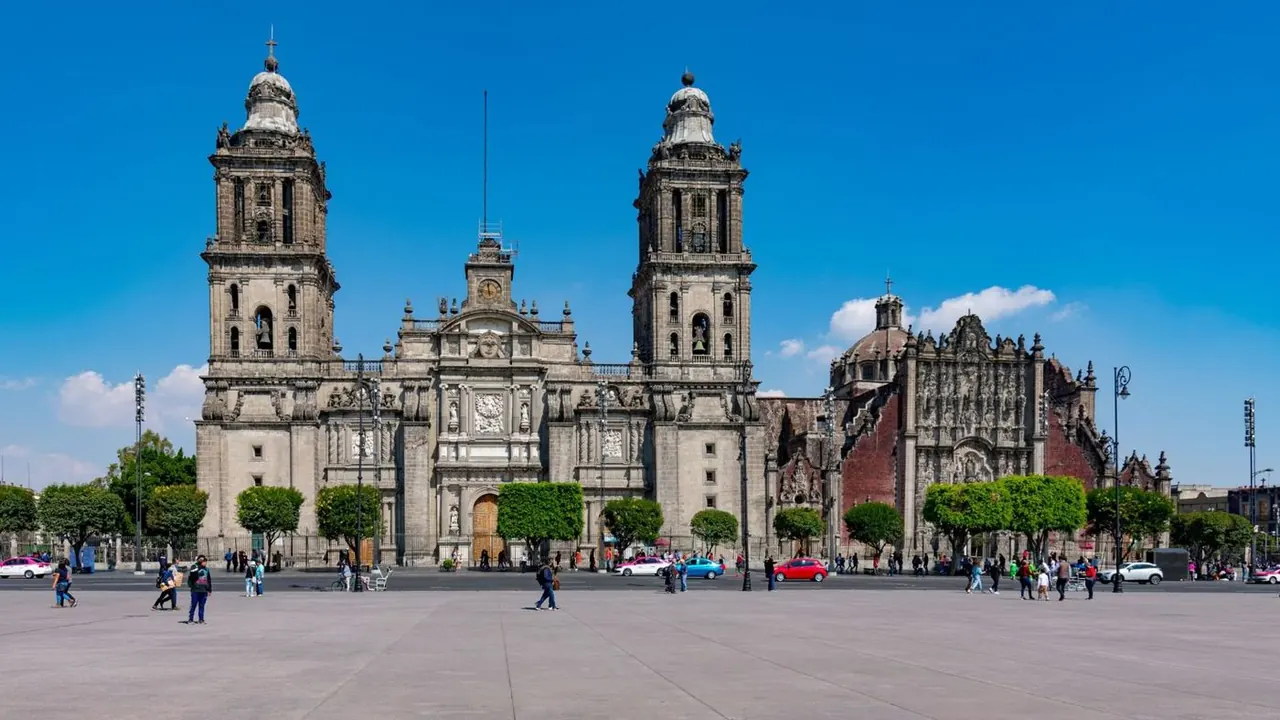
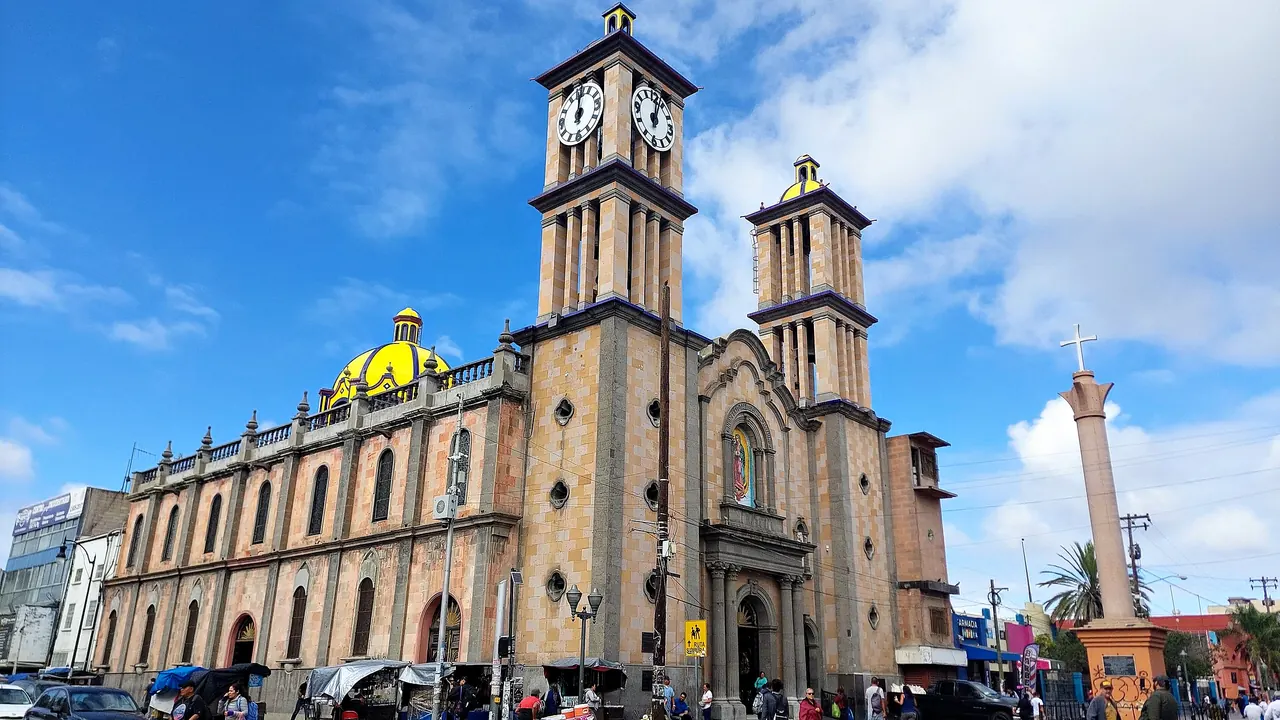
Photos: Mexico City by Oscar Dominguez, Pexels License; Tijuana by Exprimidor, CC BY-SA 4.0, cropped.
Mexico City or Tijuana?
Our verdict in twelve categories, each scored against the same fixed benchmark cities, and the climate month by month, so you can choose for your trip.
Choose Mexico City for
- culture and sights
- shopping
- live music and the arts
Mexico City is the choice for a trip built around seeing and eating. You get the Aztec ruins beside the Zócalo, the Museum of Anthropology, Rivera's murals and Frida Kahlo's house, along with market counters, late taco stands and some of the most admired tasting menus in the Americas. In the evenings there is Bellas Artes and Arena México. It suits a traveller with a week to spend, a big appetite and the patience for a vast city.
Choose Tijuana for
- beaches
Tijuana works better as a short, loose trip on the Pacific edge, especially for someone already in southern California. People come for the tacos, seafood carts, Baja Med cooking and craft beer, and Rosarito's sand, the Ensenada coast road and the Valle de Guadalupe wineries are all within easy reach. Go for the food and the coast, not for the sights.
Scoreboard
Twelve categories on one fixed scale from 0 to 100. The shaded stretch is the gap between the two.
Your match
Pick a travel style or drag the sliders, and both match scores follow your weighting.
Wins on culture and sights and shopping with your weighting.
Wins on beaches with your weighting.
What matters to you?
Category by category
What the scores mean for a trip.
Beaches & swimming
Neither is a beach city, but Tijuana is much closer to one. From Mexico City, reaching the Pacific is a long road journey in its own right, so sand and sea mean adding extra days on the coast. In town, the only swimming is in a pool.
Tijuana has the ocean at the end of its own streets. The promenade at Playas runs along the sand right up to the border fence, and Rosarito's broad beach is about half an hour south. The water is brisk and the surf can be rough, and near the city it is best avoided after rain. Treat the sea as an outing for a walk or a paddle rather than a reason to stay.
Food & drink
Both are serious taco cities, and the difference is breadth. Mexico City has the whole country's cooking in markets such as Medellín, San Juan and La Merced, from moles to blue-corn quesadillas and insects. Roma, Condesa and Polanco add cantinas, pulquerías, mezcal bars and some of the most respected tasting menus in the Americas.
Tijuana's range is narrower but has its own character: adobada and birria tacos, sea urchin tostadas from street carts, Baja Med cooking in Zona Río, craft beer taprooms and Valle de Guadalupe wine. Seafood and beer are its strengths, while Mexico City wins on range and depth.
Culture & sights
Mexico City has one of the great historic centres of the Americas. The Templo Mayor stands beside the cathedral and the National Palace with its Rivera murals. Beyond the centre are the Museum of Anthropology, Chapultepec Castle, Coyoacán and the canals of Xochimilco, and a week is barely enough.
Tijuana is a young border city with a day or two of sights. These are the Museo de las Californias inside the domed cultural centre, the Moorish-style Jai Alai palace on Revolución and the painted border fence at Playas, which stays with most visitors longer than anything else in town.
Nightlife
Both cities stay out late, but Mexico City offers far more ways to spend a night. Roma and Condesa have cocktail bars and mezcalerías, the Centro has old cantinas and Polanco has dressier clubs. There are also salsa halls, electronic clubs that run until morning and a large LGBTQ scene in the Zona Rosa.
Tijuana's nights come in two kinds. Avenida Revolución sells loud, cheap drinks to visitors from the north, while locals go to the cantinas and dive bars of Calle Sexta and the taprooms of Zona Río. The scene is smaller and rough around the edges, and the seedier streets near the Zona Norte are best avoided.
Nature & outdoors
Mexico City's outdoors are high and green. Inside the city there are Chapultepec and the Xochimilco wetlands, on its edges you can hike in the pine forests of Desierto de los Leones and Ajusco, and about two hours out are the Paso de Cortés between the volcanoes and the crater lakes of Nevado de Toluca. The downside is traffic on the way out and poor air in the dry season.
Tijuana's own hills are dry scrub with little green space, so its outdoors means the coast to the south. There are surf breaks near Rosarito, the cliff road to Ensenada, whale watching in winter and easy walks in the vineyards. It is gentler and closer to the sea, but there is less of it.
Day trips
Mexico City has the richer choice of day trips, with ancient sites and colonial towns. Teotihuacan's pyramids are about an hour away, and Puebla and Cholula, Taxco's silver streets, Tepoztlán and Cuernavaca are all within reach. Getting out through the traffic means starting early.
Tijuana's trips are about coast and wine. Rosarito, Puerto Nuevo's lobster, Ensenada and the Valle de Guadalupe are all within an hour and a half, and San Diego is just across the border. That border is the catch, because getting back across can take hours.
Good for families
Mexico City gives children much more to do. Chapultepec has the zoo, boating lakes and the Papalote museum, Polanco has an aquarium, and there is a roller-coaster park in the south, trajinera boats in Xochimilco and lucha libre. Its size, the altitude and the crowded metro at rush hour mean planning each day around one area.
Tijuana has El Trompo's science exhibits, the IMAX dome and Parque Morelos, and little else. Getting around needs a car, and Revolución is an adult drinking strip. A day on the sand at Rosarito is the easiest family outing.
Getting around
Mexico City is huge but well equipped. It has a cheap metro with colour-coded lines, Metrobús lanes and bike share, and the Centro, Roma, Condesa and Coyoacán are pleasant on foot. The drawbacks are crowds and pickpockets on the metro at rush hour and heavy traffic for much of the day.
Tijuana has no metro. Beyond the walkable core near the San Ysidro crossing, it is a hilly sprawl built for cars, so ride-hailing and taxis do most of the work. Traffic builds up heavily near the border.
Shopping & style
Mexico City is far better for shopping, especially for crafts. La Ciudadela gathers textiles, pottery, alebrijes and silver from across the country, San Ángel has a Saturday art bazaar and La Lagunilla a Sunday antiques market. For fashion, Polanco's Avenida Masaryk and the Mexican designers in Roma and Condesa have it covered.
In Tijuana, shopping means bargaining for blankets, leather and piñatas near the border, buying spices and vanilla at Mercado Hidalgo and browsing the galleries of Pasaje Rodríguez. Apart from the Zona Río malls and the pharmacies that draw visitors from the north, there is little in the way of style.
Affordability
Costs are much the same in both. Street food, ride-hailing and everyday spending are cheap, and the places where visitors cluster charge close to international prices. In Mexico City those places are the boutique hotels and cocktail bars of Roma, Condesa and Polanco, and staying in the Centro keeps your spending low.
In Tijuana the higher prices are in the day-tripper bars on Avenida Revolución and at Baja Med and wine-country tables. Mid-range hotels in Zona Río are good value.
Live music & performing arts
Mexico City has a full calendar. Bellas Artes hosts the national opera, the symphony and the Ballet Folklórico, the university orchestra plays at Sala Nezahualcóyotl and big concerts fill the Auditorio Nacional. Plaza Garibaldi has mariachis and Arena México has lucha libre.
Tijuana has the concert hall at the Centro Cultural, where the state orchestra plays, and a local opera company with an annual open-air performance. Beyond that there are informal norteño and banda sets in cantinas and small gigs around Calle Sexta, where the Nortec sound began. It is enough for an evening, not for a season.
Wellness & relaxation
Neither city is restful, but Mexico City has more to offer. There is the pre-Hispanic temazcal steam bath, good spas in Polanco, Roma and Condesa, and quiet hours in Coyoacán's plazas and Condesa's parks. Tepoztlán and Cuernavaca are close by for a proper retreat.
Tijuana has hotel spas and massage studios but no bathing tradition, and its large health trade is medical and dental. For calm, people go out to the vineyard estates of the wine valleys.
When should you go?
Pick your month. The climate figures are measured averages, not a forecast.
Mexico City in July
Tijuana in July
Daytime high, °C
Rainfall in the month, mm
Where the figures come from
Tijuana has no rain gauge within 25 km of the centre, so its rainfall comes from a gridded climate dataset read at the city rather than from a gauge further away.
Temperature and rainfall are climate normals, averaged over the years shown. Mexico City: 1991-2020 normals, Mexico Central, D. F. (7.9 km from centre). Tijuana: 2006-2020 (rainfall 1991-2020) normals, San Diego / Bandini (6.7 km from centre).
Mexico City is best in the dry season. From November to April the skies are clear and sunny, with March the sunniest month, and the days are comfortable for long walks. April is the warmest month at 28°C. The rains arrive in late May and peak in July and August, with up to 186mm a month falling mostly in heavy afternoon storms. Mornings are often fine, and the altitude means it never gets too hot to explore on foot.
Tijuana's year runs the other way. Its rain falls in winter and is heaviest in February at 54mm. Winter days are mild but greyer, and runoff makes the shore less appealing. From May to October it is almost dry, with highs reaching 27°C in September. The sea is warmest in late summer at 21°C, which is still brisk. For a beach day in Tijuana, go between August and October. For Mexico City, choose the dry, sunny months from November to April.
Which traveller are you?
For a culture and arts trip, Mexico City is the clear choice. The Templo Mayor, the Museum of Anthropology, Chapultepec Castle and the Kahlo house could fill a week, and Bellas Artes adds opera and the Ballet Folklórico. Tijuana's sights take a day or two.
On a beach and sun trip, Mexico City would mean a separate journey to the coast, so Tijuana is the better pick. Rosarito's wide sand is close, and the cliff road to Ensenada passes coves and surf breaks, though the water stays cool.
On a family trip with children, Mexico City is the better choice. It suits curious school-age children and parents who are happy to base each day in one district, because parks, museums and outings can fill several days. Tijuana works only as a quick family visit from across the border, mostly for tacos and an afternoon on the sand.
Before you go
| Measure | Mexico City | Tijuana |
|---|---|---|
| Official language | Spanish, Nahuatl, Yucatec Maya | Spanish, Nahuatl, Yucatec Maya |
| Currency | Mexican Peso (MXN) | Mexican Peso (MXN) |
| Sockets | AB127 V, 60 Hz | AB127 V, 60 Hz |
| Driving side | Right | Right |
| Time zone | UTC-6 | UTC-8, UTC-7 in summer |
| Emergency number | 911 | 911 |
| Elevation | 2,240 m | 20 m |
| Main airport | Mexico City Benito Juárez International Airport (MEX)7 km from centre109 non-stop destinations | General Abelardo L. Rodriguez International Airport (TIJ)6 km from centre38 non-stop destinations |
| Public holidays this year | 9 days | 9 days |
By the numbers
| Measure | Mexico City | Tijuana |
|---|---|---|
| City population | 9,209,944 | 1,810,645 |
| People per km² | 6,202 | 2,842 |
| Museums within 10 km | 108 | 3 |
| UNESCO World Heritage sites within 50 km | 6 | 0 |
| Swim season, months above 21 °C | - | 1 month |
Where else could you go?
Every comparison below shares a destination with this one, so you can follow Mexico City or Tijuana somewhere new.