Mexico
Guadalajara
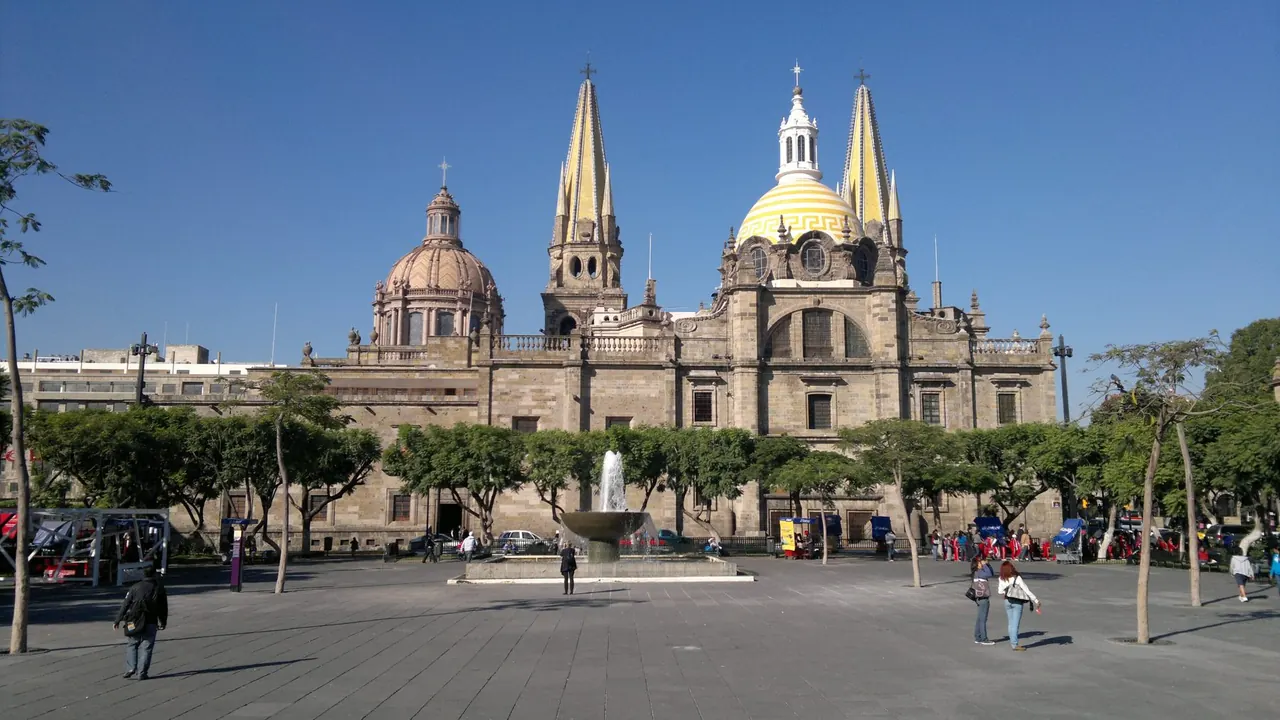
The twin towers of the cathedral over Plaza de Armas
- Affordable cities78
- Food & drink75
- Nightlife68
Photo: Ponchomx, CC BY-SA 3.0, cropped
Match
55
Every category weighted equally
- Beach & sun50
- Culture & arts59
- Food & nightlife59
- Family trip52
- Outdoors54
- Relax & unwind50
- Shopping & style58
- On a budget57
Guadalajara in twelve categories
Our verdict on each, scored 0 to 100 against the same fixed benchmark cities, so a score means the same thing on every page.
Beaches & swimming. Scores 5 out of 100.
Food & drink. Scores 75 out of 100.
Culture & sights. Scores 62 out of 100.
Nightlife. Scores 68 out of 100.
Nature & outdoors. Scores 55 out of 100.
Day trips. Scores 66 out of 100.
Good for families. Scores 55 out of 100.
Getting around. Scores 40 out of 100.
Shopping & style. Scores 60 out of 100.
Affordability. Scores 78 out of 100.
Live music & performing arts. Scores 60 out of 100.
Wellness & relaxation. Scores 35 out of 100.
Guadalajara category by category
Beaches & swimming
5Guadalajara sits on a high inland plateau, and the Pacific coast is a long drive or a short flight away, so it is not a place for a beach vacation. Lake Chapala, about an hour south, is lovely to look at but shallow and murky, and locals do not go there to swim. In the city, swimming means a hotel pool or one of the balnearios, the spring-fed pool parks found around the metropolitan area. Travellers who want sand usually add a few days on the coast around Puerto Vallarta.
Food & drink
75This is the heartland of some of Mexico's best-loved dishes, and eating here has a strong local accent. Birria, goat or beef stewed with chillies and served with its broth, is a morning institution. The torta ahogada, a crusty roll drowned in tomato and chilli sauce, is the city's signature. Carne en su jugo, pozole and the jericalla custard round out a cuisine you will not meet in the same form elsewhere. Mercado San Juan de Dios has upstairs food stalls, and the street stands of every neighbourhood carry the cooking to the street.
Jalisco is tequila country, and good agave spirits and cantaritos, served in clay cups with citrus, are part of any evening. Colonia Americana and Providencia hold a strong modern scene, from third-wave coffee to chefs reworking local produce. Range beyond Mexican cooking is moderate, but the depth within it is real.
Culture & sights
62The historic centre is laid out as a chain of plazas in the shape of a cross around the twin-spired cathedral. The Palacio de Gobierno and the neoclassical Teatro Degollado stand along it, and the long Plaza Tapatía leads to the Hospicio Cabañas. That former orphanage is a UNESCO World Heritage Site, and its chapel holds José Clemente Orozco's fierce murals, including the Man of Fire in the dome. It is the one sight here of true international rank. More Orozco murals hang in the Palacio de Gobierno.
Beyond the centre, the early twentieth-century mansions of Colonia Americana and the Expiatorio church are worth a walk. The pottery town of Tlaquepaque, now part of the city, adds colonial streets and a ceramics museum. The museums are mostly modest, and two or three days covers the essentials.
Nightlife
68Guadalajara is a big university city, and it goes out late and often. Colonia Americana and the streets around Avenida Chapultepec are the heart of it, with mezcal and craft-beer bars, cantinas and dance spots that fill from late evening. The city also has one of Mexico's best-known LGBTQ+ scenes, centred on the historic centre and Americana. The larger clubs and polished lounges sit along Avenida Vallarta and in Providencia and Zapopan, where the crowd dresses up and nights run past 3am.
Old cantinas, where a drink can come with snacks, give a more traditional evening. Weekends are much busier than weeknights. Take taxis or ride-hailing between districts late at night rather than walking long distances.
Nature & outdoors
55The city sits on a plateau, and green escape is closer than its size suggests. Bosque La Primavera, a large protected oak and pine forest on the western edge, has trails, mountain biking and warm streams. The Barranca de Huentitán, a deep canyon on the northern edge, offers a steep, hard hike down to the Río Santiago. Lake Chapala, Mexico's largest lake, is about an hour south, with lakeside promenades and hills behind for walking and birdwatching.
The high volcanoes of Colima and the pine forests around Tapalpa and Mazamitla are further out and make long days. The dry season, roughly November to May, is best for being outdoors. Summer brings afternoon storms and turns the hills green.
Day trips
66The obvious outing is Tequila, about an hour and a half away through blue agave fields that are a UNESCO World Heritage landscape. There you can visit the distilleries and the colonial town that gave the drink its name. Lake Chapala and the neighbouring village of Ajijic, with its painted walls, galleries and lakeside paths, make an easy, gentle day about an hour south. The Guachimontones, unusual circular stepped pyramids above the town of Teuchitlán, are about an hour west.
Further out, the mountain villages of Tapalpa and Mazamitla, both pueblos mágicos, offer cooler air, wooden houses and forest at about two hours. The pottery towns of Tlaquepaque and Tonalá are so close that they are more an afternoon than a trip.
Good for families
55Mexican family culture is warm, and children are welcome in restaurants late into the evening. The city has more for them than most visitors expect. The Zoológico Guadalajara is large and well kept, with views over the Huentitán canyon, and Selva Mágica next door adds rides. The Acuario Michin focuses on river and freshwater life, and the Trompo Mágico is a big hands-on children's museum. Parque Agua Azul and the Sunday car-free routes on main avenues give space to run around.
The drawbacks are distance and traffic: these attractions are spread out, and most families rely on taxis or a car. The mild spring-like climate makes the city easier on children than the hot coast.
Getting around
40The historic centre is compact and pleasant on foot, with long pedestrian streets linking the plazas. Colonia Americana and the streets around Avenida Chapultepec are walkable too. A light-rail network and the Mi Macro bus corridors run out from the centre to Zapopan, Tlaquepaque and the southern and outer districts. They are useful for some trips, but they do not reach everywhere a visitor wants to go. Away from those lines the city spreads widely along broad, busy avenues, and a visitor will find the ordinary buses hard to work out.
Most travellers use ride-hailing apps or taxis between neighbourhoods, and this works well. A car is only worth having for day trips, and rush-hour traffic is heavy.
Shopping & style
60Crafts are the reason to shop here. Tlaquepaque's streets are lined with galleries and shops selling ceramics, blown glass, furniture and sculpture. Neighbouring Tonalá is a working pottery town with a large street market of hand-painted ware a couple of days a week. In the centre, Mercado San Juan de Dios fills three floors with leather, boots, sweets and everyday goods, and it is one of the largest covered markets in Latin America.
For modern shopping, the Andares and Puerta de Hierro area in Zapopan has luxury brands and big malls. Small design and fashion shops cluster in Colonia Americana. Leather goods and footwear are a regional speciality.
Affordability
78Guadalajara is good value for a visitor. Street food and market meals cost very little, ride-hailing across town is inexpensive, and comfortable hotels in the centre and Americana are reasonably priced, with fewer tourist premiums than in the capital or the beach resorts. Museums and sights charge small fees, and many plazas and murals are free to see. The upscale districts of Providencia and Andares, with smart restaurants and cocktail bars, cost noticeably more but still less than similar places in Europe or North America.
Live music & performing arts
60This is the home of mariachi, and the music is part of daily life rather than a show put on for visitors. Groups play for tips in the Plaza de los Mariachis and in Tlaquepaque's El Parián, where tables surround a central bandstand. The Encuentro Internacional del Mariachi brings players from around the world each year, with concerts and street events.
The neoclassical Teatro Degollado is the home of the Jalisco Philharmonic and hosts the Ballet Folclórico of the University of Guadalajara, a colourful staging of regional dances. The university's Conjunto Santander and a few arenas carry touring concerts and theatre. Opera and drama are limited, so the strength is folk music, not formal arts depth.
Wellness & relaxation
35The city itself is a large, busy metropolis, and wellness in town mostly means hotel spas and massage studios. The volcanic ground around it does offer warm water. Thermal balnearios with hot pools sit on the edge of the Bosque La Primavera and along the north shore of Lake Chapala, about an hour away. You will also find temazcal, the traditional steam lodge, at some retreats. Ajijic's slow lakeside pace suits a few quiet days better than the city does. For most visitors, rest here means long lunches and shaded plazas rather than a spa culture.
When should you go?
Pick a month to see what it is like. The climate figures are measured averages, not a forecast.
Guadalajara in July
Daytime high, °C
Rainfall in the month, mm
The whole year
Shaded against this city’s own year: the deepest cell is its best month for that figure and the palest its weakest.
Where the figures come from
Guadalajara has no weather station within reach, so its figures come from a gridded climate model rather than a measured record, and read a broad area rather than the city itself.
Temperature and rainfall are climate normals, averaged over the years shown. Guadalajara: 2001-2020 normals, NASA POWER reanalysis grid, no weather station within 90 km.
Before you go
| Measure | Guadalajara |
|---|---|
| Official language | Spanish, Nahuatl, Yucatec Maya |
| Currency | Mexican Peso (MXN) |
| Sockets | AB127 V, 60 Hz |
| Driving side | Right |
| Time zone | UTC-6 |
| Emergency number | 911 |
| Elevation | 1,536 m |
| Main airport | Guadalajara International Airport (GDL)17 km from centre70 non-stop destinations |
| Public holidays this year | 9 days |
By the numbers
| Measure | Guadalajara |
|---|---|
| City population | 1,385,621 |
| People per km² | 9,556 |
| Museums within 10 km | 17 |
| UNESCO World Heritage sites within 50 km | 2 |
Compare Guadalajara with
Every comparison with a written verdict behind it.