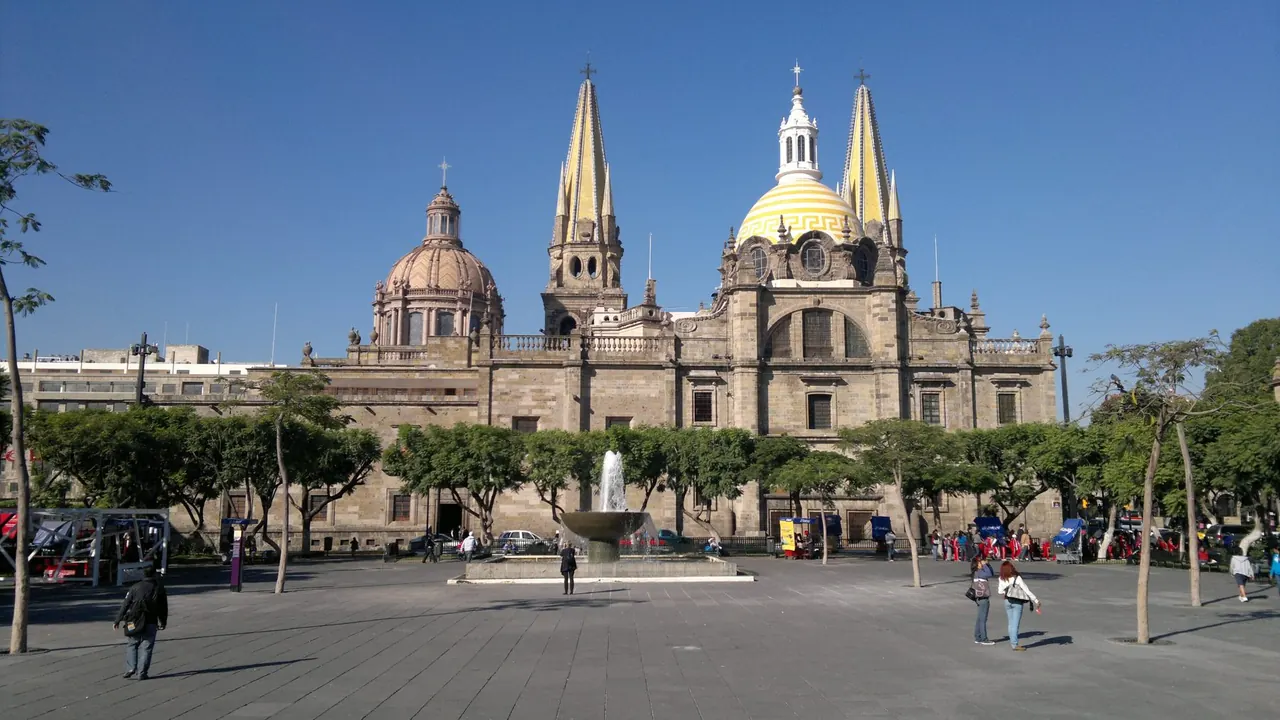
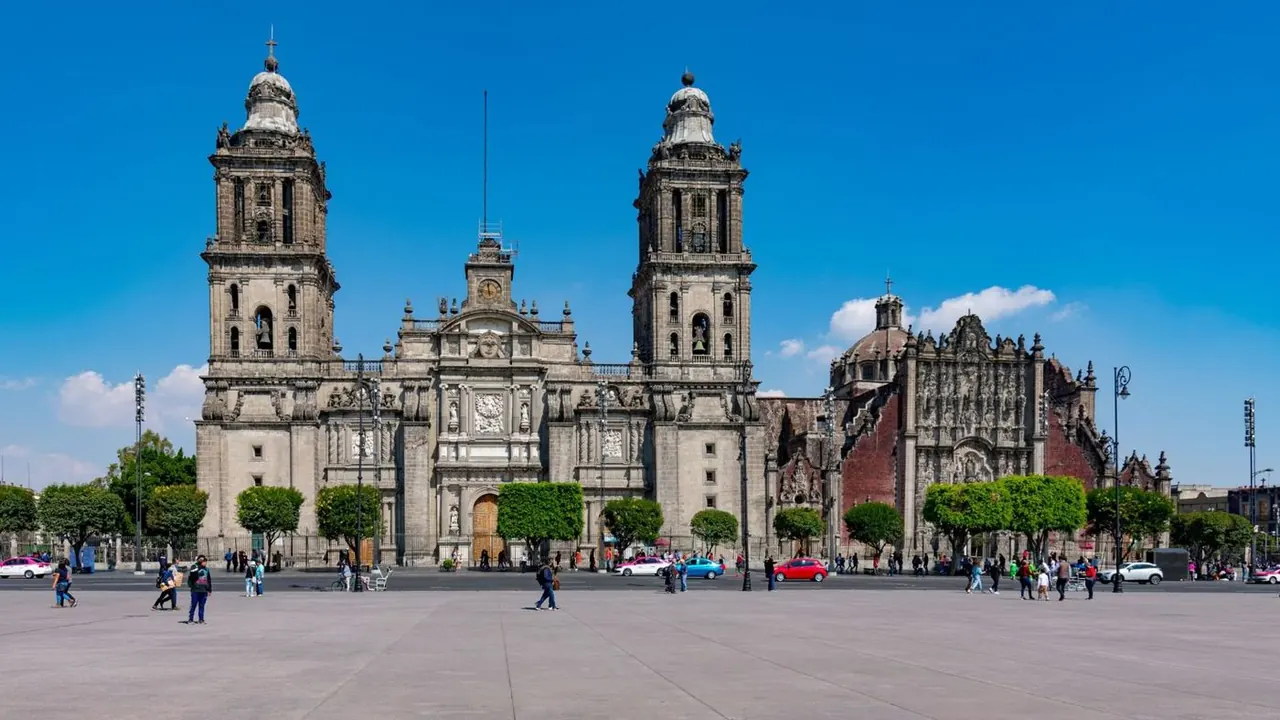
Photos: Guadalajara by Ponchomx, CC BY-SA 3.0, cropped; Mexico City by Oscar Dominguez, Pexels License.
Guadalajara or Mexico City?
Our verdict in twelve categories, each scored against the same fixed benchmark cities, and the climate month by month, so you can choose for your trip.
Choose Guadalajara for
- nature and the outdoors
- prices
Guadalajara suits travellers who want a smaller, more regional Mexico. Here you get tequila from its home ground, mariachi in the plazas of the state where it began, birria and tortas ahogadas, and the craft towns of Tlaquepaque and Tonalá. The main sights take a few days, forest and lake are within an hour, and the city makes an easy base for a shorter trip or for pairing with the Pacific coast.
Choose Mexico City for
- culture and sights
- shopping
- food and drink
For a first, fuller look at the country, Mexico City is the stronger choice. Its museums, Aztec ruins and murals, its food and nightlife, and outings such as Teotihuacan and Puebla give a week or more of variety. In return you accept long distances, heavy traffic and a pace that is rarely restful.
Scoreboard
Twelve categories on one fixed scale from 0 to 100. The shaded stretch is the gap between the two.
Your match
Pick a travel style or drag the sliders, and both match scores follow your weighting.
Wins on nature and the outdoors and prices with your weighting.
Wins on culture and sights and shopping with your weighting.
What matters to you?
Category by category
What the scores mean for a trip.
Beaches & swimming
Neither city is a beach destination. Both sit on high plateaus far from the sea, and swimming in town means a hotel pool. What differs is the nearest water. Guadalajara has spring-fed balnearios around the metropolitan area, and Puerto Vallarta's coast is a short flight away, while Lake Chapala is pretty to look at but not for swimming.
From Mexico City the closest sand is at Acapulco, several hours away by road. So from either city, the coast becomes a separate leg of the trip.
Food & drink
Both are serious places to eat, but Mexico City has the wider and deeper table. Its street food runs from al pastor to blue-corn quesadillas and tlacoyos, and markets such as Medellín and La Merced show produce from the whole country. Roma, Condesa and Polanco add tasting menus with an international reputation, pulquerías and mezcal bars.
Guadalajara's strength is a narrower and very local repertoire: birria in the morning, the torta ahogada, carne en su jugo and jericalla, with tequila and cantaritos from its own state of Jalisco. It is well worth a trip for those dishes, though the range beyond them is smaller and its modern kitchens in Colonia Americana are fewer than the capital's.
Culture & sights
This is where the two cities differ most. Mexico City puts the Aztec Templo Mayor beside the Zócalo, Rivera's murals in the National Palace and the Palacio de Bellas Artes a short walk away. In Chapultepec stands the National Museum of Anthropology, one of the world's great archaeological collections, and there are still Coyoacán's Frida Kahlo house and the Xochimilco canals to see.
Guadalajara has one sight of that calibre, Orozco's Man of Fire in the chapel dome of the Hospicio Cabañas, which stands at the end of a fine cross of plazas around the cathedral. Add the mansions of Colonia Americana and the colonial streets of Tlaquepaque, and two or three days is enough.
Nightlife
Both cities go out late, and in both the night centres on a leafy neighbourhood of mezcal bars and cantinas. Mexico City has more of everything. The cocktail bars of Roma and Condesa are a short walk apart, electronic clubs run until morning, salsa and cumbia halls draw locals of all ages, and the Zona Rosa has a large LGBTQ+ scene.
Guadalajara's version is smaller but has plenty of energy for a university city. It is built around Avenida Chapultepec in Colonia Americana, with the dressier clubs out along Avenida Vallarta and in Zapopan. Its LGBTQ+ scene is one of the best known in Mexico, which gives the city more weight than its size suggests.
Nature & outdoors
The two are broadly level here, but they work differently. Guadalajara's green spaces are closer to hand: the oak and pine forest of Bosque La Primavera lies on the western edge and the steep Huentitán canyon on the northern edge. Lake Chapala, about an hour south, is good for walking and birdwatching.
Mexico City has the bigger scenery: the pass between Iztaccíhuatl and Popocatépetl, the crater lakes of Nevado de Toluca and, in winter, the monarch butterfly reserves. Reaching them means a long drive out through traffic, though, and the air can be poor in the dry season. Inside the city, Chapultepec and the Xochimilco wetlands make gentler outings.
Day trips
Mexico City has the stronger list. The pyramids of Teotihuacan are about an hour away, and Puebla with Cholula makes a full day of churches and cooking. To the south lie Cuernavaca, Tepoztlán and the silver town of Taxco, so a week can hold several very different outings if you leave early to beat the traffic.
Guadalajara's trips are fewer but tied closely to the region. You can visit the agave fields and distilleries of Tequila, the painted lakeside village of Ajijic, the round stepped pyramids of the Guachimontones, or the cool pine villages of Tapalpa and Mazamitla.
Good for families
Families will find about the same amount to do in each, and both welcome children at restaurant tables late into the evening. Guadalajara has a large zoo above the Huentitán canyon, rides at Selva Mágica next door and the Trompo Mágico museum, and a milder climate than the coast. Its attractions are spread out, though, and need taxis.
Mexico City has more in one place, with the zoo, the boating lakes and the Papalote museum all in Chapultepec, plus trajinera boats at Xochimilco and lucha libre. Its traffic, crowded trains and altitude make it more tiring, so it is best planned one neighbourhood at a time.
Getting around
Mexico City is the easier of the two without a car, despite its size. Its large metro, with a pictogram for each station, works alongside the Metrobús lanes and a bike-share system to link walkable districts such as the Centro, Roma, Condesa and Coyoacán. Trains are packed at rush hour, and pickpockets work them.
In Guadalajara, the light rail and Mi Macro corridors miss much of what a visitor wants to see, and the ordinary buses are hard to work out. Beyond the walkable centre and Colonia Americana, most journeys are by ride-hailing, which works well. A car is worth having only for day trips.
Shopping & style
Both cities are best for crafts, but Mexico City brings together work from across the country. La Ciudadela sells textiles, Oaxacan pottery, alebrijes and silver, San Ángel's Saturday bazaar sells art and design, and La Lagunilla is the place for antiques. Luxury houses line Avenida Presidente Masaryk, and Mexican designers fill Roma.
Guadalajara's shopping is more local and more concentrated. The glass and ceramics galleries of Tlaquepaque, Tonalá's pottery market and the three floors of Mercado San Juan de Dios suit anyone after leather, boots and hand-painted ware, while Andares in Zapopan covers the malls.
Affordability
Day-to-day costs are much the same, with cheap street food, market meals and ride-hailing in both. The difference lies in where you stay. In Mexico City, the boutique hotels and restaurants of Roma, Condesa and Polanco charge close to European-capital prices, so choosing to stay there changes the bill a great deal. In Guadalajara, comfortable hotels in the centre and Colonia Americana carry fewer tourist premiums, and only Providencia and Andares are noticeably dearer.
Live music & performing arts
Mexico City has far more on stage. The Palacio de Bellas Artes holds the national opera and symphony seasons and the Ballet Folklórico de México, and Sala Nezahualcóyotl and the Auditorio Nacional add concerts. Jazz and son clubs, a large Spanish-language theatre scene and lucha libre at Arena México fill the other nights.
Guadalajara's answer is mariachi in the region where it began, played in the Plaza de los Mariachis and around the bandstand of El Parián in Tlaquepaque. The Teatro Degollado adds the Jalisco Philharmonic and the university's folk ballet. Here the music is part of daily life, but there is much less formal performance.
Wellness & relaxation
Neither is a restful city, and in both a spa visit mostly means a hotel spa or a temazcal steam lodge. What differs is the escape. From Guadalajara, thermal balnearios on the edge of La Primavera and on the north shore of Lake Chapala are about an hour away, as is Ajijic's slow lakeside pace. From Mexico City people head south to Cuernavaca and Tepoztlán, and in town the quieter hours come from Coyoacán's shaded plazas and the parks of Condesa.
When should you go?
Pick your month. The climate figures are measured averages, not a forecast.
Guadalajara in July
Mexico City in July
Daytime high, °C
Rainfall in the month, mm
Where the figures come from
Guadalajara has no weather station within reach, so its figures come from a gridded climate model rather than a measured record, and read a broad area rather than the city itself.
Temperature and rainfall are climate normals, averaged over the years shown. Guadalajara: 2001-2020 normals, NASA POWER reanalysis grid, no weather station within 90 km. Mexico City: 1991-2020 (rainfall 1961-1990) normals, Mexico Central, D. F. (7.9 km from centre).
Both cities are high enough to stay mild all year, and they follow the same pattern: a dry, sunny winter and spring, then afternoon storms from June to September. Guadalajara gets much warmer before the rains, reaching 33°C in May, so walking at midday is hard work in April and May. Its most comfortable months are November to March. The rain peaks in July at around 205mm.
Mexico City stays steadier and rarely goes much past the high twenties, so spring is a good time for walking its streets, and March is its sunniest month. Its wet season peaks a little later, in August, and October is still damp there. Neither city has a beach season to plan around.
Which traveller are you?
For a culture and arts trip, Mexico City is the clear pick. The Anthropology Museum, the Templo Mayor, Rivera's murals and the Kahlo house can fill a week, and Bellas Artes adds opera and ballet. Guadalajara's essentials, centred on Orozco's murals, fit into a few days.
On a food and nightlife trip, Mexico City again comes out ahead, with taco stands open late, big markets, respected tasting menus and nights spent walking between bars in Roma and Condesa. Guadalajara suits those set on birria, tortas ahogadas and tequila, but has less range.
For an outdoors trip, Guadalajara is the easier base. The trails and warm streams of Bosque La Primavera and the Huentitán canyon start at the edge of the city. Mexico City's volcanoes are grander, but reaching them means hours in traffic, and the air can be poor in the dry season.
Before you go
| Measure | Guadalajara | Mexico City |
|---|---|---|
| Official language | Spanish, Nahuatl, Yucatec Maya | Spanish, Nahuatl, Yucatec Maya |
| Currency | Mexican Peso (MXN) | Mexican Peso (MXN) |
| Sockets | AB127 V, 60 Hz | AB127 V, 60 Hz |
| Driving side | Right | Right |
| Time zone | UTC-6 | UTC-6 |
| Emergency number | 911 | 911 |
| Elevation | 1,536 m | 2,240 m |
| Main airport | Guadalajara International Airport (GDL)17 km from centre68 non-stop destinations | Mexico City Benito Juárez International Airport (MEX)7 km from centre109 non-stop destinations |
| Public holidays this year | 9 days | 9 days |
By the numbers
| Measure | Guadalajara | Mexico City |
|---|---|---|
| City population | 1,385,621 | 9,209,944 |
| People per km² | 9,556 | 6,202 |
| Museums within 10 km | 17 | 108 |
| UNESCO World Heritage sites within 50 km | 2 | 6 |
Where else could you go?
Every comparison below shares a destination with this one, so you can follow Guadalajara or Mexico City somewhere new.
- Puerto Vallartavs Guadalajara
- Nuevo Vallartavs Guadalajara
- Sayulitavs Guadalajara
- San Miguel de Allendevs Mexico City
- San Miguel de Allendevs Guadalajara
- Acapulcovs Mexico City