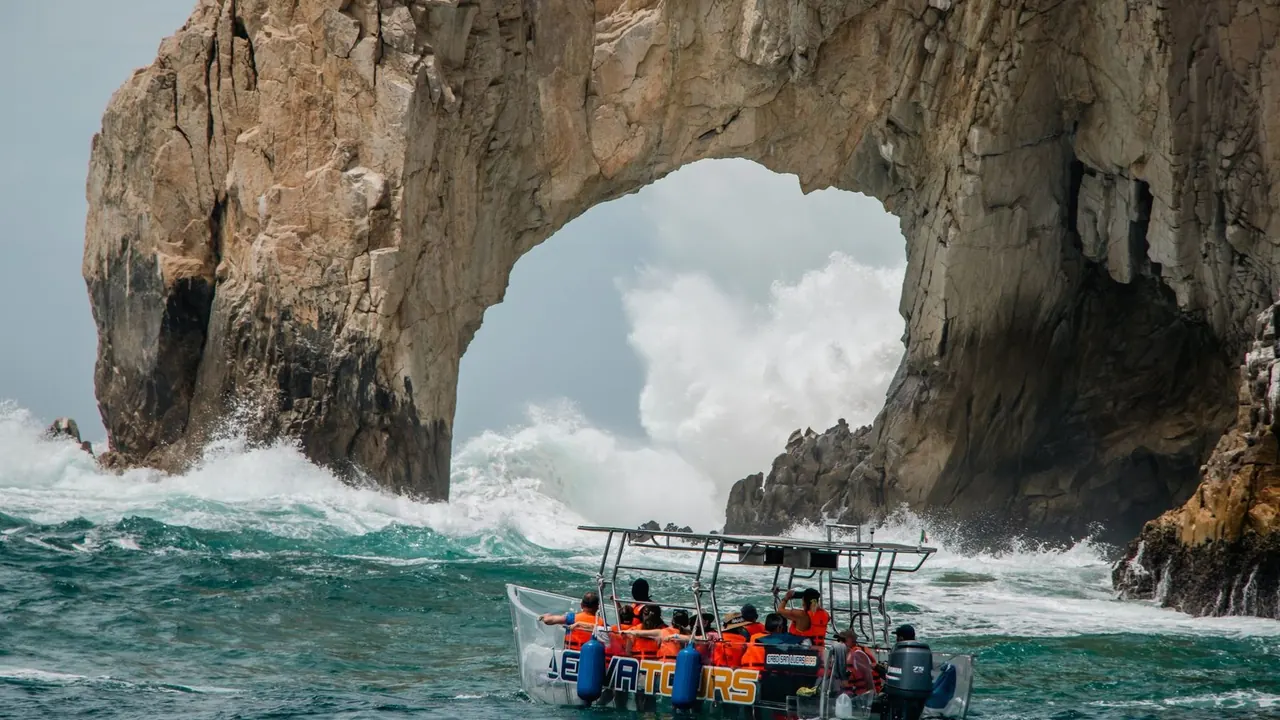
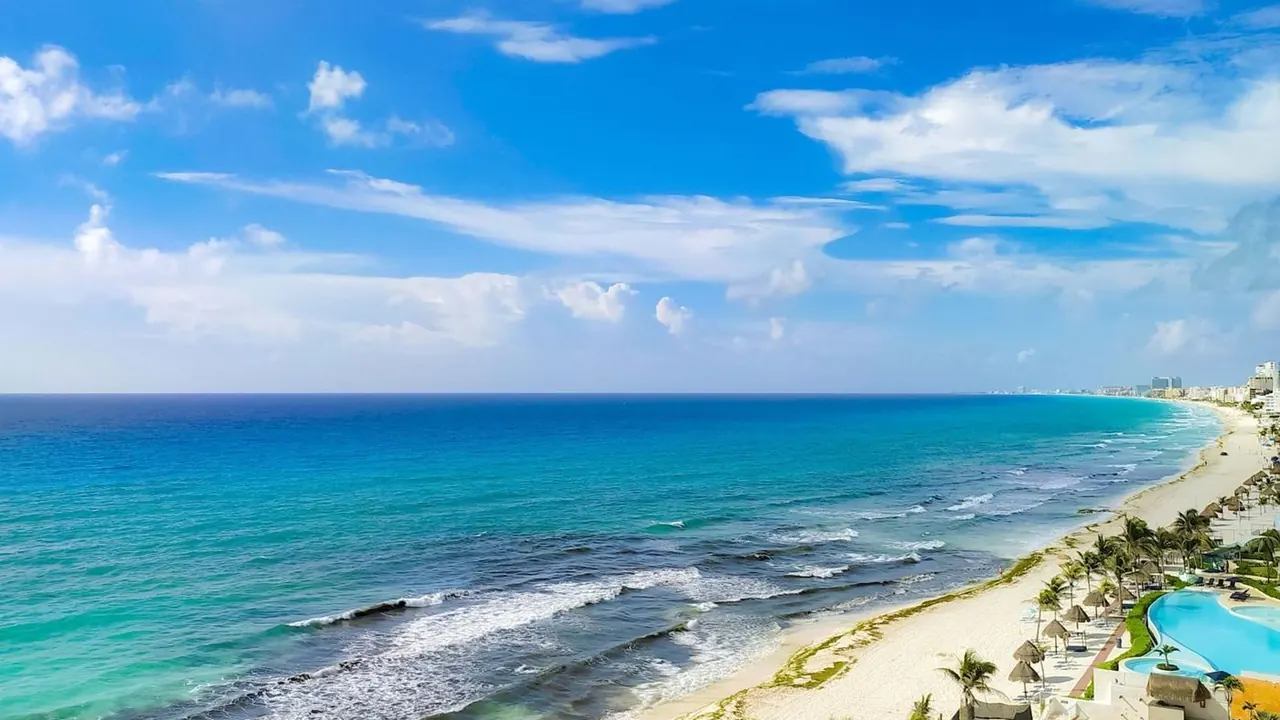
Photos: Los Cabos by Jules Clark, Pexels License; Cancun by Tellez Erik, Pexels License.
Los Cabos or Cancun?
Our verdict in twelve categories, each scored against the same fixed benchmark cities, and the climate month by month, so you can choose for your trip.
Choose Los Cabos for
- nature and the outdoors
- food and drink
- culture and sights
Los Cabos rewards travellers who care more about the sea as wildlife than as a bathtub. Whales pass the cape in winter, the marlin grounds are famous, and desert mountains rise behind the coast. It eats better too, mostly fish and seafood, especially in San José del Cabo, and its weather stays drier for more of the year. The catch is that it costs more, and the swimming is limited to one side of the cape.
Choose Cancun for
- day trips
- families
- prices
Cancun is the easier choice for a classic Caribbean beach vacation. The sand is softer and runs for longer, the sea is warm in every month, and the calm bay beaches make it simple with children. It is also the better base for anyone who wants to see the Maya world, with Chichen Itza, Coba and the cenotes within a day's reach, and downtown keeps costs down for those willing to leave the resort.
Scoreboard
Twelve categories on one fixed scale from 0 to 100. The shaded stretch is the gap between the two.
Your match
Pick a travel style or drag the sliders, and both match scores follow your weighting.
Wins on nature and the outdoors and food and drink with your weighting.
Wins on day trips and families with your weighting.
What matters to you?
Category by category
What the scores mean for a trip.
Beaches & swimming
Cancun has the stronger beaches. Its Hotel Zone gives about 22km of pale coral sand, with calm, shallow bay water on the northern arm and rolling Caribbean surf along the eastern shore, plus Playa Norte on Isla Mujeres a ferry ride away. The one recurring drawback is sargassum seaweed on the eastern side in some summers.
Los Cabos can be beautiful, but you have fewer places to swim. Medano Beach and the corridor coves such as Chileno Bay and Santa Maria Bay are the places to swim and snorkel, while the Pacific-facing sand, including much of the frontage of the big resorts, is too dangerous to enter. The water is also noticeably cooler in winter and spring.
Food & drink
Los Cabos eats a little better, and almost all of it comes from the sea: fish tacos, aguachile and the day's catch landed by the fishing fleet, best in San José del Cabo. The farm restaurants in the hills and easy access to Baja wine and mezcal give it more depth than the marina grills suggest.
Cancun's strength is its regional cooking. Yucatecan dishes such as cochinita pibil and sopa de lima are worth seeking out in the downtown markets and around Parque de las Palapas. Stay inside the Hotel Zone, though, and meals rarely rise above buffets and international menus.
Culture & sights
Neither city is a destination for sights, and both send serious visitors elsewhere. The difference is in kind. Cancun offers archaeology, with the Maya Museum and the small San Miguelito ruins, plus El Rey and El Meco nearby. Los Cabos offers a small colonial-style town, with San José del Cabo's plaza, mission church and gallery district holding an evening art walk in season.
Nightlife
Both are party destinations of a similar intensity, and both lack variety. Cancun's scene is concentrated in the Party Center, where mega-clubs stage acrobatics, confetti and open-bar nights that last until dawn.
Los Cabos parties in looser fashion. The drinking starts at the beach bars on Medano in the afternoon and moves to loud bars and clubs behind the marina in Cabo San Lucas. San José del Cabo is the place to go for a quiet drink instead.
Nature & outdoors
Los Cabos has the richer outdoors. Humpback and grey whales pass the cape in winter, often visible from the shore. The deep water off Land's End is famous for marlin, and Cabo Pulmo protects a living coral reef up the East Cape. On land, the Sierra de la Laguna offers proper hikes into oak and pine forest, and the Pacific breaks draw surfers.
Cancun's nature is almost all water, though it is good water: the Mesoamerican Reef, the underwater sculptures of MUSA, cenotes inland and whale sharks in summer. The flat scrubland behind it offers no hiking.
Day trips
Cancun is much the better base for excursions. It puts Chichen Itza, Coba, Ek Balam and colonial Valladolid within a long day, as well as Tulum's clifftop ruins, Playa del Carmen and Isla Mujeres closer by. Few beach resorts sit within reach of so much ancient history.
From Los Cabos the choice is smaller and quieter. Todos Santos, with its adobe streets and galleries, is the usual outing. La Paz makes a longer day, and the old mining town of El Triunfo suits a loop by car. Beyond these lies mostly empty desert.
Good for families
Cancun suits children far better. The northern bay beaches are shallow and calm, the resorts are built around kids' clubs, and the aquarium and eco-parks with underground rivers and lagoons give plenty to do away from the pool.
Los Cabos works mainly inside the all-inclusive resorts. Chileno and Santa Maria Bays are good for a first snorkel and whale-watching trips go down well. But there is no aquarium or theme park, and the Pacific surf needs constant watching.
Getting around
Neither is easy to get around without help, but the difficulty differs in kind. Cancun is laid out along a single line: the Hotel Zone hangs off Boulevard Kukulcan, so the buses running up and down it and on into downtown cover most of what a beach visitor needs, and ADO coaches continue down the coast to Playa del Carmen, Tulum and Valladolid. The strip is a long, hot slog on foot, though, and cenotes and ruins away from the coach routes still need a tour or a hire car.
Los Cabos is spread out instead. Its two centres, San José del Cabo and the marina at Cabo San Lucas, are much nicer to wander than anything in the Hotel Zone. But the 30km of resorts between them, and an airport well to the north, leave most visitors relying on costly taxis, shuttles or a hire car, and the local buses do far less of the work than Cancun's do.
Shopping & style
Neither place is worth a trip for its shopping, and both rely on duty-free malls. Cancun has the bigger craft market in Mercado 28, full of hammocks, huipiles and silver, but the stock repeats from stall to stall. San José del Cabo has the more original buys, with art galleries, design shops and folk art in its historic centre.
Affordability
Cancun is the cheaper of the two, mainly because of the gap between the Hotel Zone and downtown. Taco stands, market halls, local buses and small inland hotels let a careful traveller spend far less than the beachfront prices suggest.
Los Cabos is expensive almost throughout. Corridor resorts are priced at luxury levels, marina restaurants charge American beach-resort rates and taxis add up fast. San José del Cabo helps a little, but it does not close the gap.
Live music & performing arts
Cancun's evenings lean towards staged spectacle: large shows of Mexican music and dance at the eco-parks down the coast, folkloric dinner shows with mariachi, and nightly entertainment in the resorts. Los Cabos runs more to bar music, with cover bands and rock in Cabo San Lucas, mariachi over dinner and small events around the San José plaza. In both, there is no theatre, opera or concert season to plan a trip around.
Wellness & relaxation
Both offer resort spa vacations of a similar standard, and both offer the temazcal sweat lodge. In Cancun, the temazcal draws on a Maya tradition rooted in the region, but the Hotel Zone is noisy, so quiet seekers head to its southern tip, Isla Mujeres or Puerto Morelos.
In Los Cabos, the calm is easier to find on the spot. The corridor between the two towns is lined with sea-facing spas, beach yoga and quiet pools, and only Cabo San Lucas itself is loud.
When should you go?
Pick your month. The climate figures are measured averages, not a forecast.
Los Cabos in July
Cancun in July
Daytime high, °C
Rainfall in the month, mm
Where the figures come from
Los Cabos has no weather station within reach, so its figures come from a gridded climate model rather than a measured record, and read a broad area rather than the city itself.
Cancun has no weather station within reach, so its figures come from a gridded climate model rather than a measured record, and read a broad area rather than the city itself.
Temperature and rainfall are climate normals, averaged over the years shown. Los Cabos: 2001-2020 normals, NASA POWER reanalysis grid, no weather station within 90 km. Cancun: 2001-2020 normals, NASA POWER reanalysis grid, no weather station within 90 km.
Cancun is warm all year. Highs stay in the high twenties and the sea never falls below 26°C, so a beach trip works in any month. The drier stretch runs from about December to April. Rain builds from May, and late summer and autumn are wet and humid, with October the wettest month at around 224mm. The sticky months from May to September also make long walks hard work.
Los Cabos is much drier. Most months see almost no rain, and the only real wet spell is August and September, when the rain reaches around 99mm. Winter and spring are pleasant for walking and whale-watching, but the sea cools to around 22°C, which many swimmers find bracing. Even in July it is still a few degrees cooler than Cancun's. The two seas only draw level from August to October, and by then August days reach 31°C, too hot for much activity on land.
Which traveller are you?
On a family trip with children, Cancun is the better fit. The bay beaches on the northern arm of the Hotel Zone are shallow and calm, and the aquarium and eco-parks down the coast fill days. Los Cabos has few attractions for children beyond its resorts and coves.
For an outdoors trip, Los Cabos has more range. There is winter whale-watching from shore, sportfishing for marlin, diving at Cabo Pulmo, Pacific surf and real hiking in the Sierra de la Laguna. Cancun's outdoors is mostly reef, cenotes and lagoon, with no hiking.
On a trip on a tight budget, Cancun stretches the money further. Downtown taco stands, small hotels, local buses and ADO coaches cost a fraction of the Hotel Zone, while Los Cabos stays expensive almost everywhere except parts of San José del Cabo.
Before you go
| Measure | Los Cabos | Cancun |
|---|---|---|
| Official language | Spanish, Nahuatl, Yucatec Maya | Spanish, Nahuatl, Yucatec Maya |
| Currency | Mexican Peso (MXN) | Mexican Peso (MXN) |
| Sockets | AB127 V, 60 Hz | AB127 V, 60 Hz |
| Driving side | Right | Right |
| Time zone | UTC-7 | UTC-5 |
| Emergency number | 911 | 911 |
| Elevation | 11 m | 5 m |
| Main airport | Los Cabos International Airport (SJD)35 km from centre54 non-stop destinations | Cancún International Airport (CUN)14 km from centre135 non-stop destinations |
| Public holidays this year | 9 days | 9 days |
By the numbers
| Measure | Los Cabos | Cancun |
|---|---|---|
| City population | 202,694 | 888,797 |
| Museums within 10 km | 1 | 1 |
| UNESCO World Heritage sites within 50 km | 0 | 0 |
| Swim season, months above 21 °C | 12 months | 12 months |
Where else could you go?
Every comparison below shares a destination with this one, so you can follow Los Cabos or Cancun somewhere new.
- Playa del Carmenvs Cancun
- Akumalvs Cancun
- Tulumvs Cancun
- Meridavs Cancun
- Mazatlanvs Los Cabos
- Havanavs Cancun