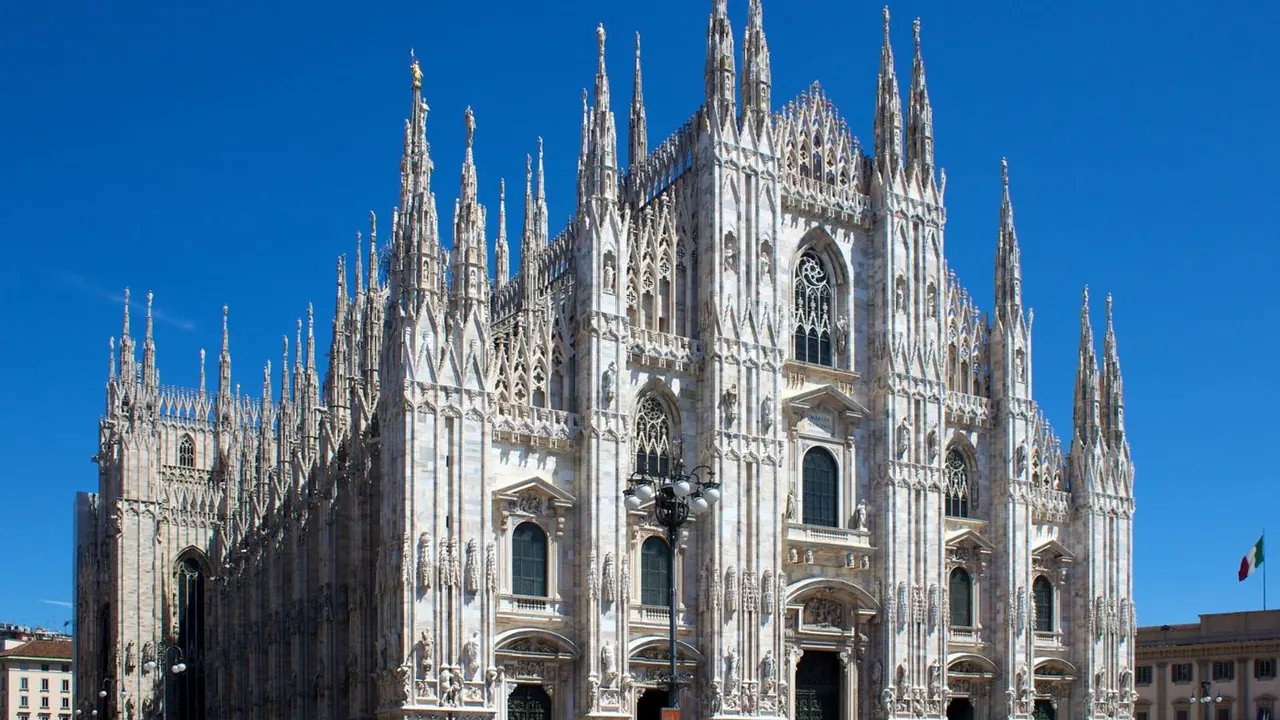
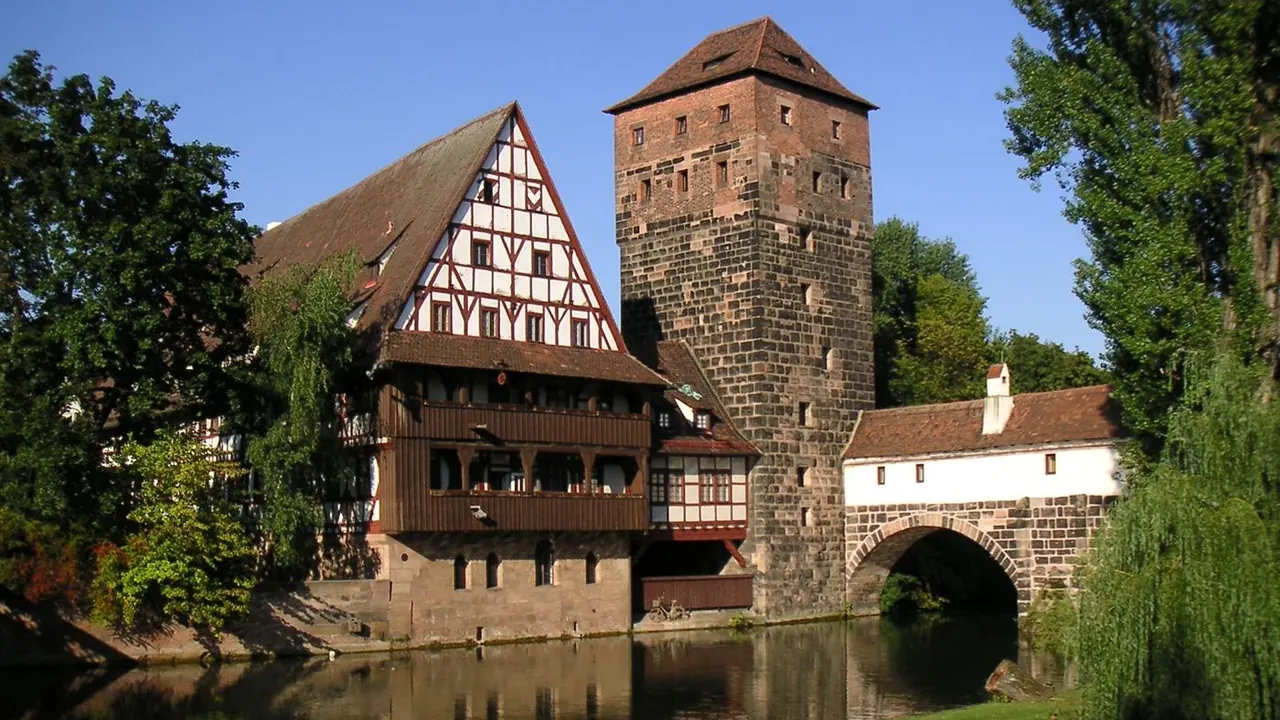
Photos: Milan by Jiuguang Wang, CC BY-SA 3.0, cropped; Nuremberg by Horst Gutmann, CC BY 2.0, cropped.
Milan or Nuremberg?
Our verdict in twelve categories, each scored against the same fixed benchmark cities, and the climate month by month, so you can choose for your trip.
Choose Milan for
- shopping
- live music and the arts
- nightlife
Milan suits travellers who want a bigger stage. It has fashion and design shopping that draws people from across the world, a night at La Scala, aperitivo along the Navigli and a rail hub that puts Lake Como, Verona and Bergamo about an hour away. It costs more, and its heritage comes in clusters between modern business districts, so it suits people who arrive with a plan and a generous budget.
Choose Nuremberg for
- prices
- families
- wellness
Choose Nuremberg for a gentler trip that is easy to get your arms around. You can walk the whole walled old town below the Kaiserburg. The toy museum, the railway museum and the zoo keep children busy, and tavern meals with local beer keep spending sensible. Bamberg, Regensburg and Rothenburg are easy days out by train, and Advent brings one of Germany's best-known Christmas markets.
Scoreboard
Twelve categories on one fixed scale from 0 to 100. The shaded stretch is the gap between the two.
Your match
Pick a travel style or drag the sliders, and both match scores follow your weighting.
Wins on shopping and live music and the arts with your weighting.
Wins on prices and families with your weighting.
What matters to you?
Category by category
What the scores mean for a trip.
Beaches & swimming
Neither city has a coast, and in both, swimming means a summer side trip to a lake about an hour away. Milan has slightly better options. Lake Como and Lake Maggiore have pebbly lidos and swimming platforms below steep wooded shores, and the Idroscalo basin sits on the city's edge.
Nuremberg's equivalent is the Franconian Lake District, a chain of reservoirs led by the Brombachsee. It has grassy banks and small sandy strips that suit children. Both sets of lakes reach about 23°C at the height of summer, but Nuremberg's season is shorter.
Food & drink
Milan is the better city for eating, by a wide margin. Its own cooking is rich in butter, from saffron risotto to ossobuco and cotoletta. Alongside it you find food from every Italian region and serious fine dining, and early-evening aperitivo in Brera, Isola or on the Navigli can be a meal in itself.
Nuremberg's food is narrower and heavier: finger-sized bratwurst grilled over beechwood, Schäufele with crackling, and Lebkuchen. Its real strength is beer, with small Franconian breweries, smoky Kellerbier and riverside beer gardens. The restaurant scene is solid but ordinary.
Culture & sights
Milan has the more important individual sights. These include the Duomo, whose roof puts you among the spires, Leonardo's Last Supper, the paintings at the Brera and Michelangelo's Rondanini Pietà in the Castello. Between these clusters, though, much of the city is modern and commercial.
Nuremberg feels more of a whole: a walled medieval town below the Kaiserburg, with Gothic churches and Dürer's house, much of it carefully rebuilt after the war. It also has a sobering twentieth-century layer that Milan cannot match, the Rally Grounds and Courtroom 600, and the Germanisches Nationalmuseum can fill a day.
Nightlife
Milan has far more going on after dark. Aperitivo turns into bar-hopping along the Navigli towpaths, or in smarter Brera, mixed Isola and Porta Venezia, the centre of the gay scene. There are also dressy clubs around Corso Como, where looks count, and warehouse nights on the city's edges.
Nuremberg's evenings happen mostly in bars and taverns. Gostenhof, west of the walls, is livelier, with small alternative venues, and students from Erlangen fill the weekends. It makes a good night out but is rarely the reason for the trip.
Nature & outdoors
Milan reaches the more dramatic landscape, although its own surroundings are the flat, often hazy Po plain. An hour north, Lake Como and Lake Maggiore lie under steep wooded slopes. The Grigne ridges above Lecco offer serious hiking and via ferrata, and Alpine skiing is possible in winter as a long day out.
Nuremberg's outdoors is gentler and closer. The Reichswald pine forest begins at the edge of the city. Franconian Switzerland, an hour away, has limestone towers, caves, trails between villages and well-known rock climbing, but no mountains.
Day trips
Both cities make excellent bases, but Milan reaches further and wider. High-speed trains put Verona's Roman arena and Turin's royal palaces and Egyptian Museum about an hour away, with Bologna a little beyond. Bergamo's walled upper town and Lake Como villages such as Varenna are about an hour away by regional train. With boats to the Borromean Islands, Mantua's Gonzaga palaces and Lugano across the Swiss border, one week can mix art cities, lakes and another country.
Nuremberg's day trips mostly follow one theme, the old towns of Franconia and Bavaria. There is Bamberg's cathedral hill with its smoked-beer taverns, Regensburg on the Danube, Würzburg's baroque Residence and the walled Romantic Road towns of Rothenburg and Dinkelsbühl. Munich, about an hour away by fast train, and Wagner's Bayreuth add some variety, but the range is narrower than Milan's.
Good for families
Nuremberg is the easier city with children. Its centuries of toy-making show in the Toy Museum, the railway museum has full-size locomotives, and the zoo spreads through wooded former quarries. In Advent, a children's market with carousels and a small steam train opens near the main one. The only real effort is the cobbled climb to the castle.
Milan works for families, but it is aimed at adults. The science and technology museum, with its submarine, is the highlight, and Parco Sempione gives children space to run. Leolandia and Gardaland suit older children, though the summer heat can be heavy.
Getting around
Both cities are easy without a car, but in different ways. Nuremberg's sights fit inside walls about 1.5km across, so most of a visit is on foot. U-Bahn, trams and S-Bahn trains run on one ticket out to the zoo, the Rally Grounds and Fürth.
Milan's centre is also flat and walkable from the Duomo to Brera, but the city is bigger, so you rely more on the five metro lines and the old orange trams. Its weak points are hot platforms in summer and the long transfer from Malpensa.
Shopping & style
This is the biggest difference between the two cities. Milan is a world fashion capital, with the flagships of the Quadrilatero around Via Montenapoleone, the old shops in the Galleria and La Rinascente by the Duomo. Beyond those come Corso Buenos Aires, vintage shops in Brera and Porta Ticinese, design showrooms and antique markets on the Navigli.
Nuremberg's main streets are lined with chain stores. What is worth buying is local: Lebkuchen in tins, wooden toys and tin figures from the Handwerkerhof. The Christkindlesmarkt changes the picture in Advent, but for the rest of the year shopping is a sideline.
Affordability
Nuremberg is the cheaper stay. Tavern meals are filling, local beer and transport cost little, and sights are modestly priced. The main catch is hotels during the trade fairs and the Advent market.
Milan is Italy's most expensive city. Hotel rooms are costly, reasonable rates almost disappear during fashion weeks and fairs, and restaurants in Brera and the centre are expensive. Aperitivo snacks, lunchtime set menus for office workers and a room near a metro stop outside the centre help, but they do not close the gap.
Live music & performing arts
Milan has La Scala, one of the world's great opera houses, whose season opens each December on the feast of Sant'Ambrogio. A determined visitor can get in with a gallery seat. The Piccolo Teatro, a fine symphony orchestra, jazz rooms and big summer concerts at San Siro fill out the calendar, though summer is quiet for opera and classical music.
Nuremberg's Staatstheater, in an Art Nouveau opera house, stages solid opera, ballet and drama in repertory. In summer, the free Bardentreffen folk weekend and an open-air orchestral concert in the Luitpoldhain add more. It is a good regional programme rather than a reason to travel.
Wellness & relaxation
Neither city is a place to come purely to rest, and the difference is one of style. Milan has a thermal spa complex with outdoor pools in town, some hotel spas and, in summer, the restored 1930s open-air pools of the Bagni Misteriosi. For real calm, though, you take a train to the lakes.
Nuremberg relies on German sauna culture. A large thermal spa in Fürth is a short U-Bahn ride away, the leisure pools have nude, mixed saunas, and Bad Windsheim's saline pools are an hour to the west. The slower pace of the old town and the beer gardens by the Pegnitz also make it easier to unwind without leaving the city.
When should you go?
Pick your month. The climate figures are measured averages, not a forecast.
Milan in July
Nuremberg in July
Daytime high, °C
Rainfall in the month, mm
Where the figures come from
Milan has no rain gauge within 25 km of the centre, so its rainfall comes from a gridded climate dataset read at the city rather than from a gauge further away.
Milan's sunshine is measured 41 km from the centre, at Novara / Cameri.
Temperature and rainfall are climate normals, averaged over the years shown. Milan: 1991-2020 normals, Milano / Linate (8 km from centre). Nuremberg: 1991-2020 normals, Nuernberg (5.5 km from centre).
Milan has the hotter, sunnier summer, reaching 30°C in July with long bright days. June to August is the time for swimming at the lakes, though the city streets can feel sticky in the heat. Spring and the start of autumn are the best months for walking. Rain builds through September and October to a peak of 128mm in November, and winters are cool and grey.
Nuremberg is a few degrees cooler all year and tops out around 25°C in July and August, so high summer stays comfortable for sightseeing and the short lake season. July is its wettest month at 77mm, and its autumn is noticeably drier than Milan's. Winters are colder, close to 4°C from December to February, with short days and little sun.
Which traveller are you?
On a shopping trip, Milan is the clear choice. The fashion houses of the Quadrilatero, the Galleria, the design showrooms and the boutiques of Brera make shopping a reason to go. Outside Advent, Nuremberg offers chain-store streets plus gingerbread and toy souvenirs.
For a food and nightlife trip, Milan leads again. Risotto, ossobuco and cooking from every Italian region lead into aperitivo on the Navigli, then late bars and clubs. Nuremberg's bratwurst, beer taverns and Gostenhof bars make pleasant but simpler evenings.
On a tight budget, your money goes further in Nuremberg. Filling tavern meals, cheap local beer, inexpensive transport and a walkable old town keep costs down outside the trade-fair weeks. Milan's hotels and Brera restaurants are among the most expensive in Italy.
Before you go
| Measure | Milan | Nuremberg |
|---|---|---|
| Official language | Italian | German |
| Currency | Euro (EUR) | Euro (EUR) |
| Sockets | CFL230 V, 50 Hz | CF230 V, 50 Hz |
| Driving side | Right | Right |
| Time zone | UTC+1, UTC+2 in summer | UTC+1, UTC+2 in summer |
| Emergency number | 112 | 112 |
| Elevation | 138 m | 209 m |
| Main airport | Milan Malpensa International Airport (MXP)40 km from centre208 non-stop destinations | Nuremberg Airport (NUE)5 km from centre56 non-stop destinations |
| Public holidays this year | 13 days | 12 days |
By the numbers
| Measure | Milan | Nuremberg |
|---|---|---|
| City population | 1,354,196 | 531,159 |
| People per km² | 7,453 | 2,848 |
| Museums within 10 km | 88 | 50 |
| UNESCO World Heritage sites within 50 km | 4 | 1 |
Where else could you go?
Every comparison below shares a destination with this one, so you can follow Milan or Nuremberg somewhere new.