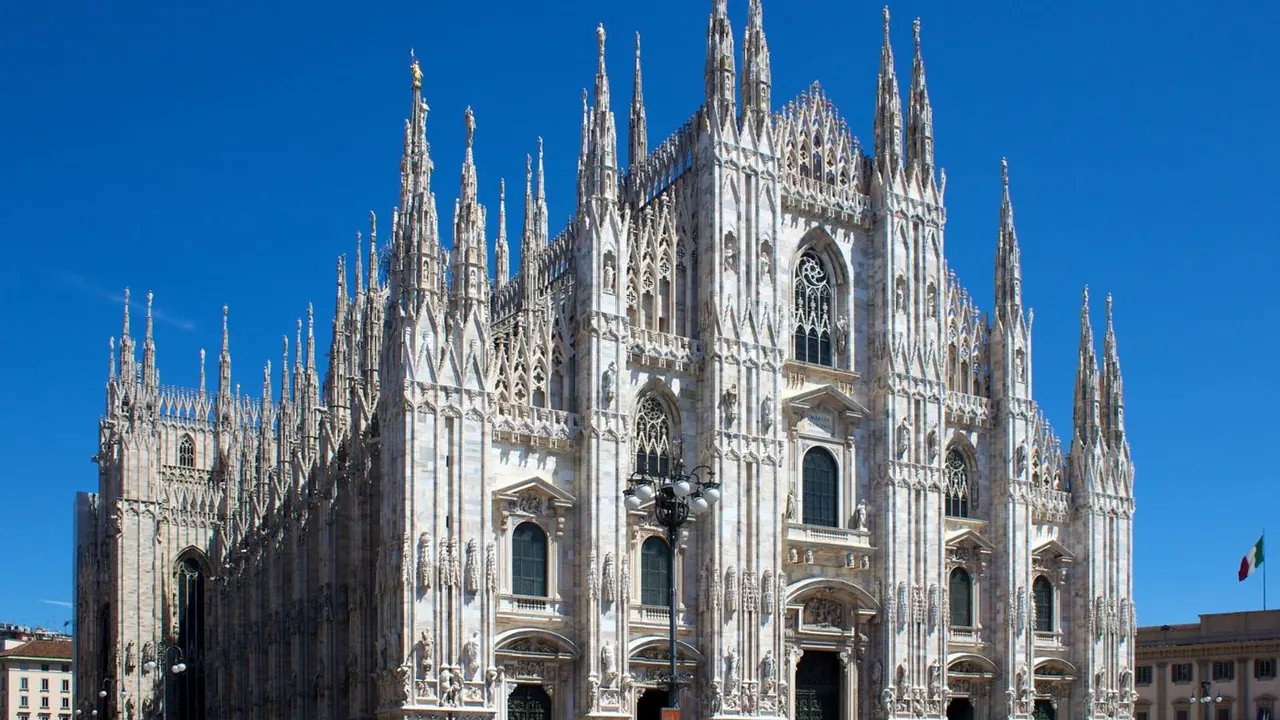
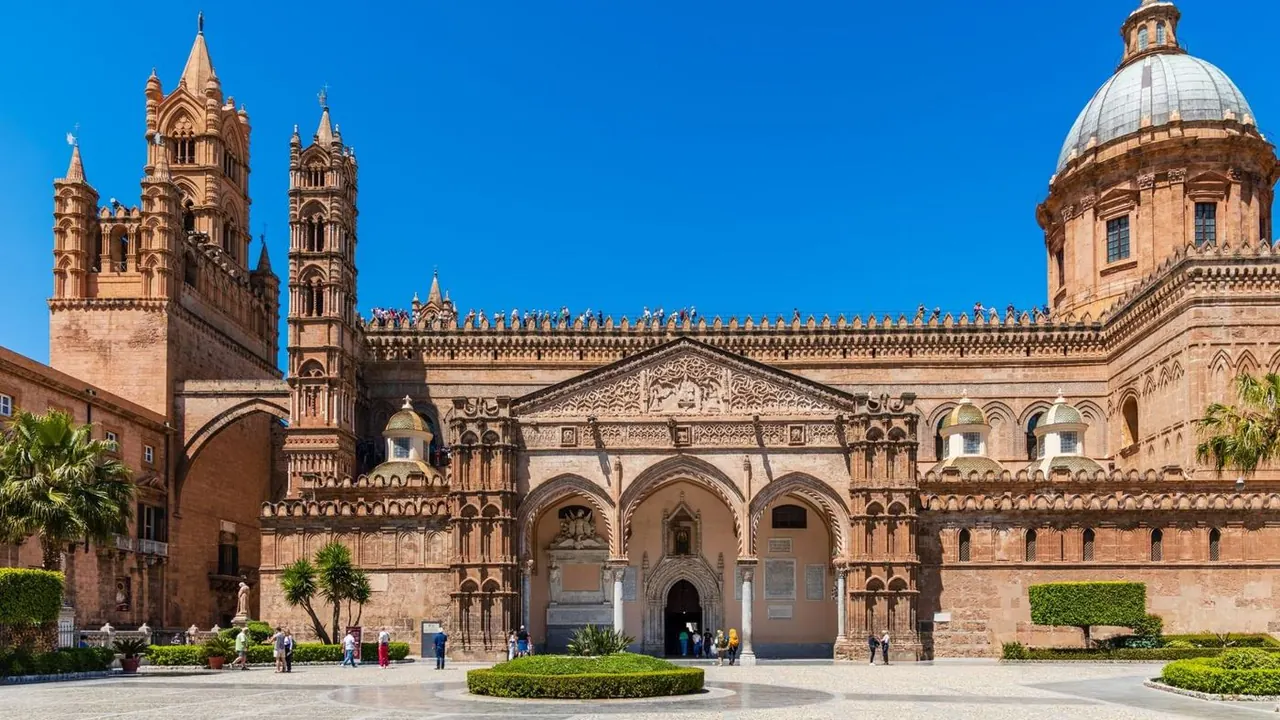
Photos: Milan by Jiuguang Wang, CC BY-SA 3.0, cropped; Palermo by Antonino Giangrasso, Pexels License.
Milan or Palermo?
Our verdict in twelve categories, each scored against the same fixed benchmark cities, and the climate month by month, so you can choose for your trip.
Choose Milan for
- shopping
- getting around
- live music and the arts
Milan suits the traveller who wants a polished, well-connected city: serious shopping in the fashion district and design showrooms, a night at La Scala, and fast trains to Verona, Turin, Bergamo or Lake Como for day trips. It's easy to get around and easier with children. In return it costs a lot, and the sea is far away.
Choose Palermo for
- beaches
- prices
- nature and the outdoors
Pick Palermo if you'd rather spend less and stay close to the water. Mondello's sandy bay is a bus ride away, the market streets do most of the cooking, and the Arab-Norman mosaics and baroque oratories fill a crumbling old centre. It suits people who don't mind slow buses, uneven lanes and hiring a car for the temples further out.
Scoreboard
Twelve categories on one fixed scale from 0 to 100. The shaded stretch is the gap between the two.
Your match
Pick a travel style or drag the sliders, and both match scores follow your weighting.
Wins on shopping and getting around with your weighting.
Wins on beaches and prices with your weighting.
What matters to you?
Category by category
What the scores mean for a trip.
Beaches & swimming
On swimming, the two cities could hardly be further apart. Milan is landlocked, so summer swims mean the Idroscalo basin near Linate, an open-air city pool, or an hour's train to the pebbly lidos and swimming platforms of Lake Como and Lake Maggiore.
Palermo has real sea on its doorstep. Mondello's pale sand and clear, shallow water are half an hour away by bus. The rocks towards Sferracavallo and Capo Gallo give quieter, deeper swimming, and Cefalù's town beach is an hour by train. The one catch is that you can't swim right outside the hotel.
Food & drink
Both are very good places to eat, but in opposite ways. Milan cooks with butter: saffron risotto, ossobuco and cotoletta, with aperitivo spreads along the Navigli and in Isola. Because people come from all over Italy, it is also the stronger city for fine dining and for other regional cuisines.
Palermo eats standing up in Ballarò, the Capo and the Vucciria: panelle, arancine and sfincione from vans. The Arab past shows in dishes like pasta con le sarde, and cannoli are filled while you wait. There is little fine dining or foreign food, but the street eating has no equal in Milan.
Culture & sights
The two are level on heritage but offer different trips. Milan's sights are a handful of masterpieces in a mostly modern city: the Duomo's rooftop spires, the Last Supper (book well ahead), the Brera paintings and the Rondanini Pietà at the Castello.
Palermo's strength is a whole style from the twelfth century, when Byzantine gold mosaic and Islamic carved ceilings were combined in the Palatine Chapel, La Martorana and the cathedral. On top come Serpotta's stucco oratories and the Salinas museum. Its sights lie across a worn, atmospheric old centre rather than in separate clusters.
Nightlife
Milan has more to offer after dark. Aperitivo along the Navigli leads on to dressy clubs around Corso Como, where your clothes matter at the door, or to warehouse nights on the city's edge. Porta Venezia is the centre of the gay scene.
Palermo's nights are looser and take place outdoors: cheap beer and grills in the Vucciria, and wine bars in the Kalsa after a late dinner. There are few clubs. The seasons also run in opposite directions: Milan empties in August, just as Palermo's dancing moves to the beach venues around Mondello.
Nature & outdoors
Palermo has wild landscape right at the city's edge. The old path up Monte Pellegrino starts in town, and Capo Gallo has cliff walks and snorkelling. Further out are the Zingaro coast trail and the beech woods of the Madonie, though these really need a car.
Milan sits on a flat, hazy plain with only Parco Sempione and the canal towpaths nearby. Within an hour by train, though, are the wooded shores of Como and Maggiore and the Grigne ridges, with sailing, hiking and via ferrata.
Day trips
Milan is the better base because of its fast trains. Bergamo, the Como villages, Verona's arena and Turin's Egyptian Museum are each about an hour away. Bologna, Mantua, Parma, the Certosa di Pavia and Swiss Lugano are all easy to reach without a car.
Palermo's day trips are just as impressive but harder to reach. Monreale's mosaics are half an hour up the hill and Cefalù is an easy train ride. Segesta, Erice and the Valley of the Temples at Agrigento, two hours away, are much easier with a hire car.
Good for families
Milan is the easier city with children, mostly because of practical things. The science museum's submarine and trains cover rainy days, Parco Sempione has playgrounds, the flat centre suits pushchairs, and Leolandia and Gardaland are within reach for older children.
Palermo welcomes children warmly, in restaurants late into the evening and with granita everywhere. Mondello's shallow bay and the puppet shows are real highlights. Away from those, there is little built for children, the stone lanes often have no pavements, and summer heat makes a seaside base outside the old town more sensible.
Getting around
Milan is much easier to get around. Five simple metro lines take contactless cards, trams fill the gaps, and direct trains reach the lakes. The main nuisances are the long transfer from Malpensa and the summer heat underground.
In Palermo you can walk the whole historic spine along Via Maqueda and Corso Vittorio Emanuele, but the side lanes mean dodging scooters. Buses crawl through traffic, driving is stressful and parking is scarce, yet a car is still the practical way to reach Segesta and the interior.
Shopping & style
For shopping, Milan is in a different league. Many of the great Italian fashion houses were founded here, and their flagships fill Via Montenapoleone and Via della Spiga. The Galleria and La Rinascente add history, and furniture and lighting showrooms make design a second reason to come.
Palermo has Italian fashion on Via Libertà, but its best buys are local: painted ceramics and moor's-head vases, marionettes from the puppet workshops, coral jewellery, and pistachio pesto and capers from the markets.
Affordability
Palermo is far cheaper. Milan is Italy's most expensive city, and hotel rooms are very hard to find at a sensible rate during trade fairs and fashion weeks. Aperitivo snacks as a light supper and office-worker lunch menus help a little.
In Palermo, a string of market stops makes dinner, and trattorie, local wine and old-centre guesthouses cost much less than in the north. Prices rise in July and August around Mondello, and car hire and fish restaurants bring costs up nearer mainland levels.
Live music & performing arts
Milan has the stronger stage, centred on La Scala's opera and ballet season, which opens each December. The Piccolo Teatro and a fine symphony orchestra add to it. Big nights at La Scala take determination to book, though gallery seats help.
Palermo's Teatro Massimo is just as grand a building, and it is far easier to get a ticket. The city's distinctive tradition is the Opera dei Pupi: armoured marionettes fighting Charlemagne's battles in small family theatres, which Milan has nothing to match. In summer, Palermo's programme moves outdoors into cloisters and squares.
Wellness & relaxation
Neither city is a place to unwind, but Milan has a little more on offer. Its thermal spa complex in the southern centre has outdoor pools and saunas, the 1930s Bagni Misteriosi make a good summer afternoon, and lakeside villas are an hour away by train.
Palermo has no bathing culture of its own beyond hotel spas, and the nearest thermal waters are at Termini Imerese, forty minutes away by train. Its quieter side lies in daily habits: the evening walk along the Foro Italico and shady hours among the palms of the Orto Botanico.
When should you go?
Pick your month. The climate figures are measured averages, not a forecast.
Milan in July
Palermo in July
Daytime high, °C
Rainfall in the month, mm
Where the figures come from
Milan has no rain gauge within 25 km of the centre, so its rainfall comes from a gridded climate dataset read at the city rather than from a gauge further away.
Milan's sunshine is measured 41 km from the centre, at Novara / Cameri.
Palermo has no rain gauge within 25 km of the centre, so its rainfall comes from a gridded climate dataset read at the city rather than from a gauge further away.
Palermo's sunshine is measured 67 km from the centre, at Ustica.
Temperature and rainfall are climate normals, averaged over the years shown. Milan: 1991-2020 normals, Milano / Linate (8 km from centre). Palermo: 1991-2020 (sunshine 1961-1990) normals, Palermo / Punta Raisi (24.1 km from centre).
The two cities have very different years. Milan has a continental climate. Winters are raw, with highs around 7°C in January, and July and August are hot and humid on the plain. Autumn is the wettest season, peaking at about 128mm in November. The best months for walking the streets are May, June and September, and even then a rainy day is never far off.
Palermo is mild all winter, with highs of around 15°C in January, so even the off-season is fine for sightseeing. Summers are dry and very sunny, with barely 2mm of rain in July, though midday heat makes walking hard. The sea is warm enough to swim from June into October and peaks around 27°C in August. Rain returns from October. Spring and early autumn are the best balance of warmth and comfort.
Which traveller are you?
On a beach and sun trip, choose Palermo. Milan has only the Idroscalo basin and the open-air city pools, with the lakes an hour away for proper swimming. From Palermo, Mondello's shallow, sandy bay is half an hour by bus, and the summers are long and dry.
On a shopping trip, Milan wins easily. The Quadrilatero holds the flagships of the great Italian fashion houses, and the Galleria, La Rinascente and the design showrooms are close by. Palermo's best buys are painted ceramics, marionettes and market capers rather than fashion.
On a tight budget, Milan is hard work, with expensive hotels and drinks in stylish bars priced to match. Palermo makes your money go much further. A walk past Ballarò's fryers makes a cheap meal, and guesthouses and trattorie cost far less.
Before you go
| Measure | Milan | Palermo |
|---|---|---|
| Official language | Italian | Italian |
| Currency | Euro (EUR) | Euro (EUR) |
| Sockets | CFL230 V, 50 Hz | CFL230 V, 50 Hz |
| Driving side | Right | Right |
| Time zone | UTC+1, UTC+2 in summer | UTC+1, UTC+2 in summer |
| Emergency number | 112 | 112 |
| Elevation | 138 m | 14 m |
| Main airport | Milan Malpensa International Airport (MXP)40 km from centre208 non-stop destinations | Falcone–Borsellino Airport (PMO)25 km from centre106 non-stop destinations |
| Public holidays this year | 13 days | 13 days |
By the numbers
| Measure | Milan | Palermo |
|---|---|---|
| City population | 1,354,196 | 630,167 |
| People per km² | 7,453 | 3,924 |
| Museums within 10 km | 88 | 42 |
| UNESCO World Heritage sites within 50 km | 4 | 1 |
| Swim season, months above 21 °C | - | 5 months |
Where else could you go?
Every comparison below shares a destination with this one, so you can follow Milan or Palermo somewhere new.