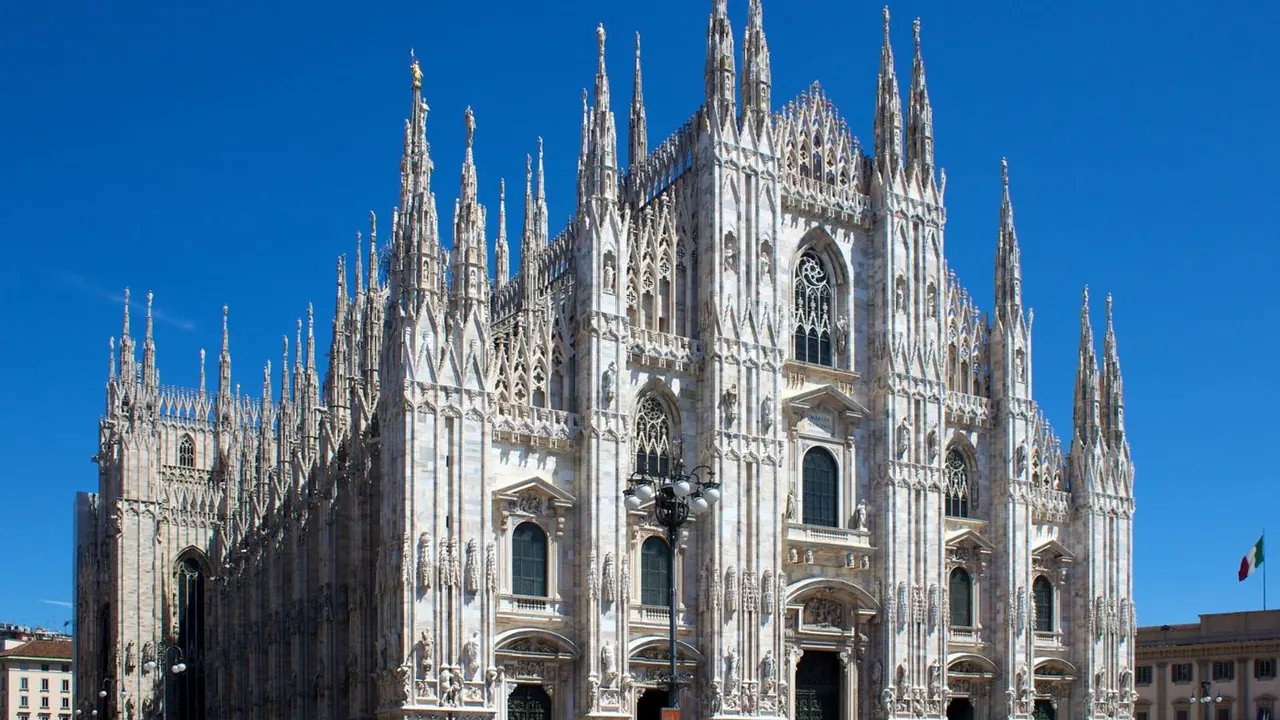
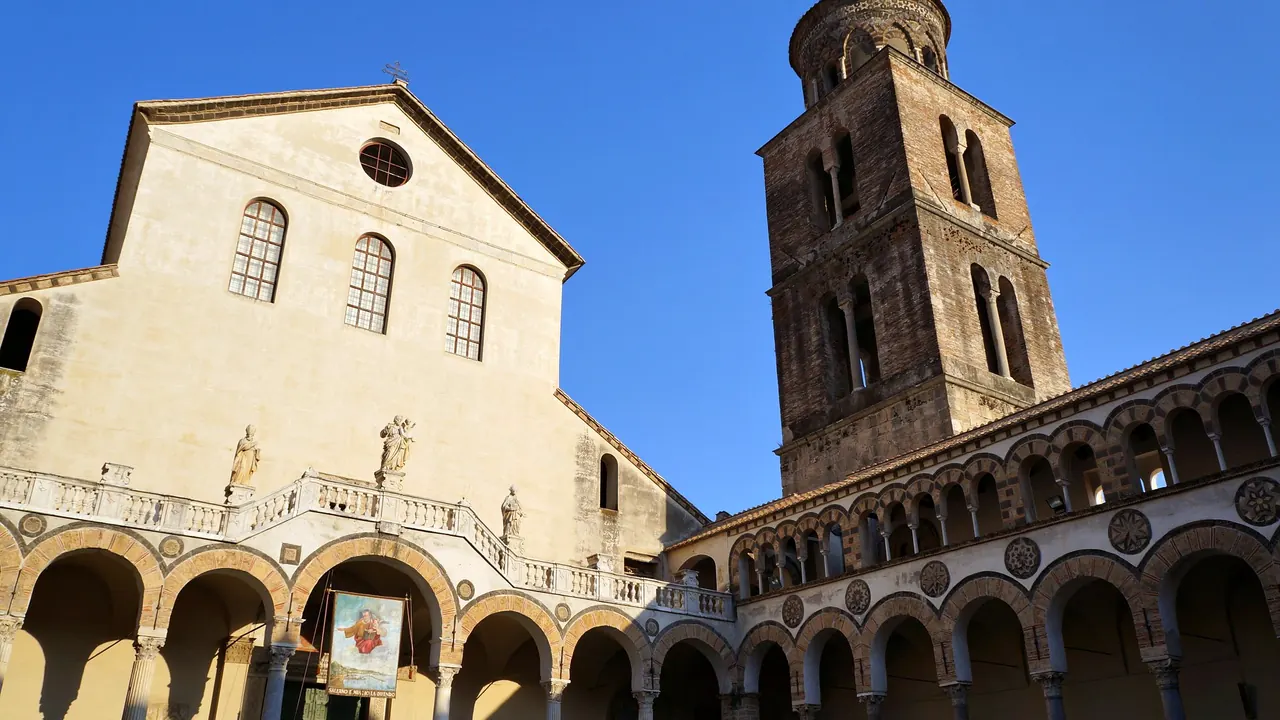
Photos: Milan by Jiuguang Wang, CC BY-SA 3.0, cropped; Salerno by Leandro Neumann Ciuffo, CC BY 2.0, cropped.
Milan or Salerno?
Our verdict in twelve categories, each scored against the same fixed benchmark cities, and the climate month by month, so you can choose for your trip.
Choose Milan for
- shopping
- live music and the arts
- culture and sights
Milan suits a traveller who wants the city itself to be the trip. It has La Scala, the Last Supper and the Brera paintings, and it is one of the great places in the world to shop for fashion and design. Evenings start with aperitivo by the Navigli canals, and the fast trains reach Verona, Turin and the lakes. It costs more and has no sea, so it works best for a city-minded trip in spring or autumn.
Choose Salerno for
- beaches
- prices
- nature and the outdoors
Salerno is the better pick if you want the sea, the Amalfi cliffs and the ancient south, and want them without paying cliff-village prices. The city sights are modest. What Salerno does well is put you a short train or ferry ride from Paestum, Pompeii, Amalfi and the long sandy beaches towards the Cilento, and then give you an honest trattoria dinner on the seafront.
Scoreboard
Twelve categories on one fixed scale from 0 to 100. The shaded stretch is the gap between the two.
Your match
Pick a travel style or drag the sliders, and both match scores follow your weighting.
Wins on shopping and live music and the arts with your weighting.
Wins on beaches and prices with your weighting.
What matters to you?
Category by category
What the scores mean for a trip.
Beaches & swimming
Salerno is a seaside city and Milan is not, and that settles it. Salerno's own grey-sand beaches are fine for a quick dip. The real swimming is south towards Paestum, where long sandy beaches backed by pine woods make a full day out, or west by ferry to the clear, pebbly coves of the Amalfi Coast.
In Milan, swimming means the Idroscalo basin, the city's open-air pools or a train of about an hour to Lake Como or Lake Maggiore. The lakes are lovely, but they are an outing, not part of daily life.
Food & drink
Milan gives you more range. Its own cooking is rich and butter-based, with saffron risotto, ossobuco and cotoletta. On top of that it has serious fine dining and good versions of cooking from all over Italy, and the aperitivo ritual in Brera, Isola and along the Navigli is an evening meal in itself.
Salerno is simpler and closer to the source: fried seafood, pasta with clams, buffalo mozzarella made that morning on the plain towards Paestum, and colatura from Cetara next door. Its everyday trattorias and pastry shops are dependable. If you want variety and ambitious restaurants, though, Milan is the stronger table.
Culture & sights
Milan has the more important sights. These are the white-marble Duomo with its walkable roof, Leonardo's Last Supper, the Brera collection of Italian painting and Michelangelo's Rondanini Pietà in the Castello Sforzesco. Sant'Ambrogio and the Ambrosiana fill another day, although the heritage comes in clusters among modern business districts.
Salerno's interest is medieval and compact: the Norman cathedral with Saint Matthew's relics in its crypt, the Giardino della Minerva linked to Europe's first medical school, and the Arechi Castle above the gulf. It is rewarding for a day or two. The region's great ancient sites lie outside the city.
Nightlife
Milan has a real night out. It starts with aperitivo on the Navigli towpaths and moves on to the dressy clubs around Corso Como or warehouse nights on the city's edge, and Porta Venezia is the centre of a lively gay scene. Expect polish rather than abandon, and a quiet August.
Salerno's evenings are about being outside rather than dancing. Young locals fill Largo Campo and Via dei Mercanti with wine glasses on weekend and summer nights, and families walk the seafront. For clubs, you go along the coast or to Naples.
Nature & outdoors
Salerno has the landscape on its doorstep. The Amalfi cliffs, the lemon terraces, the Path of the Gods and the Valle delle Ferriere start just west of the city, and the Cilento's gorges and headlands lie to the south. Kayaking and boat trips along the coast round out the summer.
Milan sits on the flat, hazy Po plain, where the city's green space is Parco Sempione and the canal towpaths. The good outdoors begins an hour north at the lakes and the Grigne ridges, which is rewarding but always needs a train first.
Day trips
Both cities are superb bases, but for different kinds of outing. From Milan the fast trains reach other great cities: Verona's arena, Turin's palaces, Bologna, Bergamo's walled upper town and Swiss Lugano, with Lake Como's villages and the Borromean Islands in between.
From Salerno the trips go back to antiquity or out along the coast. Paestum's Greek temples and Pompeii are each about half an hour by train, and ferries reach Amalfi and Positano. Naples, Herculaneum and Caserta's royal palace are also easy days out.
Good for families
Neither city is built around children, but they work in different ways. Milan has rainy-day options: the Science and Technology museum with its submarine, the small aquarium by Parco Sempione, and Leolandia and Gardaland within reach for older children.
Salerno has none of that. What it does have is a long, flat, car-free promenade with playgrounds, shallow sandy beaches to the south and the Luci d'Artista lights in winter. Its stepped old town and the winding Amalfi road are harder going with small children.
Getting around
Milan is easier to get around. The flat centre links the Duomo, Brera and the Castello on foot, and five colour-coded metro lines and a dense tram network cover the rest. Direct trains go out to the lakes. The weak points are summer heat underground and the long transfer from Malpensa.
Salerno's central strip, from the station to the seafront and old town, is walkable end to end, and regional trains run straight to Naples, Pompeii and Paestum. Along the Amalfi Coast, though, you depend on ferries, because the coastal buses are slow and crowded in summer.
Shopping & style
Milan is a reason to travel for shopping in its own right. Via Montenapoleone and Via della Spiga hold the great fashion houses, many of them founded in Milan, and La Rinascente and the Galleria add history. Corso Buenos Aires, the Brera boutiques, design showrooms and the Navigli antique markets cover everything else.
Salerno offers Corso Vittorio Emanuele's chain stores at passeggiata time. Its best buys are local ones: Vietri majolica, coastal limoncello and Cetara's colatura.
Affordability
Salerno is much easier on the budget. Its hotels cost far less than those in the cliff villages along the coast, its pizzerias and bakeries charge local prices, and trains and buses are cheap. Costs rise in high summer with ferries, lido sunbeds and entry to the big archaeological sites.
Milan is Italy's most expensive city. Hotels are dear and scarce during trade fairs and fashion weeks, and restaurants in Brera and the centre are expensive. Aperitivo snacks, office-worker lunch menus and a room near a metro stop outside the centre take some of the edge off.
Live music & performing arts
Milan has one of the world's great opera houses in La Scala, whose season opens each December on the feast of Sant'Ambrogio. Gallery seats keep it within reach. Around it are the Piccolo Teatro, a fine symphony orchestra, musicals at the Arcimboldi and big summer concerts at San Siro.
Salerno's Teatro Verdi is a handsome gilded house with a respectable season, but beyond that the programme is small. Its special evening is a summer concert at the Ravello Festival on the cliffs above Amalfi.
Wellness & relaxation
Neither city is a retreat, but Milan has more to offer within its limits. It has a well-known thermal spa complex with outdoor pools and saunas, the restored 1930s Bagni Misteriosi pools in summer and good hotel spas, and the quiet of the lakes is an hour away.
Salerno has no bathing culture of its own, and the nearest thermal springs are at Contursi Terme, an hour inland. What it offers is a slower pace: sunset walks along the palm-lined promenade and long lunches. The traffic of a working port is the price.
When should you go?
Pick your month. The climate figures are measured averages, not a forecast.
Milan in July
Salerno in July
Daytime high, °C
Rainfall in the month, mm
Where the figures come from
Milan has no rain gauge within 25 km of the centre, so its rainfall comes from a gridded climate dataset read at the city rather than from a gauge further away.
Milan's sunshine is measured 41 km from the centre, at Novara / Cameri.
Salerno's temperatures are measured 71 km from the centre, at Grazzanise.
Salerno has no rain gauge within 25 km of the centre, so its rainfall comes from a gridded climate dataset read at the city rather than from a gauge further away.
Temperature and rainfall are climate normals, averaged over the years shown. Milan: 1991-2020 normals, Milano / Linate (8 km from centre). Salerno: 1991-2020 normals, Grazzanise (71.3 km from centre).
Milan has no real dry season. Rain falls all year and is heaviest in autumn. April to June and September are the comfortable months for walking between sights and taking trains to the lakes, but expect regular showers, since May and September are among the wetter months. July and August are the sunniest, but highs near 30°C on the humid plain make the streets hard going by the afternoon. Winter is grey and cold, with January highs around 7°C, and suits opera and museums better than strolling.
Salerno has a longer warm season and much milder winters, with January highs around 13°C. June to August is the dry, very sunny stretch, and the sea reaches about 26°C in August, so that is the time for the beach. In September the sea stays warm but the rain returns, building to around 154mm in November, the wettest month in either city. Late spring, with drier days and less heat, is the best time for hiking the coast and walking round Pompeii.
Which traveller are you?
For a beach and sun trip, Salerno is the clear choice. It sits on a warm sea, has wide sandy beaches with pine woods towards Paestum and has the clear coves of the Amalfi Coast by ferry. From Milan, swimming means a train to a lake.
On a culture and arts trip, Milan offers far more. You can see the Last Supper, the Duomo's rooftop and the Pinacoteca di Brera by day, then spend the evening at La Scala or the Piccolo Teatro. Salerno's medieval cathedral and old town fill a day or two.
On a shopping trip, Milan stands apart. The Quadrilatero della Moda holds the flagships of the great Italian houses, and Brera and Porta Ticinese have independent and vintage shops. Salerno has one pedestrian street of chains, plus Vietri ceramics and limoncello to take home.
Before you go
| Measure | Milan | Salerno |
|---|---|---|
| Official language | Italian | Italian |
| Currency | Euro (EUR) | Euro (EUR) |
| Sockets | CFL230 V, 50 Hz | CFL230 V, 50 Hz |
| Driving side | Right | Right |
| Time zone | UTC+1, UTC+2 in summer | UTC+1, UTC+2 in summer |
| Emergency number | 112 | 112 |
| Elevation | 138 m | 4 m |
| Main airport | Milan Malpensa International Airport (MXP)40 km from centre208 non-stop destinations | Naples International Airport (NAP)46 km from centre131 non-stop destinations |
| Public holidays this year | 13 days | 13 days |
By the numbers
| Measure | Milan | Salerno |
|---|---|---|
| City population | 1,354,196 | 127,186 |
| People per km² | 7,453 | 2,123 |
| Museums within 10 km | 88 | 9 |
| UNESCO World Heritage sites within 50 km | 4 | 5 |
| Swim season, months above 21 °C | - | 5 months |
Where else could you go?
Every comparison below shares a destination with this one, so you can follow Milan or Salerno somewhere new.