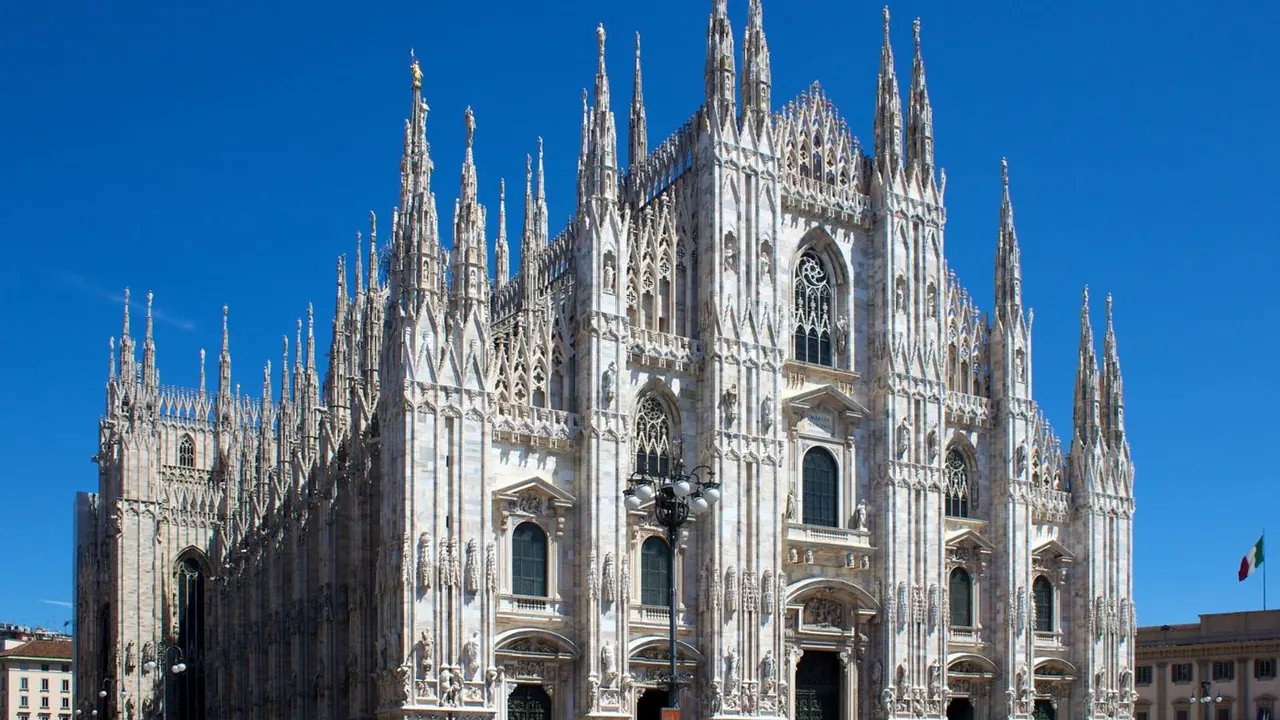
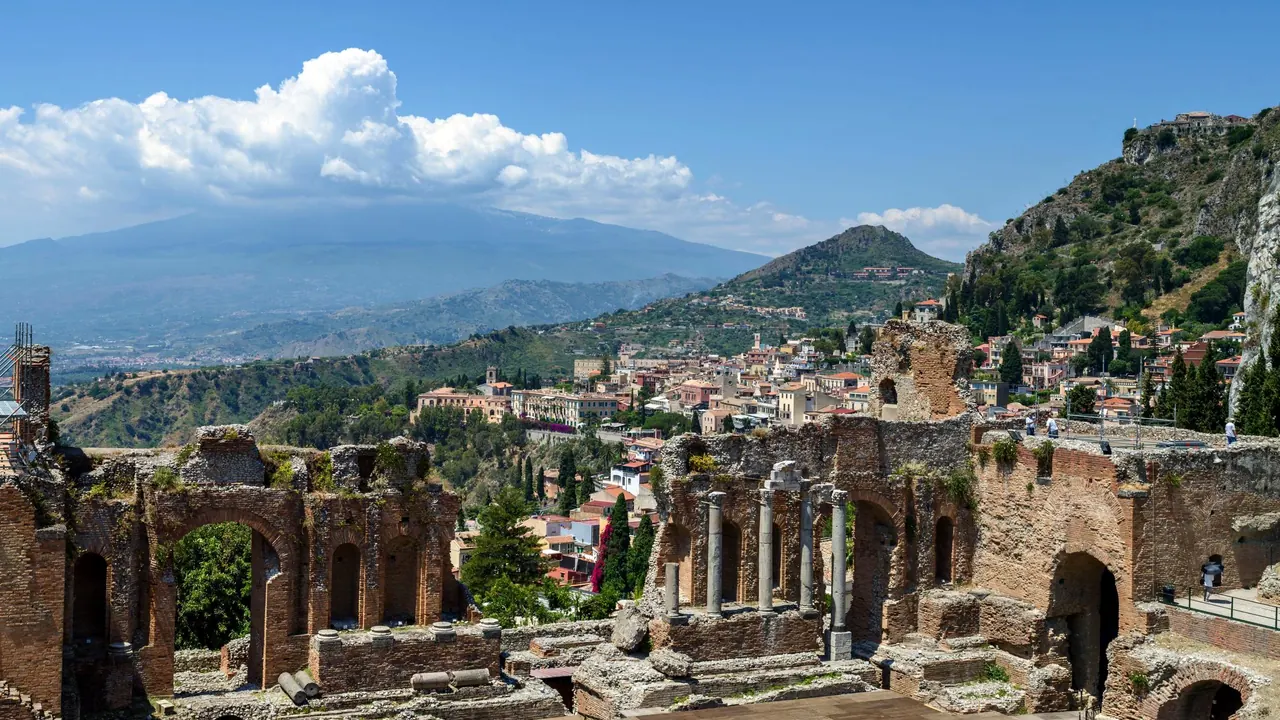
Photos: Milan by Jiuguang Wang, CC BY-SA 3.0, cropped; Taormina by Reinhard Bruckner, Pexels License.
Milan or Taormina?
Our verdict in twelve categories, each scored against the same fixed benchmark cities, and the climate month by month, so you can choose for your trip.
Choose Milan for
- shopping
- live music and the arts
- nightlife
Milan suits a city trip with a lot packed into it. You get Leonardo and the Duomo by day, La Scala or an aperitivo on the Navigli by night, and some of Europe's best shopping in the Quadrilatero della Moda. Its fast rail links also make it the better base if you want to see Verona, Bergamo or Lake Como without changing hotel.
Choose Taormina for
- beaches
- nature and the outdoors
- wellness
Taormina is for a slower vacation by the sea. Days go on the coves below the town and the lava fields of Etna, evenings on a terrace above the Ionian. The Greek theatre gives the town one great sight rather than many. If you want nightlife, museums or easy walking you will find it small and steep, but for sun, swimming and big views it is well ahead.
Scoreboard
Twelve categories on one fixed scale from 0 to 100. The shaded stretch is the gap between the two.
Your match
Pick a travel style or drag the sliders, and both match scores follow your weighting.
Wins on shopping and live music and the arts with your weighting.
Wins on beaches and nature and the outdoors with your weighting.
What matters to you?
Category by category
What the scores mean for a trip.
Beaches & swimming
Taormina wins easily here. Below the town, Isola Bella and Mazzarò have clear water for snorkelling, though the beaches are narrow strips of pebble. Giardini Naxos and Letojanni have longer stretches of sand and shingle a short bus ride away.
Milan has no coast at all. Swimming means the Idroscalo basin, a city pool or a train to the lidos on Lake Como or Lake Maggiore. That makes it an occasional outing rather than something that shapes your day.
Food & drink
Milan eats better and more widely. Beside its own butter-rich classics, such as risotto alla milanese and cotoletta, it has serious fine dining, cooking from every Italian region and the aperitivo culture of the Navigli and Isola.
Taormina's Sicilian cooking tastes more of the south: swordfish, pasta alla Norma, granita with brioche for breakfast, and Etna wines. The weakness is depth, since the Corso leans towards tourist menus and there are fewer good everyday places to choose from.
Culture & sights
Milan has far more to see. There is the Duomo and its rooftop, the Last Supper, the paintings at the Brera and Michelangelo's Rondanini Pietà in the Castello, with Sant'Ambrogio and the Ambrosiana behind them. The heritage comes in clusters among modern streets rather than as one old town.
Taormina has one world-class sight, the Greek theatre with Etna framed behind its stage, and a pretty medieval Corso showing Arab, Norman and Catalan influences. A day of slow walking covers it, and there are no major museums.
Nightlife
Milan offers a real night out. There are canal-side bars on the Navigli, the gay scene of Porta Venezia, dressy clubs around Corso Como and warehouse nights on the city's edges. It is well dressed rather than wild, and quiet in August.
In Taormina an evening means a passeggiata, a terrace wine bar and perhaps a piano bar, with a few beach clubs open late in summer. There is no club scene, and out of season the town goes quiet soon after dinner.
Nature & outdoors
Taormina has the stronger outdoors, and it is close at hand. Etna's craters and lava flows are within an hour, and so are the basalt gorges of the Alcantara. Paths climb to Castelmola and Monte Tauro, and the Isola Bella reserve is good for diving and kayaking.
Milan itself is flat and often hazy, with Parco Sempione and canal towpaths for cycling. Its strength lies an hour to the north, where the lakes and the Grigne ridges offer good hiking and via ferrata for anyone happy to take a train first.
Day trips
Both make good bases, but Milan is outstanding thanks to its high-speed trains. Verona, Turin and Bergamo are about an hour away and Bologna is not much further. Lake Como's villages, the Certosa di Pavia and Lugano across the Swiss border are all easy without a car.
From Taormina the east coast of Sicily offers fine days out, above all Ortigia and the Greek theatre at Syracuse and the black lava-stone baroque of Catania. Distances are longer, though, and the hill villages and Etna wine towns often need a tour or a hire car.
Good for families
Milan is the easier choice with children, though neither city is built around them. The science and technology museum with its submarine, the flat centre, the trams and theme parks such as Leolandia and Gardaland give plenty to fill the days.
Taormina is welcoming but hard going with a pushchair, with steps and steep lanes everywhere and pebbly beaches that are crowded in August. School-age children will love Etna and the snorkelling. Families with toddlers often do better staying down in Giardini Naxos.
Getting around
Milan is far simpler to get around. The centre is flat and walkable, the five metro lines are clear and take contactless cards, old orange trams fill the gaps and trains go direct to the lakes. The main drawback is the long transfer from Malpensa.
Taormina's centre is tiny and mostly pedestrian, but it is built on a slope, so every outing involves stairs. A cable car runs down to Mazzarò and the coastal railway reaches Catania and Messina. Etna and the inland villages, though, realistically need a tour or a car.
Shopping & style
This is Milan's home ground. Via Montenapoleone and Via della Spiga hold the flagships of the Italian fashion houses, and La Rinascente and the Galleria add a long history. Design showrooms, boutiques in Brera and antique markets on the Navigli widen the range.
In Taormina the shopping is one street, Corso Umberto. It is good for Caltagirone majolica, coral, linen and Bronte pistachio cream to take home. Browsing is pleasant but the stock is aimed at visitors, and for serious fashion you go to Catania.
Affordability
Neither is cheap, and they cost about the same overall. What differs is why prices are high and when. Milan is priced like a business city: rooms are hardest to find during trade fairs and fashion weeks, while aperitivo snacks and set lunches for office workers soften the bill.
Taormina is priced like a resort, with grand sea-view hotels setting the tone and costs peaking in summer. Sleeping in Giardini Naxos or Letojanni, or coming in spring or autumn, cuts the cost, much as staying near a metro stop outside the centre does in Milan.
Live music & performing arts
Milan is one of the great opera cities. La Scala's season opens each December, and the city also has the Piccolo Teatro, a fine symphony orchestra and big summer concerts at San Siro. There is something worth booking for most of the year, apart from a quieter summer.
Taormina has one extraordinary stage rather than a full calendar. Concerts, opera and ballet in the Greek theatre, with Etna behind, make a memorable summer night, but the rest of the year offers little beyond chamber concerts and piano bars.
Wellness & relaxation
Both are fairly modest for wellness, in different ways. Milan has public bathing, with a well-known thermal spa complex with outdoor pools and saunas and the 1930s Bagni Misteriosi in summer. The city's pace is not restful, though, and for real calm you head to the lakes.
Taormina has no public bathing tradition, only hotel spas with sea-view pools and volcanic-mud treatments. What makes it restful is the slow pace and the views of Etna, best in May, June and late September when the Corso is quiet.
When should you go?
Pick your month. The climate figures are measured averages, not a forecast.
Milan in July
Taormina in July
Daytime high, °C
Rainfall in the month, mm
Where the figures come from
Milan's sunshine is measured 41 km from the centre, at Novara / Cameri.
Taormina's temperatures are measured 45 km from the centre, at Messina.
Taormina has no rain gauge within 25 km of the centre, so its rainfall comes from a gridded climate dataset read at the city rather than from a gauge further away.
Temperature and rainfall are climate normals, averaged over the years shown. Milan: 1991-2020 (rainfall 1971-2000) normals, Milano / Linate (8 km from centre). Taormina: 1991-2020 normals, Messina (45.1 km from centre).
Milan is at its best from April to June and in September, when it is warm enough to walk the streets in comfort. In July and August it is heavy and humid at around 30°C. Winter is grey and cold, with highs near 7°C, and May and October are the wettest months, with around 119mm in October. There is no sea, so summer swimming means a trip to the lakes.
Taormina has the longer season. Summer is very sunny and almost dry, with only 8mm of rain in July. The sea reaches 26°C by August and is warm enough to swim from June to October. In midsummer the steep lanes are hot work, so May, June and late September are the best balance. Rain sets in from October to December, but winter stays mild enough for sightseeing at a time when Milan is cold.
Which traveller are you?
On a beach and sun trip, Taormina is the clear choice. There is clear water at Isola Bella and Mazzarò, longer sandy stretches at Giardini Naxos and a dry, warm summer, so swimming becomes part of every day. In Milan the nearest proper swim is an hour away on the lakes.
For a shopping trip, Milan is in another league. The Quadrilatero della Moda holds the flagships of the great Italian fashion houses, and beyond it are design showrooms, Corso Buenos Aires and antique markets on the Navigli. Taormina has one pleasant street of ceramics, coral and resort wear.
On a culture and arts trip, Milan offers far more: the Last Supper, the Brera collection, the rooftop of the Duomo and an evening at La Scala. Taormina's Greek theatre is unforgettable, but the town has no major museums and little performance outside summer.
Before you go
| Measure | Milan | Taormina |
|---|---|---|
| Official language | Italian | Italian |
| Currency | Euro (EUR) | Euro (EUR) |
| Sockets | CFL230 V, 50 Hz | CFL230 V, 50 Hz |
| Driving side | Right | Right |
| Time zone | UTC+1, UTC+2 in summer | UTC+1, UTC+2 in summer |
| Emergency number | 112 | 112 |
| Elevation | 138 m | 204 m |
| Main airport | Milan Malpensa International Airport (MXP)40 km from centre208 non-stop destinations | Catania-Fontanarossa Airport (CTA)47 km from centre96 non-stop destinations |
| Public holidays this year | 13 days | 13 days |
By the numbers
| Measure | Milan | Taormina |
|---|---|---|
| City population | 1,354,196 | 10,471 |
| People per km² | 7,453 | 799 |
| Museums within 10 km | 88 | 5 |
| UNESCO World Heritage sites within 50 km | 4 | 2 |
| Swim season, months above 21 °C | - | 5 months |
Where else could you go?
Every comparison below shares a destination with this one, so you can follow Milan or Taormina somewhere new.