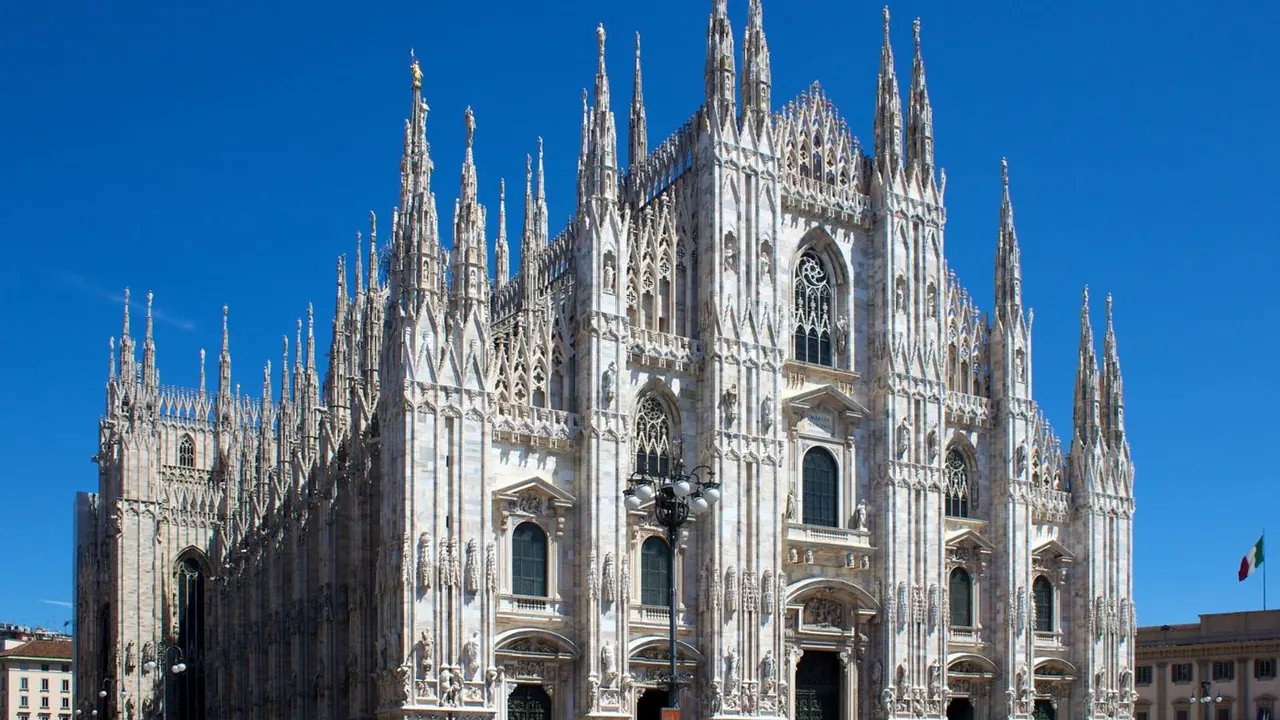
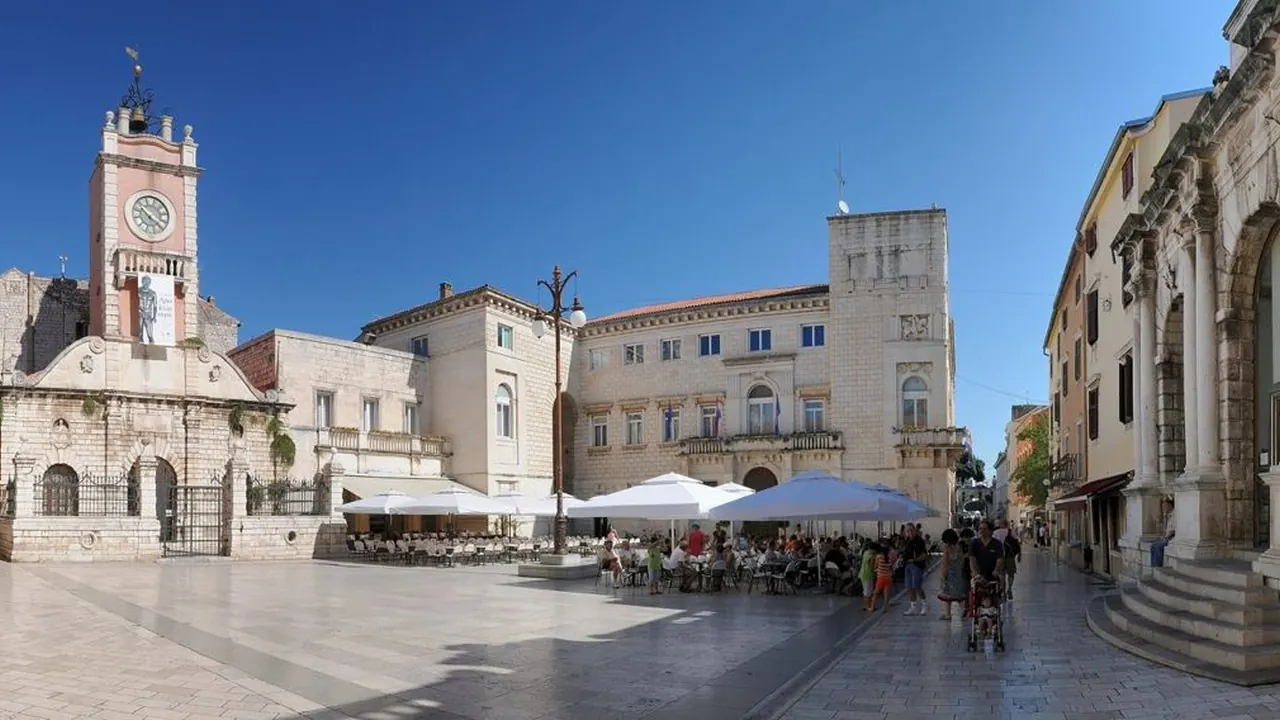
Photos: Milan by Jiuguang Wang, CC BY-SA 3.0, cropped; Zadar by Böhringer Friedrich, CC BY-SA 2.5, cropped.
Milan or Zadar?
Our verdict in twelve categories, each scored against the same fixed benchmark cities, and the climate month by month, so you can choose for your trip.
Choose Milan for
- shopping
- live music and the arts
- food and drink
Milan suits a traveller who wants a city full of things to do: the Last Supper and the Brera paintings by day, aperitivo on the Navigli, a night at La Scala and serious shopping in the Quadrilatero. Its fast trains also make it the better base for seeing more of northern Italy, from Bergamo to Verona, and the lakes are an hour away when you want space and fresh air.
Choose Zadar for
- beaches
- prices
- nature and the outdoors
Choose Zadar if the sea is the point of the trip. You can swim off the promenade, take ferries to island coves, walk Paklenica's gorges and sail to the Kornati, which makes it a summer and outdoors destination, and it costs less than Milan. Its compact Roman and Venetian old town fills a couple of days rather than a week. A typical evening means sunset at the Sea Organ rather than a big night out.
Scoreboard
Twelve categories on one fixed scale from 0 to 100. The shaded stretch is the gap between the two.
Your match
Pick a travel style or drag the sliders, and both match scores follow your weighting.
Wins on shopping and live music and the arts with your weighting.
Wins on beaches and prices with your weighting.
What matters to you?
Category by category
What the scores mean for a trip.
Beaches & swimming
Milan has no sea. A swim means the Idroscalo basin near Linate, a city pool, or a train of about an hour to the pebbly lidos of Como and Maggiore. That works as an occasional summer outing, not as the basis of a beach vacation.
Zadar is far stronger here, because swimming is part of every summer day. Locals swim straight off the stone promenade or at Kolovare and Borik, though these are pebble and concrete rather than sand. For sand, go to Nin or take the ferry to Sakarun on Dugi Otok.
Food & drink
Milan eats better and more widely. Beyond its own butter-rich cooking of saffron risotto, ossobuco and cotoletta, it serves food from every Italian region and has a serious fine-dining tier. Aperitivo in Brera, Isola or along the Navigli shapes the evening.
Zadar's food is Dalmatian, enjoyable but narrow: grilled fish, black risotto, octopus or lamb cooked under the peka, Pag cheese, and Maraschino to finish. Most konobas serve much the same menu, and the market by the walls is where the produce is at its best.
Culture & sights
Milan's sights are fewer than its size suggests, but they are of higher rank: Leonardo's Last Supper, the Duomo with its rooftop among the spires, the Brera picture gallery and Michelangelo's Rondanini Pietà in the Castello Sforzesco. They sit in clusters within a largely modern city.
Zadar packs three thousand years onto one walled peninsula. The open Roman forum, round St Donatus and the UNESCO-listed Venetian walls are a few minutes apart. Its museums of ancient glass and church treasure are good but small, and two days covers everything.
Nightlife
Milan offers a proper night out. Aperitivo runs on into the canal-side bars of the Navigli, Porta Venezia has the gay scene, and clubs range from dressy Corso Como venues to warehouse nights on the edge of the city. It does go quiet in August.
Zadar's evenings are gentler: sunset at the Sea Organ, then café-bars on Kalelarga and terraces on the walls. For serious clubbing you need the hour's trip to Zrće on Pag in high summer, and out of season the town is quiet.
Nature & outdoors
Zadar has the wilder outdoors close by. Paklenica's limestone gorges, for hiking and climbing, are under an hour away, and boats run to the Kornati and Telašćica. Krka's waterfalls and Plitvice make longer days out, and sea kayaking and island cycling are easy to arrange.
Milan sits on the flat, hazy plain, with Parco Sempione and cycling along the canal towpaths in town. The lakes and the Grigne ridges are an hour north by train, which suits walkers who are happy to travel to the start. Zadar has the sea and the mountains side by side.
Day trips
Milan is the better base by a wide margin, because high-speed trains do the work. Bergamo, Lake Como, Verona and Turin are each about an hour away. The Certosa di Pavia, Mantua, Parma and Lugano across the Swiss border are also within reach, all without a car.
Zadar has good outings too: Šibenik's cathedral, royal Nin, the islands by ferry, and Split and Trogir on a longer day. Most of them, though, need a hire car or an organised excursion.
Good for families
Both cities work with children without being built for them, but in different ways. Milan has the indoor attractions: the science and technology museum with its submarine, a small aquarium, and theme parks such as Leolandia and Gardaland within reach.
Zadar has none of these. What it does have is a car-free old town, the glowing tiles of the Greeting to the Sun and Nin's shallow sandy beaches, so days are easy and spent by the sea. Midsummer heat is tiring in both.
Getting around
Milan is easier to get around without a car. Five simple metro lines with contactless gates, a dense tram network and direct trains to the lakes cover almost everything, and the central sights are a short walk apart.
Zadar's peninsula is small and flat, and you can walk across it in a quarter of an hour. Island ferries leave from its edge. Beyond that the local buses are basic, and the national parks and the coast really need a hire car or an excursion.
Shopping & style
This is barely a contest. Milan is a world fashion capital, with the great Italian houses on Via Montenapoleone and Via della Spiga, historic shops under the Galleria's glass roof, design showrooms, and antique markets on the Navigli.
Zadar's Kalelarga has jewellers, fashion chains and souvenir shops. The things worth buying are local food and crafts: Maraschino, Pag cheese, olive oil and Pag lace, best found at the market by the walls.
Affordability
Milan is Italy's most expensive city, and hotels are especially steep during trade fairs and fashion weeks. Aperitivo snacks, lunch menus aimed at office workers and a room near a metro stop outside the centre all help, but it remains the costlier stay.
Zadar is easier on the budget. Private apartments are good value outside July and August, and konobas, bakeries, ferries and buses are fairly priced. Park entry and boat trips are the costs that add up.
Live music & performing arts
Milan has a world-famous opera house at its centre in La Scala, whose season of opera, ballet and concerts is a reason to visit on its own. Around it are the Piccolo Teatro, a symphony orchestra at the Auditorium, jazz rooms and big summer concerts at San Siro.
Zadar's calendar is short and seasonal. The Musical Evenings in St Donatus bring early and chamber music to the ninth-century church, and in July and August there are concerts in churches and squares and some klapa singing. The settings are memorable, but outside summer there is little on.
Wellness & relaxation
Neither city is a spa destination, but Milan offers a little more. Its thermal spa complex with outdoor pools and saunas, the summer pools of the Bagni Misteriosi and quiet lakeside villas an hour away all give real options for a rest day.
Zadar has only hotel spas at Borik and the mud lagoon at Nin. Its calm comes from the pace of the town instead: long café mornings and sunset from the Sea Organ steps, best outside high summer.
When should you go?
Pick your month. The climate figures are measured averages, not a forecast.
Milan in July
Zadar in July
Daytime high, °C
Rainfall in the month, mm
Where the figures come from
Milan has no rain gauge within 25 km of the centre, so its rainfall comes from a gridded climate dataset read at the city rather than from a gauge further away.
Milan's sunshine is measured 41 km from the centre, at Novara / Cameri.
Zadar has no rain gauge within 25 km of the centre, so its rainfall comes from a gridded climate dataset read at the city rather than from a gauge further away.
Temperature and rainfall are climate normals, averaged over the years shown. Milan: 1991-2020 normals, Milano / Linate (8 km from centre). Zadar: 1999-2020 (rainfall 1991-2020) normals, Zadar / Zemunik (9.9 km from centre).
Milan is at its best in late spring and June, when the days are warm and long enough for walking the streets, though May often brings showers. July is the hottest month at about 30°C and has the most sunshine of the year, but the humid heat makes sightseeing hard work. From September the rain sets in, and autumn is the wettest part of the year, peaking at around 128mm in November. Winters are cold and grey, with daytime highs near 7°C.
Zadar's beach season runs from June to September. The sea is warm enough for swimming from June and is warmest in August, at around 25°C. July and August are hot, about 31°C, and much drier than summer in Milan, so walk in the morning or evening. Winters are milder than Milan's, but from September the autumn rain is heavy. Spring and early October are the best times for hiking and for the old town.
Which traveller are you?
On a beach and sun trip, Zadar is the clear choice. You can swim off the stone promenade every day, Nin's shallow sandy beaches are twenty minutes away, and ferries reach quiet island coves. From Milan, a swim means a train to the lakes.
For a shopping trip, Milan is in another league. The Quadrilatero della Moda holds the flagships of the great Italian houses, Brera and Porta Ticinese add boutiques and vintage shops, and design showrooms are a second specialism. Zadar offers Maraschino, Pag cheese and lace, and little more.
On a culture and arts trip, Milan goes deeper. By day there are the Last Supper, the Brera collection and the Duomo roof, and by night opera or ballet at La Scala. Zadar's Roman forum and St Donatus are memorable but take only two days.
Before you go
| Measure | Milan | Zadar |
|---|---|---|
| Official language | Italian | Croatian |
| Currency | Euro (EUR) | Euro (EUR) |
| Sockets | CFL230 V, 50 Hz | CF230 V, 50 Hz |
| Driving side | Right | Right |
| Time zone | UTC+1, UTC+2 in summer | UTC+1, UTC+2 in summer |
| Emergency number | 112 | 112 |
| Elevation | 138 m | 5 m |
| Main airport | Milan Malpensa International Airport (MXP)40 km from centre208 non-stop destinations | Zadar Airport (ZAD)10 km from centre66 non-stop destinations |
| Public holidays this year | 13 days | 14 days |
By the numbers
| Measure | Milan | Zadar |
|---|---|---|
| City population | 1,354,196 | 70,779 |
| People per km² | 7,453 | - |
| Museums within 10 km | 88 | 1 |
| UNESCO World Heritage sites within 50 km | 4 | 2 |
| Swim season, months above 21 °C | - | 4 months |
Where else could you go?
Every comparison below shares a destination with this one, so you can follow Milan or Zadar somewhere new.