Mongolia
Ulaanbaatar
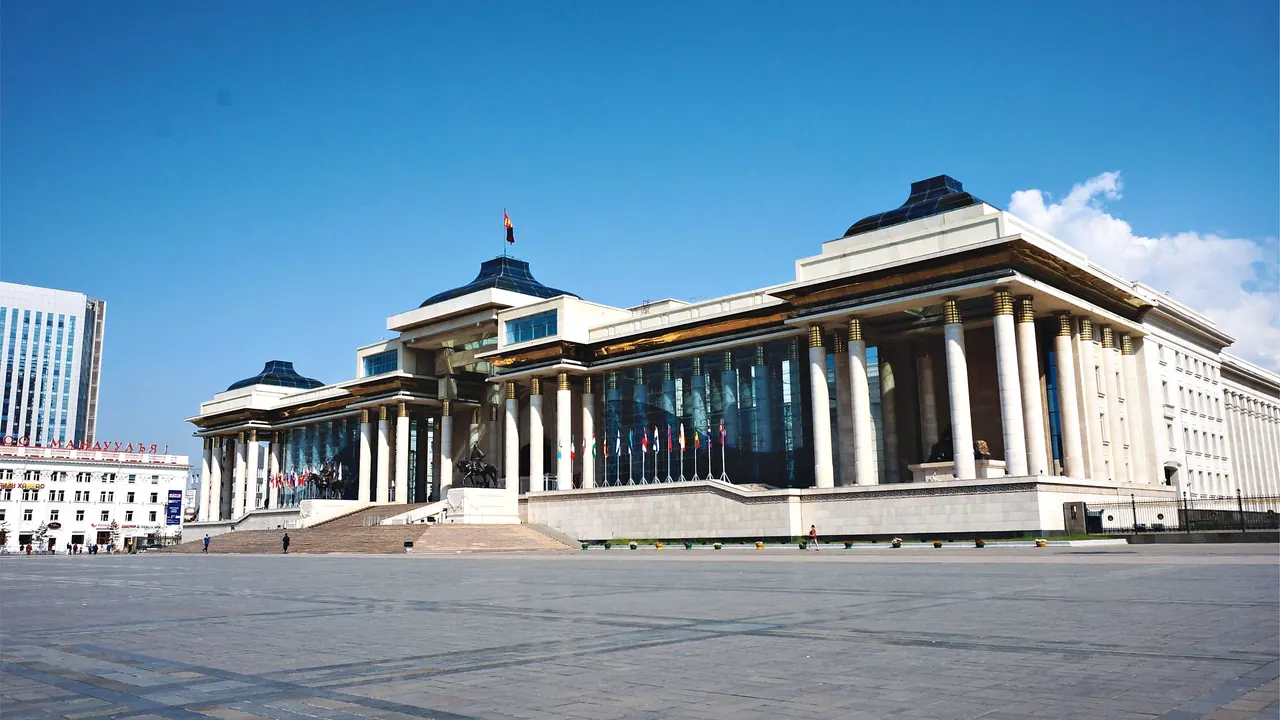
The Government Palace on Sükhbaatar Square
- Nature & outdoors70
- Affordable cities70
- Live music & the arts52
Photo: MBVisign, Pexels License
Match
39
Every category weighted equally
- Beach & sun35
- Culture & arts41
- Food & nightlife39
- Family trip38
- Outdoors40
- Relax & unwind35
- Shopping & style39
- On a budget42
Ulaanbaatar in twelve categories
Our verdict on each, scored 0 to 100 against the same fixed benchmark cities, so a score means the same thing on every page.
Beaches & swimming. Scores 3 out of 100.
Food & drink. Scores 38 out of 100.
Culture & sights. Scores 47 out of 100.
Nightlife. Scores 40 out of 100.
Nature & outdoors. Scores 70 out of 100.
Day trips. Scores 26 out of 100.
Good for families. Scores 30 out of 100.
Getting around. Scores 30 out of 100.
Shopping & style. Scores 40 out of 100.
Affordability. Scores 70 out of 100.
Live music & performing arts. Scores 52 out of 100.
Wellness & relaxation. Scores 18 out of 100.
Ulaanbaatar category by category
Beaches & swimming
3Ulaanbaatar is about as far from the sea as a capital can be, and there is no beach life to speak of. In high summer, local families paddle in the shallow Tuul River and the streams around Terelj, but the water is cold and nobody plans a stay around it. A visitor who wants to swim uses a hotel pool.
Food & drink
38Mongolian cooking is built for a herding life on the steppe: mutton, beef, flour and dairy, cooked simply and served generously. In the canteens and cafés a visitor meets buuz (steamed dumplings), khuushuur (fried meat pasties), tsuivan (stir-fried noodles) and salty milk tea. On a countryside outing you may get khorkhog, meat cooked with hot stones in a sealed pot. It is filling and honest, but rarely subtle, and vegetarians will struggle.
Because it is a capital, the centre has more range than the rest of the country. There are plenty of Korean barbecue and Russian places, decent pizza and steak houses, and a local beer and vodka culture, with airag (fermented mare's milk) in summer. Few people would come here for the food.
Culture & sights
47The city was a moving monastery town for centuries before it settled on the Tuul, and its best sights come from that Buddhist past. Gandan Monastery is a working monastery where monks chant under a towering standing Buddha. Two of the old temple compounds are now museums: the Choijin Lama Temple in the middle of the tower blocks, and the Winter Palace of the Bogd Khan, the last theocratic ruler. The Zanabazar Fine Arts Museum has superb gilded bronzes, and the Chinggis Khaan National Museum tells the story of the steppe empires.
Around that core, the city is mostly Soviet-era blocks and glass towers around the vast Sukhbaatar Square. Zaisan Memorial, on its hill to the south, gives the widest view. Two or three days covers it.
Nightlife
40Ulaanbaatar goes out more than most visitors expect. It is a young city, and the streets around Sukhbaatar Square and Seoul Street fill with pubs, Korean-style karaoke rooms and a handful of sizeable clubs that play mainstream and local hip-hop until late on weekends. Vodka and beer drive the evening, and summer nights are the liveliest. Pub crawls and taxis rather than walking are the norm, and the long, bitterly cold winter keeps people indoors. It is fun for a night or two, but the scene is small and nobody comes for it.
Nature & outdoors
70Leaving the city is the reason most travellers come, and real wilderness starts close by. Bogd Khan Uul, a protected mountain of larch forest and grassy ridges, rises straight from the southern suburbs and can be hiked in a day. About an hour and a half east, Gorkhi-Terelj National Park has granite outcrops, river valleys and ger camps where you can ride Mongolian horses across open country. Hustai National Park, about two hours west, is home to the reintroduced takhi wild horse, along with marmots, gazelle and raptors.
The green season runs from June to early September. Winters fall below -30°C, which limits outdoor plans to snow walks and the occasional dog-sled or ice outing. Getting through the city's traffic eats time before any trip.
Day trips
26There are few towns or heritage sites within easy reach. The giant steel equestrian statue of Chinggis Khaan at Tsonjin Boldog, about an hour east, is the classic outing, and it is often combined with Terelj. The ruined Manzushir Monastery on the far side of Bogd Khan Uul, destroyed in the 1930s purges, makes a quiet half-day. Visits to herding families in their gers are a popular cultural outing. The great historic site, the old imperial capital of Kharkhorin with Erdene Zuu Monastery, is a long drive away and needs an overnight stay.
Good for families
30Children tend to love the countryside side of a trip: sleeping in a ger, riding gentle steppe horses and spotting marmots. Mongolian families are welcoming to young visitors. In the city, the Central Museum of Mongolian Dinosaurs shows real Gobi fossils, and there is a small central amusement park. Otherwise, little is made with children in mind. Crossing roads is stressful, pavements are broken, distances are long, and the winter air is cold and often smoky. Summer, based partly outside the city, works best.
Getting around
30The centre is compact, and Sukhbaatar Square, the main museums and the Choijin Lama Temple are all an easy walk from one another. Gandan Monastery and Zaisan are a short taxi ride away. Beyond that it gets hard. There is no metro or tram, the buses are cheap but crowded and labelled in Cyrillic, and traffic jams are severe on the few main roads running east to west. Pavements are uneven and icy in winter. Taxis and ride-hailing fill the gaps. For anything outside the city, nearly everyone books a driver or a tour, as public transport into the countryside is sparse.
Shopping & style
40Cashmere is the reason to shop here. Mongolia produces much of the world's raw fibre, and the factory shops and outlets sell sweaters, scarves and blankets of good quality. The State Department Store on Peace Avenue, an institution for generations, gathers cashmere, souvenirs and a floor of local crafts. Felt slippers and toys, deel robes, horse-head fiddles, snuff bottles and Buddhist art fill the craft shops. For a rough, sprawling local experience, Narantuul market sells everything from saddles to ger furniture, and pickpockets work its crowds. Fashion and luxury shopping is thin.
Affordability
70Day-to-day costs are low. A plate of dumplings in a local canteen, a bus or taxi ride and entry to the museums and monasteries all cost little. Comfortable central hotels and Western-style restaurants are pricier, closer to what you pay in Southern Europe, and summer is the expensive season. The biggest cost is getting into the countryside: because there is little public transport, most visitors hire a driver, guide and vehicle, which can cost more than the rest of the trip. Ger camps in Terelj range from basic to comfortable.
Live music & performing arts
52The one performance every visitor should catch is a traditional music and dance show. These run most evenings in summer and include khoomei throat singing, the morin khuur horse-head fiddle, long song, masked tsam dance and the country's famous contortionists. The salmon-pink State Academic Theatre of Opera and Ballet on Sukhbaatar Square stages European classics and Mongolian works, and tickets are easy to get. The State Drama Theatre performs in Mongolian. Folk-rock bands that blend throat singing with guitars play the clubs from time to time. The Naadam festival in July adds ceremony and music to the city's calendar.
Wellness & relaxation
18The city is not a place to unwind. Traffic, construction noise and smoky winter air make it tiring, and spa options amount to hotel spas and some Korean-style saunas and massage rooms. The country's hot springs are a long drive away. Peace comes from leaving: a night or two at a ger camp in Terelj, with silence, wide skies and a wood stove, is the restorative part of most trips.
When should you go?
Pick a month to see what it is like. The climate figures are measured averages, not a forecast.
Ulaanbaatar in July
Daytime high, °C
Rainfall in the month, mm
The whole year
Shaded against this city’s own year: the deepest cell is its best month for that figure and the palest its weakest.
Temperature and rainfall are climate normals, averaged over the years shown. Ulaanbaatar: 1991-2020 normals, Ulaan-Baator (2.9 km from centre).
Before you go
| Measure | Ulaanbaatar |
|---|---|
| Official language | Mongolian |
| Currency | Tugrik (MNT) |
| Sockets | CE220 V, 50 Hz |
| Driving side | Right |
| Time zone | UTC+8 |
| Emergency number | 105 |
| Elevation | 1,350 m |
| Main airport | Ulaanbaatar Chinggis Khaan International Airport (UBN)31 km from centre38 non-stop destinations |
| Public holidays this year | 10 days |
By the numbers
| Measure | Ulaanbaatar |
|---|---|
| City population | 1,396,288 |
| People per km² | 297 |
| Museums within 10 km | 19 |
| UNESCO World Heritage sites within 50 km | 0 |
Compare Ulaanbaatar with
Every comparison with a written verdict behind it.