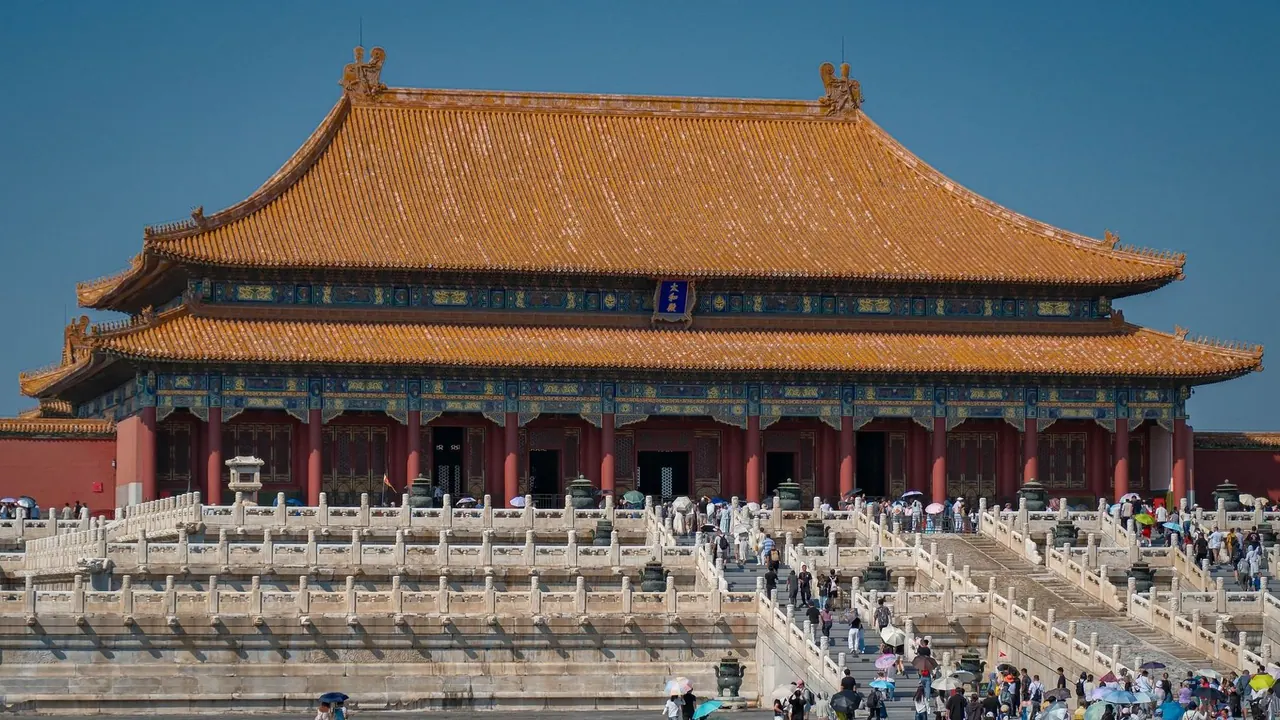
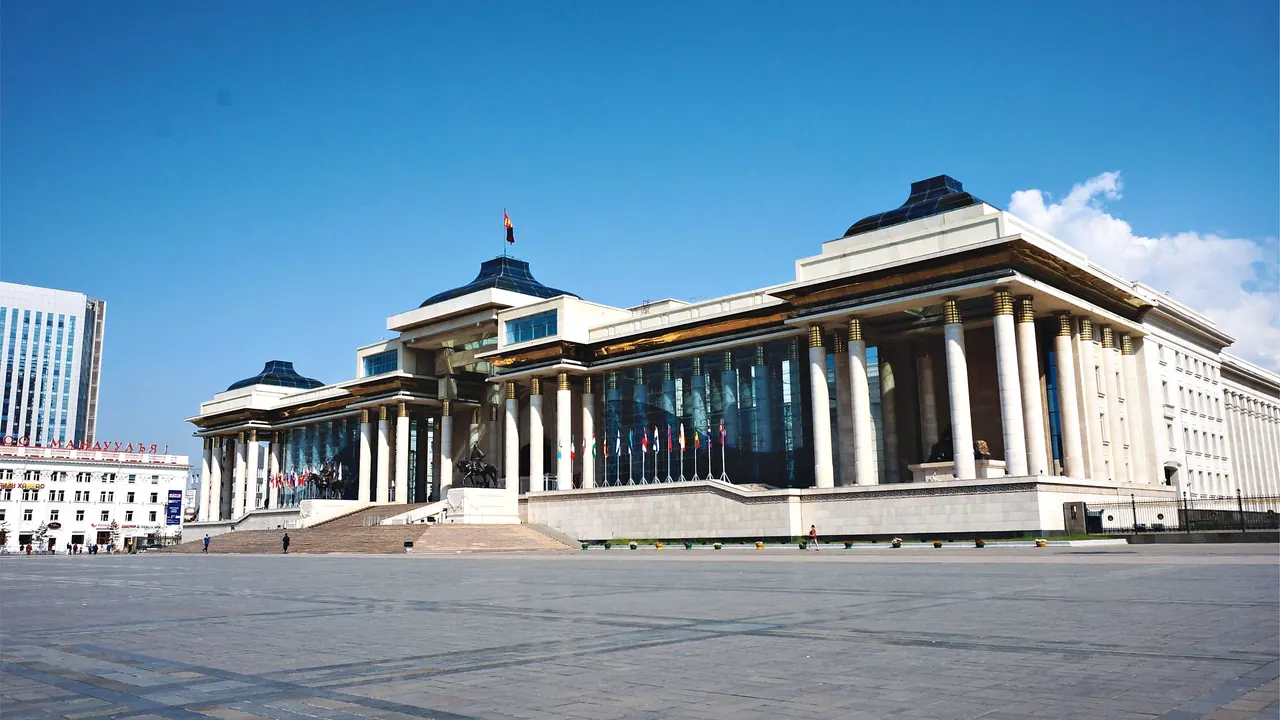
Photos: Beijing by BI ravencrow, Pexels License; Ulaanbaatar by MBVisign, Pexels License.
Beijing or Ulaanbaatar?
Our verdict in twelve categories, each scored against the same fixed benchmark cities, and the climate month by month, so you can choose for your trip.
Choose Beijing for
- day trips
- culture and sights
- food and drink
Beijing is the choice for a trip built around history and eating. Six centuries of imperial building, from the Forbidden City to the Temple of Heaven, sit beside some of the best regional cooking in China, and the Great Wall and Chengde are both within a day's reach. A huge metro, plenty for children and a massage parlour on every corner make it the easier city to travel in, even if its distances wear you down.
Choose Ulaanbaatar for
- nature and the outdoors
- prices
Ulaanbaatar suits travellers who come for open country rather than for the city. Its compact core of monasteries and museums is worth two or three days. Its real strength is how quickly you reach the larch forests of Bogd Khan Uul, the granite valleys of Terelj and the wild horses of Hustai. Go in summer, with a hired driver and a night or two in a ger camp, and expect simple food and little polish.
Scoreboard
Twelve categories on one fixed scale from 0 to 100. The shaded stretch is the gap between the two.
Your match
Pick a travel style or drag the sliders, and both match scores follow your weighting.
Wins on day trips and culture and sights with your weighting.
Wins on nature and the outdoors and prices with your weighting.
What matters to you?
Category by category
What the scores mean for a trip.
Beaches & swimming
Neither city works for a beach trip. From Beijing you can at least reach the Bohai Sea at Beidaihe in about two hours by fast train, though the water there is shallow, grey and crowded. Ulaanbaatar has only cold summer paddling in the Tuul River and the Terelj streams, so in both cities swimming means a hotel pool.
Food & drink
Beijing is a serious food city. You get roast duck carved at the table, hand-pulled noodles, cumin lamb skewers and copper-pot hotpot in winter, and the provincial restaurants serve some of the best Sichuan, Yunnan and Xinjiang cooking in the country.
Ulaanbaatar's food is built for keeping warm on the steppe. Buuz, khuushuur and salty milk tea are filling but plain, and Korean barbecue and Russian places add some variety. Vegetarians will have a hard time.
Culture & sights
Few capitals can match Beijing for sights. The Forbidden City on its imperial axis, the Temple of Heaven, the Summer Palace and the National Museum could fill a week, although each one takes a morning to reach and see.
Ulaanbaatar's culture is narrower and more intimate. Gandan Monastery's chanting monks, the Choijin Lama Temple among the tower blocks and the Zanabazar bronzes are worth seeing, but most of the city is Soviet-era blocks and glass towers.
Nightlife
Beijing offers the bigger and more varied night out, from the cocktail bars and late clubs of Sanlitun to small courtyard and rooftop bars around Gulou. Ulaanbaatar's evenings revolve around pubs, karaoke rooms and a few clubs playing local hip-hop near Sukhbaatar Square and Seoul Street. They are lively on summer weekends but run out after a night or two. In both cities you get between bars by taxi rather than on foot.
Nature & outdoors
Ulaanbaatar comes out ahead because wilderness starts at the city's edge. You can hike Bogd Khan Uul in a day from the southern suburbs, and Terelj and Hustai offer horse rides across open steppe, marmots and the reintroduced takhi.
Beijing's outdoors centre on the Yanshan mountains, where walking the wild Great Wall between watchtowers is superb. The Fragrant Hills, Shidu gorge and winter skiing at Yanqing add more, but smog can hide the hills. Ulaanbaatar's green season is short, running only from June to early September.
Day trips
Beijing is one of the great day-trip bases. You can choose between several sections of the Great Wall, the Ming and Qing tombs, or a fast train to Tianjin's concession waterfront in half an hour or to Chengde's palace and temples in about an hour.
From Ulaanbaatar the choice is small: the steel Chinggis Khaan statue at Tsonjin Boldog, the ruined Manzushir Monastery or a visit to a herding family. Kharkhorin, the old imperial capital, is too far for a day and needs an overnight stay.
Good for families
Beijing gives children far more to do in the city itself. There is the Universal theme park, the pandas and aquarium at the zoo, a hands-on science museum and the toboggan down from Mutianyu. The price is a lot of walking and heavy crowds during Chinese school vacations.
In Ulaanbaatar the fun is mostly outside town: sleeping in a ger, riding gentle horses and spotting marmots. The dinosaur museum's Gobi fossils are the main draw in the city, where broken pavements and hard road crossings make getting around with small children tiring.
Getting around
Beijing's huge metro is signposted in English and reaches most sights and both airports, though changing lines and crossing the ring roads takes time. Ulaanbaatar has no metro or tram. Its centre is easy to walk, but beyond Sukhbaatar Square you rely on taxis or crowded buses labelled in Cyrillic, through heavy traffic. In both cities the big outing usually means hiring a driver, to the Great Wall in one and to the national parks in the other.
Shopping & style
Beijing offers far more choice, from the malls of Guomao and Sanlitun to the Panjiayuan antiques market, the silk market and the brush and paper shops of Liulichang. Ulaanbaatar is a focused stop for cashmere, with factory outlets and the State Department Store on Peace Avenue. It also has felt goods, horse-head fiddles and the sprawling Narantuul market, but very little fashion.
Affordability
Day to day, both are cheap. Dumplings, taxis and entry to the main sights cost little in either city.
The difference is where the money goes. In Beijing it goes on international hotels, the famous duck restaurants and a driver to the Wall. In Ulaanbaatar the driver, guide and vehicle for the countryside can cost more than the rest of the trip, and central hotels cost more in summer.
Live music & performing arts
Beijing has much more on stage. There is Peking opera every night in historic guild halls, acrobatics and kung fu shows that need no Mandarin, and visiting ballet and orchestras at the egg-shaped National Centre for the Performing Arts. Ulaanbaatar has one essential evening: the traditional show of throat singing, horse-head fiddle and contortionists. Beyond that it has opera and ballet with easy tickets at the salmon-pink theatre on Sukhbaatar Square, and the Naadam festival in July.
Wellness & relaxation
Neither city is restful, but Beijing gives tired legs far more help. There are foot and tuina massage parlours everywhere, bathhouses with hot pools and sleeping halls that never close, and the hot springs at Xiaotangshan just north of the city.
Ulaanbaatar has little beyond hotel spas and Korean-style saunas, and the country's hot springs are a long drive away. For most visitors the restful part is a quiet night by a wood stove in a Terelj ger camp.
When should you go?
Pick your month. The climate figures are measured averages, not a forecast.
Beijing in July
Ulaanbaatar in July
Daytime high, °C
Rainfall in the month, mm
Temperature and rainfall are climate normals, averaged over the years shown. Beijing: 1991-2020 normals, Beijing (11.1 km from centre). Ulaanbaatar: 1991-2020 normals, Ulaan-Baator (2.9 km from centre).
Beijing is at its best in spring and autumn. April, May, September and October are warm and mostly dry, which suits long days at the Summer Palace or on the Great Wall, and the Fragrant Hills turn red in autumn. Summer is hot, at around 32°C, and brings most of the year's rain, which peaks at 163mm in July. Winters are dry and bright, with daytime highs close to freezing.
Ulaanbaatar has a much shorter season. June to August is the time to go, with days around 26°C, long sunny spells and green steppe outside the city, although July is also its wettest month. By November daytime highs are below freezing, and January sits near -16°C. That makes winter there far harsher than in Beijing and only for the hardy.
Which traveller are you?
For a culture and arts trip, Beijing is the clear choice. An imperial capital with a stage that runs from Peking opera to visiting orchestras can fill a week or more. Ulaanbaatar's Buddhist heritage and throat singing are worth two or three days.
On an outdoors trip, choose Ulaanbaatar and go in summer. The city is only a base, and most days are spent in open country on foot or on horseback. In Beijing the hills are a break from sightseeing rather than the point of the trip.
For a relaxing and wellness trip, Beijing is the better pick because you can recover without leaving town. After a long day on your feet, a massage or a long soak is close by, even late at night. Ulaanbaatar is tiring, and you have to leave it to find any calm.
Before you go
| Measure | Beijing | Ulaanbaatar |
|---|---|---|
| Official language | Putonghua | Mongolian |
| Currency | Yuan Renminbi (CNY) | Tugrik (MNT) |
| Sockets | ACI220 V, 50 Hz | CE220 V, 50 Hz |
| Driving side | Right | Right |
| Time zone | UTC+8 | UTC+8 |
| Emergency number | Police 110, ambulance 120, fire 119 | 105 |
| Elevation | 43 m | 1,350 m |
| Main airport | Beijing Capital International Airport (PEK)25 km from centre109 non-stop destinations | Ulaanbaatar Chinggis Khaan International Airport (UBN)31 km from centre38 non-stop destinations |
| Public holidays this year | 6 days | 10 days |
By the numbers
| Measure | Beijing | Ulaanbaatar |
|---|---|---|
| City population | 21,893,095 | 1,396,288 |
| People per km² | 1,334 | 297 |
| Museums within 10 km | 83 | 19 |
| UNESCO World Heritage sites within 50 km | 6 | 0 |
Where else could you go?
Every comparison below shares a destination with this one, so you can follow Beijing or Ulaanbaatar somewhere new.
- Xi'anvs Beijing
- Suzhouvs Beijing
- Shanghaivs Beijing
- Hangzhouvs Beijing
- Chongqingvs Beijing
- Chengduvs Beijing