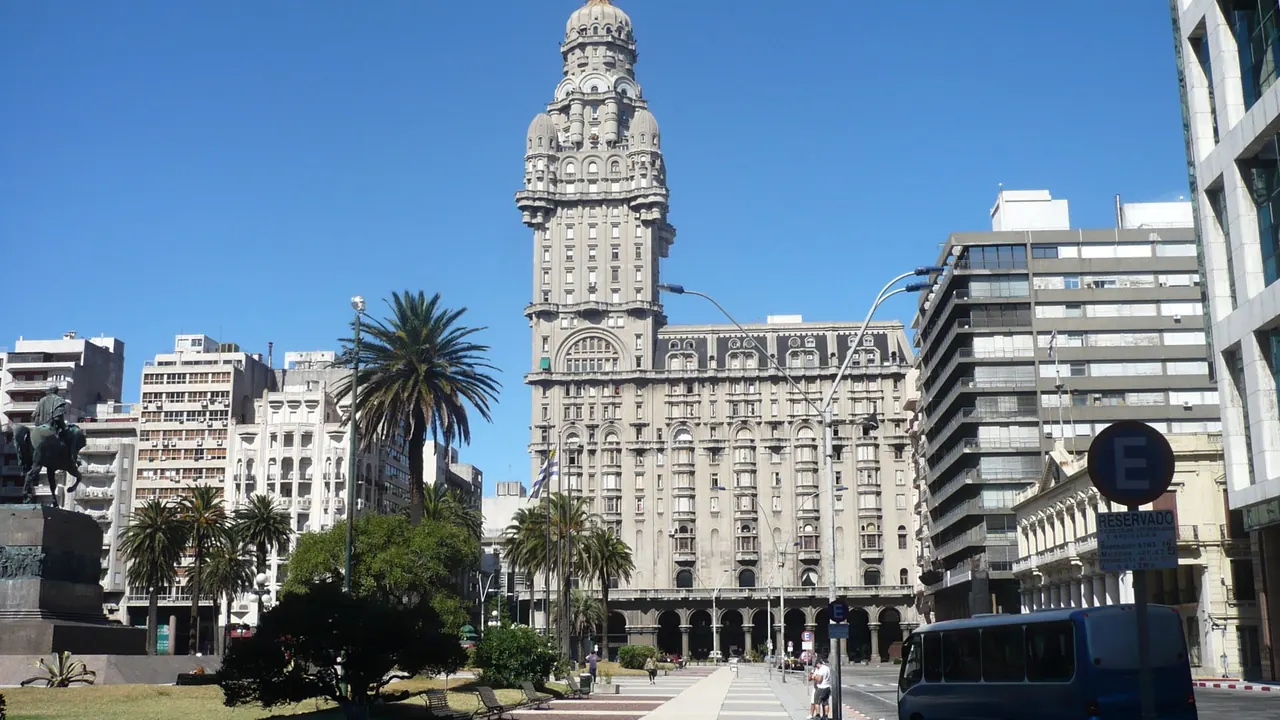
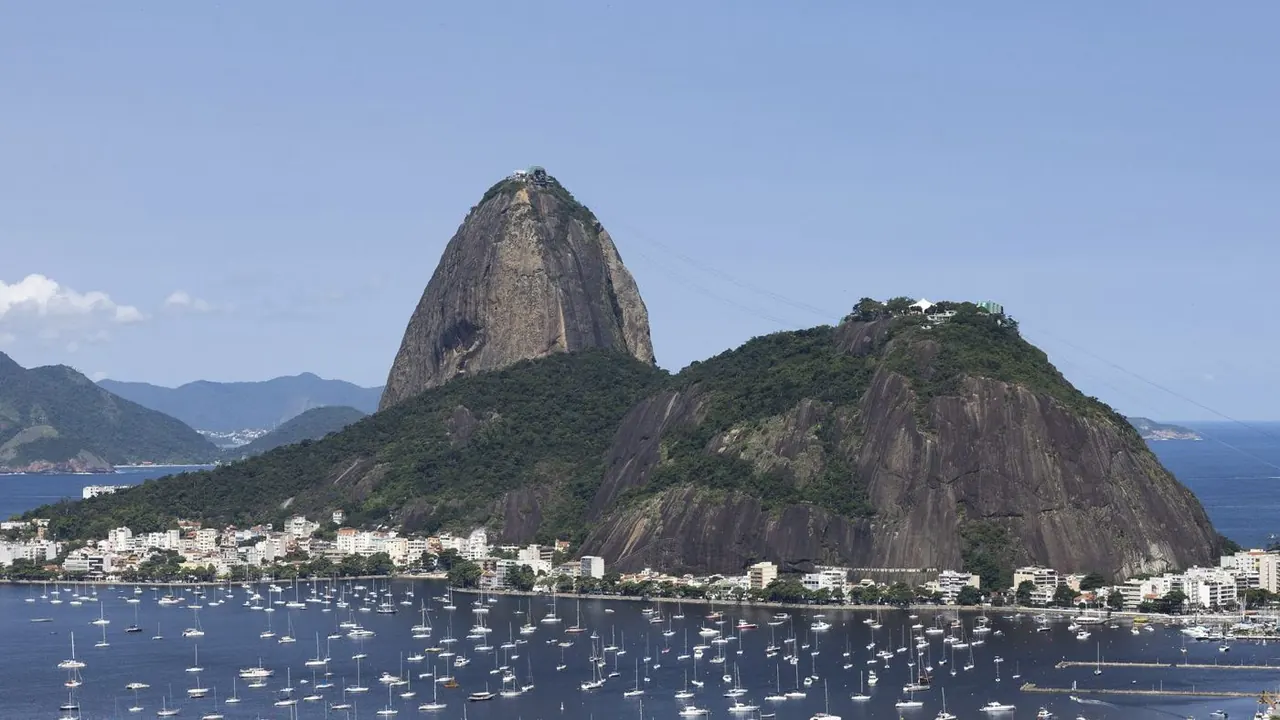
Photos: Montevideo by Andrés Franchi Ugart…, CC BY-SA 3.0, cropped; Rio de Janeiro by Arne Müseler, CC BY-SA 3.0 DE, cropped.
Montevideo or Rio de Janeiro?
Our verdict in twelve categories, each scored against the same fixed benchmark cities, and the climate month by month, so you can choose for your trip.
Choose Montevideo for
- getting around
- wellness
- day trips
Montevideo suits a traveller who wants a calm, low-key city break: two or three days in the Ciudad Vieja, steak and Tannat at the Mercado del Puerto, sunset walks along the Rambla and an outing to colonial Colonia. It is the quieter and flatter of the two, and the easier to find your way around. Its beaches face a silty estuary, though, and day-to-day costs are higher.
Choose Rio de Janeiro for
- nature and the outdoors
- beaches
- nightlife
For the beach, the mountains and long nights out, Rio is the stronger choice. Warm Atlantic beaches, rainforest trails in the middle of the city and street parties that run until dawn put it in a different class for anyone who wants to swim, hike or go out. Everyday spending is lower too. The cost is heat, heavy traffic and a city that takes more energy.
Scoreboard
Twelve categories on one fixed scale from 0 to 100. The shaded stretch is the gap between the two.
Your match
Pick a travel style or drag the sliders, and both match scores follow your weighting.
Wins on getting around and wellness with your weighting.
Wins on nature and the outdoors and beaches with your weighting.
What matters to you?
Category by category
What the scores mean for a trip.
Beaches & swimming
Montevideo's beaches along the Rambla, from Pocitos to the wider sands of Carrasco, are pleasant on a summer afternoon. The water is the silty, barely salty Río de la Plata, though, and swimming is off after heavy rain or during algae blooms. Clear Atlantic water means a longer trip east.
Rio has that ocean on its doorstep. Copacabana, Ipanema and Leblon are a short walk from the hotels, the water stays warm for much of the year, and Prainha and Grumari add surf under forested hills. The open beaches can have strong currents, and the water inside Guanabara Bay is too polluted for swimming.
Food & drink
Both cities are built around grilled meat and neither offers much range beyond its own traditions, but the way you eat differs. Montevideo's meal is a sit-down parrilla, best at the iron hall of the Mercado del Puerto, with local Tannat or medio y medio and the towering chivito as the national snack.
Rio eats casually and all day. You share pastéis and cold chopp in tiled botecos, eat feijoada on Saturdays and stop at juice bars, with coconut water and caipirinhas sold on the sand. Rio has more grazing and street-side eating, while Montevideo has a stronger wine culture.
Culture & sights
Montevideo's sights make a compact walk: Plaza Independencia with the eccentric Palacio Salvo, the Teatro Solís, the colonial and Art Deco streets of the Ciudad Vieja, and the Torres García and Andes museums. They have character, but two or three days covers them.
Rio has more to see, and its sights stay in the memory longer. Christ the Redeemer and Sugarloaf stand over the bay, while downtown has the gilded São Bento monastery and the Real Gabinete Português de Leitura. Santa Teresa's hilltop mansions lead down to the Lapa Arches. Neither city has museums of world rank, but Rio's landmarks are on another level.
Nightlife
Montevideo's nightlife is a small, friendly circuit, while Rio's spills across whole districts. In Montevideo nothing starts until late. There are pubs on the tree-lined streets of Pocitos and Punta Carretas, a student crowd in Cordón and Parque Rodó, and a cluster of bars around Bacacay in the Ciudad Vieja. Weeknights are quiet, and in summer the party crowd heads east to the coast.
Rio goes out in far greater numbers, much of it on the street. Crowds drink under the Lapa Arches, Botafogo's bars put their tables out on the pavement, Leblon has cocktail bars, and baile funk and club nights run until dawn. Before Carnival the blocos take over entire neighbourhoods. In both cities, take a taxi late at night rather than walking along quiet streets.
Nature & outdoors
This is where the two cities differ most. Montevideo's outdoors is the Rambla, more than 20km of shoreline promenade for running and cycling at sunset, plus some leafy parks and the low Cerro across the bay. The land around is flat and farmed.
Rio has rainforest in the middle of the city in Tijuca National Park, with waterfalls, toucans and the trail to Pico da Tijuca. Steep short hikes give views over the beaches, hang-gliders launch from Pedra Bonita, you can surf at Arpoador, and there is multi-day hiking in the Serra dos Órgãos. Start early in the summer heat.
Day trips
The two are fairly level here, and in both cities the best outings sit at the edge of a day. From Montevideo, the cobbled lanes of Colonia del Sacramento and the resort coast of Punta del Este each take two hours or more. The Canelones wineries and Atlántida are easier half-day trips.
Rio's easy outings are imperial Petrópolis in the cool hills and Niterói's cliff-top Niemeyer museum, a ferry ride across the bay. Paraty, Búzios and Ilha Grande are better as overnight stays, and weekend traffic can slow any trip out of the city.
Good for families
Montevideo is the calmer place with children. There is the Rambla for scooters, shallow and still estuary water, the old amusement park and pedal boats at Parque Rodó, and traffic that stays manageable. There is little built specially for children, though.
Rio has more for children to do: the Sugarloaf cable car, the Corcovado train, AquaRio and the BioParque zoo. It asks more of parents, with intense summer heat, heavy traffic, uneven pavements and belongings to watch. Leme, Praia Vermelha and Barra have the gentler water.
Getting around
Montevideo is the simpler city to get around. It has only buses, but the Ciudad Vieja and Avenida 18 de Julio are flat and walkable, taxis are easy to find, and the Rambla links the coastal districts for walkers and cyclists.
Rio's metro runs neatly from the centre to Copacabana, Ipanema and Leblon. Much of what visitors come for lies off that line among the mountains, though, including Santa Teresa, the Tijuca forest and the western beaches. Taxis and slow tunnel traffic become part of most days.
Shopping & style
Rio is the better place to shop, as long as you are buying for the beach. The Ipanema and Leblon boutiques sell Brazilian swimwear, linen and flip-flops, there is a Sunday hippie fair on Praça General Osório, and the Saara streets downtown are full of cheap fabric and Carnival costumes.
Montevideo's highlight is the Sunday Tristán Narvaja market of antiques and old records. Beyond that, it is leather, knitwear and silver-trimmed mate gourds, and imported goods are expensive.
Affordability
Montevideo is priced roughly like Southern Europe, and imported goods cost even more. Cheap buses, free museums, set lunches and a good-value steak dinner bring the bill down.
Rio is lighter on the wallet day to day. Kilo lunches, boteco snacks, the metro and ride-hailing all cost little, and the beaches and forest trails are free. The big expense is a hotel near the sand, especially around Carnival and New Year.
Live music & performing arts
Carnival shapes the music in both cities, but in different forms. Montevideo has murga choral satire on neighbourhood tablados and candombe drumming in Barrio Sur and Palermo. Tango, opera and the philharmonic play at the Teatro Solís and the SODRE, though the programme is modest outside summer.
Rio has more live music on more nights. Samba and choro play in Lapa's old houses, rodas de samba gather in squares, samba schools open their rehearsals before Carnival, and small venues keep bossa nova going. The Theatro Municipal handles the formal side, and theatre is in Portuguese.
Wellness & relaxation
Neither city has a bathing tradition, and in both, treatments mean a hotel spa. Montevideo is the more restful city overall, with mate passed around on the Rambla walls at sunset and cafés where nobody hurries you.
Rio adds yoga on the sand and an easy evening walk around the lagoon. Beyond the beach districts, though, it is loud, hot and demanding, and finding real quiet means going up to Santa Teresa or the mountain towns.
When should you go?
Pick your month. The climate figures are measured averages, not a forecast.
Montevideo in July
Rio de Janeiro in July
Daytime high, °C
Rainfall in the month, mm
Where the figures come from
Rio de Janeiro has no weather station within reach, so its figures come from a gridded climate model rather than a measured record, and read a broad area rather than the city itself.
Temperature and rainfall are climate normals, averaged over the years shown. Montevideo: 1991-2020 normals, Carrasco (19.2 km from centre). Rio de Janeiro: 2001-2020 normals, NASA POWER reanalysis grid, no weather station within 90 km.
Montevideo has proper seasons. December to February is the time for the beach, with January highs of 28°C, estuary water around 23°C and the longest, sunniest days of the year. By June to August highs drop to about 15°C. That is fine for walking the old town but too cool for the beaches, and the days are noticeably greyer. Rain falls fairly evenly all year, so no month is reliably dry.
Rio stays warm all year, and what changes is the rain. November to March is hot, humid and wet, with December the wettest month at over 230mm. This is when the beaches are fullest, but it is hard going for hiking. June to August is the drier, gentler stretch, at around 45mm a month, with water still pleasant for swimming and the best conditions for the trails and sightseeing. So the two cities peak at opposite times: Montevideo in high summer, Rio in its mild winter.
Which traveller are you?
On a beach and sun trip, Rio wins easily. Montevideo's city sands face a brownish, barely salty estuary where swimming is sometimes advised against. Rio has Copacabana and Ipanema beside the hotels, warm ocean for most of the year and surf beaches further west.
For an outdoors trip, choose Rio. Montevideo offers its long waterfront promenade and gentle sierras some way inland. Rio has rainforest trails in Tijuca, climbs up Dois Irmãos and Pedra da Gávea, hang-gliding over São Conrado and multi-day hikes in the Serra dos Órgãos.
On a relaxing and wellness trip, Montevideo is the better fit. Its sights take two or three days at most, so you can take a slow stay without feeling you are missing anything. In Rio you rest on the sand or in a hotel spa, but heat and traffic wear on you in between.
Before you go
| Measure | Montevideo | Rio de Janeiro |
|---|---|---|
| Official language | - | Portuguese |
| Currency | Peso Uruguayo (UYU) | Brazilian Real (BRL) |
| Sockets | CFIL230 V, 50 Hz | CN60 Hz |
| Driving side | Right | Right |
| Time zone | UTC-3 | UTC-3 |
| Emergency number | 911 | Police 190, ambulance 192, fire 193 |
| Elevation | 41 m | 31 m |
| Main airport | Carrasco General Cesáreo L. Berisso International Airport (MVD)17 km from centre15 non-stop destinations | Rio de Janeiro Galeão – Tom Jobim International Airport (GIG)12 km from centre54 non-stop destinations |
| Public holidays this year | 15 days | 14 days |
By the numbers
| Measure | Montevideo | Rio de Janeiro |
|---|---|---|
| City population | 1,302,954 | 6,211,223 |
| People per km² | 1,785 | 4,930 |
| Museums within 10 km | 36 | 69 |
| UNESCO World Heritage sites within 50 km | 1 | 3 |
| Swim season, months above 21 °C | 4 months | 12 months |
Where else could you go?
Every comparison below shares a destination with this one, so you can follow Montevideo or Rio de Janeiro somewhere new.