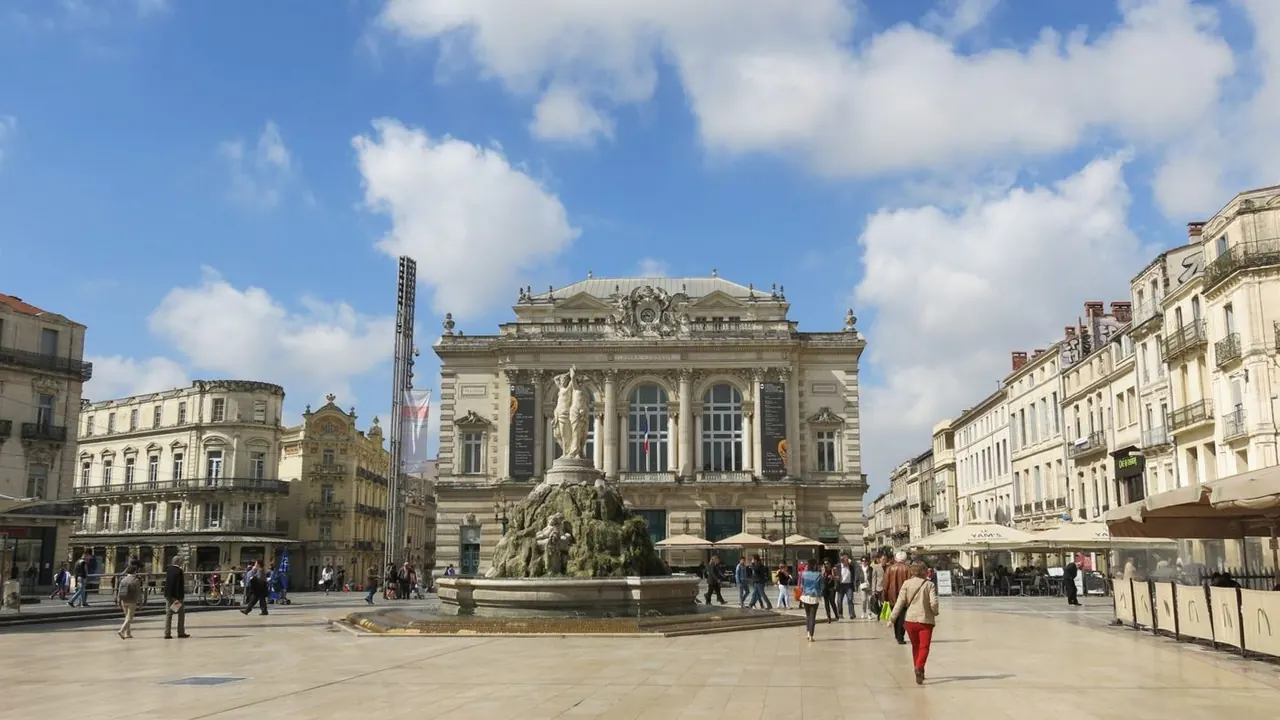
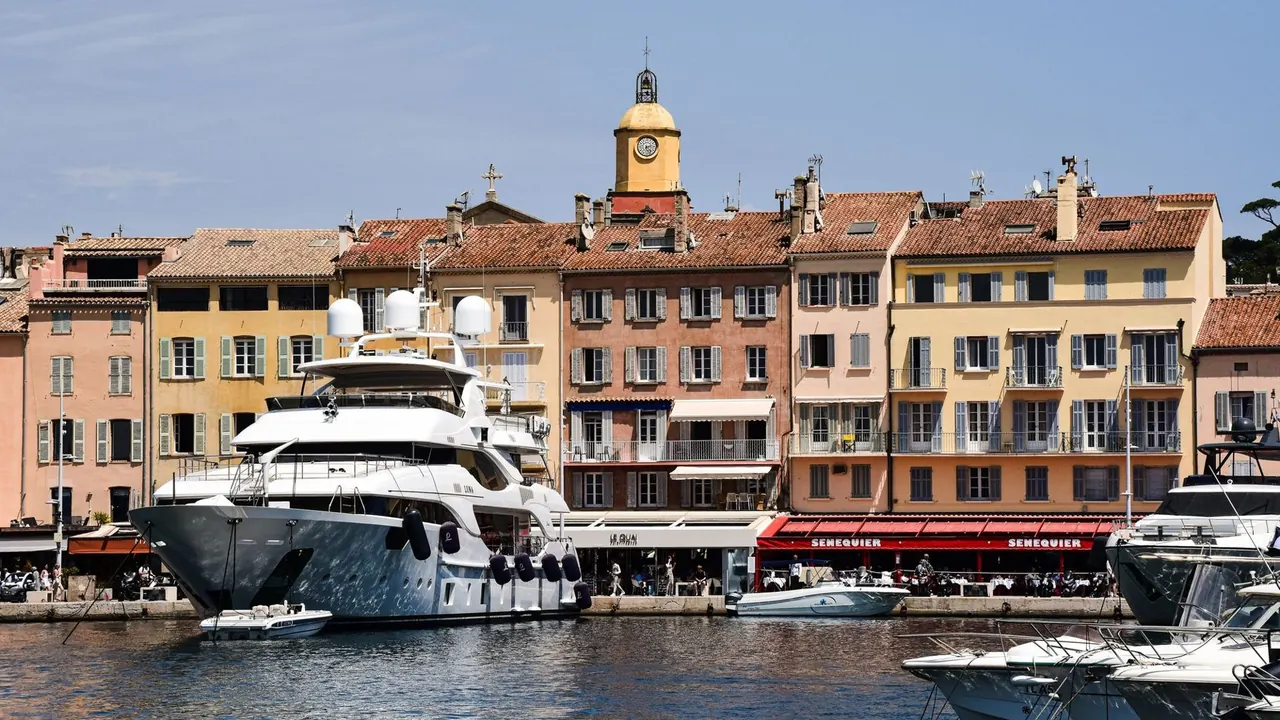
Photos: Montpellier by Peter, CC BY 2.0, cropped; Saint-Tropez by AXP Photography, Pexels License.
Montpellier or Saint-Tropez?
Our verdict in twelve categories, each scored against the same fixed benchmark cities, and the climate month by month, so you can choose for your trip.
Choose Montpellier for
- live music and the arts
- getting around
- prices
Montpellier suits travellers who want a real city with a lot within reach: a car-free medieval centre, the Musée Fabre, a serious opera and dance season, and fast trains to the Roman sites of Nîmes, Arles and Avignon. It is much easier on the budget and simpler to get around without a car. It also works well for families and for a stay of a week or more, with the sand a tram and bus ride away when you want it.
Choose Saint-Tropez for
- beaches
- shopping
- nightlife
Saint-Tropez is the place for a summer of beaches and glamour. The long pale sand at Pampelonne and the clear water of the southern coves beat Montpellier's flat coast, and the boutiques and late harbour nights have a polish Montpellier never tries for. You pay for it in money and in traffic, so it rewards people who come for the sea and the setting rather than sights, often on a shorter stay.
Scoreboard
Twelve categories on one fixed scale from 0 to 100. The shaded stretch is the gap between the two.
Your match
Pick a travel style or drag the sliders, and both match scores follow your weighting.
Wins on live music and the arts and getting around with your weighting.
Wins on beaches and shopping with your weighting.
What matters to you?
Category by category
What the scores mean for a trip.
Beaches & swimming
Saint-Tropez is the better choice for swimming. Pampelonne gives about 5km of pale sand and clear water. Further south, the coves of Escalet, Cap Taillat and Gigaro are quieter, set among rocky headlands and pines. The town itself has only small beaches such as Les Graniers, so you still travel to the best sand.
Montpellier's sea is a tram and bus ride away at Palavas or Carnon, where a long, flat run of sand heads east towards the dunes of l'Espiguette. The water is shallow and gentle, but there are no coves or clear island water, and the nearer beaches fill up on summer evenings.
Food & drink
Montpellier eats better for most visitors. There are Pic Saint-Loup wines, oysters and mussels from the Thau lagoon and spicy tielle from Sète. The covered halls of Castellane and Laissac show off local produce, and cheap student places sit alongside the bistros.
Saint-Tropez cooks Provençal food with polish, from bouillabaisse and aïoli to rosé lunches on the sand, and its best hotel dining rooms are genuinely good. Simple, good-value meals are scarce, though, many quayside tables charge mainly for the view, and much of the town shuts in winter.
Culture & sights
Montpellier has far more to see. There are the car-free lanes and hidden courtyards of the Écusson, the Peyrou terrace with its aqueduct, France's oldest botanical garden, Bofill's neoclassical Antigone and the Musée Fabre, which together fill two or three days.
Saint-Tropez can be seen in a day. The Musée de l'Annonciade, with the pointillist and Fauvist painting of Signac's circle, is a real pleasure, and the citadel and the lanes of La Ponche are pleasant to wander. Still, people come for the setting rather than the heritage.
Nightlife
The two are fairly even for a night out, but the nights are very different. Montpellier runs on its students: casual bars, pubs and wine bars around Place Jean-Jaurès are busy on weeknights and through most of the year, and late-night clubbing means a taxi out towards Lattes.
Saint-Tropez is glamorous and seasonal. Beach-club afternoons at Pampelonne lead to champagne on the harbour and a few famous clubs open until dawn, with dress codes and table service. From October there is little more than a café drink on the Place des Lices.
Nature & outdoors
Both have fine country on the doorstep, but of different kinds. Montpellier looks to the flamingo lagoons and the Camargue, the climb up Pic Saint-Loup and canoeing in the Hérault gorges, with kitesurfing on its windy coast.
Saint-Tropez is all sea and maquis. There is the Sentier du Littoral around the capes, cork-oak forest in the Massif des Maures, sailing and snorkelling in the gulf, and the national-park islands of Port-Cros and Porquerolles.
Day trips
Montpellier is the stronger base by a wide margin. Trains reach Roman Nîmes in about half an hour and Arles, Avignon and Carcassonne within an hour and a half. Sète, Aigues-Mortes and Saint-Guilhem-le-Désert are closer still.
From Saint-Tropez the outings are short and pretty rather than important: the hilltop villages of Ramatuelle and Gassin, Grimaud's castle, Port Grimaud by boat, rosé estates and a full day on Porquerolles. Nearly all depend on roads that jam in July and August.
Good for families
Montpellier is the easier choice with children. It has pedestrian lanes and simple trams, a zoo in wooded parkland, and an aquarium and planetarium side by side at Odysseum. The calm, shallow beaches are there for mornings by the sea.
Saint-Tropez has good sandy beaches for small children at Pampelonne and Gigaro, and little else. Its harbour and beach-club scene is aimed at adults and the costs mount on a long stay, so families often stay across the gulf in Sainte-Maxime instead.
Getting around
Montpellier is far simpler. Its compact centre is walkable, trams run out to Antigone, Port Marianne and Odysseum, and the station has fast trains across the region. You only really need a car for the hills, the gorges and the Camargue.
Saint-Tropez is tiny and easy on foot, but awkward beyond it. There is no railway, the buses are slow and the main beaches are several kilometres out. In high summer the single road along the gulf jams for hours, and the passenger boat from Sainte-Maxime or Port Grimaud is often the best way in.
Shopping & style
Saint-Tropez is the place to shop, which is unusual for a town its size. Big fashion houses open summer shops in the lanes behind the port, alongside resort wear, swimwear and jewellery, and hand-made Tropézienne sandals are still stitched in the old town.
Montpellier is pleasant but ordinary, with small boutiques and bookshops in the Écusson and the Polygone mall by the Comédie. Its best buys are wine, olive oil and honey from the markets, and unlike Saint-Tropez its shops stay open all year.
Affordability
This is where the two differ most. Montpellier is mid-range for Western Europe: student bars, market halls and set lunches keep daily costs reasonable, and only summer rooms and restaurant wine push the bill up.
Saint-Tropez is among the most expensive stays on the Mediterranean. Beach loungers and cocktails cost a lot, and taxis and parking add to the bill. Visitors on a budget tend to sleep inland or across the gulf, picnic from the market and come in for the day. Spring and autumn are cheaper, but never cheap.
Live music & performing arts
Montpellier is in another league. The Opéra Comédie and the Opéra Berlioz share a season of opera, ballet and orchestral concerts, and contemporary dance is a speciality, with the Montpellier Danse festival each summer. Summer also brings the Radio France festival, with many free concerts, and theatre outdoors at the Domaine d'O.
Saint-Tropez offers open-air classical and jazz on the citadel in summer, live sets at beach clubs and the costumed Bravade procession each May. Outside that, opera or theatre means a long drive to Toulon or Nice.
Wellness & relaxation
Neither town has a bathing tradition of its own, but Montpellier has the edge. Real thermal water at Balaruc-les-Bains on the Thau lagoon is half an hour away and open to day visitors, and long lunches in shaded squares slow the pace even in a lively centre.
Saint-Tropez relies on luxury hotel spas aimed at their own guests. It is crowded and loud in high summer, but in May, June and September it settles into pétanque, morning walks and long lunches, and becomes a genuinely calm place to unwind.
When should you go?
Pick your month. The climate figures are measured averages, not a forecast.
Montpellier in July
Saint-Tropez in July
Daytime high, °C
Rainfall in the month, mm
Where the figures come from
Saint-Tropez has no rain gauge within 25 km of the centre, so its rainfall comes from a gridded climate dataset read at the city rather than from a gauge further away.
Saint-Tropez's sunshine is measured 62 km from the centre, at Nice.
Temperature and rainfall are climate normals, averaged over the years shown. Montpellier: 1991-2020 normals, Montpellier (7.8 km from centre). Saint-Tropez: 1999-2020 (sunshine 1991-2020, rainfall 1991-2020) normals, Le Luc (24.2 km from centre).
Both have a long, dry, sunny summer, and July is the driest month in each. Saint-Tropez runs a little hotter and its sea a little warmer, reaching about 24°C in August against 22°C off Montpellier's beaches, so its swimming season starts a touch earlier in June. Both are good for the beach from June to September. Montpellier's stone streets reach about 30°C in July, so walking the old town is most comfortable in May, June and late September.
Autumn rain arrives differently. In Montpellier the wettest spell is September and October. On the Saint-Tropez peninsula the heaviest rain comes later, peaking at about 155mm in November. Winters are mild and much alike, with highs in the low teens. That suits Montpellier's museums and markets far better than Saint-Tropez, where much of the town closes for the winter.
Which traveller are you?
On a beach and sun trip, Saint-Tropez wins clearly. Pampelonne's long sweep of pale sand, the clearer water and the quiet coves towards Cap Taillat make a proper beach vacation, while Montpellier's flat, busy coast is better for a few days at the sea.
For a culture and arts trip, choose Montpellier. The Écusson's courtyards, a fine painting collection, an opera and dance season with an internationally respected festival, and Roman Nîmes by train add up to far more than Saint-Tropez's single museum and citadel.
On a tight budget, Montpellier is the realistic option. Student bars, market halls and lunch menus keep daily costs down, and the tram replaces taxis. Saint-Tropez charges yachting-crowd prices even for a coffee on the port.
Before you go
| Measure | Montpellier | Saint-Tropez |
|---|---|---|
| Official language | French | French |
| Currency | Euro (EUR) | Euro (EUR) |
| Sockets | CE230 V, 50 Hz | CE230 V, 50 Hz |
| Driving side | Right | Right |
| Time zone | UTC+1, UTC+2 in summer | UTC+1, UTC+2 in summer |
| Emergency number | 112 | 112 |
| Elevation | 7 m | 0 m |
| Main airport | Montpellier-Méditerranée Airport (MPL)8 km from centre41 non-stop destinations | Nice-Côte d'Azur Airport (NCE)64 km from centre130 non-stop destinations |
| Public holidays this year | 11 days | 11 days |
By the numbers
| Measure | Montpellier | Saint-Tropez |
|---|---|---|
| City population | 310,240 | 3,582 |
| People per km² | 5,452 | 320 |
| Museums within 10 km | 14 | 4 |
| UNESCO World Heritage sites within 50 km | 2 | 0 |
| Swim season, months above 21 °C | 2 months | 3 months |
Where else could you go?
Every comparison below shares a destination with this one, so you can follow Montpellier or Saint-Tropez somewhere new.