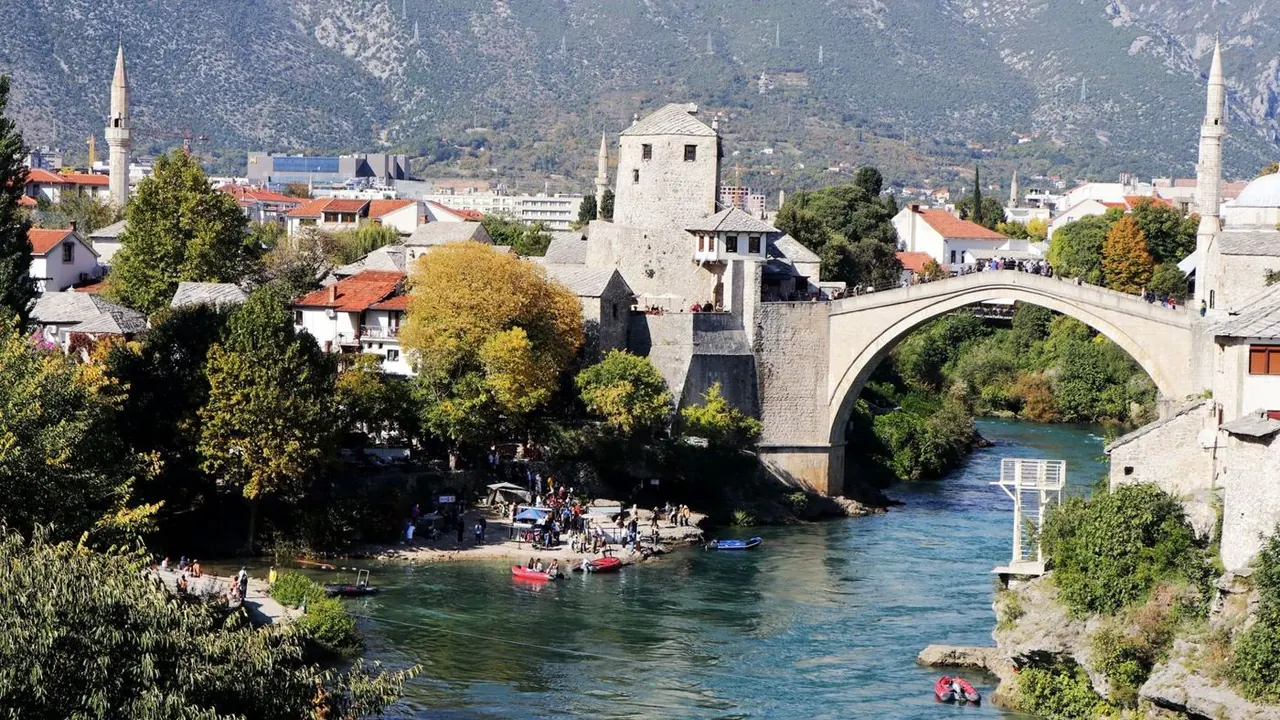
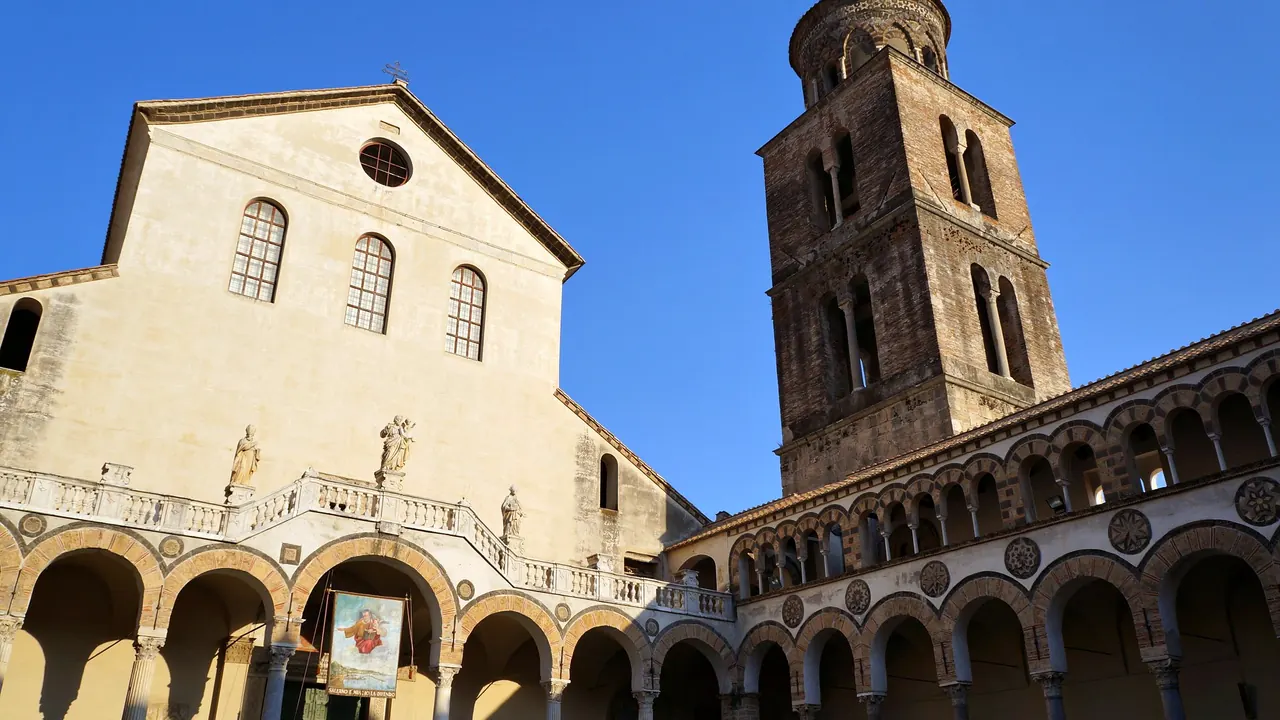
Photos: Mostar by Alan Wang, Pexels License; Salerno by Leandro Neumann Ciuffo, CC BY 2.0, cropped.
Mostar or Salerno?
Our verdict in twelve categories, each scored against the same fixed benchmark cities, and the climate month by month, so you can choose for your trip.
Choose Mostar for
- prices
- culture and sights
Mostar suits a traveller who wants a short, inexpensive stop with a strong sense of place. The Old Bridge, the Ottoman lanes and the scarred façades along the old front line tell a story you will not find on the Italian coast, and the karst valleys around Blagaj and Počitelj are rugged and uncrowded. Evenings are quiet and the food is simple, and you will want a car or a tour to see the surroundings.
Choose Salerno for
- beaches
- day trips
- live music and the arts
Salerno is the better choice for a longer stay by the sea. Its real strength is what lies within a short train or ferry ride: Pompeii, the temples of Paestum, Amalfi, Ravello and Naples. Add sandy beaches, Campanian cooking and a working opera house, and it fills a week easily where Mostar fills two days, though your daily spending will be higher.
Scoreboard
Twelve categories on one fixed scale from 0 to 100. The shaded stretch is the gap between the two.
Your match
Pick a travel style or drag the sliders, and both match scores follow your weighting.
Wins on prices and culture and sights with your weighting.
Wins on beaches and day trips with your weighting.
What matters to you?
Category by category
What the scores mean for a trip.
Beaches & swimming
Mostar is inland, so a swim there means a cold plunge in the Neretva or a trip out to the pool beneath the Kravica waterfalls. The nearest sea, at Neum, is a day's outing by car.
Salerno lives on the coast. Its grey-sand city beaches are fine for a quick dip, and the wide sandy stretches with pine woods towards Paestum, along with the pebbly Amalfi coves a ferry ride away, make full beach days easy all summer.
Food & drink
Mostar cooks hearty Bosnian food with an Ottoman accent: ćevapi in somun bread, flaky burek, stuffed peppers and Herzegovinian wines such as Žilavka and Blatina. The coffee ritual is a pleasure, but once you leave the local cooking, the choice runs out quickly.
Salerno eats better and more widely. The seafood comes straight from the gulf, the buffalo mozzarella is made the same day on the plain to the south, colatura comes from Cetara and the trattorias and pastry shops of the old town are good. For a food-led trip, the Italian city wins comfortably.
Culture & sights
Each city takes a day or two, but Mostar's sights leave the stronger impression. The rebuilt Stari Most, with divers leaping from its crown, sits at the heart of a UNESCO-listed Ottoman quarter. Around it are the minaret of Koski Mehmed Pasha, the carpeted Bišćević house and the war-marked buildings of the old front line.
Salerno's heritage is medieval rather than Ottoman. It has the Norman cathedral holding Saint Matthew's relics, the medicinal Giardino della Minerva tied to Europe's first medical school and the Arechi Castle above the gulf. It is attractive, but its greatest ancient sites lie outside the city.
Nightlife
Neither is a clubbing city, but Salerno has more life after dark. On weekends and summer nights, young locals fill the squares around Largo Campo and Via dei Mercanti with drinks outside, and Naples is close for a bigger night. In Mostar the evening ends with drinks on a terrace facing the lit bridge, and the old town goes quiet once the day visitors leave.
Nature & outdoors
Salerno has the more spectacular landscape. The Amalfi cliffs and lemon terraces, the Path of the Gods and the Valle delle Ferriere, and the wooded hills of the Cilento give it walking and sea kayaking of the highest order.
Mostar's outdoors are wilder and emptier: bare karst, the Prenj and Velež ranges, rafting in the Neretva canyons, the Blidinje plateau and the birdlife of Hutovo Blato. In both places, spring and autumn suit hiking far better than summer.
Day trips
This is where Salerno pulls well ahead. Paestum and Pompeii are each about half an hour by train, ferries run to Amalfi and Positano, and Naples, Herculaneum and Caserta are all easy outings, so a week of excursions needs no car.
Mostar's outings are smaller and more intimate. There is the dervish tekke at Blagaj, the hillside village of Počitelj and the stećci tombstones near Stolac. Sarajevo makes a long day by train, but most of the nearby places need a car or a tour.
Good for families
Salerno is the easier place with children. The flat, car-free promenade has playgrounds and gelato, the shallow sandy beaches to the south suit young swimmers and the Luci d'Artista lights brighten the winter.
In Mostar, the bridge divers and a swim at Kravica will fill a day. After that, the steep, slippery cobbles, the trouble with pushchairs and the fierce valley heat make a longer family stay hard work.
Getting around
Both centres are walkable, but Salerno connects better beyond them. Regional trains run directly to Naples, Pompeii and Paestum, and summer ferries along the coast avoid the crowded roads. Mostar's old town and bridge are a short stroll apart on slick stones. Blagaj, Počitelj and Kravica, though, are hard to reach without a car, a taxi or a tour.
Shopping & style
Mostar's shopping is the Kujundžiluk, where a few coppersmiths still hammer coffee sets by hand among stalls of imported souvenirs. Salerno has more to offer. Corso Vittorio Emanuele is lined with Italian clothing shops, and you can take home painted Vietri majolica, limoncello and Cetara's colatura. Neither is the place for luxury shopping.
Affordability
Mostar is clearly the cheaper stay. Family-run guesthouses, grilled meals and Herzegovinian wine all cost very little, and only the bridge-view terraces charge noticeably more.
Salerno is good value for this coast, far cheaper to sleep in than the cliff villages it serves as a base for. Even so, summer room prices, ferry fares, beach lido fees and the entry tickets to Pompeii and Paestum push daily spending well above Mostar's.
Live music & performing arts
Salerno has the Teatro Verdi, a gilded opera house with a proper season of opera, ballet and concerts. In summer, the Ravello Festival on its cliff-top terraces is within reach for a special evening. Mostar's national theatre and youth theatre perform mostly in local languages, so outside the summer concerts there is little for a visitor to book.
Wellness & relaxation
Neither city has a bathing tradition. Salerno at least has open-air thermal pools at Contursi Terme about an hour inland, and its palm-lined promenade is made for slow sunset walks. Mostar's hammam stands as a monument rather than a working bath, so rest there means long coffees in the shade and the quiet lanes by the river after the day visitors have gone.
When should you go?
Pick your month. The climate figures are measured averages, not a forecast.
Mostar in July
Salerno in July
Daytime high, °C
Rainfall in the month, mm
Where the figures come from
Salerno's temperatures are measured 71 km from the centre, at Grazzanise.
Salerno has no rain gauge within 25 km of the centre, so its rainfall comes from a gridded climate dataset read at the city rather than from a gauge further away.
Temperature and rainfall are climate normals, averaged over the years shown. Mostar: 1991-2020 normals, Mostar (0.9 km from centre). Salerno: 1991-2020 normals, Grazzanise (71.3 km from centre).
Mostar has the harsher climate of the two. Its basin traps heat, so July and August reach 33°C, too hot for comfortable sightseeing on the stone lanes, and winters are cold and very wet, with close to 198mm of rain in December. May, June and late September into early October are the months to go, warm and bright enough for walking, river trips and a swim at Kravica.
Salerno is milder at both ends of the year. Summers are just as sunny but drier, and the sea warms to about 26°C by August, so beach weather runs from June into September. In winter its days stay around 13°C against Mostar's 9°C, and the rain arrives later in autumn, which makes Salerno the easier choice from November to March.
Which traveller are you?
On a beach and sun trip, Salerno is the clear pick. It has its own seafront, long sandy beaches towards Paestum and the clear coves of the Amalfi Coast by ferry. From Mostar, the sea at Neum means a drive of over an hour.
For a trip on a tight budget, Mostar goes further. Guesthouses, ćevapi, local wine and coffee all cost little, and a few streets away from the bridge prices drop again. Salerno is reasonable for Italy, but ferries, lidos and site entry fees add up.
On a food and nightlife trip, Salerno gives far more. You get buffalo mozzarella, fried seafood and colatura by day, then late evenings among the wine bars around Largo Campo. Mostar offers hearty grills and quiet terraces, and little after dark.
Before you go
| Measure | Mostar | Salerno |
|---|---|---|
| Official language | Croatian, Serbian, Bosnian | Italian |
| Currency | Convertible Mark (BAM) | Euro (EUR) |
| Sockets | CF230 V, 50 Hz | CFL230 V, 50 Hz |
| Driving side | Right | Right |
| Time zone | UTC+1, UTC+2 in summer | UTC+1, UTC+2 in summer |
| Emergency number | 112 | 112 |
| Elevation | 60 m | 4 m |
| Main airport | Sarajevo International Airport (SJJ)68 km from centre38 non-stop destinations | Naples International Airport (NAP)46 km from centre131 non-stop destinations |
| Public holidays this year | 8 days | 13 days |
By the numbers
| Measure | Mostar | Salerno |
|---|---|---|
| City population | 105,448 | 127,186 |
| People per km² | 90 | 2,123 |
| Museums within 10 km | 3 | 9 |
| UNESCO World Heritage sites within 50 km | 1 | 5 |
| Swim season, months above 21 °C | - | 5 months |
Where else could you go?
Every comparison below shares a destination with this one, so you can follow Mostar or Salerno somewhere new.