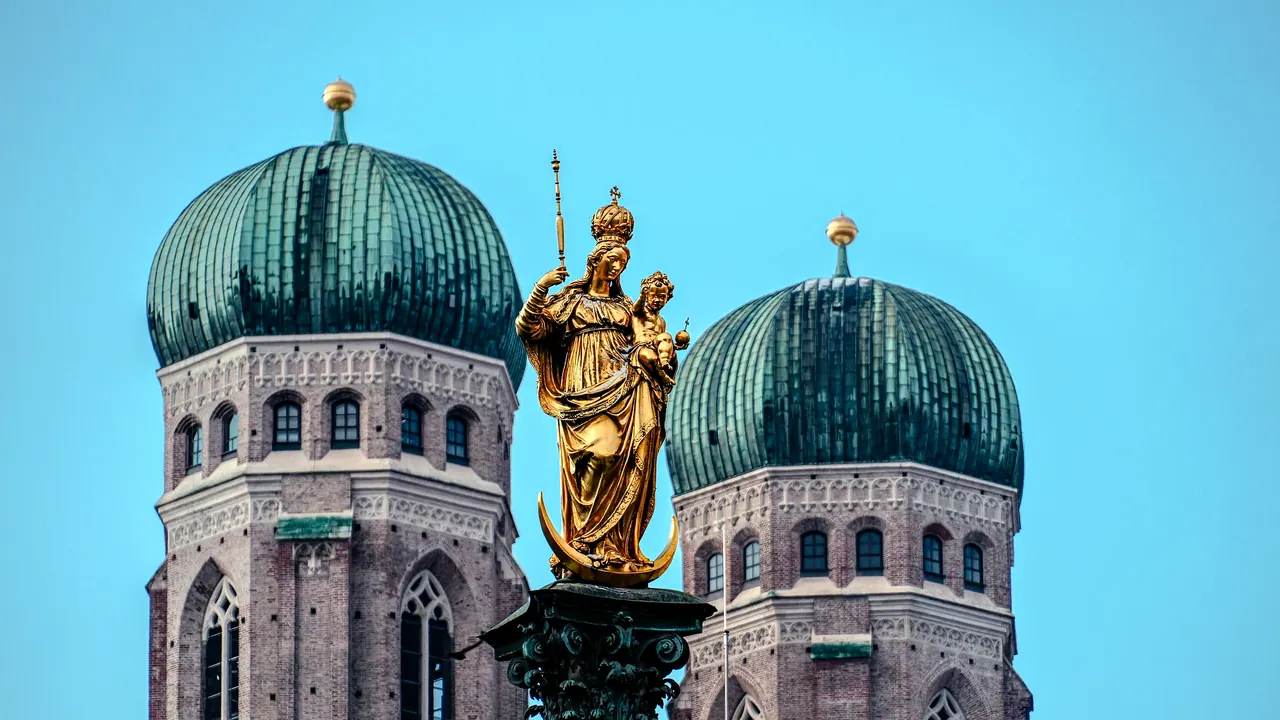
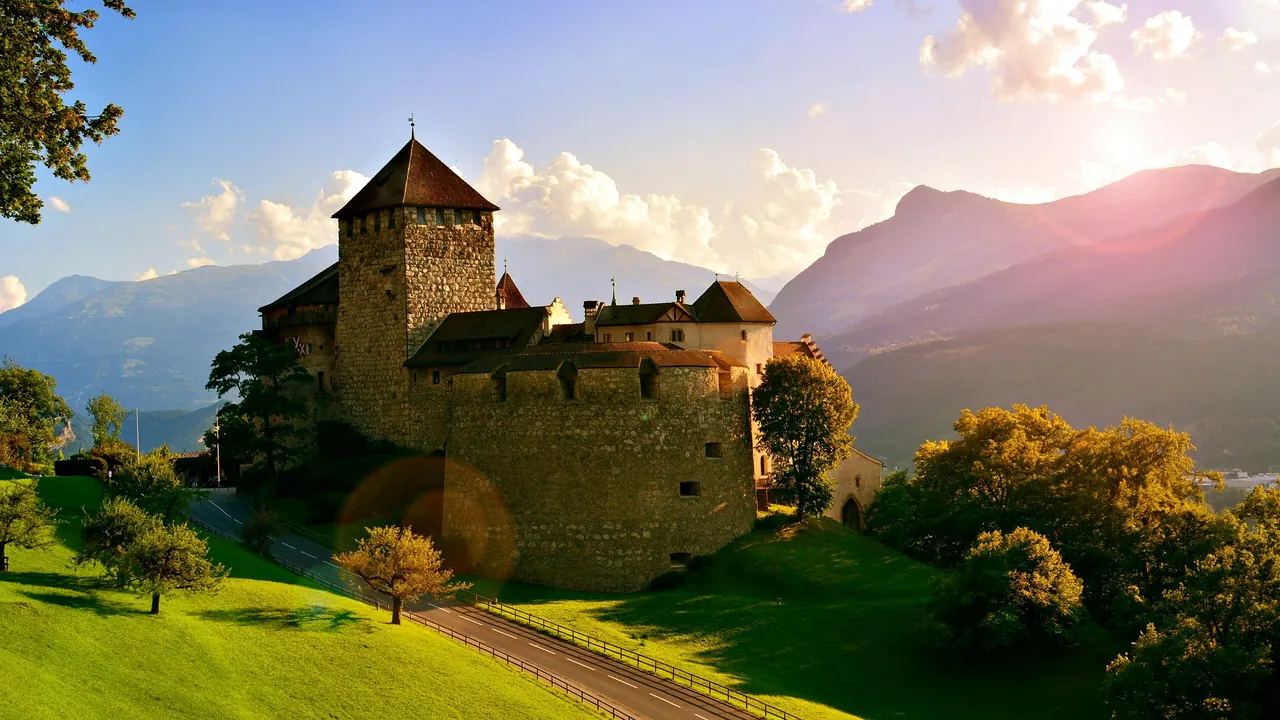
Photos: Munich by 0xd1ma, Pexels License; Vaduz by Justin LaBerge, CC BY 2.0, cropped.
Munich or Vaduz?
Our verdict in twelve categories, each scored against the same fixed benchmark cities, and the climate month by month, so you can choose for your trip.
Choose Munich for
- live music and the arts
- shopping
- culture and sights
Munich is the better choice for almost any trip that is mainly about a city. It has great painting collections and royal palaces, a world-class opera house and three serious orchestras, and beer gardens, markets and shopping streets that fill an evening as well as a day. It also handles children far better, and its trains put Salzburg, Nuremberg and the royal castles within easy reach without a car.
Choose Vaduz for
- nature and the outdoors
Vaduz suits a different traveller: someone who wants mountains first and a town second. The trails start where the streets end, the high Rätikon is half an hour up the road, and evenings are quiet and early. Its two art museums fill a pleasant day, but there is little to do after dark and not much choice of food or shops. It is also expensive, so it works best for walkers and drivers on a short, slow stay.
Scoreboard
Twelve categories on one fixed scale from 0 to 100. The shaded stretch is the gap between the two.
Your match
Pick a travel style or drag the sliders, and both match scores follow your weighting.
Wins on live music and the arts and shopping with your weighting.
Wins on nature and the outdoors with your weighting.
What matters to you?
Category by category
What the scores mean for a trip.
Beaches & swimming
Neither has a coast, but Munich does more for swimmers. People sunbathe on the Isar gravel at the Flaucher, and the Starnberger See and Ammersee are an S-Bahn ride away. Vaduz has open-air pools, and the nearest lakes, the Walensee and Lake Constance, are really reached by car. In both places the water is cool and alpine and the season is short.
Food & drink
Munich gives you much more to eat. It has brewery beer halls and chestnut-shaded gardens, white sausage and pretzels in the morning, the Viktualienmarkt for picnic food and a solid group of starred kitchens. The choice outside Bavarian cooking is narrower, but there is still plenty.
Vaduz comes down to a handful of hotel dining rooms and hill inns serving Käsknöpfle and rösti. The dependable highlight is the wine, Pinot Noir from the slopes below the castle. There is no market and no street food, and the kitchens close early.
Culture & sights
Munich has collections of European standing, while Vaduz has a short but good list. In Munich the Kunstareal in Maxvorstadt puts old masters, Greek and Roman sculpture and the Blue Rider painters within a few streets of each other. The Residenz, Nymphenburg and the Deutsches Museum could fill several more days.
Vaduz takes one easy day. Its strength is modern art, in the matching black and white cubes of the Kunstmuseum and the Hilti Art Foundation, and the National Museum and the stamp museum are nearby. The castle above the town is in every view, but visitors cannot go inside.
Nightlife
Munich is no party capital, but it has real choices. You can stay in the beer hall, move to the bars and gay bars of Glockenbach, or go on to a techno club that runs until morning at weekends. During Oktoberfest the whole city is a party. Vaduz has a few wine bars and hotel lounges on the Städtle, and local people who want a proper night out drive to Feldkirch or Zurich.
Nature & outdoors
Both are fine bases for the Alps, and the real difference is how far away the mountains are. Munich sits on a flat plain, so the peaks make a day out. The foothills and Tegernsee are about an hour away by train, and Garmisch and the Zugspitze are a longer journey. The Five Lakes region out towards Starnberg is a separate outing for sailing, cycling and gentle walks, while in the city itself you have the English Garden with its Eisbach surfers and green cycle paths along the Isar.
Vaduz has the mountains right on its doorstep. You can walk out of your hotel and be among vines and beech woods within minutes, and Malbun and the high Rätikon ridges are only half an hour up the road. Skiing at Malbun is small-scale but close by, whereas from Munich the slopes always mean a train ride first.
Day trips
Munich has the longer and easier list of day trips. Augsburg, Nuremberg, Regensburg, Salzburg and Neuschwanstein can all be reached by regional or fast trains. Vaduz is well placed between three countries, for Feldkirch, St Gallen's abbey library, Appenzell and Lake Constance. But reaching them by public transport often means changing at Buchs or Sargans, so a car helps a great deal.
Good for families
Munich is ready for children in a way Vaduz is not. It has the Hellabrunn zoo along the Isar, the hands-on rooms of the Deutsches Museum, an aquarium, and beer gardens with their own playgrounds.
Vaduz is just as safe and calm, but nothing there is aimed at children. Days revolve around the open-air pools, gentle walks above Triesenberg and the beginner slopes at Malbun, which suits older children who like to hike better than small ones.
Getting around
Both centres are flat and easy on foot, but beyond that Munich is far easier. Its U-Bahn, S-Bahn and tram network reaches the palaces, the airport and the lakes on one system. Vaduz has a tidy bus network to every village and up to Malbun, but no railway station of its own, so many visitors end up hiring a car.
Shopping & style
Munich covers every level of shopping. Maximilianstrasse has the luxury houses and the Neuhauser Strasse axis has the department stores. Specialist tailors make Tracht, and there are independent boutiques in Glockenbach. In Vaduz there is a short run of watch, jewellery and stamp shops on the Städtle, and a bottle of local wine is the best thing to take home.
Affordability
Neither is cheap, but Munich is easier on a budget. Its hotels are expensive, yet beer-hall meals are fair value, a picnic in a beer garden costs little, and several museums cost almost nothing on Sundays. Vaduz follows Swiss prices for everything and has few hotels to choose from. Staying across the border in Austria is the usual way to save.
Live music & performing arts
Munich is one of Europe's great music cities. The Bavarian State Opera plays at the National Theatre, there is chamber opera in the rococo Cuvilliés Theatre, and concerts by three leading orchestras fill the Herkulessaal and the Prinzregententheater. Liechtenstein offers a modest programme at the theatre in neighbouring Schaan, a short orchestral season and a summer festival in Vaduz. You will usually find something on, but it is not a reason to go.
Wellness & relaxation
Munich has a bathing culture of its own. There is the Art Nouveau Müller'sches Volksbad, there are public saunas run in the German manner, and the huge thermal complex at Erding is close by. Vaduz has only a few hotel spas. Its calm comes from quiet streets and mountain air, and the best soak is across the Rhine in the old thermal baths at Bad Ragaz.
When should you go?
Pick your month. The climate figures are measured averages, not a forecast.
Munich in July
Vaduz in July
Daytime high, °C
Rainfall in the month, mm
Where the figures come from
Vaduz's temperatures are measured 51 km from the centre, at Sigmarszell-Zeisertsweiler.
Vaduz has no rain gauge within 25 km of the centre, so its rainfall comes from a gridded climate dataset read at the destination rather than from a gauge further away.
Temperature and rainfall are climate normals, averaged over the years shown. Munich: 1991-2020 normals, München (1.9 km from centre). Vaduz: 1991-2020 normals, Sigmarszell-Zeisertsweiler (51.3 km from centre).
The two places share almost the same calendar of warmth. Both climb from about 4°C in January to the mid-twenties in July and August, with Munich a degree or so warmer. The lakes are only worth a swim from June to early September. Summer is also the wettest time in both, often with afternoon thunderstorms, as rainfall peaks at around 121mm in Munich and 126mm in Vaduz. Munich gets a little more sunshine in every month of the year.
For walking the streets, May, June and September are the most comfortable months in Munich. In Vaduz, June to early October is the best time to be up on the high trails. Autumn and winter set them apart more clearly. Vaduz stays wetter and darker from October to December, while Munich dries out a little, though both are grey and cold in midwinter.
Which traveller are you?
For a culture and arts trip, Munich is the clear choice. You get the Alte Pinakothek and the rest of the Kunstareal, the Residenz and Nymphenburg, and evenings at the Bavarian State Opera. Vaduz has two fine modern art museums and then not much else.
On a food and nightlife trip, Munich is the only sensible pick. It has beer halls, the Viktualienmarkt and cocktail bars around Gärtnerplatz, plus late clubs at weekends. Vaduz has a few inns, its own vineyard wine and very little open after dinner.
For an outdoors trip, both are excellent, but the choice depends on how you like to travel. In Vaduz you can walk out of town straight onto mountain trails, and the Rätikon is close. Munich trades that for train access to the Zugspitze, Tegernsee and the lakes, with a big city to come back to.
Before you go
| Measure | Munich | Vaduz |
|---|---|---|
| Official language | German | German |
| Currency | Euro (EUR) | Swiss Franc (CHF) |
| Sockets | CF230 V, 50 Hz | CJ230 V, 50 Hz |
| Driving side | Right | Right |
| Time zone | UTC+1, UTC+2 in summer | UTC+1, UTC+2 in summer |
| Emergency number | 112 | 112 |
| Elevation | 519 m | 455 m |
| Main airport | Munich Airport (MUC)29 km from centre220 non-stop destinations | Zürich Airport (ZRH)81 km from centre226 non-stop destinations |
| Public holidays this year | 12 days | 21 days |
By the numbers
| Measure | Munich | Vaduz |
|---|---|---|
| Population | 1,505,036 | 5,668 |
| People per km² | 4,844 | 328 |
| Museums within 10 km | 75 | 7 |
| UNESCO World Heritage sites within 50 km | 1 | 3 |
Where else could you go?
Every comparison below shares a destination with this one, so you can follow Munich or Vaduz somewhere new.