Myanmar
Bagan
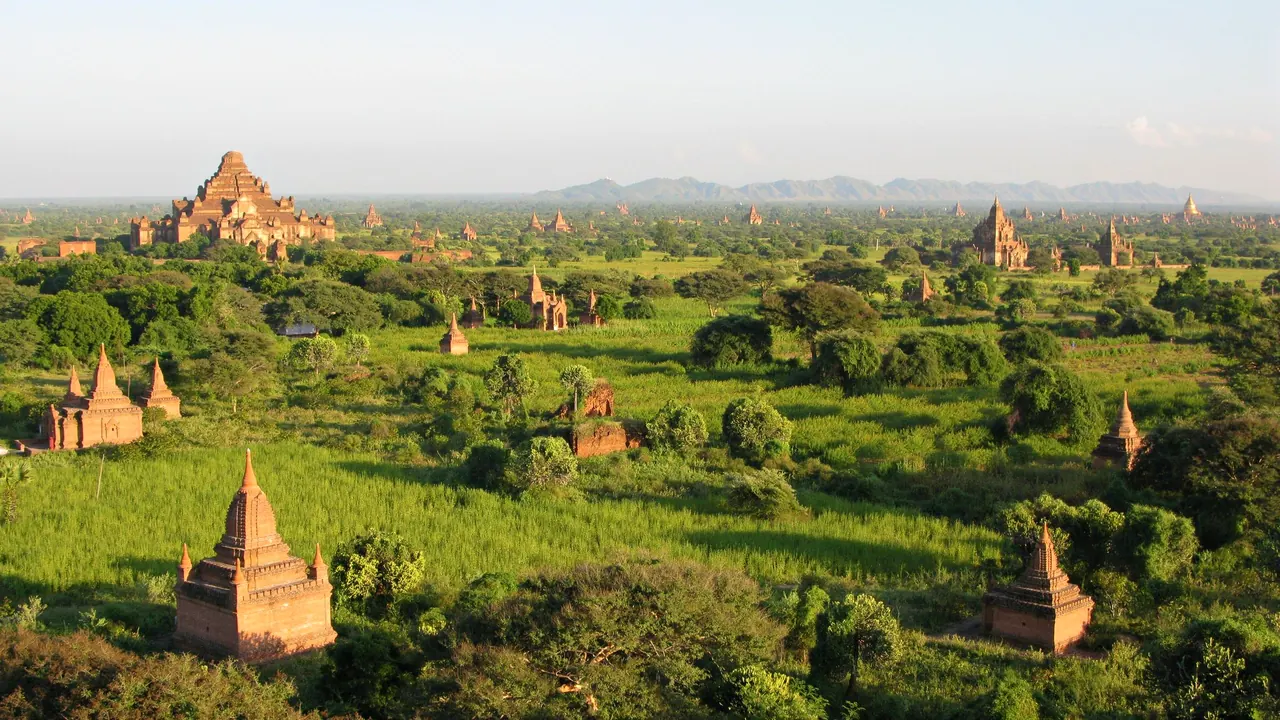
Temples across the Bagan plain
- Culture & sights88
- Affordable cities85
- Nature & outdoors34
Photo: Vyacheslav Argenberg, CC BY 4.0, cropped
Match
33
Every category weighted equally
- Beach & sun30
- Culture & arts38
- Food & nightlife29
- Family trip35
- Outdoors35
- Relax & unwind32
- Shopping & style32
- On a budget39
Bagan in twelve categories
Our verdict on each, scored 0 to 100 against the same fixed benchmark cities, so a score means the same thing on every page.
Beaches & swimming. Scores 3 out of 100.
Food & drink. Scores 26 out of 100.
Culture & sights. Scores 88 out of 100.
Nightlife. Scores 4 out of 100.
Nature & outdoors. Scores 34 out of 100.
Day trips. Scores 32 out of 100.
Good for families. Scores 20 out of 100.
Getting around. Scores 22 out of 100.
Shopping & style. Scores 33 out of 100.
Affordability. Scores 85 out of 100.
Live music & performing arts. Scores 14 out of 100.
Wellness & relaxation. Scores 33 out of 100.
Bagan category by category
Beaches & swimming
3Bagan has no beaches. It sits on the plains of central Myanmar, far from the coast, and the broad, silty Irrawaddy that runs past it is for boat trips and sunsets, not swimming. On a hot afternoon the only place to get into the water is a hotel pool, so pick a place to stay with one if that matters to you.
Food & drink
26Eating in Bagan is simple and local, spread across Nyaung U, Old Bagan's edges and New Bagan rather than gathered into any real dining district. The best meals are Burmese curry spreads, where one meat or fish curry comes with a crowd of small side dishes, soups and fresh leaves, along with tea-leaf salad and bowls of mohinga for breakfast. Tea shops serving sweet milky tea and fried snacks are the local social hub.
Around the town you also find toddy palm sugar and palm wine, tamarind sweets and peanut snacks from the farms of the dry zone. Beyond that the choice is small: many restaurants cook the same set of Burmese, Chinese and pasta dishes for tourists, and there is no fine-dining tier. Visitors come for the temples, not to eat.
Culture & sights
88Bagan is one of the great sights of Asia. Between the 11th and 13th centuries the kings of the Pagan empire built thousands of temples, stupas and monasteries on a bend of the Irrawaddy, and more than two thousand still stand across a plain of roughly 100 square kilometres. The headline monuments are the gilded Shwezigon Pagoda, the white Ananda Temple with its four standing Buddhas, the massive brick bulk of Dhammayangyi and the tall Thatbyinnyu, but much of the pleasure lies in the smaller brick shrines along dirt tracks, many with faded murals inside.
The site is a UNESCO World Heritage Site, and the Archaeological Museum and the reconstructed palace give context. The earthquake of 2016 damaged many structures, and some carry heavy-handed restoration. Climbing on temples is largely restricted, so dawn and dusk views come from mounds and a few permitted terraces. What Bagan lacks is variety: this is temple heritage, almost all of one era, rather than a city of museums.
Nightlife
4There is no nightlife to speak of. Days start before dawn for the sunrise over the temples, and evenings end with dinner and a cold beer in one of the restaurants on Nyaung U's main restaurant strip or at a hotel bar. By ten the town is dark and quiet.
Nature & outdoors
34The landscape around Bagan is a dry, flat plain of scrub, palms and peanut fields beside the wide Irrawaddy. Its beauty comes from the temples scattered across it, best seen from a hot-air balloon at dawn in the dry season or from a sunset boat on the river. Cycling or riding an e-bike along the sandy tracks between monuments is the main outdoor activity.
For real terrain, Mount Popa, an extinct volcano about an hour and a half away, offers forested slopes and walking, with monkeys around the shrine. There is little else in the way of hiking, and from March to May the heat, often above 40°C, makes midday outdoors punishing. November to February is the comfortable season.
Day trips
32The classic outing is to Mount Popa, about an hour and a half by road, where the monastery of Taung Kalat perches on a volcanic plug and is reached by several hundred barefoot steps past shrines to the nats, the spirits of Burmese folk religion. It is a striking place, though crowded with pilgrims and monkeys.
Salay, about an hour south, has a fine teak monastery with carved woodwork, a few old temples and faded colonial-era buildings, and makes a quiet half day. Across the river, Pakokku is a busy market town known for its thanaka and tobacco, with river villages along the way. Beyond these the list runs out: Mandalay and the other old royal capitals are too far for a day.
Good for families
20Bagan suits older children with an interest in history and adventure better than young ones. Horse-cart rides, cycling between temples and a balloon flight can delight them, and Burmese people are warm towards children. But there is nothing made for kids, the sights are one brick temple after another, distances across the dusty plain are long and the heat is fierce for much of the year. Medical facilities are basic, so families need to plan carefully, and a hotel with a pool makes the afternoons manageable.
Getting around
22Bagan is spread across a large plain, with Nyaung U, Old Bagan and New Bagan several kilometres apart and the temples scattered between them, so walking only works inside a cluster of monuments. There is no public transport a visitor would use. Most people hire an electric scooter, which is easy and the classic way to explore, though the sandy tracks can be tricky. Bicycles work in the cool season, and horse carts and drivers with taxis cover the rest, often by the day.
Shopping & style
33Bagan is the centre of Burmese lacquerware, and the workshops in Myinkaba and New Bagan are worth a visit to watch bowls and boxes built up in layers of bamboo, horsehair and lacquer before buying. Sand paintings copied from temple murals are sold at many monuments, often with persistent sellers. Nyaung U market is the place for longyi cloth, thanaka wood and everyday goods. Beyond crafts and souvenirs there is no shopping of any kind.
Affordability
85Bagan is a cheap place to travel. Simple guesthouses, Burmese curry meals, tea-shop breakfasts and e-bike hire all cost very little by international standards, and a day of temple hopping needs almost no spending beyond transport. The main costs are the archaeological zone fee charged to foreigners, the better hotels in Old Bagan and the dawn balloon flights, which are an expensive treat. Staying in Nyaung U keeps things lowest.
Live music & performing arts
14Live performance in Bagan means Burmese marionette shows and traditional dance staged at dinner restaurants for visitors, which are charming in a small way. If your visit coincides with a pagoda festival, such as the long-established one at Ananda Temple, you may catch an all-night zat pwe of music, dance and comedy. There is no theatre or concert life beyond that.
Wellness & relaxation
33Bagan has no bathing tradition, but it is a calm place. After the early start for sunrise, the hot middle of the day is for resting, and the riverside resorts in Old Bagan and New Bagan have pools, gardens and spas offering Burmese massage and thanaka treatments. Simpler massage places in Nyaung U are cheap and relaxed. Evenings watching the light fade over the plain set the pace, though heat, dust and touts at the busiest temples break the calm.
When should you go?
Pick a month to see what it is like. The climate figures are measured averages, not a forecast.
Bagan in July
Daytime high, °C
Rainfall in the month, mm
The whole year
Shaded against this city’s own year: the deepest cell is its best month for that figure and the palest its weakest.
Where the figures come from
Bagan has no weather station within reach, so its figures come from a gridded climate model rather than a measured record, and read a broad area rather than the city itself.
Temperature and rainfall are climate normals, averaged over the years shown. Bagan: 2001-2020 normals, NASA POWER reanalysis grid, no weather station within 90 km.
Before you go
| Measure | Bagan |
|---|---|
| Official language | Burmese |
| Currency | Kyat (MMK) |
| Sockets | CFG230 V, 50 Hz |
| Driving side | Right |
| Time zone | UTC+6:30 |
| Emergency number | Police 199, ambulance 192, fire 191 |
| Elevation | 75 m |
| Main airport | Bagan Airport (NYU)7 km from centre |
By the numbers
| Measure | Bagan |
|---|---|
| City population | 22,000 |
| Museums within 10 km | 1 |
| UNESCO World Heritage sites within 50 km | 1 |
Compare Bagan with
Every comparison with a written verdict behind it.