Nicaragua
Granada, Nicaragua
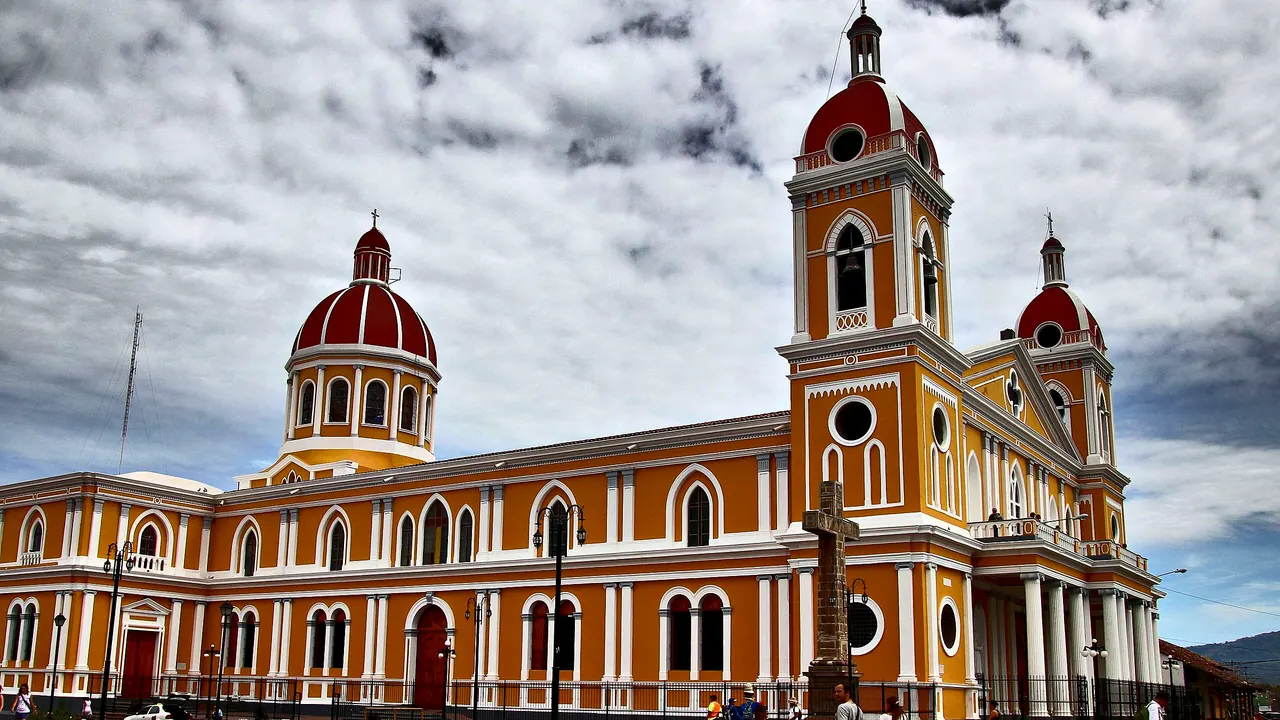
The cathedral seen from the square
- Affordable cities86
- Nature & outdoors72
- Day trips52
Photo: Guillaume Baviere from Uppsala, Sweden, CC BY-SA 2.0, cropped
Match
43
Every category weighted equally
- Beach & sun45
- Culture & arts42
- Food & nightlife39
- Family trip48
- Outdoors50
- Relax & unwind44
- Shopping & style39
- On a budget48
Granada, Nicaragua in twelve categories
Our verdict on each, scored 0 to 100 against the same fixed benchmark cities, so a score means the same thing on every page.
Beaches & swimming. Scores 38 out of 100.
Food & drink. Scores 38 out of 100.
Culture & sights. Scores 50 out of 100.
Nightlife. Scores 28 out of 100.
Nature & outdoors. Scores 72 out of 100.
Day trips. Scores 52 out of 100.
Good for families. Scores 32 out of 100.
Getting around. Scores 45 out of 100.
Shopping & style. Scores 30 out of 100.
Affordability. Scores 86 out of 100.
Live music & performing arts. Scores 15 out of 100.
Wellness & relaxation. Scores 32 out of 100.
Granada, Nicaragua category by category
Beaches & swimming
38Granada sits on the shore of Lake Nicaragua, but the city waterfront is a promenade, not a place to swim. The water near town is murky and nobody treats it as a beach.
The real swimming is at Laguna de Apoyo, a volcanic crater lake about half an hour away. The water is clear, warm at around 28°C, and calm, with small docks and lakeside lodges where you can spend a lazy day in and out of the water. The Pacific beaches around San Juan del Sur are roughly two hours south, so they're a separate trip rather than part of a stay here. Beach lovers usually split their time between Granada and the coast.
Food & drink
38Eating in Granada is simple and cheap. The city's own dish is vigorón, a heap of boiled yuca, crisp pork crackling and cabbage salad served on a banana leaf. Kiosks around the central park sell it. Elsewhere you find nacatamales wrapped in plantain leaves, gallo pinto, grilled meats from evening fritanga stalls, and fresh fruit juices and cacao drinks.
The pedestrian Calle La Calzada is lined with restaurants for visitors. Quality there varies, from decent grilled fish and international menus to forgettable tourist plates. Fine dining hardly exists, and coffee and rum are better bought to take home than explored in cafés. Plan on good street eating rather than memorable meals.
Culture & sights
50Granada is one of the oldest Spanish colonial cities on the American mainland. Most of the pleasure here is in the townscape: single-storey houses painted ochre, blue and terracotta, built around shaded courtyards, along a grid of streets leading to the yellow cathedral on the Parque Central.
The main sights are a short walk from one another. The bell tower of La Merced church looks over the tiled roofs to Mombacho volcano. The San Francisco convent has a museum holding pre-Columbian basalt statues from Zapatera island. You can also see the Xalteva church and the small La Pólvora fortress. Two days covers it all comfortably. This is a beautiful setting more than a place of major museums.
Nightlife
28Evenings centre on Calle La Calzada, where tables spill into the street and travellers and locals drink cheap rum and local beer late into the night. Hostel bars draw a backpacker crowd. A few small clubs play reggaeton and salsa at weekends. It's sociable and relaxed, but small. On weeknights most of the town is quiet well before midnight, and once you have spent a night or two out, there's little new to find.
Nature & outdoors
72Granada is surrounded by volcanic landscape. Mombacho volcano rises just south of town, and its summit is cloud forest with marked trails around misty craters, orchids and howler monkeys. Below it, Las Isletas, a scatter of small islands in Lake Nicaragua formed by an ancient eruption, can be explored by launch or kayak, with herons, egrets and fishing villages along the way.
Masaya volcano, about forty minutes away, is one of the few places where you can drive to the rim of an active crater. Laguna de Apoyo is good for kayaking and paddleboarding. The twin volcanoes of Ometepe island are a longer trip south. Lowland heat makes early mornings the best time to be out.
Day trips
52Masaya, about half an hour away, is the classic outing, with a large craft market and the indigenous Monimbó quarter. From there the road climbs to the Pueblos Blancos. These are small hill towns such as San Juan de Oriente, known for its pottery workshops, and Catarina, whose lookout faces Laguna de Apoyo.
Managua is about an hour away for the old cathedral ruins and the Tiscapa lookout. San Juan del Sur, a fishing town and surf resort on the Pacific, can be done as a long day. Ometepe island and colonial León need more time than a day trip allows. Expect pleasant towns rather than major heritage sites.
Good for families
32Some things here go down well with children. A horse-drawn carriage ride around the colonial centre is an easy start. A boat trip through the islets of Lake Nicaragua is another, with the small island where monkeys live as the highlight. A swimming day at Laguna de Apoyo works well, and so does the drive up Masaya volcano, where you can stand at the rim of an active crater and watch it steam. Nicaraguans are warm towards children, and many courtyard hotels have small pools for the hot afternoons.
There are no zoos, theme parks or museums made for children, though. The heat is steady all year, pavements are narrow and broken, and medical care is basic outside the capital. Granada works for families with older, adaptable children and less well with toddlers.
Getting around
45The historic centre is a compact grid, so you can walk from the cathedral to the lakefront or to Xalteva in a few minutes. Most visitors walk everywhere in town, using the cheap local taxis and horse carriages in the midday heat. Pavements are narrow and uneven, and the streets are hot in the afternoon.
Getting out of town is less simple. Brightly painted former school buses and minibuses run to Masaya and Managua from informal terminals, and they're cheap but crowded and hard to work out at first. Most travellers use shuttles, tours or hired drivers for the volcanoes, Apoyo and the coast.
Shopping & style
30Shopping in Granada means crafts. Handwoven hammocks, painted pottery from the nearby Pueblos Blancos, wooden carvings, rocking chairs, Nicaraguan coffee, rum and hand-rolled cigars are all made in the region. The shops along La Calzada and around the central park sell them, along with a few small galleries and design boutiques. Most people get better choice at the old artisan market in Masaya. Beyond crafts there's very little, with no fashion streets or department stores to speak of.
Affordability
86Granada is one of the cheaper colonial towns to visit in the Americas. Simple guesthouses and courtyard hotels cost very little. Street food and local eateries cost even less, and so do taxis and the buses to nearby towns. Tours to the volcanoes and islands are affordable too. The boutique hotels in restored mansions and the restaurants along La Calzada charge noticeably more than the rest of town, but they still look cheap from a North American or European budget.
Live music & performing arts
15There's little formal stage life in Granada. Marimba players and folkloric dancers perform for diners around the central park and on La Calzada, and some hotels and cultural centres put on traditional dance evenings. Religious processions and patron saint festivities bring out music and costumed dances on the town's calendar. There's no theatre or concert season to plan around.
Wellness & relaxation
32Granada has no bathing tradition, and spas are limited to a handful of massage studios and treatments in the better hotels. What it does offer is a slow pace. You can spend long afternoons in a rocking chair in a shaded courtyard, take a dip in a hotel pool, and walk the quiet streets in the evening once the heat breaks.
For a proper retreat, the lodges around Laguna de Apoyo offer yoga, massage and quiet days by the water, a short drive from town.
When should you go?
Pick a month to see what it is like. The climate figures are measured averages, not a forecast.
Granada, Nicaragua in July
Daytime high, °C
Rainfall in the month, mm
The whole year
Shaded against this city’s own year: the deepest cell is its best month for that figure and the palest its weakest.
Where the figures come from
Granada, Nicaragua's temperatures are measured 34 km from the centre, at Managua A. C. Sandino.
Granada, Nicaragua has no rain gauge within 25 km of the centre, so its rainfall comes from a gridded climate dataset read at the city rather than from a gauge further away.
Temperature and rainfall are climate normals, averaged over the years shown. Granada, Nicaragua: 1961-1990 (sunshine 1991-2020, rainfall 1991-2020) normals, Managua A. C. Sandino (33.7 km from centre).
Before you go
| Measure | Granada, Nicaragua |
|---|---|
| Official language | Spanish |
| Currency | Cordoba Oro (NIO) |
| Sockets | AB120 V, 60 Hz |
| Driving side | Right |
| Time zone | UTC-6 |
| Emergency number | Police 118, ambulance 128, fire 115/120 |
| Elevation | 73 m |
| Main airport | Augusto C. Sandino (Managua) International Airport (MGA)33 km from centre11 non-stop destinations |
| Public holidays this year | 12 days |
By the numbers
| Measure | Granada, Nicaragua |
|---|---|
| City population | 105,171 |
| People per km² | 178 |
| Museums within 10 km | 1 |
| UNESCO World Heritage sites within 50 km | 0 |
| Swim season, months above 21 °C | 12 months |
Compare Granada, Nicaragua with
Every comparison with a written verdict behind it.
- Antigua Guatemala
- Cartagena
- Leon, Nicaragua
- Panama City
- San Jose, Costa Rica
- Santa Teresa, Costa Rica
- Tamarindo