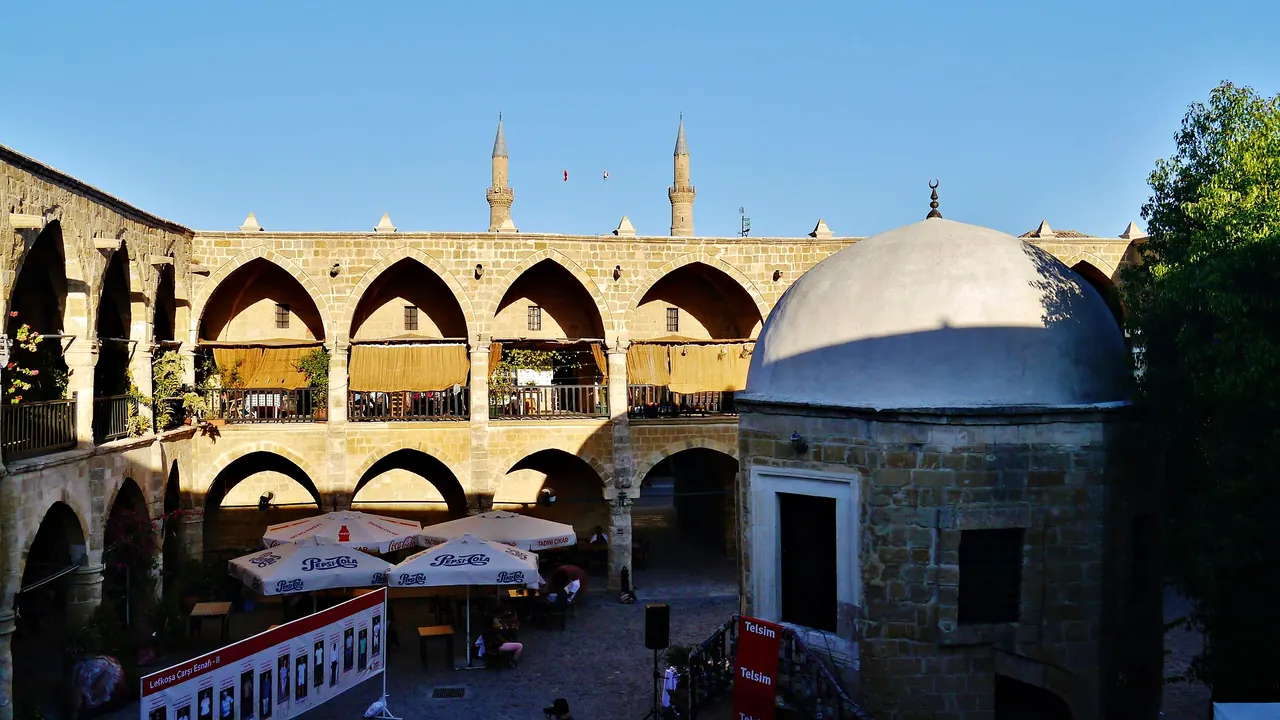
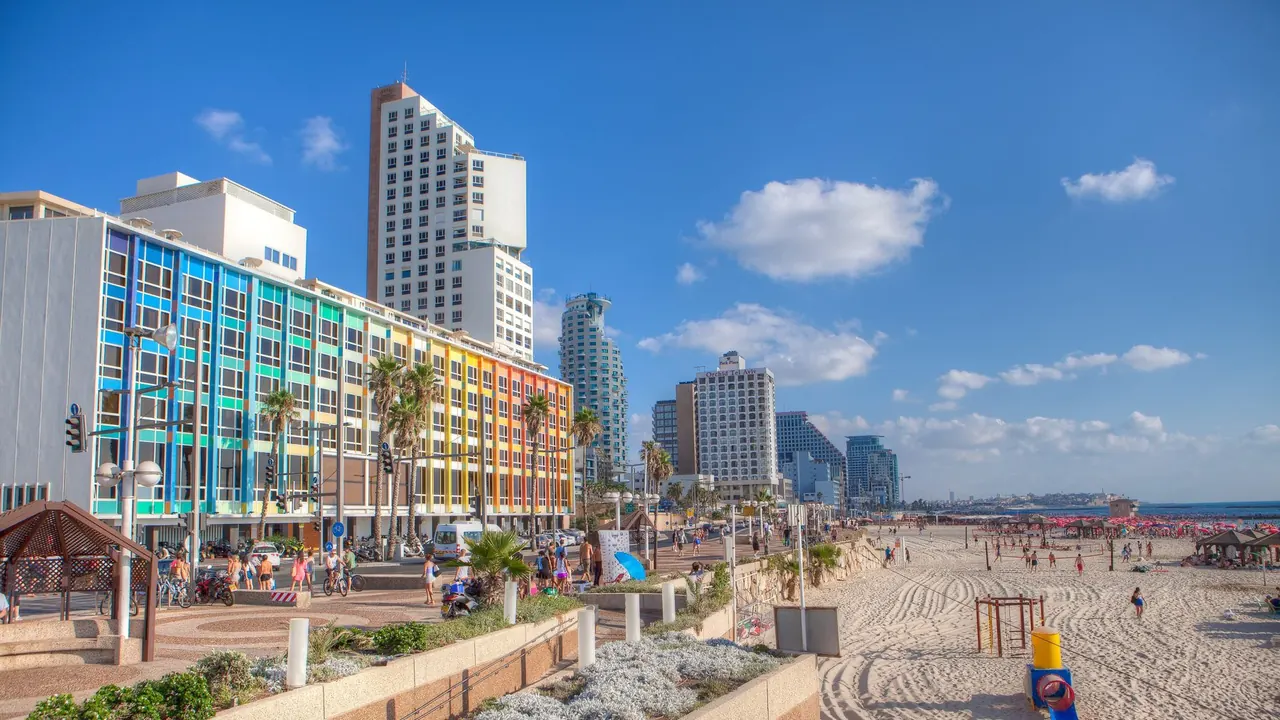
Photos: Nicosia by Zairon, CC BY-SA 4.0, cropped; Tel Aviv by israeltourism, CC BY-SA 2.0, cropped.
Nicosia or Tel Aviv?
Our verdict in twelve categories, each scored against the same fixed benchmark cities, and the climate month by month, so you can choose for your trip.
Choose Nicosia for
- prices
- culture and sights
- wellness
Nicosia suits a slower, cheaper trip built around history and the wider island. Its walled old town, split by the Green Line, lets you walk from Byzantine icons to a Gothic cathedral turned mosque in an afternoon, and meze dinners, coffee in shaded squares and an old hammam set the pace. It works best for travellers with a hire car who want to explore Cyprus from the middle and don't need the sea on the doorstep.
Choose Tel Aviv for
- beaches
- nightlife
- live music and the arts
Tel Aviv is the stronger choice for a sociable, sun-filled city vacation with a bigger budget. The beach runs along the whole western edge of town, the food and bar scene stays busy until very late, and Jerusalem is a short train ride away. Families, beach lovers and anyone who wants evenings out will find far more here, as long as they accept high prices and the Shabbat pause in public transport.
Scoreboard
Twelve categories on one fixed scale from 0 to 100. The shaded stretch is the gap between the two.
Your match
Pick a travel style or drag the sliders, and both match scores follow your weighting.
Wins on prices and culture and sights with your weighting.
Wins on beaches and nightlife with your weighting.
What matters to you?
Category by category
What the scores mean for a trip.
Beaches & swimming
In Tel Aviv the beach is part of daily life. Fine pale sand runs from the old port down to the rocks below Jaffa, you walk to it from most central hotels, and locals come morning and evening for paddle-ball, early runs and sunset swims.
Nicosia sits inland on the Mesaoria plain, so the sea is a day out. Larnaca's beaches and the Kyrenia coast are each about 45 minutes' drive away, and the water there is just as warm, but in the city a pool is the only way to cool off.
Food & drink
Nicosia keeps to Cypriot cooking: long meze meals at taverna tables in the lanes around Faneromeni, then a walk across the Green Line for kebab grills and syrupy pastries by the Bandabulya market. It is satisfying and good value, but there is little choice beyond the island's own kitchens.
Tel Aviv offers far more variety. Yemenite soups, Iraqi kubbeh and hummus counters sit alongside chef-driven open kitchens, and Carmel Market, Jaffa's fish restaurants by the port and the all-day café culture give you a different meal at every turn.
Culture & sights
Nicosia has more history to walk through. The Venetian walls with their heart-shaped bastions surround a city divided by the Green Line, and the Cyprus Museum's antiquities, the Byzantine icons at the Archbishop's Palace and the Selimiye Mosque, a Gothic cathedral with minarets, all fit into two or three days.
Tel Aviv's main draw is its architecture, the Bauhaus streets of the White City along Rothschild Boulevard, plus old Jaffa and Neve Tzedek. Its museums are good but few, and the country's great historic sites are a train ride away rather than in the city.
Nightlife
Tel Aviv treats going out as part of who it is. Bars around Rothschild, Lilienblum and Allenby are packed past midnight, Thursday is the big night, and warehouse clubs in the south play house and techno until dawn, with one of the region's most open gay scenes as well.
Nicosia's evenings are friendlier and smaller. Students and young professionals drink on the pavements around Faneromeni Square and Ledra Street from about midnight, with a few clubs outside the walls after that. Serious clubbing in Cyprus happens on the coast.
Nature & outdoors
There is little to choose between them, but the outdoors works differently in each. From Nicosia you head for the hills: ridge trails along the Kyrenia range, and the cool pine forests of the Troodos about an hour away, where Mount Olympos is snow-capped in winter.
Tel Aviv's outdoor life is on the water and the seafront, with surfing, kitesurfing and paddleboarding off the beaches and cycling through Yarkon Park. Its wilder country, the Carmel ridge and the desert canyons of Ein Gedi, means a longer drive.
Day trips
Tel Aviv has the stronger range, mainly because Jerusalem's Old City is about half an hour away by fast train. Caesarea, Haifa's Baha'i Gardens and Crusader Acre lie up the coast, and Masada and the Dead Sea make a long day south. On Saturdays, with public transport stopped for Shabbat, you need a car or a tour.
From Nicosia most of Cyprus is reachable in a day, including Kyrenia's harbour, Bellapais abbey, Roman Salamis and the painted churches of the Troodos. A hire car does most of the work, though, as the buses won't get you to many of these places.
Good for families
Children are welcome everywhere in both cities, but Tel Aviv has far more for them to do. Lifeguarded beaches, the lawns and Luna Park in Yarkon Park, the drive-through Ramat Gan Safari and the children's museum in Holon fill a week, and the flat promenade is easy with a pushchair.
Nicosia feels safe and relaxed, but it has no zoo, aquarium or theme park and the sea is a drive away. Families with young children usually stay on the coast and visit the city for a day.
Getting around
Both centres are easy on foot, but beyond them the cities part ways. Tel Aviv adds bike-share, cycle lanes, light rail, a dense bus network and fast trains to Jerusalem and Haifa, although almost everything stops from Friday afternoon until Saturday night.
In Nicosia, walking stops working once you leave the walls. The suburbs are built around the car, local buses are of little use to visitors and there is no rail, so a hire car is the realistic way to see the island.
Shopping & style
Tel Aviv is the better place to shop, especially for local design. Israeli fashion, jewellery and ceramics fill boutiques on Dizengoff, Sheinkin and in Neve Tzedek, and the Nahalat Binyamin crafts market and the Jaffa flea market reward a slow browse.
Nicosia's Ledra Street is mostly chain stores. The more memorable buys are Lefkara lace from the Cyprus Handicraft Centre and spices and copperware from the Bandabulya market across the line.
Affordability
Nicosia costs a great deal less. Meze and souvla are filling and good value, coffee is cheap and the northern half is cheaper again, although the hire car most visitors need adds to the total.
Tel Aviv is among the most expensive cities in the Mediterranean, with costly hotels, restaurant meals and cocktails. The savings are falafel, sabich and market food, plus the free pleasures of the beach and the White City.
Live music & performing arts
Tel Aviv has a far stronger stage. The Israel Philharmonic, the Israeli Opera and Habima are all based here, and Batsheva, with the Suzanne Dellal Centre in Neve Tzedek, makes the city a major name in contemporary dance. Clubs in the south host rock, Mizrahi pop and jazz.
Nicosia has the Cyprus Symphony Orchestra and some folk and jazz in old-town bars, but it is a modest local scene, and most of its theatre is in Greek.
Wellness & relaxation
Nicosia is slightly better for unwinding. The domed Omeriye Hammam still offers steam and massage, the summer afternoon lull slows the old town, and the cool Troodos villages are close by for deeper rest.
Tel Aviv runs louder and faster, with hotel spas and yoga classes rather than any bathing tradition. Its calm comes from Shabbat and slow mornings on the promenade, and for proper restorative bathing people travel to the Dead Sea mud spas, about an hour and a half away.
When should you go?
Pick your month. The climate figures are measured averages, not a forecast.
Nicosia in July
Tel Aviv in July
Daytime high, °C
Rainfall in the month, mm
Where the figures come from
Nicosia's temperatures are measured 40 km from the centre, at Larnaca Airport.
Nicosia's station stands 218 m below the city centre, so the centre is likely a little cooler than the figures say.
Nicosia has no rain gauge within 25 km of the centre, so its rainfall comes from a gridded climate dataset read at the city rather than from a gauge further away.
Temperature and rainfall are climate normals, averaged over the years shown. Nicosia: 1991-2020 normals, Larnaca Airport (40.4 km from centre). Tel Aviv: 1991-2020 (sunshine 1961-1990) normals, Bet Dagan (9.5 km from centre).
Both cities have long, dry summers and wet winters, but they feel different in the heat. Inland Nicosia is the hotter and harsher of the two in July and August, with afternoons around 33°C and very little shade on the plain, so sightseeing becomes an early-morning job. Tel Aviv reaches a similar heat but has the sea beside it, and the water is about 28°C by late summer, warm enough to swim from May well into November. The coast near Nicosia warms up in step, but getting there always means a drive.
Spring and autumn are the best seasons for both. April and May in Nicosia are warm, dry and green, ideal for walking the old town and the hills, and October is pleasant again. Winter is milder in Tel Aviv but much wetter, with around 140mm of rain in January against Nicosia's lighter, more scattered showers, so a winter city break leans towards Nicosia.
Which traveller are you?
On a beach and sun trip, Tel Aviv is the clear pick. Its sand runs along the whole seafront within walking distance of most hotels, with lifeguards and calm water behind breakwaters. Nicosia is inland, so every swim is a drive to the coast.
For a trip on a tight budget, Nicosia goes much further. Meze, souvla and coffee cost little, the northern half is cheaper still, and museums charge little. Tel Aviv is one of the Mediterranean's most expensive cities, and only its street food stays cheap.
On a food and nightlife trip, Tel Aviv offers far more. Market grazing, chef-led dining rooms and late cocktail bars lead on to a house and techno club scene until dawn. Nicosia's evenings are relaxed bar nights inside the walls, pleasant but on a much smaller scale.
Before you go
| Measure | Nicosia | Tel Aviv |
|---|---|---|
| Official language | Turkish, Greek, Modern Greek | Hebrew |
| Currency | Euro (EUR) | New Israeli Sheqel (ILS) |
| Sockets | G240 V, 50 Hz | CHM230 V, 50 Hz |
| Driving side | Left | Right |
| Time zone | UTC+2, UTC+3 in summer | UTC+2, UTC+3 in summer |
| Emergency number | 112 | Police 100, fire 102 |
| Elevation | 220 m | 5 m |
| Main airport | Larnaca International Airport (LCA)41 km from centre112 non-stop destinations | Ben Gurion International Airport (TLV)13 km from centre111 non-stop destinations |
| Public holidays this year | 17 days | - |
By the numbers
| Measure | Nicosia | Tel Aviv |
|---|---|---|
| City population | 56,848 | 467,875 |
| People per km² | 1,112 | 8,998 |
| Museums within 10 km | 19 | 99 |
| UNESCO World Heritage sites within 50 km | 2 | 2 |
| Swim season, months above 21 °C | 6 months | 7 months |
Where else could you go?
Every comparison below shares a destination with this one, so you can follow Nicosia or Tel Aviv somewhere new.
- Larnacavs Nicosia
- Jerusalemvs Tel Aviv
- Limassolvs Nicosia
- Paphosvs Nicosia
- Ammanvs Tel Aviv
- Alanyavs Nicosia