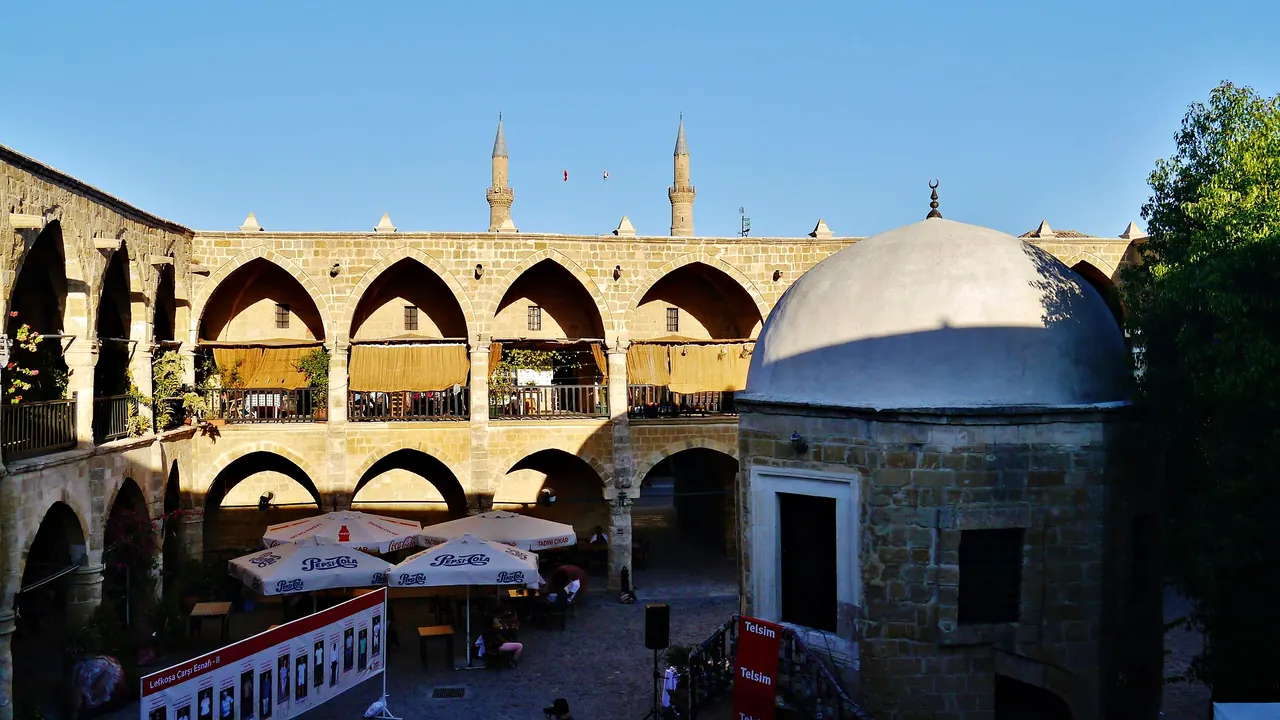
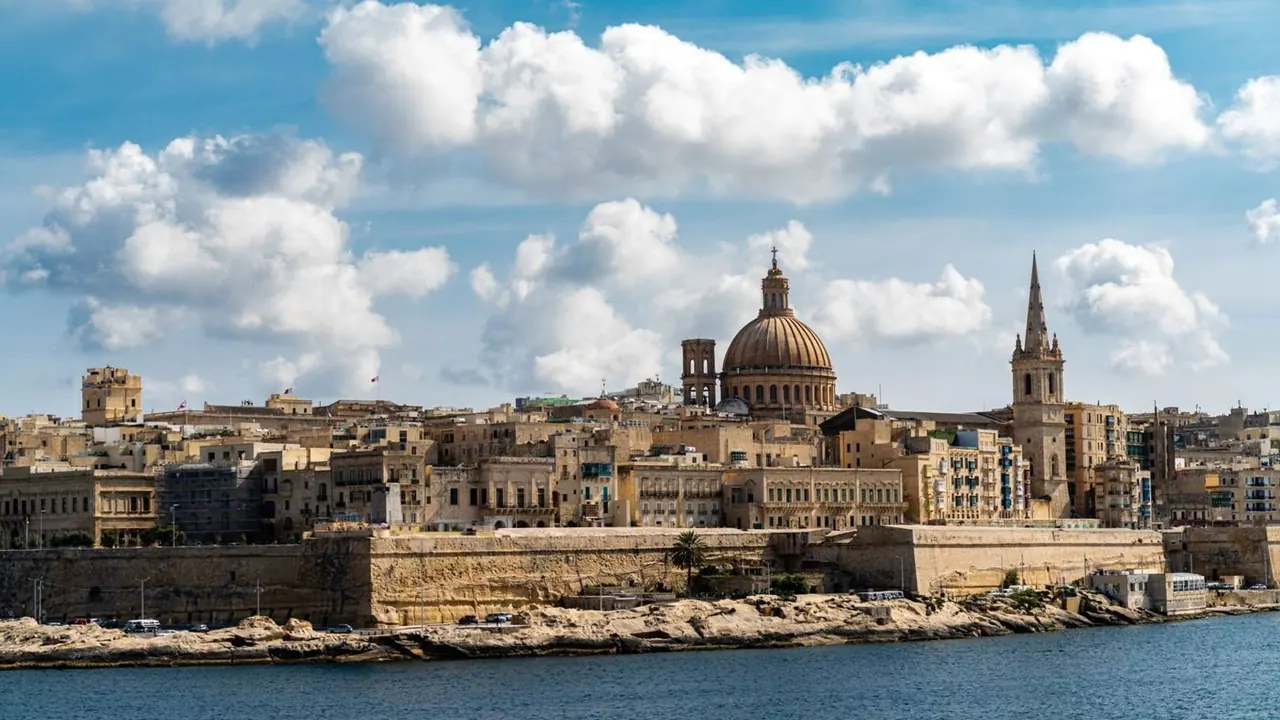
Photos: Nicosia by Zairon, CC BY-SA 4.0, cropped; Valletta by Pho Tomass, Pexels License.
Nicosia or Valletta?
Our verdict in twelve categories, each scored against the same fixed benchmark cities, and the climate month by month, so you can choose for your trip.
Choose Nicosia for
- wellness
- prices
- food and drink
Nicosia suits a traveller who wants something different from a classic sightseeing break: a capital still split in two. You can show your passport at Ledra Street and a few minutes later be among Ottoman inns and a Gothic cathedral with minarets. The pleasures here are slow ones, such as long meze dinners that start late, steam and massage in an old hammam and quiet shaded squares in the afternoon. With a hire car it also makes a calm base for the Troodos villages.
Choose Valletta for
- beaches
- families
- getting around
Pick Valletta if you want the great sights, the sea and easy travel all in one place. The walled baroque city and its Co-Cathedral are among the finest of their kind in the Mediterranean. You can swim below the bastions, and buses and ferries reach Mdina, Gozo and the sandy bays without a car. For a first visit, a family trip or a short stay, it is the easier and fuller choice.
Scoreboard
Twelve categories on one fixed scale from 0 to 100. The shaded stretch is the gap between the two.
Your match
Pick a travel style or drag the sliders, and both match scores follow your weighting.
Wins on wellness and prices with your weighting.
Wins on beaches and families with your weighting.
What matters to you?
Category by category
What the scores mean for a trip.
Beaches & swimming
Nicosia lies inland on the Mesaoria plain, so the sea is always a drive of about three quarters of an hour, either to Larnaca's town beach or over the hills to the Kyrenia coast. The water is lovely when you get there, but every swim is a day out, and in the city a pool is the only way to cool off.
Valletta has the sea right below its walls. Ladders lead from the flat rocks under the bastions and along the Sliema shore into very clear water. Golden Bay and Mellieha Bay are within an hour by bus, and a boat trip takes you to Comino's Blue Lagoon, although the sandy beaches are small and fill up in August.
Food & drink
The two are evenly matched but eat differently. Nicosia's way is the long sit-down meze, dozens of small plates and charcoal-grilled souvla at a taverna. Crossing the Green Line on foot adds a second kitchen, with kebab grills and syrupy pastries by the Bandabulya market.
Valletta eats on the move: pastizzi and tea at a counter, ftira for lunch, rabbit stew for a proper dinner, and fish at Marsaxlokk on a Sunday morning. Many tables on its main streets are aimed at cruise passengers. Neither city offers much beyond its local cooking.
Culture & sights
Valletta has the stronger heritage. The entire walled grid is the Knights' creation and a UNESCO site, and the gilded Co-Cathedral with Caravaggio's Beheading of Saint John is a sight people cross Europe for. The Three Cities and the Hypogeum add depth close by.
Nicosia's appeal is more layered than grand. The Cyprus Museum's antiquities, Byzantine icons and the Selimiye Mosque are all inside one ring of Venetian walls, split by a ceasefire line. It is absorbing to walk, but nothing in it matches the Co-Cathedral.
Nightlife
Neither capital is a party city. The difference is where the late hours happen. Nicosia's nights are inside its walls: students and young professionals drink on the pavements around Faneromeni, the bars only fill towards midnight, and a few clubs on the avenues keep going after that.
Valletta goes quieter after dinner, with wine and cocktail bars along the old sailors' lane of Strait Street. For dancing until dawn you take a bus or taxi to the loud club block of Paceville in St Julian's.
Nature & outdoors
There is as much to do outdoors in one as in the other, but the settings are completely different. From Nicosia the attraction is the mountains: the pine-clad Troodos rise to nearly 2,000m about an hour away, and the Kyrenia ridge has trails along its crest.
Malta has no mountains or forests, and its walks are short ones along the Dingli cliffs or on Gozo. Its strength is the water. Wrecks, caves and Gozo's Blue Hole make it a serious diving destination, and snorkelling and boat trips fill the summer.
Day trips
Both have an excellent choice of day trips. Nicosia's range is wider: the harbour and castles of Kyrenia, Bellapais Abbey, Roman Salamis beside walled Famagusta, and the painted mountain churches of the Troodos. Reaching most of it takes a car, and some trips cross the Green Line.
Valletta's trips are easier to reach. Mdina is half an hour by bus, the temples of Hagar Qim are older than the pyramids, and Gozo by ferry makes a full day. Everything shares one island character, though.
Good for families
Valletta is the easier choice with children. English is spoken everywhere, the noon cannon and harbour boats keep them entertained, and the aquarium, Popeye Village and shallow sandy bays are a short trip away. The city's stepped streets are the main nuisance for anyone with a pushchair.
Nicosia makes children welcome at late family dinners and feels safe, but it has no zoo, aquarium or theme park worth the name. With the beaches a drive away and the summer heat so intense, it works better as a day visit from the coast.
Getting around
Nicosia is easy on foot only inside its walls and across the Ledra Street crossing. Beyond them the suburbs are built around the car, and local buses do little for visitors, so most people hire a car for the mountains and villages.
Valletta needs no car. The city is about a kilometre long and easy to walk, apart from the stairs, and a lift and short ferries link it to the harbour, Sliema and the Three Cities. The island's buses leave from the city gate for almost everywhere, though they are slow and often crowded on Malta's congested roads.
Shopping & style
Neither city is worth the trip for shopping, and both have a central street of chain stores. Nicosia's extra is the north side: spices, Turkish delight and copperware in the covered Bandabulya market, plus Lefkara lace at the Handicraft Centre. Valletta is better for small crafts, especially silver filigree and blown glass, which you can watch being made at Ta' Qali.
Affordability
Overall costs are much the same, but the money goes in different places. In Nicosia, meze and coffee are cheap and the northern half costs even less, but most visitors pay for a hire car.
In Valletta, rooms inside the walls cost more, so many people stay across the harbour in Sliema. Getting around costs little thanks to cheap buses, and pastizzi are almost free.
Live music & performing arts
Valletta has more to offer here. The gilded oval auditorium of the Manoel Theatre, in use since 1731, is a reason to see anything on its stage. Winter brings a baroque festival, summer brings jazz on the Grand Harbour, and the rival opera houses on Gozo stage full productions in autumn.
Nicosia has the island's symphony orchestra and state theatre, but most of the drama is in Greek. For visitors, the better evenings are rebetiko or jazz in the old-town bars and summer concerts in the moat.
Wellness & relaxation
Nicosia has the better bathing culture, a legacy of its Ottoman centuries. The domed Omeriye Hammam still offers steam and massage, the Büyük Hamam continues the tradition across the line, and the Troodos villages give a cool retreat.
Valletta has only hotel and resort spas. Its rest comes from the evening hush once the day crowds leave, when the limestone turns gold and the Barrakka Gardens look quietly over the harbour.
When should you go?
Pick your month. The climate figures are measured averages, not a forecast.
Nicosia in July
Valletta in July
Daytime high, °C
Rainfall in the month, mm
Where the figures come from
Nicosia's temperatures are measured 40 km from the centre, at Larnaca Airport.
Nicosia's station stands 218 m below the city centre, so the centre is likely a little cooler than the figures say.
Nicosia has no rain gauge within 25 km of the centre, so its rainfall comes from a gridded climate dataset read at the city rather than from a gauge further away.
Temperature and rainfall are climate normals, averaged over the years shown. Nicosia: 1991-2020 normals, Larnaca Airport (40.4 km from centre). Valletta: 1991-2020 normals, Luqa (5.9 km from centre).
Both cities are at their best in spring and in the first half of autumn, but the timing differs. Nicosia sits inland and heats up more. July and August reach about 33°C, which makes walking the streets in the middle of the day hard work. October is the sweet spot there: still warm, sunny and almost dry, with around 20mm of rain. Valletta's sea air keeps the heat a little softer, but its rains come earlier and heavier, building through September to around 90mm in November. Late spring and June are its most reliable stretch.
For swimming, the sea is warm enough from June to October off both coasts and peaks at about 28°C in August near Nicosia, slightly higher than around Malta. Nicosia has the sunnier record in every month. Winter is mild in both cities, but the days are short and wet, so it suits sightseeing rather than the beach.
Which traveller are you?
On a beach and sun trip, Valletta is the clear pick. You can swim from the limestone ledges in town, and the sandy bays of the north are a bus ride away. In Nicosia every swim means driving to the coast.
On a family trip with children, Valletta again works better. English is spoken everywhere, and the aquarium, Popeye Village and shallow northern bays are all close. Nicosia is welcoming to children but has little built for them, and in summer it is fiercely hot.
For a relaxing and wellness trip, Nicosia has the edge. A restored 16th-century hammam still offers steam and massage, the old town takes a long siesta pause, and the cool pine villages of the Troodos are an easy drive away.
Before you go
| Measure | Nicosia | Valletta |
|---|---|---|
| Official language | Turkish, Greek, Modern Greek | English, Maltese |
| Currency | Euro (EUR) | Euro (EUR) |
| Sockets | G240 V, 50 Hz | G230 V, 50 Hz |
| Driving side | Left | Left |
| Time zone | UTC+2, UTC+3 in summer | UTC+1, UTC+2 in summer |
| Emergency number | 112 | 112 |
| Elevation | 220 m | 56 m |
| Main airport | Larnaca International Airport (LCA)41 km from centre112 non-stop destinations | Malta International Airport (MLA)6 km from centre113 non-stop destinations |
| Public holidays this year | 17 days | 14 days |
By the numbers
| Measure | Nicosia | Valletta |
|---|---|---|
| City population | 56,848 | 5,197 |
| People per km² | 1,112 | 6,496 |
| Museums within 10 km | 19 | 16 |
| UNESCO World Heritage sites within 50 km | 2 | 3 |
| Swim season, months above 21 °C | 6 months | 6 months |
Where else could you go?
Every comparison below shares a destination with this one, so you can follow Nicosia or Valletta somewhere new.
- Larnacavs Nicosia
- Limassolvs Nicosia
- Paphosvs Nicosia
- Syracuse, Sicilyvs Valletta
- Cataniavs Valletta
- Alanyavs Nicosia