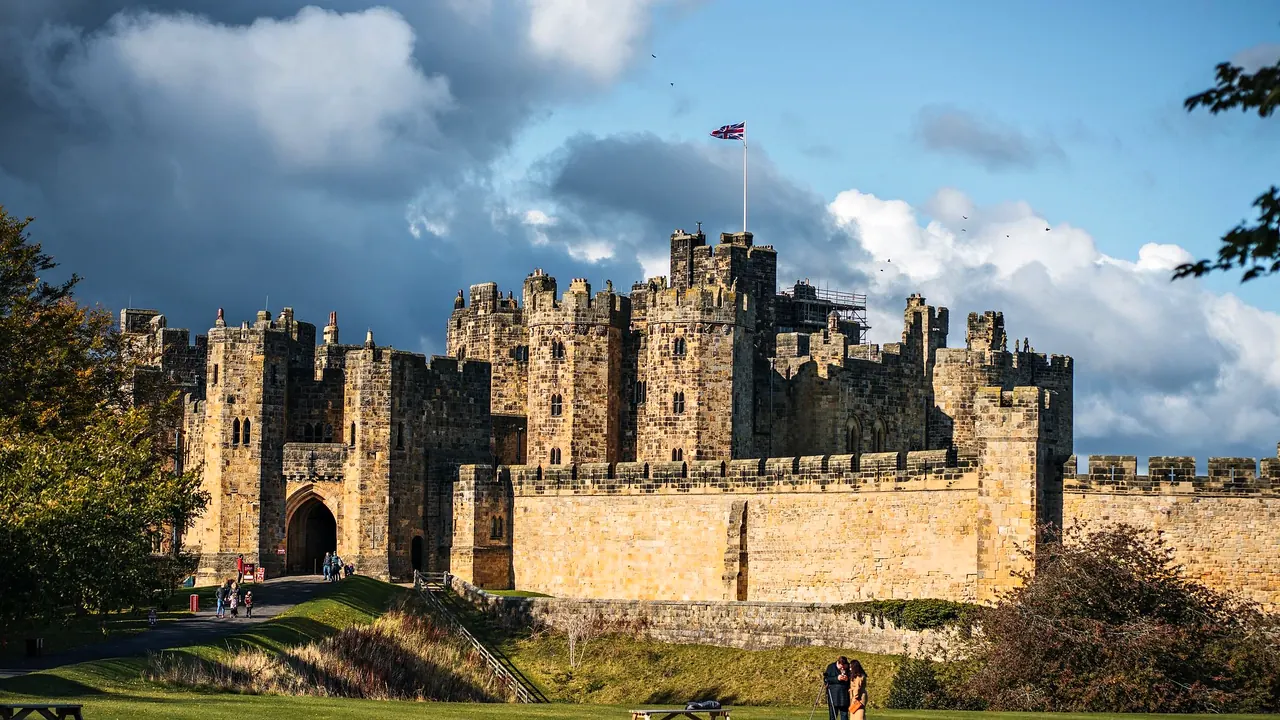
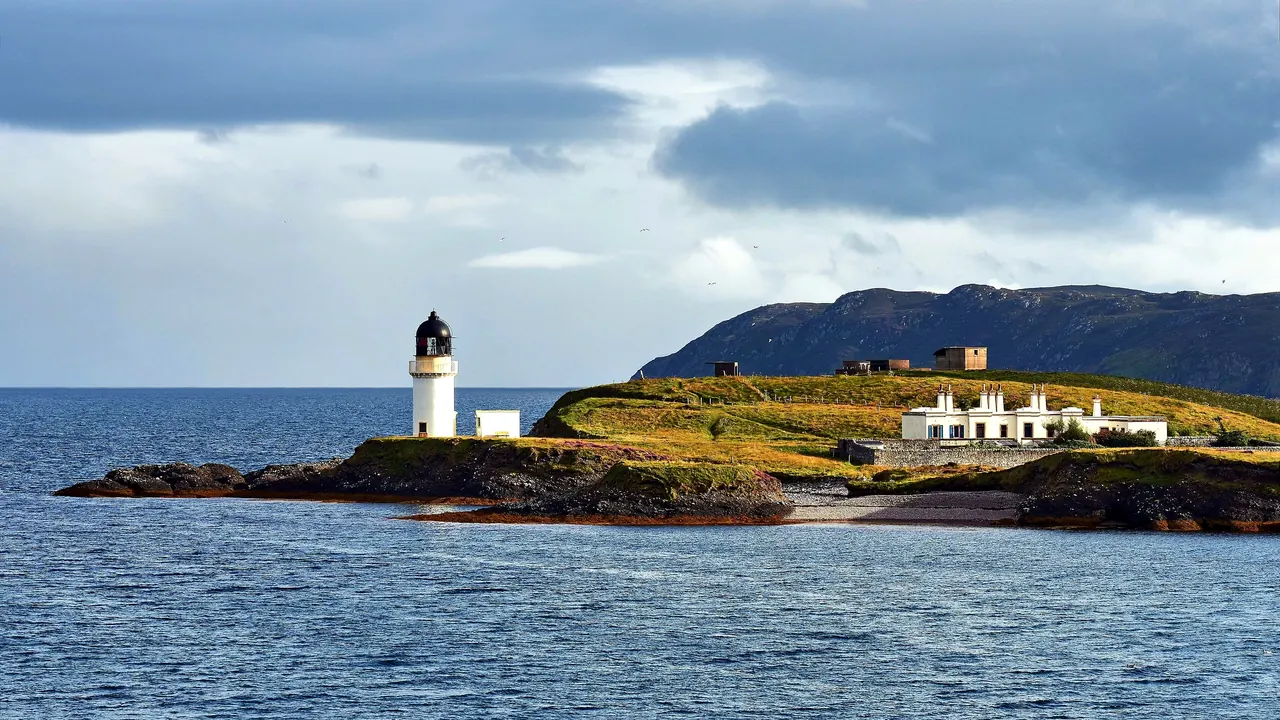
Photos: Northumberland by Clément Proust, Pexels License; Outer Hebrides by Virtual-Pano, CC BY-SA 4.0, cropped.
Northumberland or Outer Hebrides?
Our verdict in twelve categories, each scored against the same fixed benchmark cities, and the climate month by month, so you can choose for your trip.
Choose Northumberland for
- day trips
- culture and sights
- families
Northumberland is the better pick for a trip that mixes coast with history and a little ease. Castles stand above the beaches, Hadrian's Wall crosses the moors to the south, and two rail lines and the A1 keep everything within a short drive. Edinburgh, Durham and Newcastle are close enough for a day out, families have more to do, and the bills run a little lower. It suits a first visit to wild Britain, or a group whose interests don't all match.
Choose Outer Hebrides for
- shopping
- nature and the outdoors
- wellness
Choose the Outer Hebrides when remoteness is the whole point. The islands feel further from everyday life: Gaelic spoken in the shops, eagles over Harris, otters on empty shores, and white beaches that are often completely empty. You give up variety, easy travel and choice at dinner, and you need a car and good waterproofs. In return you get a deeper quiet, and a landscape that feels like the edge of the Atlantic.
Scoreboard
Twelve categories on one fixed scale from 0 to 100. The shaded stretch is the gap between the two.
Your match
Pick a travel style or drag the sliders, and both match scores follow your weighting.
Wins on day trips and culture and sights with your weighting.
Wins on shopping and nature and the outdoors with your weighting.
What matters to you?
Category by category
What the scores mean for a trip.
Beaches & swimming
Both coasts have outstanding sand and sea too cold for much swimming, so the choice comes down to setting. Northumberland's beaches come with history above them: Bamburgh's castle over the strand, Dunstanburgh's ruins at the end of Embleton Bay, and the long open sweep of Druridge Bay. The North Sea there is a degree or so warmer in late summer.
The Hebridean beaches are wilder and stranger. They are white shell sand backed by machair at Luskentyre and Scarista, and the shallows turn turquoise in sunshine. They are also further from anywhere, and the Atlantic wind cuts more days short.
Food & drink
Northumberland has somewhat more choice, simply because there are more places to eat. Coaching inns and village pubs cover the county, Hexham and Alnwick have a few ambitious kitchens, and Newcastle is close for anything more. Craster kippers and a crab sandwich in Seahouses are the meals to seek out.
The Hebrides arguably have the finer raw material: langoustines and scallops off the island boats, local smoked salmon and Stornoway black pudding. Outside Stornoway and Harris, though, you will often find little more than a hotel bar. Winter and Sunday closures are common, so most visitors cook some of their own meals.
Culture & sights
Northumberland is far richer in sights. A dozen castles, Holy Island's priory, the Elizabethan walls of Berwick, Cragside and the forts and museums of Hadrian's Wall add up to many days of visiting. They are close enough that you can see two or three in a day.
The Hebrides go back further but offer fewer sights. The Calanais stones, the Dun Carloway broch and the blackhouse villages tell a story of prehistoric and crofting life. Their strongest culture is living rather than built: Gaelic as an everyday language. The sights are spread thinly along a long chain of islands.
Nightlife
Both places are quiet after dark. The difference is that Northumberland has a way out: a pint by an inn fire most nights, and a train into Newcastle when you want a proper night out.
The Hebrides have no such option, and on Lewis and Harris Sundays are completely still. What they offer instead is a chance of a traditional music session starting up in a Stornoway pub at the weekend.
Nature & outdoors
Both are superb outdoors, but in different ways. Northumberland's wild places are easier to reach and gentler: puffins and grey seals on the Farne Islands, the coast path past dunes and harbours, rounded walks in the Cheviots, and cycling under the dark skies at Kielder.
The Hebrides feel rawer and more remote: bare gneiss, peat bog and the Clisham above North Harris. The wildlife is harder to find elsewhere in Britain, with golden and white-tailed eagles, otters and corncrakes. There is also Atlantic surf, sea kayaking and the boat to St Kilda's cliffs.
Day trips
Edinburgh is under an hour by train from Berwick, and from the south of the county Durham's cathedral and Newcastle's quayside are just as easy to reach. That gives Northumberland a range of outings the islands cannot match. The ruined abbeys of Melrose and Jedburgh in the Borders and the open-air Beamish Museum each fill a day.
In the Hebrides, a day out means hopping between islands by causeway and short ferry, from Berneray down through the Uists to Barra. Most trips end at a harbour and a beach rather than a town. The longest option is the ferry to Skye for Portree, which takes a full day.
Good for families
Northumberland gives children more to aim at. Alnwick's castle and garden are set up for young visitors, and the boat to the Farnes brings puffins and seals close. Even the tide on the Holy Island causeway becomes part of the day's plan. The islands have the same seals and seabirds, but nothing is laid on for children, so finding them is up to you.
What the Hebrides give in return is space: beaches empty enough for children to roam freely, and a fair chance of an eagle overhead. Neither place has much for a wet day, and on the islands Stornoway's pool is about the only indoor option. Hebridean distances are also longer, on single-track roads that test patience in the back seat.
Getting around
Northumberland is the easier place to move around. For visitors, the lines that matter are the east coast main line, stopping at Morpeth, Alnmouth for Alnwick and Berwick, and the Tyne Valley line out to Hexham and Haltwhistle for the Wall. A car covers the rest on quiet roads, with the A1 running up the coast. The one thing to plan around is the tide on the Holy Island causeway.
The Hebrides have no railway, so a car is essential. The chain runs for about 210km, much of it single-track with passing places, and inter-island ferries need booking in summer. Buses are sparse, and on Lewis and Harris they barely run on Sundays.
Shopping & style
The Hebrides have the more distinctive shopping, built around Harris Tweed. You can buy a length of cloth or a jacket from the weaver who made it, in a shed beside their house, with island gin, knitwear and smoked fish as good extras.
Northumberland's shopping is pleasant small-town browsing: Hexham and Alnwick's high streets and markets, smokehouse counters and farm shops. Its one real draw is the vast second-hand bookshop in Alnwick's old railway station.
Affordability
Northumberland is somewhat easier on the budget. It costs about what rural England does, with cheaper bases in Hexham and the Tyne Valley, and the beaches and much of the Wall are free. The main extras are castle admissions and the car.
The Hebrides cost more to reach and to live in. Car hire and vehicle ferries add up, shop food is shipped in, and summer rooms are scarce. Self-catering, camping and visiting in spring or early autumn bring the cost down.
Live music & performing arts
Both have a living folk tradition and few stages. Northumberland's sound is the smallpipes in pub sessions, with modest arts centres in Hexham and Berwick. Newcastle and Gateshead are close for orchestras and big touring shows.
In the Hebrides the music is Gaelic song and fiddle at village ceilidhs and fèis gatherings. The year's high point is the Hebridean Celtic Festival in Stornoway in July, but there is no larger city nearby to fill the gaps.
Wellness & relaxation
Neither place has much in the way of spas. Northumberland at least has a few country-house and coastal hotels with treatment rooms, and its rest comes from a cottage stay where the tides and the weather set the pace.
The Hebrides offer an even deeper quiet: long light summer evenings, roads with hardly any traffic, Sabbath Sundays and a cottage beside a sea loch. A treatment, on the other hand, is hard to find.
When should you go?
Pick your month. The climate figures are measured averages, not a forecast.
Northumberland in July
Outer Hebrides in July
Daytime high, °C
Rainfall in the month, mm
Where the figures come from
Northumberland has no rain gauge within 25 km of the centre, so its rainfall comes from a gridded climate dataset read at the destination rather than from a gauge further away.
Temperature and rainfall are climate normals, averaged over the years shown. Northumberland: 1991-2020 normals, Boulmer (7 km from centre). Outer Hebrides: 1991-2020 normals, Stornoway (4.1 km from centre).
Neither place ever gets hot, and both are best from May to September. Northumberland is the milder of the two, with summer highs of about 18°C. Its rain is spread fairly evenly through the year, peaking in late summer and late autumn, and the North Sea warms to about 15°C by August. That is fine for paddling and long beach walks, but cold for swimming. Winter is cool and grey, but the castles and the Wall can still be walked on dry days.
Where most visitors stay in the Outer Hebrides, summer tops out nearer 16°C and the Atlantic stays a little cooler. The bigger difference is the rain. Late spring and early summer are fairly dry, at about 65mm a month, and May is clearly the sunniest month. From October the weather turns wet and dark, with up to 144mm in January, and many places close. This makes May and June the islands' sweet spot, whereas Northumberland's warmest weeks fall in July and August.
Which traveller are you?
For a culture and arts trip, Northumberland wins on depth. Its castles, priory and Roman frontier lie close enough together to fill a week without long drives. The Hebridean sights are few and scattered along a chain of islands.
On a family trip with children, choose Northumberland. Several of its sights are run with young visitors in mind, and none is a long drive away. The Hebrides suit only families who are happy to make their own fun outdoors in any weather.
For a shopping trip, the Outer Hebrides have the edge. They offer one thing worth the journey, a cloth made on the islands and bought from the person who wove it. Northumberland's browsing is pleasant, but it is rarely the reason to go.
Before you go
| Measure | Northumberland | Outer Hebrides |
|---|---|---|
| Official language | English | English |
| Currency | Pound Sterling (GBP) | Pound Sterling (GBP) |
| Sockets | G230 V, 50 Hz | G230 V, 50 Hz |
| Driving side | Left | Left |
| Time zone | UTC, UTC+1 in summer | UTC, UTC+1 in summer |
| Emergency number | 112 or 999 | 112 or 999 |
| Main airport | Newcastle International Airport (NCL)80 non-stop destinations | Stornoway Airport (SYY)6 non-stop destinations |
| Public holidays this year | 8 days | 10 days |
By the numbers
| Measure | Northumberland | Outer Hebrides |
|---|---|---|
| Population | 323,820 | 26,720 |
| People per km² | 65 | 9 |
| Swim season, months above 21 °C | None | None |
Where else could you go?
Every comparison below shares a destination with this one, so you can follow Northumberland or Outer Hebrides somewhere new.
- Isle of Skyevs Outer Hebrides
- Edinburghvs Northumberland
- Lake Districtvs Northumberland
- Yorkshire Dalesvs Northumberland
- Scottish Highlandsvs Outer Hebrides
- Orkneyvs Outer Hebrides