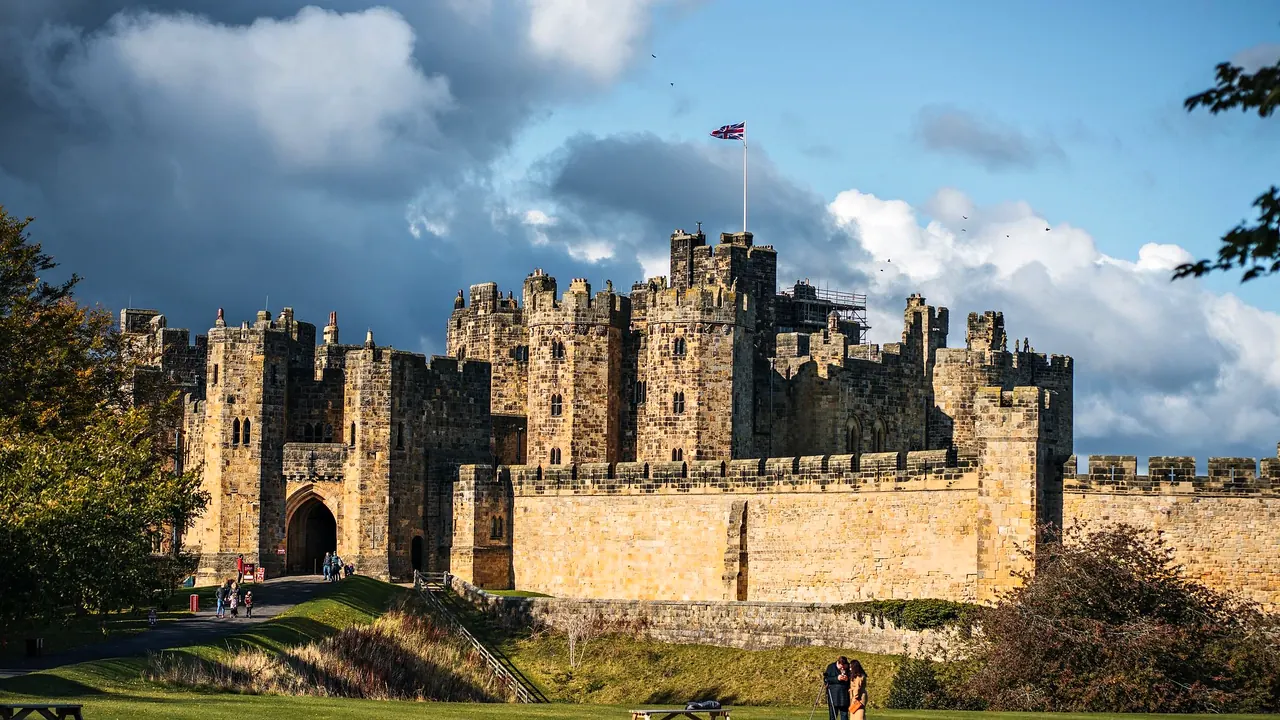
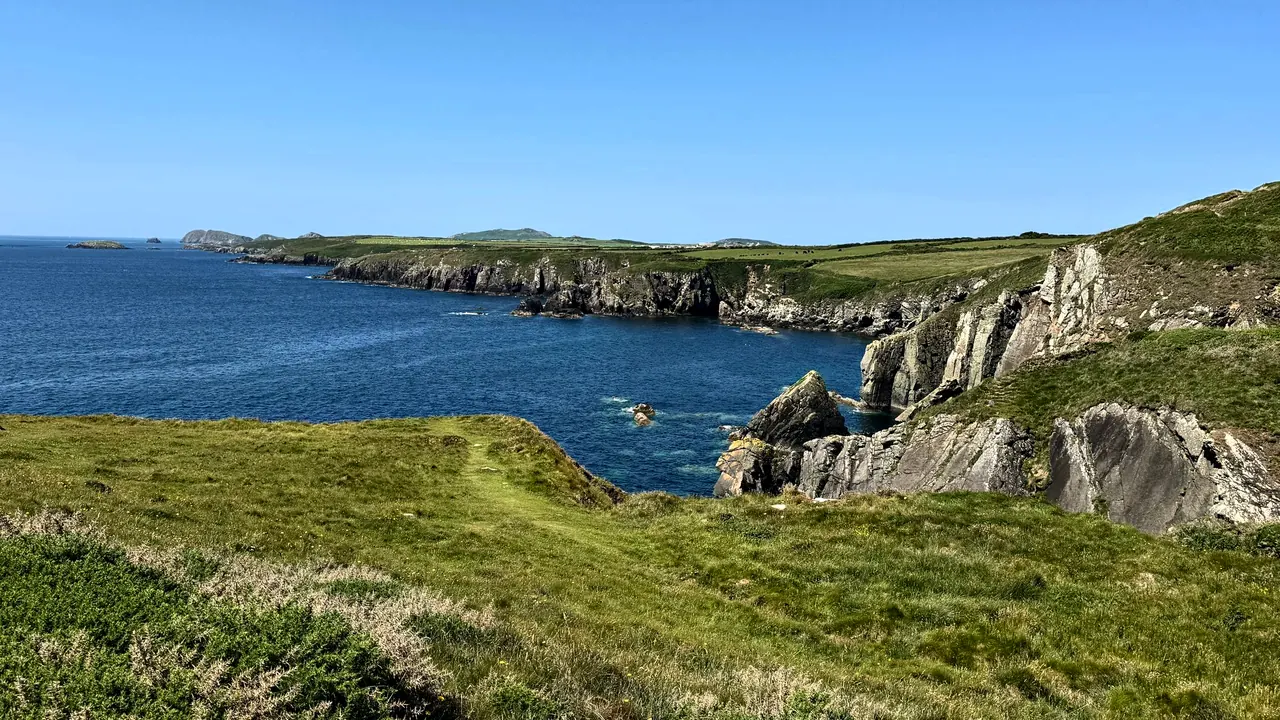
Photos: Northumberland by Clément Proust, Pexels License; Pembrokeshire by Petra Nesti, Pexels License.
Northumberland or Pembrokeshire?
Our verdict in twelve categories, each scored against the same fixed benchmark cities, and the climate month by month, so you can choose for your trip.
Choose Northumberland for
- day trips
- culture and sights
- getting around
Northumberland suits travellers whose ideal day is a castle in the morning and an empty beach or a stretch of Hadrian's Wall in the afternoon. Its history goes deeper, from the Roman frontier to Bamburgh and Lindisfarne. Edinburgh, Durham and Newcastle are close enough for days out, which gives a week here more range. It is the better base if you are not planning to swim.
Choose Pembrokeshire for
- beaches
- shopping
- nightlife
Pick Pembrokeshire if the beach is the point of the trip. The sand is as fine as Northumberland's, but more of the bays have lifeguards, the sea is a little warmer, and in Tenby and Saundersfoot families can walk to the beach. Active visitors also get coasteering, surf and kayaking on top of the coast path. The cost is fewer big sights and cities within reach.
Scoreboard
Twelve categories on one fixed scale from 0 to 100. The shaded stretch is the gap between the two.
Your match
Pick a travel style or drag the sliders, and both match scores follow your weighting.
Too close to call, level with your weighting
Wins on day trips and culture and sights with your weighting.
Wins on beaches and shopping with your weighting.
What matters to you?
Category by category
What the scores mean for a trip.
Beaches & swimming
Both coasts have superb sand and cold water, so the difference is in how you use the beaches. Northumberland's beaches at Bamburgh, Embleton Bay and Druridge Bay are emptier and grander. But the North Sea is colder, the wind is often brisk and lifeguards are few, so these are beaches for walks, kites and paddling.
Pembrokeshire's beaches are made for a full beach day. Many have lifeguards in summer, Tenby has sand right in town, the bays around Dale and Marloes are sheltered, and the water is a couple of degrees warmer by late summer. It is still a sea for wetsuits, but a swim here is a normal part of the day rather than a dare.
Food & drink
Neither is a food destination. Both are about what the boats and farms bring in, and they are close on choice. Northumberland's specialities are kippers smoked in Craster, crab sandwiches in the fishing villages and Lindisfarne oysters, mostly eaten in coaching inns. For a wider range of restaurants you go into Newcastle.
Pembrokeshire offers crab and lobster, salt-marsh lamb, early potatoes and ice cream made on dairy farms. Its farmers' markets suit a self-catering week, and St Davids and Narberth have a handful of good restaurants.
Culture & sights
Northumberland has the weightier heritage. Hadrian's Wall, with Housesteads and the writing tablets at Vindolanda, is the finest stretch of the Roman frontier. The run of castles from Alnwick and Bamburgh to Warkworth and Lindisfarne, along with Berwick's Elizabethan walls, gives you a week of sightseeing.
Pembrokeshire's best sights are in St Davids, where the cathedral and the ruined Bishop's Palace sit together in their hollow. Add Pembroke Castle and older stones such as Pentre Ifan, and you have a few good days rather than a whole trip. In both counties you drive between sites.
Nightlife
Neither is a place for going out, but Pembrokeshire at least has Tenby. On summer weekends its harbour pubs fill up and a few bars stay open late. In Northumberland an evening means a pint by the fire in a village inn, and anyone wanting more takes the train into Newcastle.
Nature & outdoors
Northumberland's outdoors reaches well inland. You can walk the crags along Hadrian's Wall or cross the Cheviots and meet almost nobody, and at Kielder the night skies are among the darkest in Europe, so a clear evening there is worth staying up for. Out at sea, puffins, terns and guillemots crowd the Farne Islands from late spring to midsummer.
Pembrokeshire's best scenery is almost all on the shore. Its coast path runs for about 300km over red and grey cliffs, arches and sea stacks, and any stretch makes a day's loop. Puffins nest on Skomer, there is a great gannet colony on Grassholm, and dolphins are often seen in the bays. Each autumn grey seals pup in both counties, on the Farnes and on Ramsey.
Day trips
Northumberland has major places on its doorstep. Edinburgh is under an hour by train from Berwick, Durham's cathedral and Newcastle's quayside are close, and Beamish and the abbey towns of the Scottish Borders each make a full day out.
Pembrokeshire's outings are pleasant but small: a boat from Tenby to Caldey, the harbours at Aberaeron and New Quay, and Dylan Thomas's boathouse at Laugharne. Swansea, the nearest sizeable city, is up to two hours away.
Good for families
Both make easy family trips, with sandy beaches, rock pools and boat trips to see puffins and seals. Northumberland's draw is its castles: costumed activities and broomstick training at Alnwick, the huge treehouse in the Alnwick Garden, and the race against the tide to Holy Island. There is little to do indoors when it rains.
Pembrokeshire has more for wet days, including a farm park with an indoor funfair and several soft-play centres. In Tenby and Saundersfoot young children can walk to the beach. In either county, plan on a car for most outings.
Getting around
Northumberland is the easier of the two without a car. The main east coast line stops at Morpeth, Alnmouth and Berwick, and the Tyne Valley line reaches Hexham and Haltwhistle for the Wall. When you do drive, the roads are quiet and the A1 runs straight up the coast. Check the tide tables before crossing to Holy Island.
In Pembrokeshire the branch lines end at Tenby, Pembroke, Haverfordwest and Fishguard, and many beaches lie down narrow lanes where car parks fill early in summer. The seasonal coast buses are good for one-way walks on the coast path, but a car is the realistic choice.
Shopping & style
Pembrokeshire has better things to take home. Its woollen mills still weave Welsh blankets and throws, Narberth has independent shops and antiques, and the galleries in St Davids sell local paintings and pottery.
Northumberland's high streets in Hexham and Alnwick are pleasant, and the large second-hand bookshop in Alnwick's old railway station is worth a detour. Beyond those, it is mostly farm shops and smokehouse counters.
Affordability
Costs are much the same in both: rural British prices that peak in the school summer break, with free beaches and coast paths. In Northumberland you save by staying inland around Hexham and the Tyne Valley, though castle and National Trust admissions add up. In Pembrokeshire the savings come from going in spring or early autumn and cooking for yourself.
Live music & performing arts
Northumberland has the more distinctive music of its own, the Northumbrian smallpipes, heard at pub sessions and small festivals. Newcastle and Gateshead, just over the county line, have the big venues for orchestras and touring shows.
Pembrokeshire's highlight is the classical music festival held in St Davids Cathedral each early summer. Otherwise it is folk, pub sessions and small theatres in Milford Haven and Fishguard.
Wellness & relaxation
Neither has spas worth travelling for, just a few country-house and coastal hotels, and both are restful because they are quiet. In Northumberland that means sleepy villages and a slow cottage week paced by the tides. Pembrokeshire also has a few yoga and retreat stays in farmhouses, and it is calmest outside August, when the coastal towns fill up.
When should you go?
Pick your month. The climate figures are measured averages, not a forecast.
Northumberland in July
Pembrokeshire in July
Daytime high, °C
Rainfall in the month, mm
Where the figures come from
Northumberland has no rain gauge within 25 km of the centre, so its rainfall comes from a gridded climate dataset read at the destination rather than from a gauge further away.
Pembrokeshire's temperatures are measured 46 km from the centre, at Aberporth.
Pembrokeshire has no rain gauge within 25 km of the centre, so its rainfall comes from a gridded climate dataset read at the destination rather than from a gauge further away.
Temperature and rainfall are climate normals, averaged over the years shown. Northumberland: 1991-2020 normals, Boulmer (7 km from centre). Pembrokeshire: 1991-2020 normals, Aberporth (46.2 km from centre).
The two share a cool sea climate with almost the same air temperatures: highs of about 18°C in July and August and around 7°C in midwinter. Late spring to early autumn is the time for walking and sitting on the sand, and neither is ever too hot for the streets. Around its coast and market towns Northumberland is noticeably drier, especially in spring and late autumn. Even its wettest months, August and November, stay well short of Pembrokeshire's.
Pembrokeshire's sea is the warmer of the two. It reaches about 17°C in August and stays mild into September, a couple of degrees above the North Sea, so late summer is when swimming is best. May and June are its sunniest months, with about 210 hours of sun in May. October to December are wet there, with up to 121mm in November, so autumn and early winter are its weaker season.
Which traveller are you?
On a beach and sun trip, Pembrokeshire is the clear choice. Its beaches have lifeguards in summer, there are sheltered bays and the sea is slightly warmer, and in towns like Tenby the sand is right on your doorstep. Northumberland's beaches are beautiful, but better for walking than swimming.
For a culture and arts trip, choose Northumberland. Hadrian's Wall and Vindolanda, Bamburgh, Alnwick and Lindisfarne fill several days of sightseeing, and Durham, Newcastle and Edinburgh are near enough for cathedrals and galleries. Pembrokeshire's heritage centres on St Davids and is seen in a few days.
On an outdoors trip, Pembrokeshire edges ahead for anyone who wants to be on or in the water, with coasteering, surf at Freshwater West and kayaking below its cliffs. Northumberland is better for walkers and cyclists heading inland, with the Cheviot Hills and the forest trails at Kielder.
Before you go
| Measure | Northumberland | Pembrokeshire |
|---|---|---|
| Official language | English | English |
| Currency | Pound Sterling (GBP) | Pound Sterling (GBP) |
| Sockets | G230 V, 50 Hz | G230 V, 50 Hz |
| Driving side | Left | Left |
| Time zone | UTC, UTC+1 in summer | UTC, UTC+1 in summer |
| Emergency number | 112 or 999 | 112 or 999 |
| Main airport | Newcastle International Airport (NCL)80 non-stop destinations | Cardiff International Airport (CWL)32 non-stop destinations |
| Public holidays this year | 8 days | 8 days |
By the numbers
| Measure | Northumberland | Pembrokeshire |
|---|---|---|
| Population | 323,820 | 125,818 |
| People per km² | 65 | 78 |
| Swim season, months above 21 °C | None | None |
Where else could you go?
Every comparison below shares a destination with this one, so you can follow Northumberland or Pembrokeshire somewhere new.
- Edinburghvs Northumberland
- Lake Districtvs Northumberland
- Yorkshire Dalesvs Northumberland
- Cornwallvs Pembrokeshire
- Snowdoniavs Pembrokeshire
- Devonvs Pembrokeshire