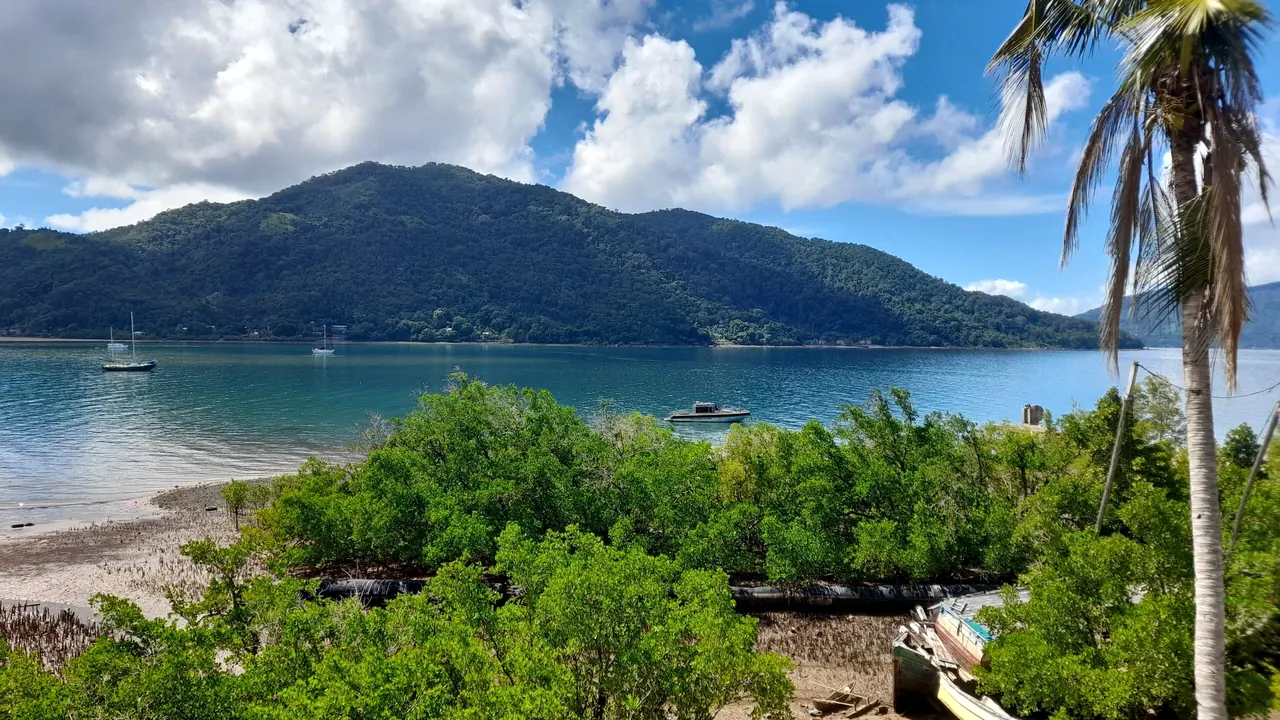
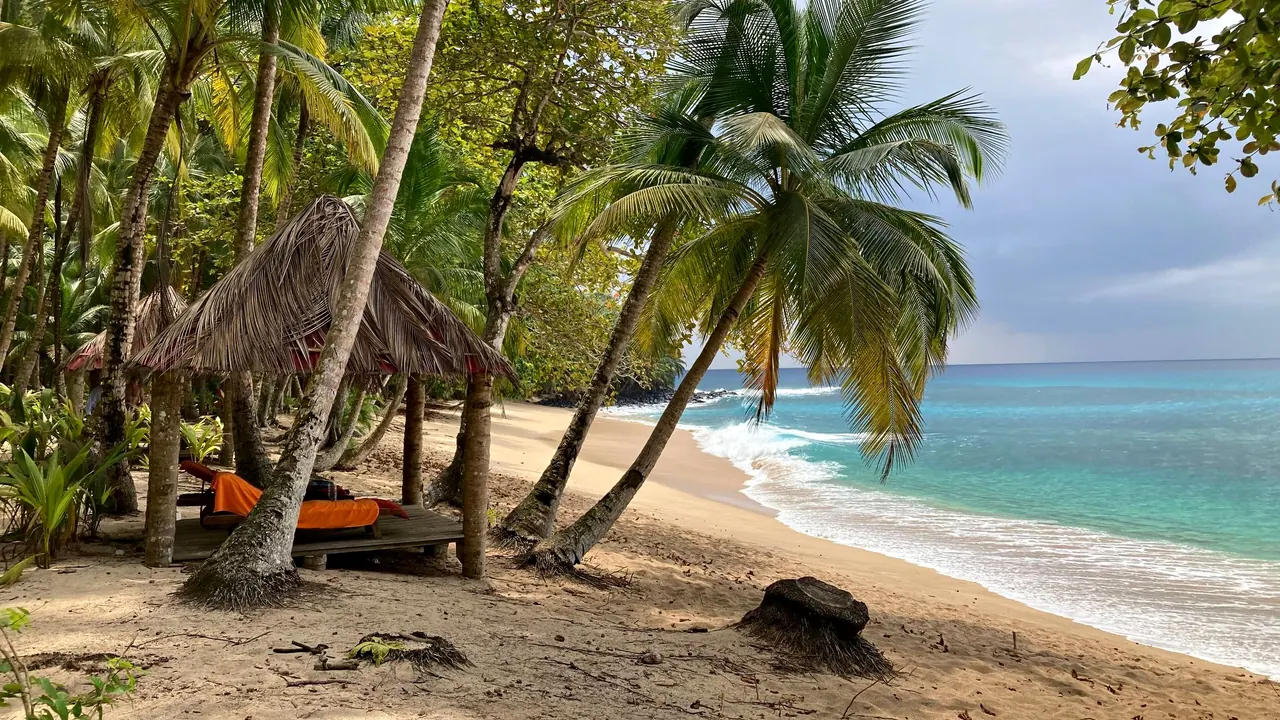
Photos: Nosy Be by Anai171, CC BY-SA 4.0, cropped; Príncipe by Josep M. Gracia, CC BY-SA 4.0, cropped.
Nosy Be or Príncipe?
Our verdict in twelve categories, each scored against the same fixed benchmark cities, and the climate month by month, so you can choose for your trip.
Choose Nosy Be for
- prices
- nightlife
- day trips
Nosy Be suits travellers who want a tropical island with a bit more going on around the beach and the boat trips. You can eat seafood cooked with vanilla and green pepper, have a night out in Ambatoloaka, take a boat to the villages on Nosy Komba or cross to the plantations of the mainland. Simple guesthouses keep a careful trip affordable. It is also the easier choice for families, with calm water at Andilana and lemurs children can see up close.
Choose Príncipe for
- culture and sights
- beaches
- nature and the outdoors
Príncipe is for people who want to disappear. The whole island is rainforest down to the water, the coves are empty and the evenings end early. Its plantation ruins and eclipse history give a little more to explore than Nosy Be's few sights. The price is real: most rooms are in upmarket eco-resorts, the journey ends in a small plane, and there is almost nothing to do after dark or to buy. If complete seclusion is the point, nothing else here gets close.
Scoreboard
Twelve categories on one fixed scale from 0 to 100. The shaded stretch is the gap between the two.
Your match
Pick a travel style or drag the sliders, and both match scores follow your weighting.
Wins on prices and nightlife with your weighting.
Wins on culture and sights and beaches with your weighting.
What matters to you?
Category by category
What the scores mean for a trip.
Beaches & swimming
These are two equally strong beach islands with different kinds of sand. Nosy Be gives you a long, open curve of pale sand at Andilana with sunsets over the Mozambique Channel, plus village beaches on the west coast that are easy to reach but narrower, with seaweed and shallows at low tide. Its very best sand is offshore, on the sandbar of Nosy Iranja and the quieter shores of Sakatia and Komba.
Príncipe's beaches are small golden coves like Praia Banana, where the forest meets the water and you often have the place to yourself. What you give up is convenience. Many coves are reached only by rough track or boat, there are almost no facilities, and some shores have rocks or currents that call for local advice.
Food & drink
Nosy Be eats noticeably better. Prawns, crab and lobster come cooked with coconut, vanilla or green pepper, and you can eat romazava and zebu stew at roadside places or snacks in Hell-Ville market. The beach restaurants along the west coast add French and Italian cooking, and rhum arrangé is poured everywhere.
On Príncipe you mostly eat at your lodge: the morning's fish, plantain, breadfruit and the odd calulu, with only a handful of simple places in Santo António. Its real food highlight is a tasting at a cocoa or coffee estate.
Culture & sights
Neither island is a sightseeing trip, but Príncipe has a little more to explore. Its roças, the half-ruined cocoa plantations, tell the story of the colonial economy and its forced labour. At Roça Sundy, Eddington's team photographed the 1919 eclipse that helped prove Einstein right, and pastel Santo António adds churches along its river.
Nosy Be's heritage fits into one morning. There are faded colonial fronts in Hell-Ville, the sacred Sakalava banyan where you go barefoot, the graves of Russian sailors from 1905 and the ylang-ylang distilleries.
Nightlife
Nosy Be is the only one of the two with a night out. Ambatoloaka has a short strip of bars and a couple of clubs mixing salegy with international pop until late, busiest at weekends, though its seedy edge puts some people off. On Príncipe a weekend drink with locals in a Santo António bar is about as far as it goes, and most guests sleep early for dawn walks.
Nature & outdoors
Both islands are first-rate for wildlife, and the difference is in what you see. Nosy Be is about lemurs and reptiles: black lemurs, panther chameleons and boas in the Lokobe forest and on Nosy Komba. It also has easy snorkelling with turtles at Nosy Tanikely and whale sharks offshore late in the year.
Príncipe is wilder as a landscape. The whole island is a biosphere reserve, with roadless forest in the south, volcanic spires such as Pico Papagaio above the canopy, an unusual number of endemic birds and turtles nesting on the beaches. Both have passing humpback whales, but Príncipe's trails are rougher and need a guide.
Day trips
Nosy Be gives you somewhere to go. Boats run to Ampangorinana on Nosy Komba with its embroidery and carvings, and to the fishing hamlets of Sakatia and Iranja. The short crossing to Ankify opens the Sambirano valley, where cocoa and vanilla plantations near Ambanja make a full day on the mainland.
Príncipe has no other towns to visit, so outings stay in the forest or at sea. São Tomé is a flight away and is better treated as a second stay than a day out.
Good for families
Nosy Be is the easier island with children. The water at Andilana is calm, lemurs on Nosy Komba come close, turtles at Tanikely are easy to spot, and west coast resorts have pools.
Príncipe offers equally memorable moments, such as turtle hatchlings and whales, but the small-plane hop, rough roads and wet trails make it tiring, so it really only suits adventurous families with older children. On both islands malaria and basic medical care need planning, and neither has anything built for children.
Getting around
Both islands take effort, but Nosy Be is a little easier. Taxis, tuk-tuks and hired scooters or quads reach anywhere on the island within about an hour, even if the roads are potholed and the offshore highlights still mean boat trips.
On Príncipe there are only a few roads, and those are rutted, so you rely on four-wheel-drive drivers and guided excursions. The south has no roads at all, so boats are the only way to its far beaches. Santo António, though, is small enough to cross on foot in minutes.
Shopping & style
Neither is a shopping trip, but Nosy Be at least sends you home with something. Hell-Ville's covered market is good for vanilla pods, pepper and cinnamon, distilleries sell ylang-ylang oil, and Nosy Komba's villagers sell embroidered tablecloths along the paths. On Príncipe the best you can take home is plantation chocolate and coffee, a few carvings and fabrics, with almost nothing else on offer.
Affordability
Nosy Be is clearly cheaper to stay on. Local meals, taxis and simple guesthouses cost little, though resorts, imported wine and the boat excursions can approach European levels.
Príncipe is expensive from the start. Most rooms are in a few upmarket eco-resorts, and the small-plane flight, transfers and guided outings all add to the bill. A few basic guesthouses near Santo António help, but only if you can arrange your own excursions.
Live music & performing arts
Each island has one festival worth planning around, and little beyond it. Nosy Be's Donia brings music from Madagascar and the Indian Ocean islands to Hell-Ville around Pentecost, and salegy bands play in Ambatoloaka's bars the rest of the year. Príncipe's big event is the Auto de Floripes in August, a masked street drama of Christians and Moors that takes over Santo António for days. The two are different kinds of event: Donia is a music festival, while the Auto de Floripes is a piece of living folk theatre.
Wellness & relaxation
Both islands relax you through their pace rather than any bathing tradition. Nosy Be has more pampering, with resort spas using ylang-ylang, vanilla and coconut and masseuses under the trees on some beaches, and the north-west around Andilana is the calmest part. Príncipe has fewer treatments but deeper quiet: few cars, no crowds and nothing but forest sounds at night.
When should you go?
Pick your month. The climate figures are measured averages, not a forecast.
Nosy Be in July
Príncipe in July
Daytime high, °C
Rainfall in the month, mm
Where the figures come from
Príncipe has no weather station within reach, so its figures come from a gridded climate model rather than a measured record, and read a broad area rather than one spot.
Temperature and rainfall are climate normals, averaged over the years shown. Nosy Be: 1991-2020 normals, Fascene Nossi-Be (14.3 km from centre). Príncipe: 2001-2020 normals, NASA POWER reanalysis grid, no weather station within 90 km.
Both islands have warm sea all year, so the dry season decides the trip. On Nosy Be that runs from about May to October, when the rain almost stops and the sea is clear and calm. December to March is the heavy rainy season, with over 400mm in January alone. The heat barely changes through the year, with afternoons around 31°C to 33°C, so any walking around Hell-Ville or the hills is best done early in the day.
Príncipe is milder, with highs of about 26°C to 28°C, which makes forest walks less punishing. Its driest stretch is shorter, roughly June to September, when August sees around 40mm. The rain comes in two wetter spells, from March to May and more heavily in October and November, and that is when the trails turn heavy. For a trip in the southern winter both islands are at their best together. Nosy Be also stays dry into October, when Príncipe is already wet.
Which traveller are you?
On a trip on a tight budget, Nosy Be is the realistic choice. Guesthouses in Ambatoloaka or Hell-Ville, market food and taxis are cheap, while Príncipe's beds are mostly in costly eco-resorts and every transfer and outing adds up.
For a food and nightlife trip, Nosy Be is the only one of the two that works, with grilled seafood, rhum arrangé and Ambatoloaka's bars and clubs playing salegy late. On Príncipe you mostly eat where you stay and sleep early.
On an outdoors trip, both islands are strong, so the choice is about what you want to do. Príncipe is for walkers, with guided trails through the roadless Obô forest, endemic birds and volcanic spires. Nosy Be is better for snorkelling with turtles and seeing lemurs up close.
Before you go
| Measure | Nosy Be | Príncipe |
|---|---|---|
| Official language | French, Malagasy | Portuguese |
| Currency | Malagasy Ariary (MGA) | Dobra (STN) |
| Sockets | CEJK50 Hz | CF220 V, 50 Hz |
| Driving side | Right | Right |
| Time zone | UTC+3 | UTC |
| Emergency number | Police 117, ambulance 124, fire 118 | 112 |
| Main airport | Nosy Be International Airport (NOS)8 non-stop destinations | Principe Airport (PCP)1 non-stop destination |
| Public holidays this year | 10 days | 8 days |
By the numbers
| Measure | Nosy Be | Príncipe |
|---|---|---|
| Population | 60,000 | 7,344 |
| People per km² | 207 | 54 |
| Swim season, months above 21 °C | 12 months | 12 months |
Where else could you go?
Every comparison below shares a destination with this one, so you can follow Nosy Be or Príncipe somewhere new.
- São Tomévs Príncipe
- Loango National Parkvs Príncipe
- Moronivs Nosy Be
- Antananarivovs Nosy Be
- Réunionvs Nosy Be
- Port Louisvs Nosy Be