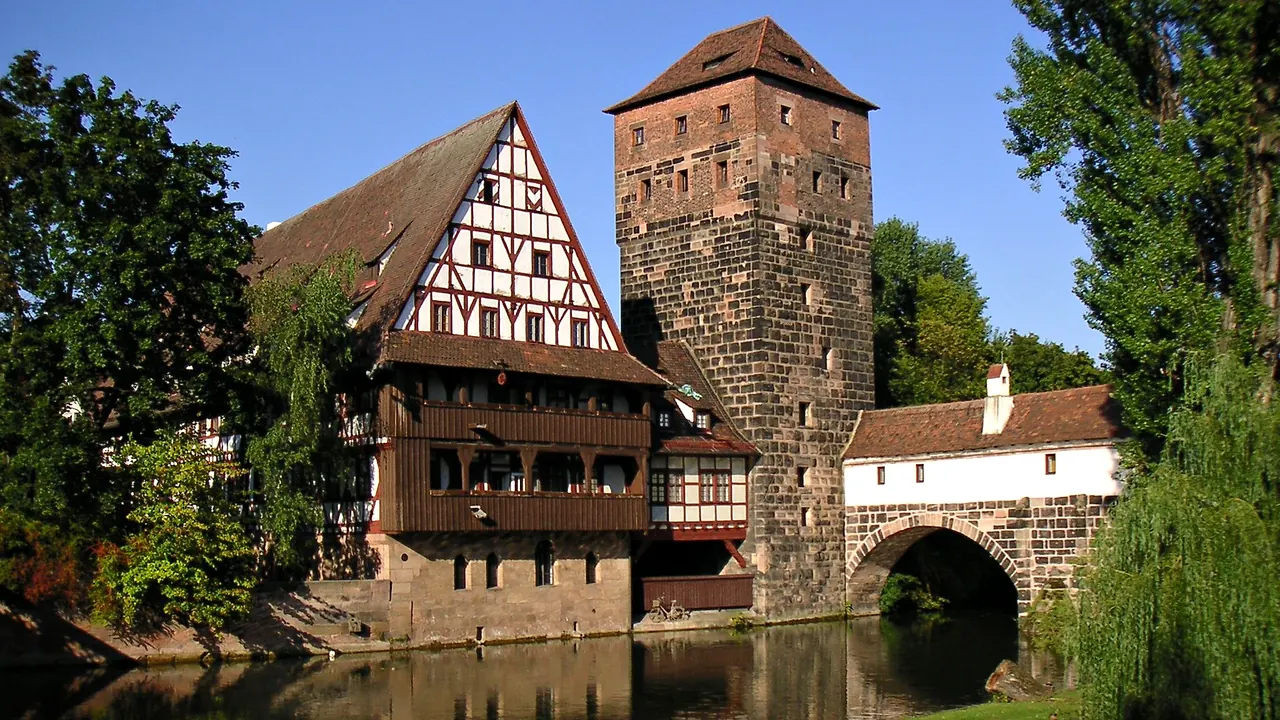
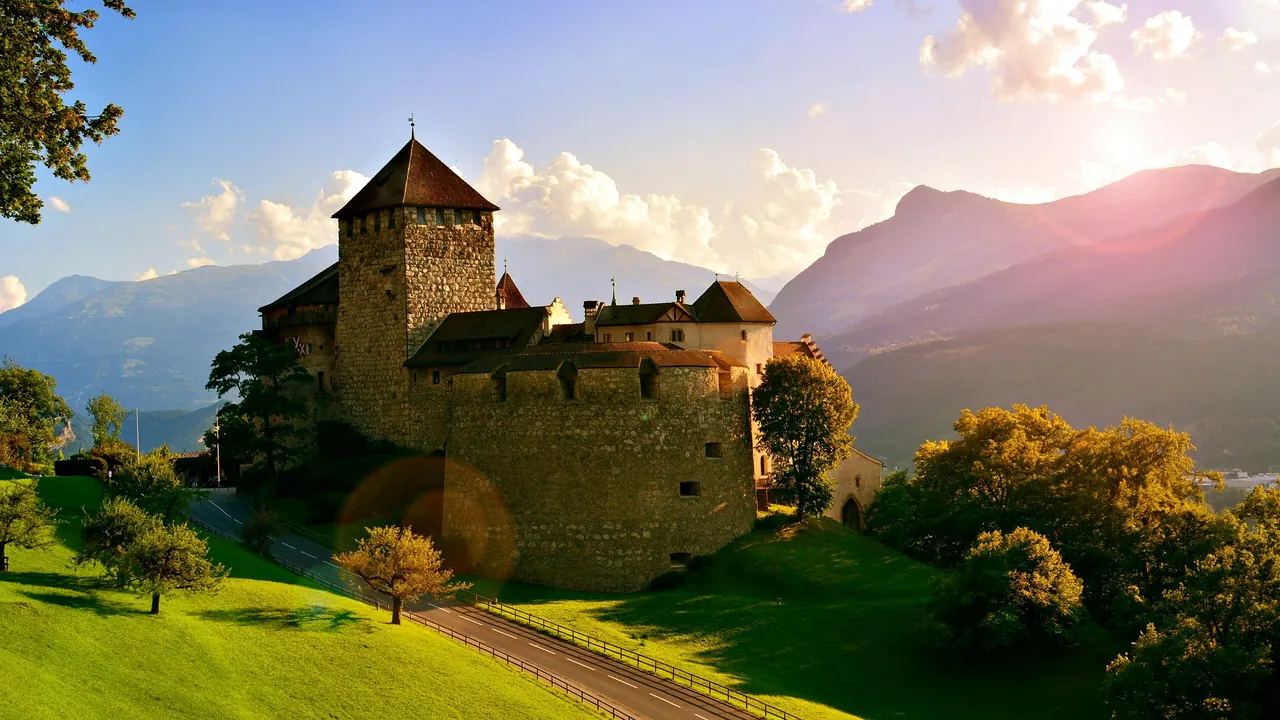
Photos: Nuremberg by Horst Gutmann, CC BY 2.0, cropped; Vaduz by Justin LaBerge, CC BY 2.0, cropped.
Nuremberg or Vaduz?
Our verdict in twelve categories, each scored against the same fixed benchmark cities, and the climate month by month, so you can choose for your trip.
Choose Nuremberg for
- prices
- culture and sights
- shopping
Nuremberg suits travellers who want a proper city trip. It has a walled medieval old town under an imperial castle, a national museum that can fill a day and the sobering sites of the twentieth century. Add Franconian taverns, an easy evening in Gostenhof and plenty to keep children busy, all at a fair price. Its rail links also put Bamberg, Regensburg and Würzburg within reach without a car.
Choose Vaduz for
- nature and the outdoors
If the mountains are the reason for the trip, pick Vaduz. Trails climb from the edge of town, and the Rätikon peaks and the slopes at Malbun are half an hour up the road. The town itself is quiet and orderly, and you can see it in a day. It suits walkers, cyclists and winter visitors who are happy with early nights. You will need a generous budget, and you shouldn't expect much from the shops or the bars.
Scoreboard
Twelve categories on one fixed scale from 0 to 100. The shaded stretch is the gap between the two.
Your match
Pick a travel style or drag the sliders, and both match scores follow your weighting.
Wins on prices and culture and sights with your weighting.
Wins on nature and the outdoors with your weighting.
What matters to you?
Category by category
What the scores mean for a trip.
Beaches & swimming
Neither place is for swimming, and in both a swim means an outdoor pool or a drive to a lake. What differs is the kind of lake. Nuremberg's Franconian Lake District, about an hour south, is a chain of reservoirs with grassy shores and small sandy strips, and in a warm summer it gets a little warmer than the Alpine lakes.
From Vaduz the water is closer and the setting more dramatic. The Walensee lies under steep mountain walls about half an hour away, and the shores of Lake Constance are under an hour.
Food & drink
Nuremberg gives you far more to eat and drink. There are small beechwood-grilled bratwurst on pewter plates, Schäufele with crackling, Lebkuchen all year, and above all a Franconian beer culture of taverns and riverside beer gardens pouring local lagers and Kellerbier.
In Vaduz the choice is a few hotel dining rooms, some restaurants on the Städtle and village inns serving Käsknöpfle and rösti. Its one real pleasure is wine, with Pinot Noir from the prince's own estate on the slopes below the castle. Otherwise the range is small and kitchens close early.
Culture & sights
Nuremberg has far more to see. Inside the medieval walls are the imperial castle, St Sebaldus and St Lorenz, the Beautiful Fountain and Dürer's house, and the Germanisches Nationalmuseum could take a day on its own. The Rally Grounds and Courtroom 600 add a sombre chapter of twentieth-century history.
Vaduz fits into a single unhurried day. Its highlight is modern art in the black and white cubes of the Kunstmuseum and the Hilti Art Foundation, alongside the National Museum and the stamp collection. The castle itself is closed to visitors.
Nightlife
Nuremberg is no party city, but it gives you a good night out. You can try the old town's wine bars and taverns, students on the riverbanks in summer, and the small bars and alternative venues of Gostenhof.
Vaduz falls silent after dinner. Apart from a few wine bars and hotel lounges on the Städtle, there is nothing open late, and its own young people cross into Austria or travel to Zurich to go out.
Nature & outdoors
Vaduz has the stronger outdoors by a wide margin, because the Alps begin at the edge of town. Within half an hour you can be on high walks in the Rätikon, the exposed Fürstensteig or long ridge routes above Malbun, and in winter Malbun has skiing too. The flat Rhine dam path is there for cycling.
Nuremberg's countryside is gentler. The Reichswald pine forest starts at the city's edge, the Pegnitz valley is good for easy riverside cycling, and Franconian Switzerland, an hour away, has limestone towers, caves and serious rock climbing.
Day trips
Nuremberg has the better choice of outings and the easier way to reach them. Bamberg, Regensburg and Würzburg are each about an hour away by train, Rothenburg and Dinkelsbühl are a little further, and Munich is close by fast train.
Vaduz makes up for less in sheer range with variety across three countries. Feldkirch is twenty minutes away, and St Gallen's abbey library, Appenzell's painted houses and Lindau on Lake Constance are each about an hour. Without a train station of its own, though, these trips usually involve changes, so a car helps.
Good for families
Nuremberg is much better with children, thanks to its centuries of toy-making. There are the Toy Museum, the railway museum with Germany's first train, a large zoo in old quarries with a dolphin house, and a big toy-brand play park just outside the city.
Vaduz is safe, clean and easy with a pushchair, but nothing there is built for children. Families spend their time at the open-air pools, on gentle walks above Triesenberg or on the beginner slopes at Malbun. That works better for older children who like hiking than for small ones.
Getting around
Both centres are easy on foot, but Nuremberg is far better connected beyond that. The walled old town is about 1.5km across, with the main station at its southern gate. An integrated network of U-Bahn, trams and S-Bahn reaches the zoo, the Rally Grounds and Fürth on one ticket, and regional trains make a car unnecessary.
In Vaduz the sights sit along one short, flat pedestrian street. Buses reach every village and run up to Malbun, but further trips mean changing at Buchs, Sargans or Feldkirch, and many visitors find a car simpler.
Shopping & style
A shopper will only find real streets of shops in Nuremberg, and even there the best buys are traditional ones. Königstraße and Breite Gasse carry the chains and department stores, and visitors usually leave with Lebkuchen in decorated tins, wooden toys and crafts from the Handwerkerhof workshops by the station gate. In Advent the Christkindlesmarkt on the Hauptmarkt adds plum-figure dolls and ornaments.
Vaduz has a handful of shops on the Städtle selling watches, jewellery and the collectable stamps, with no department stores or markets. A bottle of local wine is the best thing to take home, and serious shoppers head to Zurich.
Affordability
Here the two are very far apart. Nuremberg is mid-priced for Western Europe, with filling tavern food, cheap local beer and transport that costs little. The one thing to plan around is trade-fair weeks and the Advent market season, when hotel rooms get scarce and expensive.
Vaduz follows Swiss prices for everything from a room to a simple lunch, and with so few hotels there is hardly a budget option. Some visitors cut costs by sleeping across the border in Austria.
Live music & performing arts
An evening of opera or ballet is easy to arrange in Nuremberg, where the Staatstheater stages both in repertory alongside drama in its Art Nouveau opera house. Two orchestras play through the season, and in summer there is a large open-air concert in the Luitpoldhain. The free Bardentreffen folk weekend in the old town squares and a big rock festival at the Zeppelinfeld add more.
Liechtenstein does well for its size, but its calendar is small: the theatre in neighbouring Schaan, a short symphony season, a summer classical festival in Vaduz and the odd church concert. You will usually find something to attend over a week, but no more than that.
Wellness & relaxation
The two are broadly level, and neither has a bathing tradition within its own boundaries. The difference is in the kind of rest on offer. From Nuremberg, the U-Bahn runs to a large thermal spa with sauna gardens in Fürth, where you should expect nude, mixed saunas. Bad Windsheim's saline pools are an hour west, and slow beer-garden afternoons by the Pegnitz are the local way to switch off.
Vaduz relaxes you through quiet and scenery. Bad Ragaz, twenty-five minutes away, has a large thermal bath fed by warm water from the Tamina gorge, and it pairs well with days of walking in the hills.
When should you go?
Pick your month. The climate figures are measured averages, not a forecast.
Nuremberg in July
Vaduz in July
Daytime high, °C
Rainfall in the month, mm
Where the figures come from
Vaduz's temperatures are measured 51 km from the centre, at Sigmarszell-Zeisertsweiler.
Vaduz has no rain gauge within 25 km of the centre, so its rainfall comes from a gridded climate dataset read at the destination rather than from a gauge further away.
Temperature and rainfall are climate normals, averaged over the years shown. Nuremberg: 1991-2020 normals, Nuernberg (5.5 km from centre). Vaduz: 1991-2020 normals, Sigmarszell-Zeisertsweiler (51.3 km from centre).
Through the year the two places are almost equally warm. Winter highs sit around 4°C in both, cold enough that sightseeing means short walks between warm interiors. Both reach the mid-twenties in July and August, with Nuremberg peaking at 25°C. May to September is the comfortable stretch for walking in either, and the lakes are only warm enough for a swim at the height of summer.
The real difference is rain. Vaduz sits against the Alps and gets roughly twice the rainfall, and its wettest months are in summer, reaching 126mm in August. Nuremberg's wettest month is July, with 77mm. Nuremberg also gets slightly more summer sunshine, so for a dry city stroll in midsummer it has the edge. In Vaduz, plan mountain days around the weather and keep a spare day in hand.
Which traveller are you?
On a culture and arts trip, Nuremberg is the clear choice. It has the Kaiserburg, the Gothic churches, Dürer's house, the Germanisches Nationalmuseum and Courtroom 600, then an evening at the Staatstheater. Vaduz has a strong modern art pair but little else.
For a trip on a tight budget, go to Nuremberg. Tavern meals and local beer are inexpensive, and one transport ticket covers the whole area. Vaduz runs at Swiss prices and has few hotels, so even a short stay costs a lot.
On an outdoors trip, Vaduz wins easily. You can walk straight from town into vineyards and beech forest, reach high ridges in the Rätikon and ski at Malbun in winter. Nuremberg offers gentle forest walks and Franconian Switzerland's limestone, but no mountains.
Before you go
| Measure | Nuremberg | Vaduz |
|---|---|---|
| Official language | German | German |
| Currency | Euro (EUR) | Swiss Franc (CHF) |
| Sockets | CF230 V, 50 Hz | CJ230 V, 50 Hz |
| Driving side | Right | Right |
| Time zone | UTC+1, UTC+2 in summer | UTC+1, UTC+2 in summer |
| Emergency number | 112 | 112 |
| Elevation | 209 m | 455 m |
| Main airport | Nuremberg Airport (NUE)5 km from centre60 non-stop destinations | Zürich Airport (ZRH)81 km from centre226 non-stop destinations |
| Public holidays this year | 12 days | 21 days |
By the numbers
| Measure | Nuremberg | Vaduz |
|---|---|---|
| Population | 531,159 | 5,668 |
| People per km² | 2,848 | 328 |
| Museums within 10 km | 50 | 7 |
| UNESCO World Heritage sites within 50 km | 1 | 3 |
Where else could you go?
Every comparison below shares a destination with this one, so you can follow Nuremberg or Vaduz somewhere new.
- Bambergvs Nuremberg
- Rothenburg ob der Taubervs Nuremberg
- Zurichvs Vaduz
- Lucernevs Vaduz
- Luganovs Vaduz
- Interlakenvs Vaduz