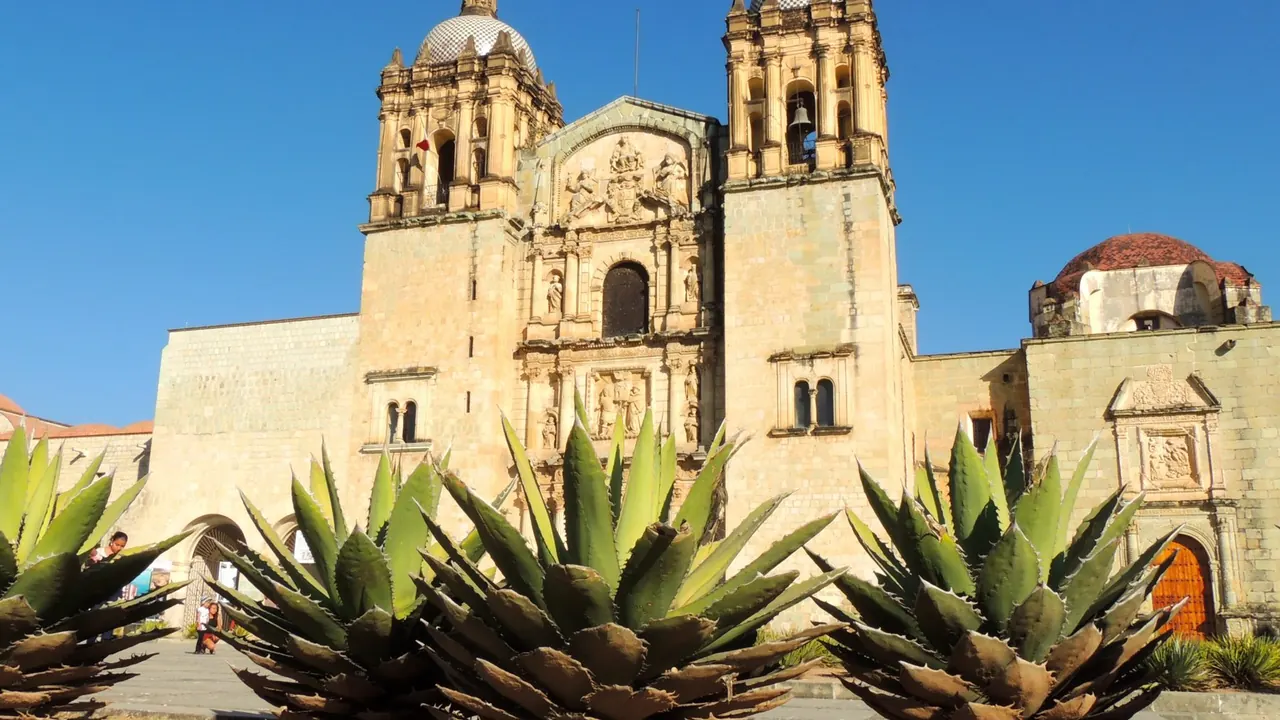
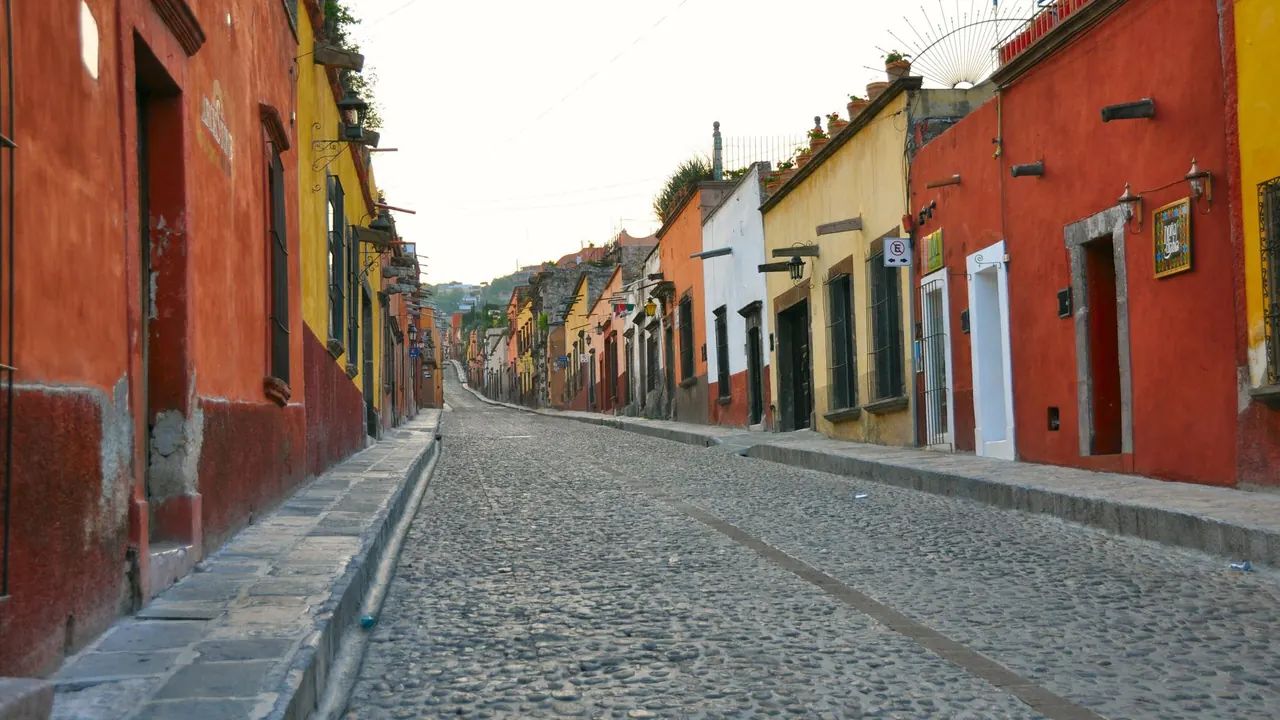
Photos: Oaxaca by Öskr Rck, CC BY-SA 3.0, cropped; San Miguel de Allende by Russ Bowling, CC BY 2.0, cropped.
Oaxaca or San Miguel de Allende?
Our verdict in twelve categories, each scored against the same fixed benchmark cities, and the climate month by month, so you can choose for your trip.
Choose Oaxaca for
- prices
- food and drink
- nature and the outdoors
Oaxaca suits travellers who plan their days around eating, drinking and making things: moles and market grills, mezcal from valley distilleries, rugs and pottery bought in the villages where they are woven and fired. It also goes further on a modest budget. Walkers get real mountain country in the Sierra Norte, with cloud forest and trails run by the villages themselves.
Choose San Miguel de Allende for
- wellness
- day trips
- live music and the arts
Choose San Miguel de Allende for a slower, more polished stay, ideally with a driver or hire car. The town is a pleasure simply to sit in, and its hot spring pools are a short ride away. Guanajuato and Querétaro add two more colonial cities within easy reach, something Oaxaca's valley villages cannot match.
Scoreboard
Twelve categories on one fixed scale from 0 to 100. The shaded stretch is the gap between the two.
Your match
Pick a travel style or drag the sliders, and both match scores follow your weighting.
Wins on prices and food and drink with your weighting.
Wins on wellness and day trips with your weighting.
What matters to you?
Category by category
What the scores mean for a trip.
Beaches & swimming
Neither town has any beach life, and in both a swim means a hotel pool. What differs is how far the sea is. From Oaxaca, the Pacific at Puerto Escondido, Mazunte or Huatulco is a short flight or a long mountain drive away, so a few days on the coast are easy to add at the end.
San Miguel sits deep in the central plateau, so the sea is a separate journey. Its alternative to the beach is the warm spring-fed pools in the countryside, which are for soaking rather than swimming.
Food & drink
Oaxaca is one of Mexico's great food destinations, and San Miguel cannot match it. The range of moles, the meat grilled to order in the Mercado 20 de Noviembre, chapulines, quesillo and hot chocolate with egg bread give every meal a sense of place. Mezcal tasting rooms pour spirits from the surrounding valleys, and chef-led tasting menus build on local maize.
San Miguel eats well for its size, with rooftop and courtyard dining, Bajío ingredients and wine from Guanajuato's high desert. Much of it is aimed at foreign residents, though, and the menus start to look alike long before Oaxaca's would.
Culture & sights
Oaxaca has more to see and more weight behind it. Monte Albán, the Zapotec capital on its flattened mountaintop, is twenty minutes away. In the former monastery beside Santo Domingo, the gold of Tomb 7 is on show, and the Tamayo and Textile museums go deeper into the region's art and weaving.
San Miguel's appeal is the townscape itself: cobbled hillside streets, ochre façades and the pink spires of the Parroquia. Bellas Artes with its unfinished Siqueiros mural is a highlight, but there are no major museums, and two days cover the essentials.
Nightlife
Evenings are much alike in size: relaxed drinking rather than clubbing, with very little after the early hours in either. Oaxaca's nights centre on tasting village mezcal in small bars in the centre and Jalatlaco, with salsa nights at weekends.
San Miguel moves more with the calendar. On Fridays and Saturdays visitors from Mexico City and Querétaro keep the streets round the Jardín busy and a few dance bars open late, but on weeknights the town goes quiet soon after dinner.
Nature & outdoors
Oaxaca has far better outdoor country. In the Sierra Norte, the Pueblos Mancomunados run trails, cabins and guides through pine-oak and cloud forest, and you can walk from village to village for several days. The petrified-looking cascades of Hierve el Agua make a fine half-day out.
Around San Miguel the landscape is dry scrub and cactus with no real mountains or forest. The canyon trails of El Charco del Ingenio, horse riding on the ranches and dawn balloon flights fill a morning rather than a trip.
Day trips
San Miguel is the better base for excursions, mainly because of the cities around it. Guanajuato, the silver town packed into its ravine, and baroque Querétaro are each about an hour away. Atotonilco's mural-covered sanctuary, Dolores Hidalgo and Bernal beneath its monolith fill out a full week.
Oaxaca's outings are smaller places in the Central Valleys: the Tule cypress, the weavers of Teotitlán, Mitla's stone fretwork and the mezcal villages near Matatlán. The lonely monasteries of the Mixteca Alta reward a longer day, but there is no second historic city to set beside Oaxaca itself.
Good for families
Neither is an obvious family destination, with no zoo, aquarium or theme park in either, but Oaxaca gives children a little more to do. Hands-on sessions painting alebrijes or making chocolate and tortillas work well for older children, and the flat zócalo is pleasant in the evenings.
San Miguel is more of an adult town of galleries and rooftop bars, and its steep cobbles are harder with a pushchair. Spring pools and horse rides help, but younger children run out of things to do sooner.
Getting around
Both centres are compact enough to walk, but Oaxaca's is easier on the legs. Its grid is level, and the pedestrian Macedonio Alcalá runs from the zócalo to Santo Domingo. Colectivos and second-class buses make the valley villages simple to reach without a car.
San Miguel's streets climb steeply over uneven stones at about 1,900m, so even short walks take effort. With no airport in town, arrival means a shuttle from Querétaro or León, and smaller places beyond the bus routes need a driver.
Shopping & style
Both are towns for crafts rather than fashion, but Oaxaca has the edge because you can buy at the source. Rugs come from Teotitlán, black pottery from San Bartolo Coyotepec and carvings from Arrazola, and the weekly markets at Tlacolula and Ocotlán are worth visiting even if you buy nothing.
San Miguel is stronger on things for the house. Tin lanterns and glass fill the stepped Mercado de Artesanías, the design shops gather folk art from across Mexico, and an old textile mill is now full of studios and antique dealers.
Affordability
Oaxaca is clearly the cheaper stay. Market tlayudas, fonda lunches, simple guesthouses and rides out to the ruins all cost little, and the expense is mostly in boutique hotels and tasting menus.
San Miguel is among the dearer places in Mexico, with colonial boutique hotels and restaurants around the Jardín priced for foreign residents and visitors from the capital. Street food and cantinas are still cheap, and the churches and streets cost nothing to enjoy.
Live music & performing arts
Neither town has much of a formal programme, and the difference lies in when the music happens. Oaxaca's big moment is the Guelaguetza in July, when dancers from across the state perform above the city. Outside festival time, marimba and the state band in the zócalo are pleasant but modest.
San Miguel spreads its music more evenly through the year. The Teatro Ángela Peralta hosts chamber music and jazz festivals in their seasons, and mariachi bands play on the Jardín every night.
Wellness & relaxation
San Miguel is the better place to unwind. The mineral springs towards Atotonilco, with open-air pools and domed grottoes of naturally hot water, make an easy half-day out. In town, spas, yoga and temazcal cater to the large resident community, and the town's slow pace does the rest.
Oaxaca's wellness tradition is more rooted in local custom: temazcal ceremonies led by traditional healers in the city and nearby villages. It has no thermal baths, though, and festival weeks bring fireworks and crowds.
When should you go?
Pick your month. The climate figures are measured averages, not a forecast.
Oaxaca in July
San Miguel de Allende in July
Daytime high, °C
Rainfall in the month, mm
Where the figures come from
San Miguel de Allende's temperatures are measured 54 km from the centre, at Guanajuato, Gto..
San Miguel de Allende has no rain gauge within 25 km of the centre, so its rainfall comes from a gridded climate dataset read at the city rather than from a gauge further away.
Temperature and rainfall are climate normals, averaged over the years shown. Oaxaca: 1961-1990 normals, Oaxaca, Oax. (1.1 km from centre). San Miguel de Allende: 1991-2020 normals, Guanajuato, Gto. (53.7 km from centre).
Both towns follow the same rhythm: a dry, sunny winter and spring, then summer rain from June to September. Through the dry season, from October to April, Oaxaca is the warmer of the two, with days near 28°C even in January. San Miguel's afternoons in December and January are closer to 23°C, which suits its steep climbs well. In summer the gap closes, and San Miguel is if anything slightly warmer in June and July.
April and May are the hottest stretch in both, with Oaxaca reaching 33°C, and the middle of the day becomes tiring on the streets and at the ruins. From November to March Oaxaca has its clearest skies and driest air, with noticeably more sunshine than San Miguel. This is its best season for sightseeing and the hills. San Miguel's rain peaks in July at about 130mm. October and November work well in both towns, because the rain has eased and the spring heat has not yet arrived. Neither town has beach weather to plan around.
Which traveller are you?
On a food and nightlife trip, Oaxaca is the clear choice. Its moles, tlayudas and smoky market grills have far more depth than San Miguel's restaurants, and evenings flow naturally from dinner into small mezcal bars in the centre and Jalatlaco.
For a trip on a tight budget, Oaxaca stretches your money much further. Market meals, guesthouses and colectivos to the villages all cost little. In San Miguel, rooms and restaurants around the Jardín are priced for foreign residents and weekend visitors from the capital.
On a relaxing and wellness trip, San Miguel suits you better. The warm spring pools and grottoes towards Atotonilco are fifteen minutes away, and the town is full of spas and yoga classes. Oaxaca offers temazcal ceremonies but has no thermal baths.
Before you go
| Measure | Oaxaca | San Miguel de Allende |
|---|---|---|
| Official language | Spanish, Nahuatl, Yucatec Maya | Spanish, Nahuatl, Yucatec Maya |
| Currency | Mexican Peso (MXN) | Mexican Peso (MXN) |
| Sockets | AB127 V, 60 Hz | AB127 V, 60 Hz |
| Driving side | Right | Right |
| Time zone | UTC-6 | UTC-6 |
| Emergency number | 911 | 911 |
| Elevation | 1,555 m | 1,900 m |
| Main airport | Xoxocotlán International Airport (OAX)7 km from centre14 non-stop destinations | Guanajuato International Airport (BJX)77 km from centre22 non-stop destinations |
| Public holidays this year | 9 days | 9 days |
By the numbers
| Measure | Oaxaca | San Miguel de Allende |
|---|---|---|
| City population | 258,913 | 69,811 |
| People per km² | 3,028 | - |
| Museums within 10 km | 10 | 2 |
| UNESCO World Heritage sites within 50 km | 2 | 2 |
Where else could you go?
Every comparison below shares a destination with this one, so you can follow Oaxaca or San Miguel de Allende somewhere new.