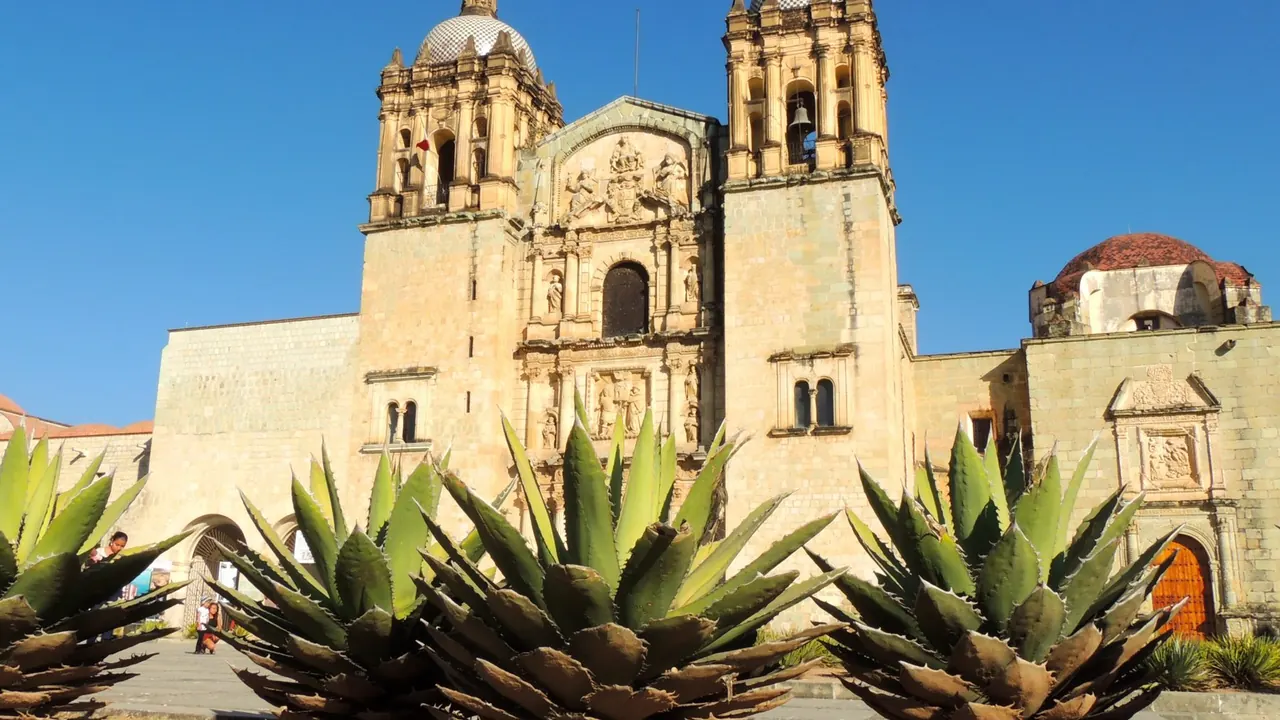
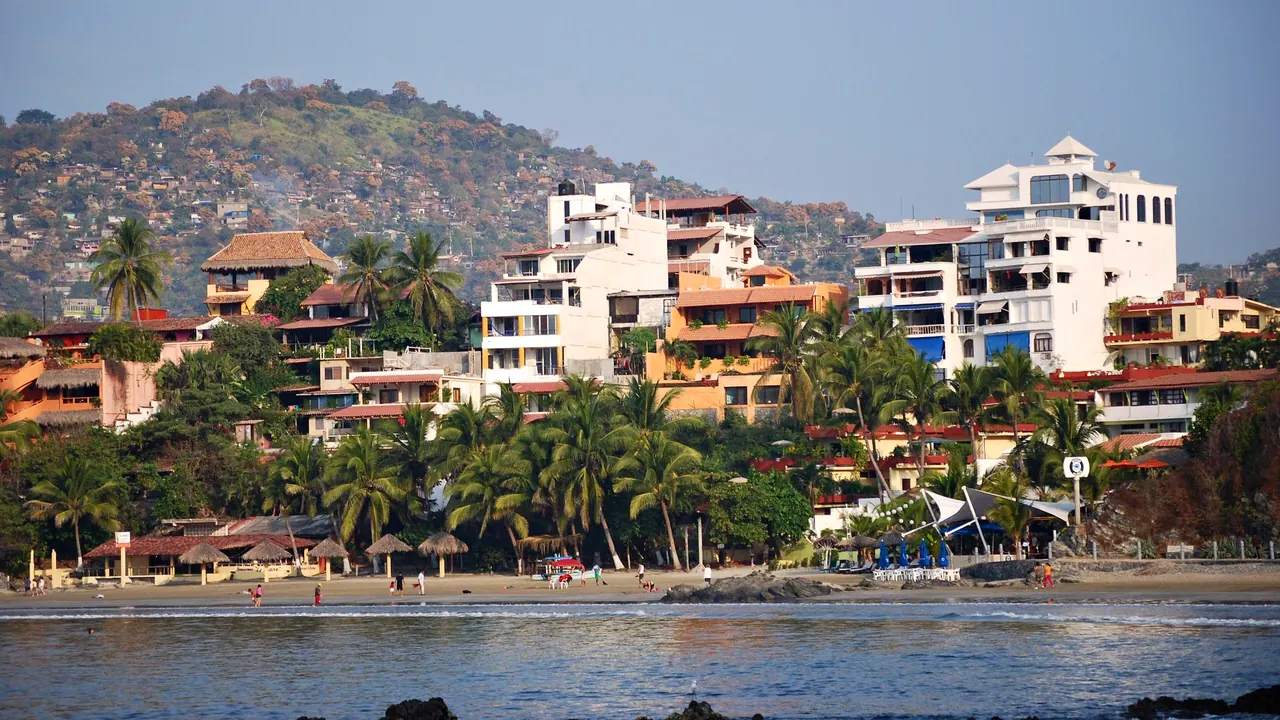
Photos: Oaxaca by Öskr Rck, CC BY-SA 3.0, cropped; Zihuatanejo by AlejandroLinaresGarcia, CC BY-SA 4.0, cropped.
Oaxaca or Zihuatanejo?
Our verdict in twelve categories, each scored against the same fixed benchmark cities, and the climate month by month, so you can choose for your trip.
Choose Oaxaca for
- culture and sights
- day trips
- shopping
Oaxaca is the choice for a trip built around eating, looking and buying. You get moles and mezcal at the source, a colonial centre in green stone, Monte Albán on its mountaintop and a ring of craft villages within an hour. It suits travellers who like full days on foot and in markets, and who don't mind that the sea is a separate journey away.
Choose Zihuatanejo for
- beaches
- families
Zihuatanejo is for those who mainly want warm water and an easy pace. Its sheltered bay, calm swimming at La Ropa and Las Gatas and grilled fish under a palapa make a simple, restful beach stay that works well with children. There is little to visit beyond the sand and the boats, so choose it when doing very little is the point.
Scoreboard
Twelve categories on one fixed scale from 0 to 100. The shaded stretch is the gap between the two.
Your match
Pick a travel style or drag the sliders, and both match scores follow your weighting.
Wins on culture and sights and day trips with your weighting.
Wins on beaches and families with your weighting.
What matters to you?
Category by category
What the scores mean for a trip.
Beaches & swimming
Zihuatanejo is a beach destination and Oaxaca is not one at all. The bay gives you calm, warm swimming at Playa La Ropa, snorkelling over the old reef at Las Gatas and quiet coves on Isla Ixtapa. Ixtapa adds longer open-ocean beaches, though the surf there needs care.
Oaxaca sits in a highland valley with mountains between it and the Pacific, so in the city the only swimming is in a hotel pool. If you want both, the usual plan is a week inland followed by a few days on the coast.
Food & drink
Oaxaca is a food destination in its own right. It is known for its many moles, tlayudas grilled over charcoal and the smoky grill aisle of the Mercado 20 de Noviembre, with mezcal from village distilleries and chef-led tasting menus on top.
Zihuatanejo's cooking is good but narrower: tiritas, fish grilled a la talla on the beach and pozole on Thursdays. It is honest coastal food to enjoy on a beach vacation, not a reason to plan one.
Culture & sights
The difference here is large. Oaxaca's UNESCO-listed colonial centre, the gilded interior of Santo Domingo, the Tomb 7 treasure and the Tamayo and textile museums fill two or three full days, and Monte Albán is only twenty minutes away.
Zihuatanejo offers a small archaeological museum on the waterfront and the whitewashed streets of a working fishing town. That is pleasant for an hour, but there is little else to see.
Nightlife
Neither is a clubbing town, but Oaxaca has more to fill an evening. Its mezcal tasting bars in the centre and Jalatlaco, the rooftops facing Santo Domingo and the Macedonio Alcalá stay lively later. Zihuatanejo's nights are a sunset drink and a long dinner, and the louder beach bars and few clubs are up the coast in Ixtapa, busiest in high season.
Nature & outdoors
The two are level for outdoor appeal, but one is about the mountains and the other about the sea. From Oaxaca you hike village to village through the pine-oak and cloud forest of the Sierra Norte, cycle among agave fields or visit the stone falls at Hierve el Agua.
Around Zihuatanejo nearly everything happens on or beside the water: diving and snorkelling, sport fishing, humpback whales in winter, nesting turtles, and the birds and crocodiles of the Barra de Potosí lagoon. Hiking there is limited.
Day trips
Oaxaca is the better base for outings. Within an hour you can reach the great cypress at Tule, the weaving looms of Teotitlán, the stone fretwork of Mitla and the mezcal pits of Matatlán, and the Mixteca Alta monasteries make a longer day. Colectivos and tours make it easy to combine two or three stops.
From Zihuatanejo the outings are small: a surf day in Troncones, lunch on the sand at Barra de Potosí or the ball court at Xihuacan. Anything bigger is too far for a comfortable return.
Good for families
Oaxaca gives older children more to do with their hands. They can paint an alebrije in the carving villages or join a chocolate or tortilla-making session, and the zócalo has balloon sellers and music in the evenings. But nothing in the city is built for children: there is no zoo, aquarium or theme park, and younger ones may find the days long.
Zihuatanejo works better for families because the town is small and the sea fills the day. Away from the sand, children can spot crocodiles in the mangrove channels near Playa Linda and see sea turtles nesting in the second half of the year. Keep to the bay, though, because the open-ocean beaches such as El Palmar have surf and currents that are no place for small swimmers.
Getting around
Oaxaca is easier on foot, since almost everything a visitor wants lies within a twenty-minute walk of the zócalo, and colectivos run out to the valley villages. Zihuatanejo's own centre is compact too, but its beaches are spread around a hilly bay with few pavements. Getting between them means taxis, buses or a water taxi to Las Gatas.
Shopping & style
The real difference is where the buying happens. In Oaxaca you can go to the villages where things are made: rugs straight off the looms in Teotitlán del Valle, black barro negro in San Bartolo Coyotepec, painted alebrijes in Arrazola and San Martín Tilcajete, and the weekly markets at Tlacolula and Ocotlán. Back in the centre, the galleries around the Macedonio Alcalá sell huipiles and tin work, and the markets sell mole paste, chocolate and mezcal you can take home.
Zihuatanejo has a single artisans' market near the centre, selling hammocks, Taxco silver and Olinalá lacquerware from the Guerrero mountains, plus a small plaza in Ixtapa. It's fine for a few gifts, but you can't plan a trip around it.
Affordability
Both are good value, and Oaxaca is a little easier on the budget. Market food, colectivos and site entry cost little, and only the boutique hotels and festival weeks are expensive. Zihuatanejo is also cheap if you stay in town and eat at taquerías. Costs rise in the hillside hotels above La Ropa, the Ixtapa resorts and during the winter high season.
Live music & performing arts
Oaxaca has the bigger performing tradition. Its high points are the Guelaguetza dances in July and the street processions of the Day of the Dead, and the rest of the year there is marimba in the zócalo and concerts at the Teatro Macedonio Alcalá. Zihuatanejo has its yearly guitar festival and some live music in restaurants during high season, but no theatre.
Wellness & relaxation
Both suit a slow stay equally well, but the kind of rest differs. In Oaxaca it comes from tradition: a temazcal ceremony led by a healer, shaded courtyards and garden evenings in Jalatlaco, though festival weeks are noisy. In Zihuatanejo it comes from the heat and the sea: reading in the shade between swims, with spas found mainly in the hillside hotels and the Ixtapa resorts.
When should you go?
Pick your month. The climate figures are measured averages, not a forecast.
Oaxaca in July
Zihuatanejo in July
Daytime high, °C
Rainfall in the month, mm
Where the figures come from
Zihuatanejo has no weather station within reach, so its figures come from a gridded climate model rather than a measured record, and read a broad area rather than the city itself.
Temperature and rainfall are climate normals, averaged over the years shown. Oaxaca: 1961-1990 (rainfall 1991-2020) normals, Oaxaca, Oax. (1.1 km from centre). Zihuatanejo: 1991-2020 normals, TerraClimate 4 km grid at the town, no weather station within 90 km.
The two share a dry season and a wet season, though the weather feels different in each. In Oaxaca, November to March is the best time to walk the streets and visit the ruins: almost no rain, long sunny days and warm afternoons. April and May are the hottest months, reaching about 33°C, with little shade at the archaeological sites. From June to September the rains arrive, roughly 150mm a month, mostly in afternoon storms. The valleys turn green, but some mountain trails get washed out.
Zihuatanejo is hot all year, with afternoon highs that barely move from the low thirties, and the sea is warm enough to swim in every month. December to May is the easy beach season, dry and calm. The wet season lasts from June into October and is heavier than Oaxaca's, peaking at about 285mm in September, when humid heat makes the middle of the day hard going.
Which traveller are you?
For a beach and sun trip, Zihuatanejo is the obvious pick. It has a sheltered bay, warm water every month, flat clear sea for snorkelling at Las Gatas and long sand at La Ropa. In Oaxaca, swimming means a hotel pool, and the coast is several hours away.
On a culture and arts trip, Oaxaca is far ahead. It has the UNESCO-listed centre, Santo Domingo and its museum of Monte Albán gold, printmaking workshops, Mitla and Monte Albán, and the Guelaguetza in July. Zihuatanejo has a small coastal museum and a fishing pier.
On a family trip with young children, Zihuatanejo is easier. The bay beaches are calm enough for paddling, the resorts have pools and kids' clubs, and there are boat rides and turtle releases. Oaxaca's cobbles, shadeless ruins and long market days can tire small children.
Before you go
| Measure | Oaxaca | Zihuatanejo |
|---|---|---|
| Official language | Spanish, Nahuatl, Yucatec Maya | Spanish, Nahuatl, Yucatec Maya |
| Currency | Mexican Peso (MXN) | Mexican Peso (MXN) |
| Sockets | AB127 V, 60 Hz | AB127 V, 60 Hz |
| Driving side | Right | Right |
| Time zone | UTC-6 | UTC-6 |
| Emergency number | 911 | 911 |
| Elevation | 1,555 m | 13 m |
| Main airport | Xoxocotlán International Airport (OAX)7 km from centre15 non-stop destinations | Ixtapa-Zihuatanejo International Airport (ZIH)11 km from centre17 non-stop destinations |
| Public holidays this year | 9 days | 9 days |
By the numbers
| Measure | Oaxaca | Zihuatanejo |
|---|---|---|
| City population | 258,913 | 70,760 |
| People per km² | 3,028 | - |
| Museums within 10 km | 10 | 1 |
| UNESCO World Heritage sites within 50 km | 2 | 0 |
| Swim season, months above 21 °C | - | 12 months |
Where else could you go?
Every comparison below shares a destination with this one, so you can follow Oaxaca or Zihuatanejo somewhere new.
- Puerto Escondidovs Oaxaca
- Huatulcovs Oaxaca
- Acapulcovs Zihuatanejo
- Pueblavs Oaxaca
- Mexico Cityvs Zihuatanejo
- Acapulcovs Oaxaca