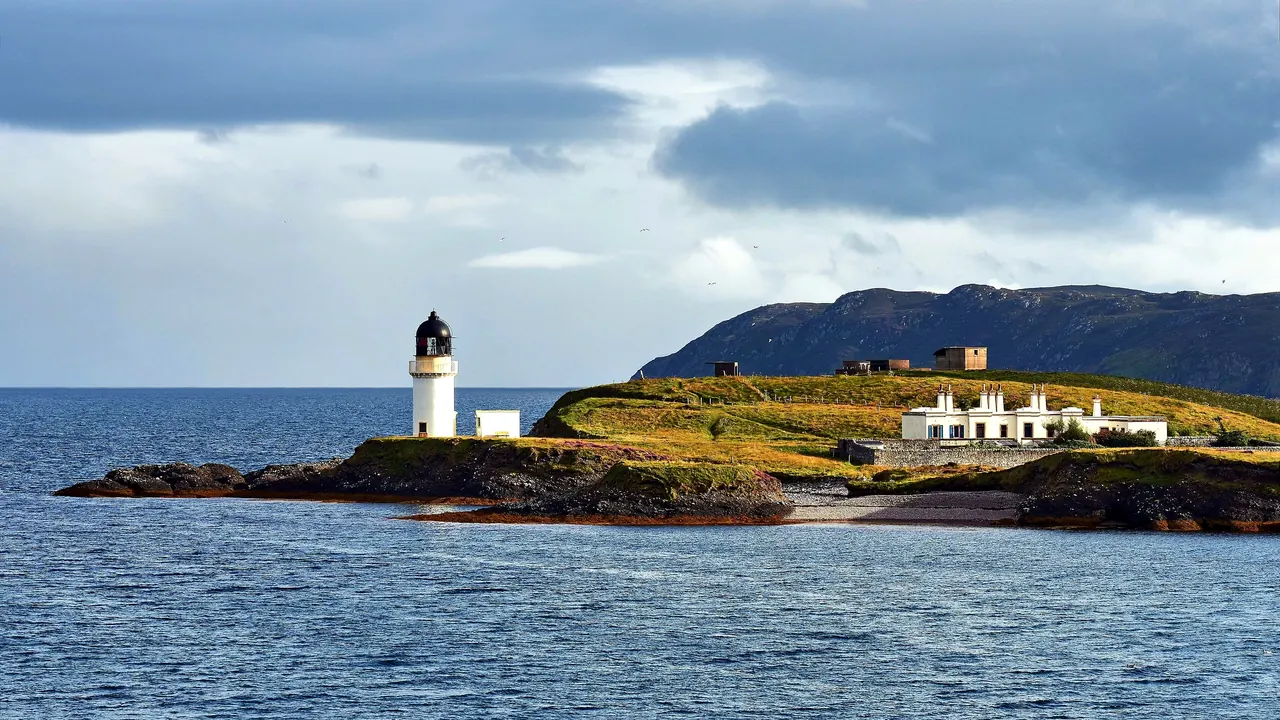
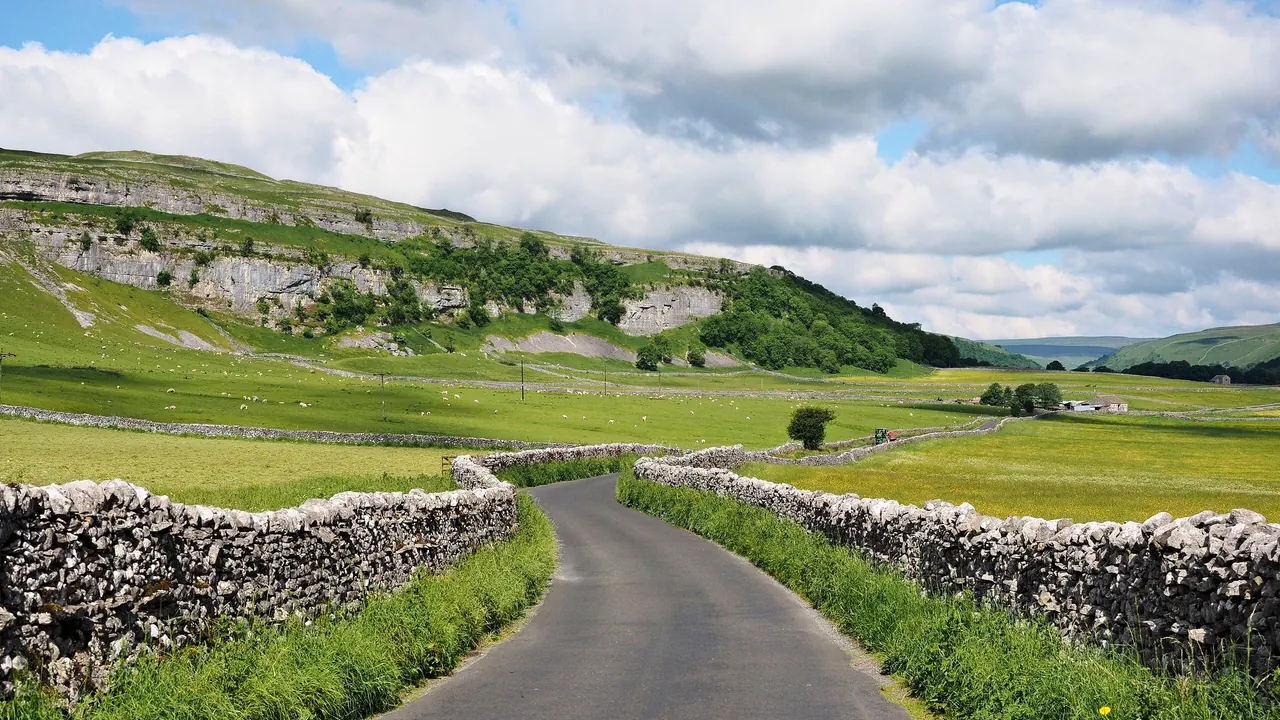
Photos: Outer Hebrides by Virtual-Pano, CC BY-SA 4.0, cropped; Yorkshire Dales by Kreuzschnabel, CC BY-SA 3.0, cropped.
Outer Hebrides or Yorkshire Dales?
Our verdict in twelve categories, each scored against the same fixed benchmark cities, and the climate month by month, so you can choose for your trip.
Choose Outer Hebrides for
- beaches
- shopping
The Outer Hebrides suit travellers who want real remoteness and are happy to give up some comfort for it. You get empty white beaches on Harris and the Uists, eagles and otters along quiet shores, the Calanais Stones in evening light and Gaelic still spoken in daily life. In return you drive long single-track roads, rarely eat out and accept that the sea is for a quick dip at best.
Choose Yorkshire Dales for
- day trips
- families
- getting around
Pick the Yorkshire Dales for walking straight from a village door, with a pub fire waiting at the end of the day and plenty within easy reach. York, Fountains Abbey, Durham and Haworth all make easy days out, and families have show caves, castles and riverside paddling for good outings, even if a wet day is still hard to fill. The trip also costs less and asks less of you. What you give up is the sea and the feeling of standing at the edge of the Atlantic.
Scoreboard
Twelve categories on one fixed scale from 0 to 100. The shaded stretch is the gap between the two.
Your match
Pick a travel style or drag the sliders, and both match scores follow your weighting.
Wins on beaches and shopping with your weighting.
Wins on day trips and families with your weighting.
What matters to you?
Category by category
What the scores mean for a trip.
Beaches & swimming
The Outer Hebrides have real beaches and the Dales have none. Luskentyre and Seilebost on Harris, Uig Sands on Lewis and the twin bays of Vatersay are long white strands backed by dunes, and on a sunny day you may have one to yourself. The Atlantic stays cold, so think of walks, picnics and a quick bracing dip rather than swimming.
In the Dales, the water is inland: river pools on the Wharfe near Burnsall and Grassington, or the falls of the Swale at Keld. These are just as cold, they rise quickly after rain, and you need a long drive to reach the sea.
Food & drink
The Dales are the easier place to eat well. Most villages have a pub, the best dining inns are in Wharfedale, and local food is easy to find, from Wensleydale cheese at Hawes to bitter brewed in Masham.
The islands win on raw ingredients: langoustines, scallops and lobster straight off the boats, plus Stornoway black pudding and local smoked salmon. Restaurants are few once you leave Stornoway and Harris, though, and many shut on Sundays and in winter. Most visitors end up cooking seafood bought at the pier.
Culture & sights
The two are about level for sights, but the history is very different. The Hebrides offer prehistory and island life: the Calanais Stones, the Dun Carloway broch, the thatched blackhouses at Gearrannan and Arnol, and Gaelic all around you. These sights are few and spread far apart.
The Dales are about medieval and Georgian England. You have Skipton and Richmond castles, Bolton Priory and Jervaulx, and Richard III's Middleham. The Ribblehead Viaduct and old lead mines show the working landscape, and the sights sit much closer together.
Nightlife
Both are places for quiet evenings, not nights out. In the islands, that means a hotel bar or a Stornoway pub, perhaps with a traditional music session, and Sundays on Lewis and Harris are very still. A Dales evening means a village pub with a fire and walkers comparing routes. Skipton is a little livelier at weekends, and Leeds is close enough for a proper night out, which the islands have no equivalent of.
Nature & outdoors
Both are outstanding outdoors, but in very different ways. The Hebrides are about rock, sea and wildlife: the bare gneiss of South Harris, the Clisham above North Harris, the watery, bird-filled Uists, and sea kayaking, surfing and boat trips to St Kilda.
The Dales are limestone country. Malham Cove and Gordale Scar lie a short walk apart, the Three Peaks make a famous long day's hike, and around Gaping Gill is some of Britain's best caving. Choose the islands for coast and wildlife, and the Dales for fell walking, caves and cycling over steep passes.
Day trips
On day trips the Dales pull far ahead. Fountains Abbey and Harrogate are about half an hour from the eastern dales, and York is about an hour away. Durham, the Brontë parsonage at Haworth, Saltaire and the Lake District can all be reached from different sides of the park, and the Settle to Carlisle railway is a day out in itself.
In the Hebrides, a day trip means hopping between islands over causeways and short ferry crossings, from Berneray down to Eriskay and Barra. Each trip usually ends at a village and a stretch of coast, and the ferry from Tarbert to Skye is the only real change of scene.
Good for families
The Dales are the easier choice with children. Show caves near Ingleton and Clapham, a steam railway near Skipton, farm parks, castles and paddling by the river at Bolton Abbey give you plenty of outings, and older children can try caving or gorge scrambling.
The Hebrides suit families who are happy outdoors in waterproofs. Children can hunt in rock pools, watch seals and run on empty sand. Beyond that, there is little built for children, the sea is too cold for long swims, and the pool in Stornoway is the main wet-day fallback.
Getting around
You need a car in both, but the Dales ask less of it. Distances are short, the Settle to Carlisle line has stations close to walks at Horton and Ribblehead, and once you have chosen a village base, many walks start from the door. The catch is traffic at Malham and Bolton Abbey on summer weekends.
The islands stretch about 210km from the Butt of Lewis to Vatersay, mostly on single-track roads with passing places. You also need to book inter-island ferries, and on Lewis and Harris buses hardly run at all on Sundays.
Shopping & style
Neither is a shopping trip, but the islands have the one thing really worth buying. Harris Tweed is sold by the weavers themselves from sheds beside their homes on Lewis and Harris, along with knitwear and island gin.
In the Dales you browse market towns instead, from Skipton's street market to cheese in Hawes, outdoor gear, antiques and small galleries. For larger shops and boutiques you would go to Harrogate or York.
Affordability
The Dales are the cheaper trip. Prices are what you would expect in rural England, but there are no vehicle ferries to pay for, and bunkhouses, youth hostels and campsites keep costs down for groups.
In the Hebrides, car hire and ferry fares add up fast, food costs more because it is shipped in, and the limited stock of rooms keeps summer rates firm. In both places the walks and beaches are free, and you get better rates outside the summer peak.
Live music & performing arts
The two are about level here, and both rely on summer festivals. The islands have the Hebridean Celtic Festival in Stornoway each July, ceilidhs and fèis events in village halls, and Gaelic song that turns up in everyday life.
The Dales have a real historic stage in Richmond's Georgian Theatre Royal of 1788, plus the Swaledale Festival's concerts in village churches and brass bands and choirs in chapels. For anything bigger, Harrogate, York and Leeds are within reach.
Wellness & relaxation
For pampering, the Dales come out ahead. Several country-house hotels have spas, and Harrogate's Victorian Turkish Baths, with their tiled steam rooms, are a short drive from Nidderdale. Long walks and dark starry nights do the rest.
The Hebrides offer stillness instead: empty roads, summer evenings that stay light very late, and a cottage by a sea loch. Apart from the odd hotel treatment room and the Stornoway pool, there are no spas or massage to speak of.
When should you go?
Pick your month. The climate figures are measured averages, not a forecast.
Outer Hebrides in July
Yorkshire Dales in July
Daytime high, °C
Rainfall in the month, mm
Where the figures come from
Yorkshire Dales's temperatures are measured 40 km from the centre, at Leeming.
Yorkshire Dales's station stands 153 m below the place it is measured for, so that place is likely a little cooler than the figures say.
Yorkshire Dales has no rain gauge within 25 km of the centre, so its rainfall comes from a gridded climate dataset read at the destination rather than from a gauge further away.
Temperature and rainfall are climate normals, averaged over the years shown. Outer Hebrides: 1991-2020 normals, Stornoway (4.1 km from centre). Yorkshire Dales: 1991-2020 normals, Leeming (39.7 km from centre).
Neither place is ever hot, but the Dales are clearly warmer in summer. Highs in the valleys reach about 21°C in July, while the Hebridean coast rarely gets above 16°C. The islands have a drier, brighter early summer, though. May and June are their least rainy months and May is the sunniest of the year, which makes late spring the best time for machair flowers, birds and long walks on the sand. The Atlantic stays cold all year and only reaches about 13°C from July to September, so even in high summer it is paddling weather.
In the Dales, rain does not ease in summer and grows heavier through July and August. May and early June are the most settled weeks for long fell walks, and September is still mild enough to walk in comfort. From October to February both places are wet, dark and cool, with highs around 7°C in midwinter. The islands are the wetter and much the gloomier of the two, so both are best left for spring and summer.
Which traveller are you?
For a beach and sun trip, the Outer Hebrides are the only real choice of the two. Luskentyre, Scarista and Vatersay offer long, often empty white sand and turquoise shallows, while the Dales have nothing but river pools. Just don't expect warm swimming.
On a family trip with children, the Yorkshire Dales make life easier. Show caves near Ingleton, a steam railway near Skipton, castles and farm parks fill the days, and drives are short. In the islands, a rainy day with little indoors can be long.
For wildlife watchers, the Outer Hebrides have something the Dales cannot match: golden and white-tailed eagles over Harris, otters, corncrakes in the Uists, seals and basking sharks offshore, and summer boats out to the seabird cliffs of St Kilda.
Before you go
| Measure | Outer Hebrides | Yorkshire Dales |
|---|---|---|
| Official language | English | English |
| Currency | Pound Sterling (GBP) | Pound Sterling (GBP) |
| Sockets | G230 V, 50 Hz | G230 V, 50 Hz |
| Driving side | Left | Left |
| Time zone | UTC, UTC+1 in summer | UTC, UTC+1 in summer |
| Emergency number | 112 or 999 | 112 or 999 |
| Main airport | Stornoway Airport (SYY)6 non-stop destinations | Leeds Bradford Airport (LBA)69 non-stop destinations |
| Public holidays this year | 10 days | 8 days |
By the numbers
| Measure | Outer Hebrides | Yorkshire Dales |
|---|---|---|
| Population | 26,720 | - |
| People per km² | 9 | - |
| Swim season, months above 21 °C | None | None |
Where else could you go?
Every comparison below shares a destination with this one, so you can follow Outer Hebrides or Yorkshire Dales somewhere new.
- Lake Districtvs Yorkshire Dales
- Isle of Skyevs Outer Hebrides
- Peak Districtvs Yorkshire Dales
- Northumberlandvs Yorkshire Dales
- Scottish Highlandsvs Outer Hebrides
- Snowdoniavs Yorkshire Dales