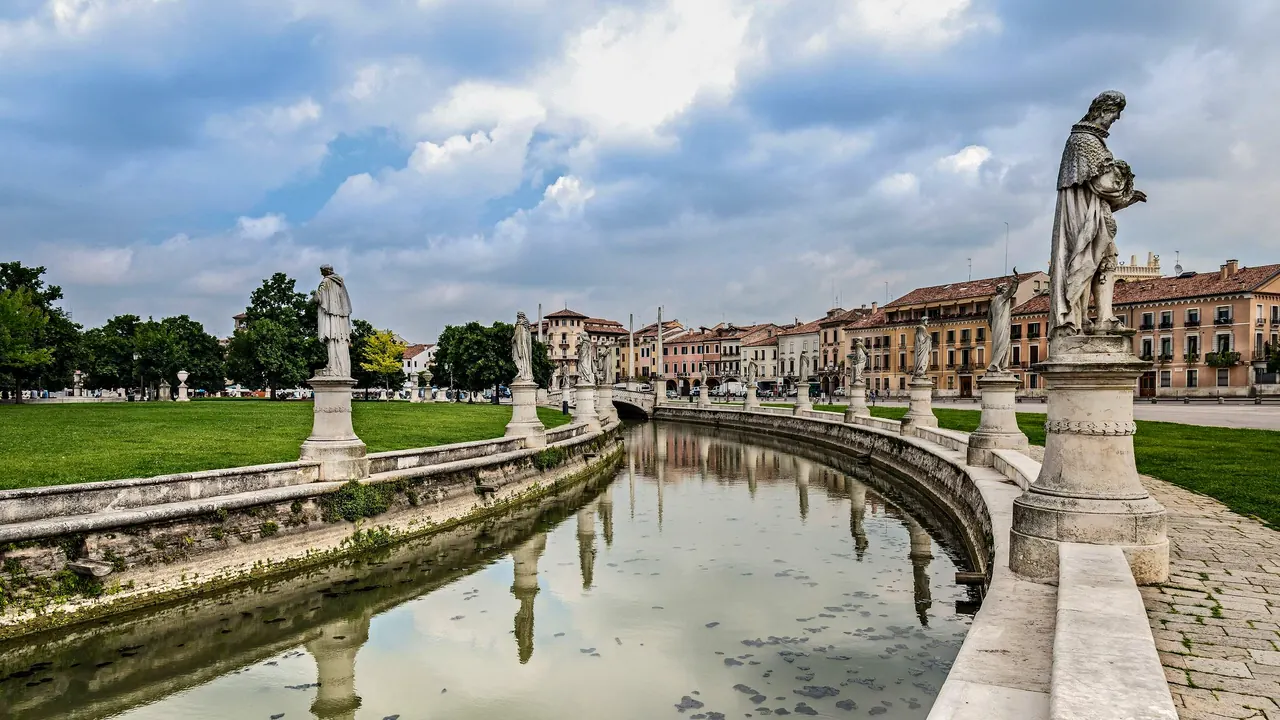
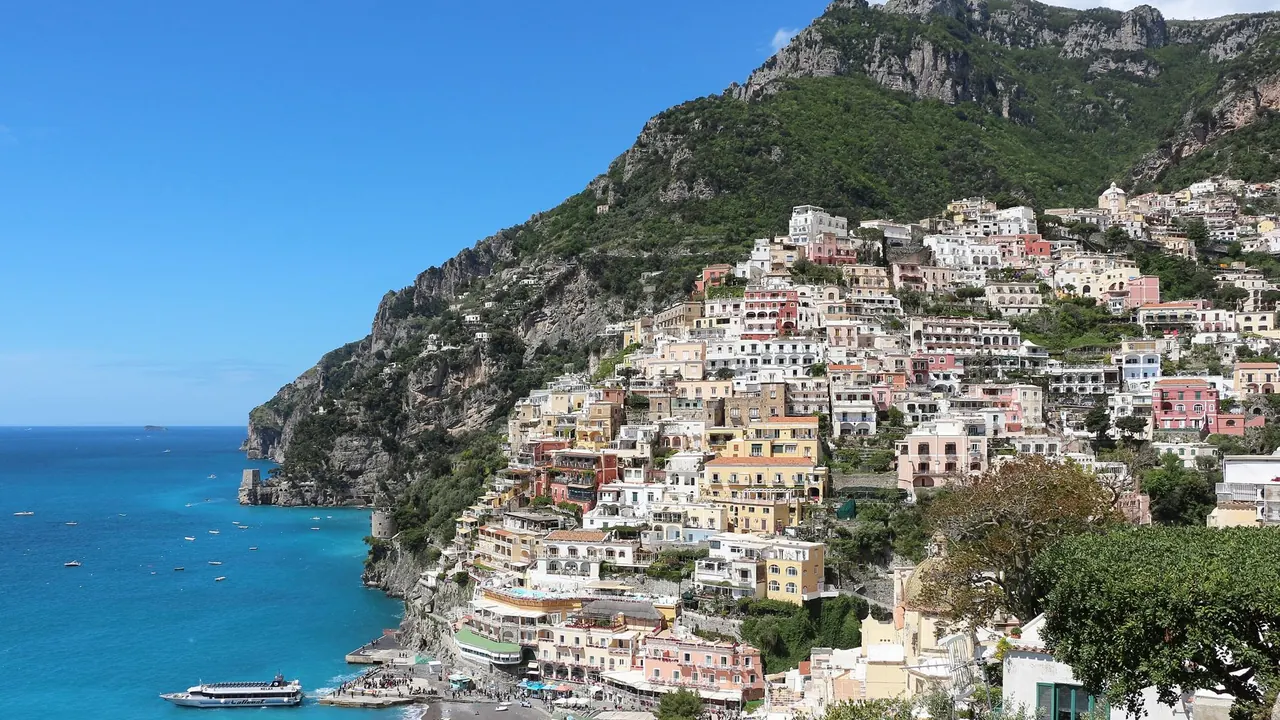
Photos: Padua by Didier Descouens, CC BY-SA 4.0, cropped; Positano by Bernard Gagnon, CC BY 4.0, cropped.
Padua or Positano?
Our verdict in twelve categories, each scored against the same fixed benchmark cities, and the climate month by month, so you can choose for your trip.
Choose Padua for
- culture and sights
- prices
- getting around
Padua suits travellers who want substance and range on a sensible budget. Giotto's frescoes in the Scrovegni Chapel, the Basilica of Saint Anthony and the old university are on its doorstep, and the morning markets and evening spritz in the squares feed you well. A station with fast lines in every direction puts Venice, Verona and Bologna within easy reach, and the thermal pools of Abano lie just outside town. It is the better choice for a culture-led trip, a vacation with children, or anyone who wants to see a lot of northern Italy from one base.
Choose Positano for
- beaches
- nature and the outdoors
Positano is for travellers who came for the sea and the scenery and are happy to pay for both. Its houses fall steeply down a ravine to clear blue water, boats leave for coves and Capri, and the Path of the Gods runs along the cliffs above. In return you get very few sights, quiet evenings and hundreds of steps. It rewards couples and walkers who want a slow, beautiful stay on the coast, but it is a poor fit for small children or a tight budget.
Scoreboard
Twelve categories on one fixed scale from 0 to 100. The shaded stretch is the gap between the two.
Your match
Pick a travel style or drag the sliders, and both match scores follow your weighting.
Wins on culture and sights and prices with your weighting.
Wins on beaches and nature and the outdoors with your weighting.
What matters to you?
Category by category
What the scores mean for a trip.
Beaches & swimming
Swimming is a big part of a stay in Positano. From Spiaggia Grande, Fornillo and the coves reached by stairway or boat, you swim in deep, clear water under the cliffs. The shore is coarse grey sand and pebbles and shelves steeply, so bring water shoes.
Padua has no beach of its own. Sottomarina or the Lido of Venice make a day out about an hour away, with shallow, calm water that suits paddling children but a flat line of umbrellas instead of cliffs and coves.
Food & drink
Padua offers the wider and more everyday table. Bigoli with duck, baccalà, risotto with peas and the morning stalls of Piazza delle Erbe and Piazza della Frutta make eating part of daily life, with Euganean wine and the spritz alongside.
In Positano you eat on terraces looking over the sea, and the clams, grilled fish and lemon desserts are lovely the first time. The menus repeat one another, though, there is little market or street food, and many kitchens shut for the winter.
Culture & sights
Padua has far more to see. The Scrovegni Chapel, the UNESCO-listed fourteenth-century fresco cycles, the Basilica of Saint Anthony, the Palazzo della Ragione and the oldest university botanical garden can easily fill several days.
In Positano the town itself is the sight: the majolica dome of Santa Maria Assunta and the Roman villa with painted walls underneath it. Anyone who wants more has to go to Pompeii or Naples.
Nightlife
In neither town will you find a big night out, but Padua has more going on. Students keep the squares and the wine bars of the old ghetto busy on term-time evenings, and the aperitivo crowd stays late on warm nights.
Positano's evenings are about a drink with a view and a long dinner, plus one dressy club in a cave at the end of the main beach. Once the summer season ends, there is little left.
Nature & outdoors
Positano has the more spectacular landscape, right at the door. The Path of the Gods runs along cliffs high above the sea, woodland trails climb to ridges above 1,000m, and kayaks can follow the rock face out to grottoes and the Li Galli islets.
From Padua you have to travel a little to reach the countryside. The Euganean Hills, about 15km away, offer vineyards, woods and quiet cycling roads, the Brenta towpaths make gentle bike rides, and real mountain walking means driving to Monte Grappa or Asiago.
Day trips
Both are excellent bases for day trips, and Padua's are easier to do. Fast trains make Venice, Vicenza, Verona, Bologna and Ferrara simple to reach in any month, and the Brenta villas and the walled towns around the Euganean Hills are closer still.
Positano's list is just as tempting: Amalfi, Ravello, Capri, Pompeii and Paestum. The difference is that it depends on boats that mostly run from spring to autumn and a slow coast road, so it takes more planning and more patience.
Good for families
Neither town is built around children, but Padua is the easier one with a pushchair. Its centre is flat, largely closed to traffic and has room to run in Prato della Valle, and Gardaland and Lake Garda are a day trip away.
Positano is a town of stairs with a steeply shelving pebble shore. It works for older children who love boats and swimming, but it is tiring with toddlers.
Getting around
Getting around is far simpler in Padua. Almost everything is within a 20-minute walk on flat, arcaded streets, a tram links the station to the centre, and main-line trains take you out in every direction without a car.
Positano is small, but almost every walk involves steep steps. Buses on the single coast road fill up and crawl in summer, and the ferries that are the easiest way out mostly run only in season.
Shopping & style
Shopping is about equally rewarding in the two towns, but you come home with different things. Padua's arcades have Italian shoes, bookshops and delicatessens, a monthly antiques market fills Prato della Valle, and the morning markets are good for cheese and Euganean wine to take home.
Positano sells one look and does it well. Its lanes are full of white linen, printed resort wear in the moda Positano style, sandals made to fit while you wait, and hand-painted ceramics.
Affordability
Padua costs what a mid-sized northern Italian city normally does. Its reasonably priced hotels are why many visitors sleep there and spend the day in Venice.
Positano ranks among the most expensive stays in Italy. You pay extra for the view on your room, your lounger and your dinner, and boats and transfers add more. Staying in Praiano or Sorrento, or coming in May or October, makes it gentler on the wallet.
Live music & performing arts
Padua has a small but steady programme all year: theatre and some opera at Teatro Verdi, chamber concerts in the Sala dei Giganti and the Basilica, and student music venues. The Fenice and the Arena in Verona are both close enough for a night out.
Positano itself has only the odd summer concert in a church or square. The real draw nearby is Ravello's classical festival on a terrace above the sea.
Wellness & relaxation
Padua has the stronger spa tradition. Abano Terme and Montegrotto, about 12km away, make up one of Europe's largest thermal districts, with hot mineral pools and mud treatments, and day visitors are welcome.
In Positano, relaxing means a hotel spa, a pool cut into the cliff and a long afternoon on a terrace. In July and August, though, the crowds and the stairs make the town feel anything but restful.
When should you go?
Pick your month. The climate figures are measured averages, not a forecast.
Padua in July
Positano in July
Daytime high, °C
Rainfall in the month, mm
Where the figures come from
Padua's temperatures are measured 35 km from the centre, at Treviso / Istrana.
Padua has no rain gauge within 25 km of the centre, so its rainfall comes from a gridded climate dataset read at the city rather than from a gauge further away.
Padua's sunshine is measured 36 km from the centre, at Treviso / S. Angelo.
Positano's temperatures are measured 25 km from the centre, at Capri.
Positano has no rain gauge within 25 km of the centre, so its rainfall comes from a gridded climate dataset read at the city rather than from a gauge further away.
Positano's sunshine is measured 59 km from the centre, at Grazzanise.
Temperature and rainfall are climate normals, averaged over the years shown. Padua: 1991-2020 normals, Treviso / Istrana (35.4 km from centre). Positano: 2005-2025 (sunshine 1991-2020, rainfall 1991-2020) normals, Capri (25.3 km from centre).
Positano has the longer warm season and much milder winters. Its summers are dry, with almost no rain in July and August, and the sea is warm enough for swimming from June into early October, at around 26°C by late summer. Padua sits on the plain and swings much further. Winter days are cold, around 8°C in January, and July and August reach about 31°C in heavy, humid air that makes long afternoons on foot tiring. Its rain is spread fairly evenly through the year rather than holding off in summer.
For walking the streets and the hills, both towns are at their best in May, June and September, while Padua's spring and early autumn also suit a day at the spas. Late autumn changes the picture on the coast. From October Positano becomes the wetter of the two, with about 127mm of rain in November, so a winter trip leans towards Padua's museums and thermal pools rather than a stay by the sea.
Which traveller are you?
On a beach and sun trip, Positano is the clear choice. You swim straight from the town in deep, clear water and take boats to Fornillo, quieter coves and Capri. From Padua the sea is an hour away on a flat, crowded Adriatic strip.
For a culture and arts trip, Padua wins easily. Giotto's chapel, the UNESCO-listed fresco cycles, Donatello's work at the Basilica and the anatomical theatre fill several days, and Venice and Vicenza are close by train. Positano's sights take a couple of hours.
On a trip on a tight budget, Padua makes sense and Positano rarely does. Padua's rooms, trattorias and train fares are moderate, and the walkable centre costs nothing to get around. In Positano the sea views, loungers, boats and transfers all add to the bill.
Before you go
| Measure | Padua | Positano |
|---|---|---|
| Official language | Italian | Italian |
| Currency | Euro (EUR) | Euro (EUR) |
| Sockets | CFL230 V, 50 Hz | CFL230 V, 50 Hz |
| Driving side | Right | Right |
| Time zone | UTC+1, UTC+2 in summer | UTC+1, UTC+2 in summer |
| Emergency number | 112 | 112 |
| Elevation | 12 m | 142 m |
| Main airport | Venice Marco Polo Airport (VCE)39 km from centre103 non-stop destinations | Naples International Airport (NAP)33 km from centre131 non-stop destinations |
| Public holidays this year | 13 days | 13 days |
By the numbers
| Measure | Padua | Positano |
|---|---|---|
| City population | 206,496 | 3,729 |
| People per km² | 2,220 | 429 |
| Museums within 10 km | 29 | 10 |
| UNESCO World Heritage sites within 50 km | 5 | 5 |
| Swim season, months above 21 °C | 4 months | 5 months |
Where else could you go?
Every comparison below shares a destination with this one, so you can follow Padua or Positano somewhere new.