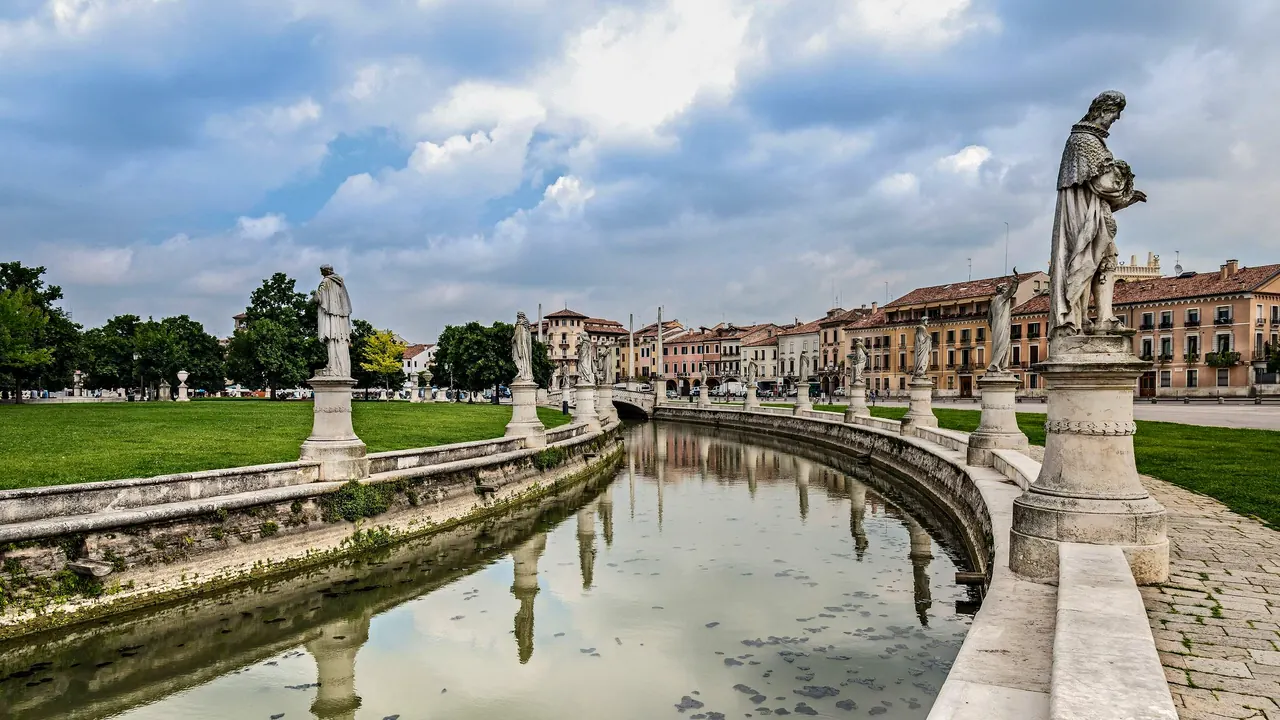
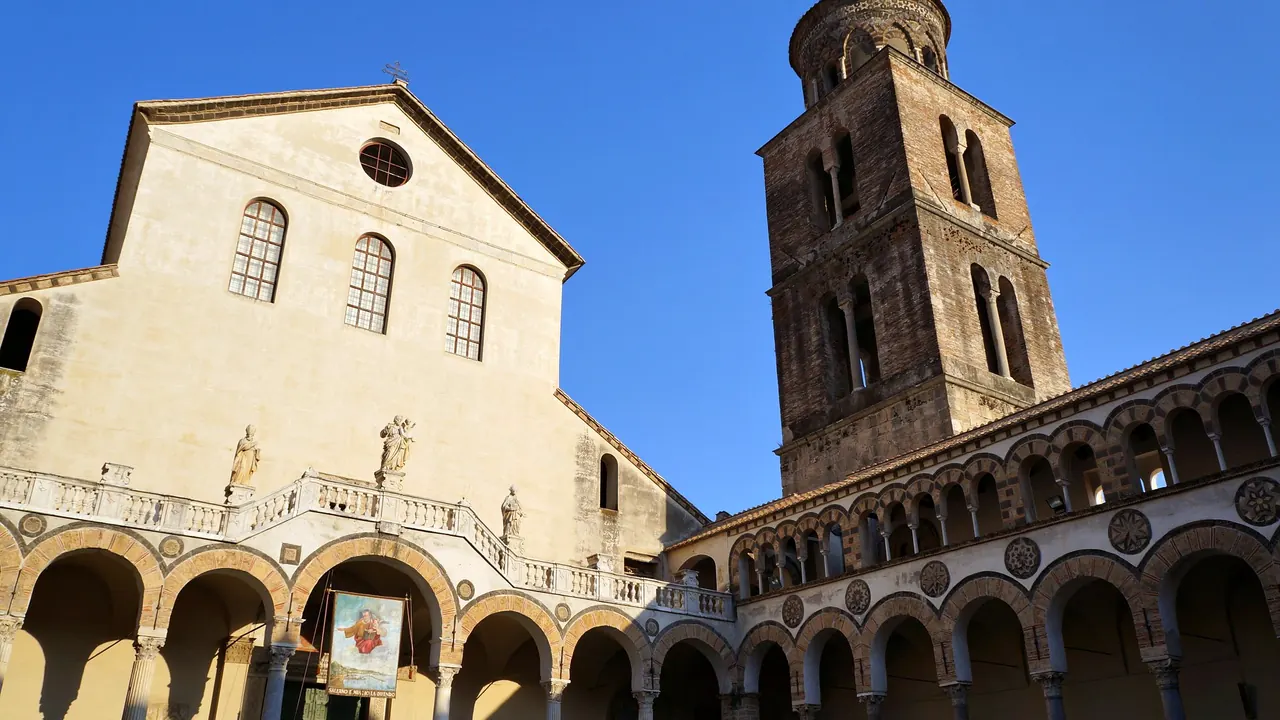
Photos: Padua by Didier Descouens, CC BY-SA 4.0, cropped; Salerno by Leandro Neumann Ciuffo, CC BY 2.0, cropped.
Padua or Salerno?
Our verdict in twelve categories, each scored against the same fixed benchmark cities, and the climate month by month, so you can choose for your trip.
Choose Padua for
- wellness
- culture and sights
- getting around
Padua suits travellers who want art and history at the heart of the trip, with a calm, well-connected base. Giotto's chapel, the Basilica of Saint Anthony and the university's anatomical theatre fill a couple of unhurried days on foot. Fast trains put Venice, Vicenza and Verona within easy reach, and the thermal pools of Abano are close enough for a soak at the end of the day.
Choose Salerno for
- beaches
- nature and the outdoors
- families
Choose Salerno if the sea and the scenery matter more than frescoes. It has city beaches on the doorstep and better sand towards Paestum, and the Amalfi Coast and the Cilento are close by for walking and boat trips. Winters are milder and everyday costs a little lower. The city's own sights are modest, but it is as good a base as Padua, only its day trips lead to Greek temples, Roman ruins and cliffs rather than Renaissance towns.
Scoreboard
Twelve categories on one fixed scale from 0 to 100. The shaded stretch is the gap between the two.
Your match
Pick a travel style or drag the sliders, and both match scores follow your weighting.
Too close to call, level with your weighting
Wins on wellness and culture and sights with your weighting.
Wins on beaches and nature and the outdoors with your weighting.
What matters to you?
Category by category
What the scores mean for a trip.
Beaches & swimming
Padua is an inland city, so the sea is an outing, not part of daily life. Sottomarina and the Lido of Venice are about an hour away, and they are flat strips of umbrellas and bathing establishments, calm and shallow but not scenic.
Salerno has the sea at the end of its streets. The city's grey-sand beaches are fine for a quick dip, the wide sandy shore towards Paestum suits a full day under the pines, and ferries reach the clear pebbly coves of the Amalfi Coast. That is the difference between a dip now and then and a real beach vacation.
Food & drink
The two cities eat equally well, but from opposite ends of Italy. Padua's cooking is Venetian and homely: bigoli with duck sauce, risotto with spring peas, boiled meats and baccalà. Its day revolves around the morning markets under the Palazzo della Ragione and the standing spritz in the squares at dusk.
Salerno cooks for the coast. Expect fried seafood, pasta with clams, wood-fired pizza, buffalo mozzarella eaten the day it is made and Cetara's anchovy colatura, with sfogliatelle and lemon pastries afterwards. Euganean reds against Fiano and Aglianico sums up the gap.
Culture & sights
Here Padua is clearly ahead. Giotto's Scrovegni Chapel changed European painting, and around it are a UNESCO-listed group of fresco cycles, the domed Basilica of Saint Anthony with Donatello's bronzes, the world's oldest permanent anatomical theatre and a botanical garden founded in 1545.
Salerno's heritage is mostly medieval and much smaller in scale. The Norman cathedral with Saint Matthew's crypt, the medicinal garden of Europe's first medical school and the Arechi Castle fill a day or two, and the region's great ancient sites are outside the city.
Nightlife
Evenings are similar: drinks outdoors in the old centre rather than clubs. The difference lies in who goes out and when. Padua's students fill Piazza delle Erbe and the wine bars around the Bo during term, but the city goes quiet in high summer. Salerno's old-town lanes around Largo Campo come alive on weekends and especially in summer, when clubs open along the coast and Naples is close for a bigger night.
Nature & outdoors
Salerno has far more dramatic surroundings. Limestone cliffs, terraced lemon groves and old mule tracks such as the Path of the Gods are close by, the Cilento offers gorges and wild headlands, and kayaking and boat trips along the coast fill summer days.
Padua's outdoors is gentler and starts a little way out of town. The Euganean Hills, about 15km away, have vineyard trails and good road cycling, and the Brenta towpaths make level bike rides. Real mountain walking means driving to the pre-Alps.
Day trips
Both are first-rate bases, and the difference is where the trips lead. From Padua, quick trains reach Venice, Vicenza, Verona and Bologna, and the Brenta villas and the walled towns around the Euganean Hills are closer still. It is a tour of art cities with no car needed.
From Salerno the trips go back further in time and out to the coast: the Greek temples at Paestum, Pompeii and Herculaneum, and ferries to Amalfi and Positano in season, with Naples and Caserta also within easy reach.
Good for families
Salerno works better with children, mostly thanks to the sea. A long, car-free promenade with playgrounds, shallow sandy beaches south of town and the Luci d'Artista lights in winter give families plenty to do, though the steep old town and the winding coast roads are tiring.
Padua is flat, safe and easy with a pushchair, and Prato della Valle has room to run. Its main sights, though, are frescoes and churches, so families usually head to Gardaland or Lake Garda for a day.
Getting around
Padua is the easier city to move around. Its compact, level centre is largely closed to traffic, arcades give shelter from rain and sun, and a tram links the station with the sights. The station has main lines in every direction, which makes day trips simple.
Salerno's centre is a walkable strip along the water, but the castle sits high above, and the Amalfi Coast depends on ferries in the warmer months because the coastal buses are slow and packed in summer.
Shopping & style
Neither is a shopping destination, and each sends serious shoppers on to a larger city. Padua's strengths are its arcaded streets of shoe shops and university bookshops, the market delicatessens and a monthly antiques market on Prato della Valle. Salerno has a long chain-store street on Corso Vittorio Emanuele, but its best buys are local: Vietri's painted majolica, limoncello and Cetara's colatura.
Affordability
Salerno is a little easier on the budget. Its pizzerias, bakeries and regional trains charge local southern prices, and it costs far less to sleep there than in the cliff villages. Summer ferries, lido sunbeds and the entry fees at the big archaeological sites add up, though.
Padua is moderate rather than cheap, but it is a sensible alternative to staying in Venice. Rooms cost more during the trade fairs and graduation season.
Live music & performing arts
The two are well matched, and each has a nineteenth-century Teatro Verdi. Salerno's gilded house, modelled on the San Carlo, puts on full seasons of opera and ballet, and the Ravello Festival's cliff-top concerts are close by. Padua leans towards drama and chamber music, with concerts in the Sala dei Giganti and the basilica, and the Fenice and the Verona Arena are within reach for big opera.
Wellness & relaxation
Padua is much the better choice for rest and treatments. Abano Terme and Montegrotto, about 12km away, are among Europe's largest thermal districts, with hot mineral pools and mud cures in use since Roman times, and many spa hotels let in day visitors.
Salerno's nearest springs are about an hour inland at Contursi, so in town wellness means a hotel spa. The calming part of a stay there is a sunset walk along the palm-lined seafront.
When should you go?
Pick your month. The climate figures are measured averages, not a forecast.
Padua in July
Salerno in July
Daytime high, °C
Rainfall in the month, mm
Where the figures come from
Padua's temperatures are measured 35 km from the centre, at Treviso / Istrana.
Padua has no rain gauge within 25 km of the centre, so its rainfall comes from a gridded climate dataset read at the city rather than from a gauge further away.
Padua's sunshine is measured 36 km from the centre, at Treviso / S. Angelo.
Salerno's temperatures are measured 71 km from the centre, at Grazzanise.
Salerno has no rain gauge within 25 km of the centre, so its rainfall comes from a gridded climate dataset read at the city rather than from a gauge further away.
Temperature and rainfall are climate normals, averaged over the years shown. Padua: 1991-2020 normals, Treviso / Istrana (35.4 km from centre). Salerno: 1991-2020 normals, Grazzanise (71.3 km from centre).
Both cities reach 31°C in July and August, but the heat feels different. On the Venetian plain it is humid, and Padua's rain is spread fairly evenly through the year. Salerno's summer is almost dry and noticeably sunnier. For walking the streets, Padua is at its best from April to early June and again in September and October. Its winters are raw, with highs of about 8°C and frequent fog. Salerno stays mild through winter, but winter is also its wet season, and the rain is heaviest in late autumn and early winter.
Padua's sea is about an hour away and Salerno's is right in front of it. Both are warm enough for swimming from June to September. The difference shows in October. Off Salerno the water is still about 22°C, while the Adriatic has dropped to 19°C, so Salerno is the place for a late-season swim. But October is also one of Salerno's wettest months, with about 123mm of rain, so expect some lost days. Spring and early autumn are Salerno's best seasons for walking the coastal paths.
Which traveller are you?
For a culture and arts trip, Padua is the stronger choice. Giotto's Scrovegni frescoes, the UNESCO-listed fresco cycles, Donatello's work at the Basilica of Saint Anthony and the historic university make a dense, walkable centre that Salerno's cathedral and castle cannot match.
On a beach and sun trip, Salerno wins easily. It sits on the sea, with long sandy beaches towards Paestum and clear coves along the Amalfi Coast, and it gets more summer sunshine. From inland Padua, a day on the Adriatic means an hour's journey each way.
For a relaxing and wellness trip, Padua has the real advantage. The thermal district of Abano and Montegrotto, one of Europe's largest, is a short ride away, with hot mineral pools and mud treatments. Salerno offers seafront strolls but no bathing culture of its own.
Before you go
| Measure | Padua | Salerno |
|---|---|---|
| Official language | Italian | Italian |
| Currency | Euro (EUR) | Euro (EUR) |
| Sockets | CFL230 V, 50 Hz | CFL230 V, 50 Hz |
| Driving side | Right | Right |
| Time zone | UTC+1, UTC+2 in summer | UTC+1, UTC+2 in summer |
| Emergency number | 112 | 112 |
| Elevation | 12 m | 4 m |
| Main airport | Venice Marco Polo Airport (VCE)39 km from centre103 non-stop destinations | Naples International Airport (NAP)46 km from centre131 non-stop destinations |
| Public holidays this year | 13 days | 13 days |
By the numbers
| Measure | Padua | Salerno |
|---|---|---|
| City population | 206,496 | 127,186 |
| People per km² | 2,220 | 2,123 |
| Museums within 10 km | 29 | 9 |
| UNESCO World Heritage sites within 50 km | 5 | 5 |
| Swim season, months above 21 °C | 4 months | 5 months |
Where else could you go?
Every comparison below shares a destination with this one, so you can follow Padua or Salerno somewhere new.