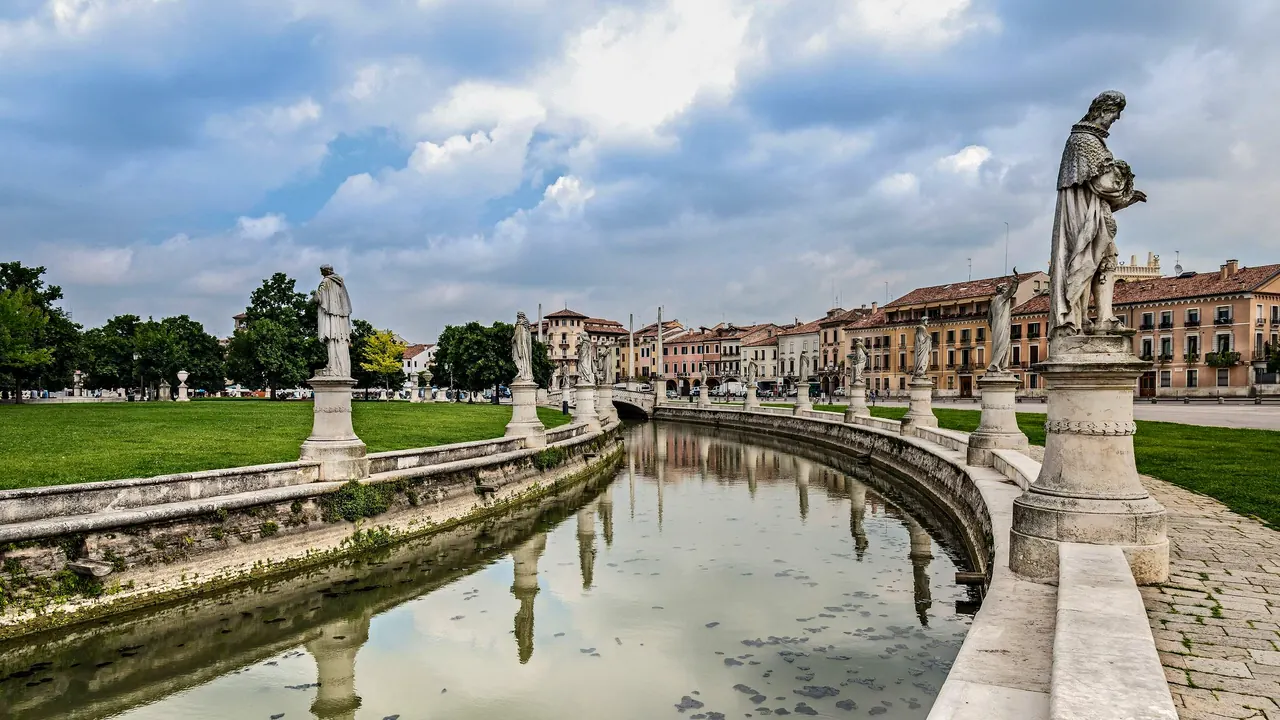
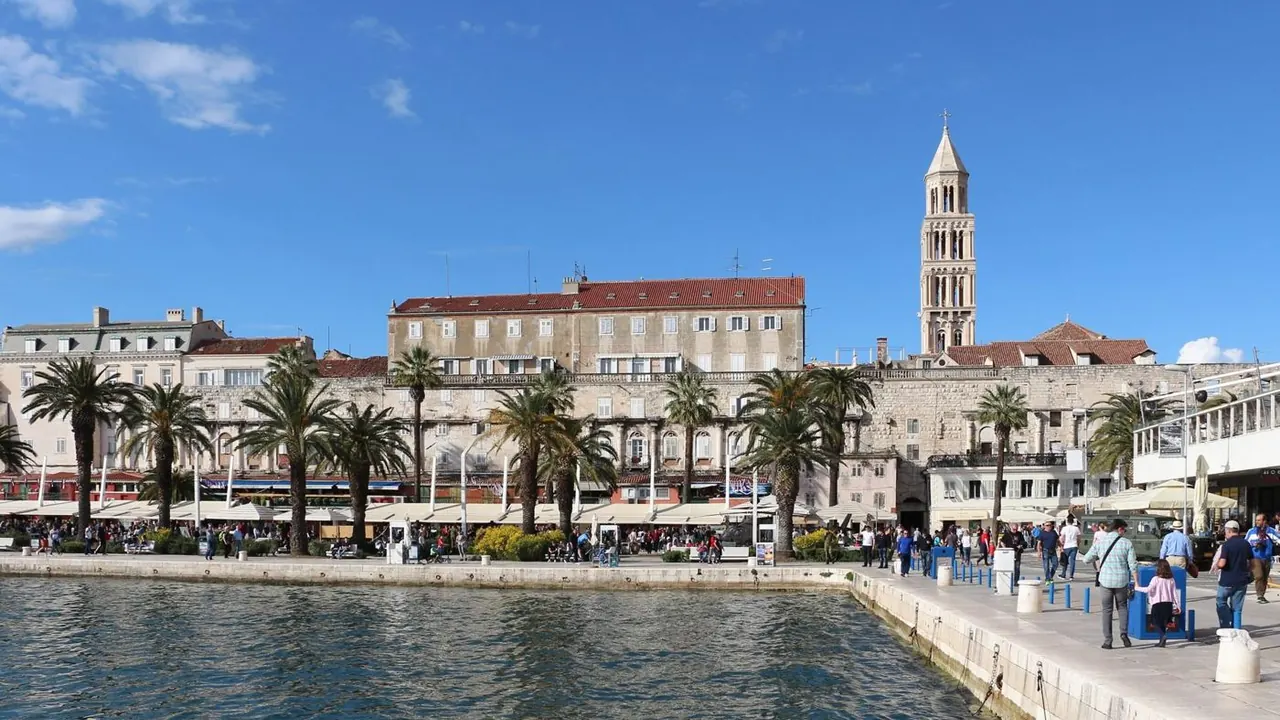
Photos: Padua by Didier Descouens, CC BY-SA 4.0, cropped; Split by Bernard Gagnon, CC BY-SA 4.0, cropped.
Padua or Split?
Our verdict in twelve categories, each scored against the same fixed benchmark cities, and the climate month by month, so you can choose for your trip.
Choose Padua for
- wellness
- day trips
- shopping
Padua suits travellers who want art, history and a good rail base more than a beach. Giotto's frescoes in the Scrovegni Chapel and the Basilica of Saint Anthony fill a day or two. After that the station takes over, with Venice, Vicenza, Verona and Bologna all within easy reach and a calmer bed to come back to each night. The thermal pools of Abano Terme round off a slow, comfortable stay on the plain.
Choose Split for
- beaches
- nature and the outdoors
- families
Split is the choice for a trip built around the sea and the outdoors. You can walk from a Roman emperor's palace to a swim, take a ferry out to Brač or Hvar, and hike on Marjan or in the mountains behind the coast. It costs more at the height of summer and has fewer great sights, but its summer evenings in the stone alleys and its mix of islands, canyons and ridges are things Padua cannot match.
Scoreboard
Twelve categories on one fixed scale from 0 to 100. The shaded stretch is the gap between the two.
Your match
Pick a travel style or drag the sliders, and both match scores follow your weighting.
Too close to call, level with your weighting
Wins on wellness and day trips with your weighting.
Wins on beaches and nature and the outdoors with your weighting.
What matters to you?
Category by category
What the scores mean for a trip.
Beaches & swimming
Split wins easily on beaches. Its sea is a walk from the palace walls, with Bačvice's shallow sandy bay where locals play picigin, and quieter pebble and rock coves with pine shade around Marjan. The city beaches get crowded in high summer, but ferries to Brač, Šolta and Hvar lead to longer stretches of shore and calmer water.
Padua lies inland, so a swim means about an hour's journey to Sottomarina or the Lido of Venice. There the water is calm and shallow, which is good for small children, but the beaches are flat rows of umbrellas. It works as an occasional outing, not as the centre of a stay.
Food & drink
Both cities eat well, and the difference is mainly in style. Padua's cooking comes from the Venetian kitchen and its markets: bigoli with duck sauce, baccalà and risotto with spring peas, bought or eaten around the morning stalls of Piazza delle Erbe. Its evening spritz in the squares and the old Caffè Pedrocchi make drinking a social ritual.
Split cooks Dalmatian food, which leans towards the sea: grilled fish, black risotto, and octopus under the peka bell, best eaten in the konobas of Varoš rather than inside the palace. Plavac Mali and Pošip are the wines to try with it. Neither city has much fine dining, and Split's restaurant scene gets noticeably quieter in winter.
Culture & sights
Padua has more art of the first rank. Giotto's Scrovegni Chapel is one of the turning points of European painting, and the UNESCO-listed fresco cycles, Donatello's work at the Basilica of Saint Anthony, the old anatomical theatre at Palazzo Bo and the sixteenth-century botanical garden give the city real depth.
Split has one extraordinary sight, Diocletian's Palace, which people still live in. Its cathedral was once the emperor's mausoleum and its vaulted cellars show the Roman plan. Beyond the palace, the Meštrović Gallery is the main draw, and most visitors have seen everything in two days.
Nightlife
Split has the livelier nights, at least in summer. Bars fill the palace alleys and stairways, and the clubs and beach bars around Bačvice stay open into the early hours. From October to May, though, going out mostly means a quiet glass of wine.
Padua's evenings revolve around the aperitivo. Students and locals stand with spritz glasses in Piazza delle Erbe and Piazza dei Signori, then move on to small wine bars in the old ghetto. There are few clubs. Padua's quiet season is the opposite of Split's: it is busiest during the university term and goes quiet in high summer.
Nature & outdoors
Split has much more to offer outdoors, starting right at the edge of town. Marjan's pine forest, cliffs and chapels are a walk from the old town, and the ridges of Mosor, Kozjak and Biokovo give proper mountain hiking above the sea. The Cetina canyon at Omiš has rafting and canyoning, Krka's waterfalls are about an hour away, and kayaks and sailing boats head out among the islands.
Padua's landscape is gentler and further away. The Euganean Hills, about 15km off, have vineyard trails and quiet cycling roads, and the Brenta towpaths make flat bike rides past the villas. Serious mountain walking means a drive to Monte Grappa or the Asiago plateau.
Day trips
Padua is the better base for day trips, and not by a little. Venice is less than half an hour away by train, so you can visit it more than once, and Vicenza, Verona, Treviso, Bologna and Ferrara are all easy to reach by rail. Closer to home are the Brenta villas and the walled towns of the Euganean Hills.
Split's excursions are fine too, but they run more by bus and boat: medieval Trogir, Šibenik's cathedral, Salona's Roman ruins, and island days on Hvar or Brač. These are simple in summer but take more planning once the ferry timetables thin out in winter.
Good for families
Split works better with children, mainly because of the outdoors. Bačvice's shallows are safe for paddling, Marjan has shade and room to run, and a ferry ride often ends up as the highlight. The heat and crowds of July and August are the main drawbacks.
Padua is flat, safe and largely pedestrianised, and Prato della Valle and the botanical glasshouses fill a few hours. Otherwise the city is mostly frescoes and churches, so families usually head out to Gardaland and Lake Garda or to the Adriatic.
Getting around
Padua is easier to get around, both in town and beyond it. The centre is flat and arcaded, and a tram runs from the station past the main sights. Fast trains in every direction mean you can see the region without a car.
Split's car-free core is compact too, and having the ferry port, bus station and railway station together at the harbour makes leaving simple. Local buses are basic, though, the coast road jams in summer, and the polished, stepped palace streets are hard work with a pushchair or heavy bags.
Shopping & style
Padua is the better place to shop, though neither city is worth visiting for it. Its arcades have Italian fashion and shoe shops, independent boutiques and university bookshops, and a large antiques market fills Prato della Valle one Sunday a month.
Shops in Split's palace lean towards souvenirs, lavender and coral, and the fashion chains are on Marmontova. The Pazar market's figs, honey, brandies and olive oil are the best things to take home.
Affordability
Padua is the cheaper choice overall, and the gap is widest in Split's high summer. Its hotels make a reasonably priced base for the region, which is why many visitors sleep there and go out by train each day. Walking, market food and standing spritzes keep daily spending moderate, and rooms only get dearer around the big trade fairs and graduation season.
Split's prices change with the season. In July and August, rooms near the old town and fish sold by weight on the Riva cost what you would pay in a big Western European city, and ferry fares add up for a family. In May, June, late September and winter, rooms cost far less and the city becomes modestly priced, much closer to Padua.
Live music & performing arts
Neither city has a big performing arts scene, but the settings are different. Padua has a year-round season: drama and some opera at the horseshoe Teatro Verdi, and chamber concerts in the frescoed Sala dei Giganti and the basilica. The Fenice in Venice and the summer Arena in Verona are both close enough for a night out.
Split's best moments come in summer, when the Split Summer Festival stages opera under the open sky in the Peristyle. The Croatian National Theatre also has opera and ballet in season, and you can hear unaccompanied klapa singing echo in the palace vestibule.
Wellness & relaxation
Padua has the real advantage for wellness. About 12km away, Abano Terme and Montegrotto Terme form one of Europe's largest thermal districts, with hot mineral water and mud treatments that go back to Roman times. Many spa hotels take day visitors, so you can soak after a morning of sightseeing.
Split has no bathing tradition, so it is hotel spas and massage studios. What it offers instead is fjaka, the Dalmatian habit of long coffees and a slow afternoon. That is easiest to enjoy in May, June or September, or by escaping to an island when the summer old town gets loud.
When should you go?
Pick your month. The climate figures are measured averages, not a forecast.
Padua in July
Split in July
Daytime high, °C
Rainfall in the month, mm
Where the figures come from
Padua's temperatures are measured 35 km from the centre, at Treviso / Istrana.
Padua has no rain gauge within 25 km of the centre, so its rainfall comes from a gridded climate dataset read at the city rather than from a gauge further away.
Padua's sunshine is measured 36 km from the centre, at Treviso / S. Angelo.
Temperature and rainfall are climate normals, averaged over the years shown. Padua: 1991-2020 normals, Treviso / Istrana (35.4 km from centre). Split: 1991-2020 (sunshine 1971-2000, rainfall 1981-2010) normals, Split / Marjan (0.9 km from centre).
Padua has the more continental climate of the two. July and August reach about 31°C and feel humid, and the rain is spread through the year rather than kept for one season: May is about as wet as October, and November is the wettest month of all. The best weeks for walking the streets are late April, May, September and early October, either side of the sticky heat. Winters on the plain are cold, foggy and grey, with highs near 8°C in January. The nearby Adriatic is warm enough for a swim from June to September, but getting there is a day trip.
Split is just as hot in midsummer, but it is much sunnier and nearly dry, with about 29mm of rain in July. Its sea is warm enough for swimming from June to September and still pleasant in October. That dry summer gives way to much heavier rain from October, and November is the wettest month. Winters are milder and sunnier than Padua's, so between December and March Split is the better place for a walk, though the sea is too cold for swimming.
Which traveller are you?
On a beach and sun trip, Split is the clear choice. You can walk from the old town to the sandy shallows of Bačvice or the pine-shaded coves around Marjan, and ferries reach longer island beaches. Padua's nearest sand is an hour away.
For a relaxing and wellness trip, pick Padua. The thermal pools and mud treatments of Abano Terme and Montegrotto are a short ride from the centre, and the arcades and botanical garden keep the pace slow. Split has hotel spas and its easy local rhythm, but no bathing tradition.
On an outdoors trip, Split gives far more variety. Marjan's trails start on foot from the centre, and there are ridge hikes on Mosor and Biokovo, rafting in the Cetina canyon and kayaking among the islands. Padua offers gentle cycling, the Euganean Hills and more distant pre-Alps.
Before you go
| Measure | Padua | Split |
|---|---|---|
| Official language | Italian | Croatian |
| Currency | Euro (EUR) | Euro (EUR) |
| Sockets | CFL230 V, 50 Hz | CF230 V, 50 Hz |
| Driving side | Right | Right |
| Time zone | UTC+1, UTC+2 in summer | UTC+1, UTC+2 in summer |
| Emergency number | 112 | 112 |
| Elevation | 12 m | 0 m |
| Main airport | Venice Marco Polo Airport (VCE)39 km from centre103 non-stop destinations | Split Saint Jerome Airport (SPU)12 km from centre69 non-stop destinations |
| Public holidays this year | 13 days | 14 days |
By the numbers
| Measure | Padua | Split |
|---|---|---|
| City population | 206,496 | 160,577 |
| People per km² | 2,220 | - |
| Museums within 10 km | 29 | 11 |
| UNESCO World Heritage sites within 50 km | 5 | 4 |
| Swim season, months above 21 °C | 4 months | 4 months |
Where else could you go?
Every comparison below shares a destination with this one, so you can follow Padua or Split somewhere new.