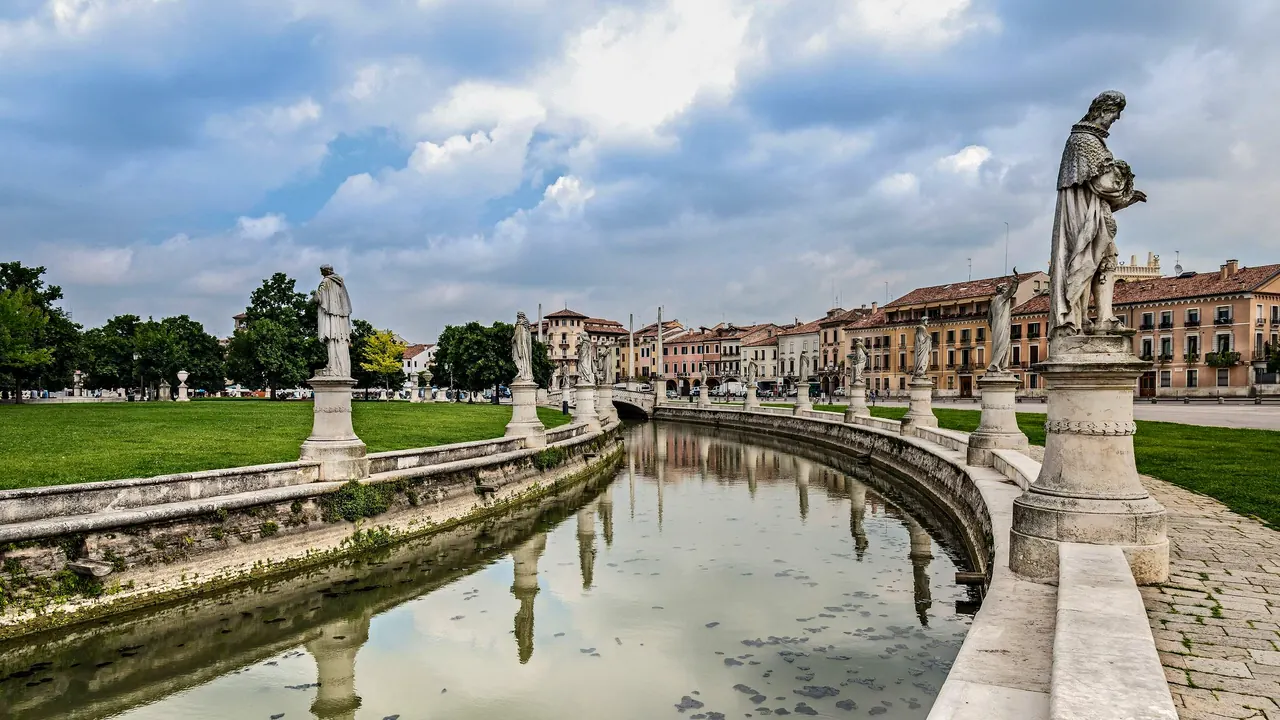
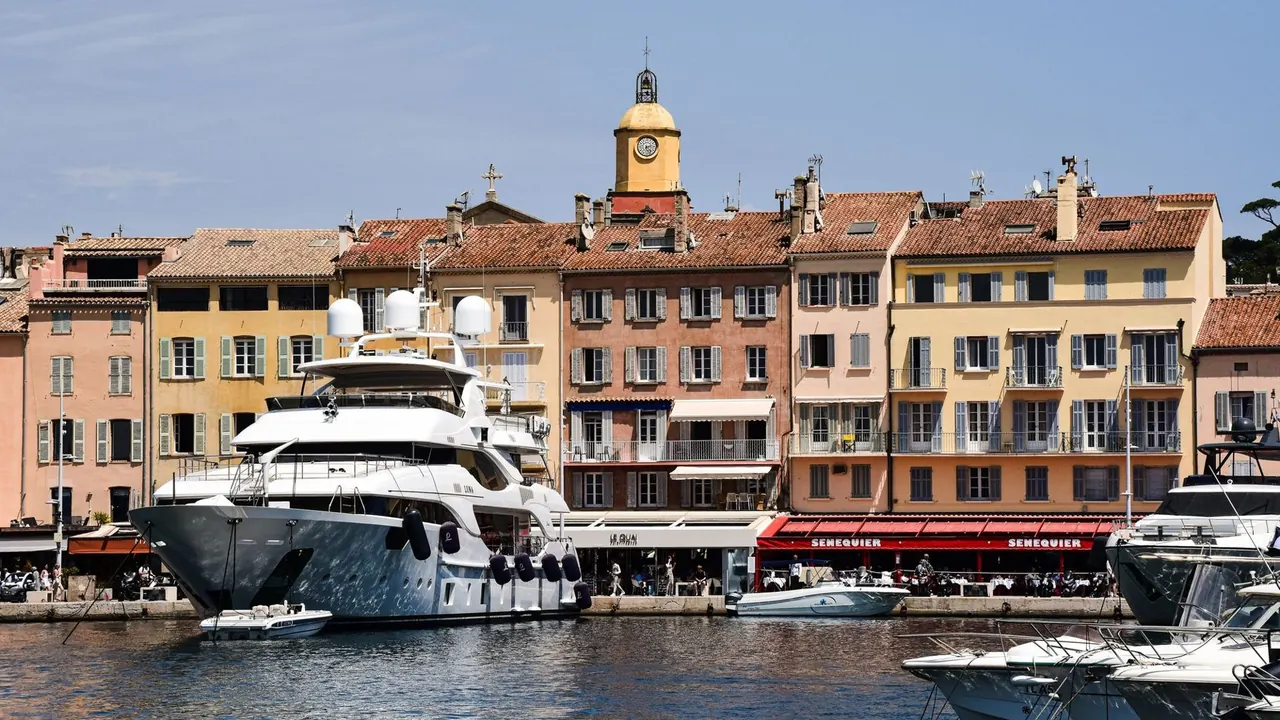
Photos: Padua by Didier Descouens, CC BY-SA 4.0, cropped; Saint-Tropez by AXP Photography, Pexels License.
Padua or Saint-Tropez?
Our verdict in twelve categories, each scored against the same fixed benchmark cities, and the climate month by month, so you can choose for your trip.
Choose Padua for
- prices
- getting around
- culture and sights
Padua is the choice for a vacation built around art, history and movement. Giotto's chapel and the Basilica of Saint Anthony are on the doorstep, Venice, Vicenza and Verona are short train rides away, and the thermal pools of Abano wait at the end of the day. It suits travellers who like to sightsee hard, eat well at market prices and never need a car.
Choose Saint-Tropez for
- beaches
- shopping
- nature and the outdoors
Saint-Tropez is for a sun-and-sea summer. Its draw is Pampelonne's long pale sand, clear water, coastal walks through the maquis and a glamorous scene of beach clubs and harbour terraces after dark. Come for the setting rather than the monuments, and expect to pay a lot for it, especially in July and August.
Scoreboard
Twelve categories on one fixed scale from 0 to 100. The shaded stretch is the gap between the two.
Your match
Pick a travel style or drag the sliders, and both match scores follow your weighting.
Wins on prices and getting around with your weighting.
Wins on beaches and shopping with your weighting.
What matters to you?
Category by category
What the scores mean for a trip.
Beaches & swimming
Padua has no beach of its own. The nearest sand, at Sottomarina or on the Lido of Venice, is about an hour away and consists of flat, shallow, organised stretches. It works for a paddling day out but not as the reason to come.
In Saint-Tropez the beach is the whole summer. Pampelonne gives you about 5km of pale sand and clear water, with beach clubs and public stretches side by side, and quieter coves at Escalet, Cap Taillat and Gigaro along the coast path.
Food & drink
Padua eats better and more honestly day to day. Venetian dishes such as bigoli with duck sauce and baccalà, the morning markets of Piazza delle Erbe and Piazza della Frutta, Euganean wines and the evening spritz make good food easy to find at ordinary prices.
Saint-Tropez has grilled fish, bouillabaisse, rosé and the cream-filled tarte tropézienne, and its hotel dining rooms outclass anything in Padua's narrow fine-dining range. Below that top end, though, many quayside places trade on the view, and simple, good-value meals take some hunting.
Culture & sights
There is little contest here. Padua holds Giotto's Scrovegni Chapel, a UNESCO-listed group of fourteenth-century fresco cycles, the Basilica of Saint Anthony with Donatello's bronzes, the university's anatomical theatre and the world's oldest botanical garden still on its original site. That is several days of serious sightseeing.
Saint-Tropez offers the Musée de l'Annonciade, with its Signac and Fauvist paintings, a citadel with a maritime museum and the lanes of La Ponche. It is a pleasant day's worth, and most visitors come for the setting.
Nightlife
Saint-Tropez in July and August has the bigger night out: beach-club parties at Pampelonne in the afternoon, champagne on the harbour terraces and famous clubs open until dawn, with table service and dress codes to match. By October it has gone quiet.
Padua's evenings are smaller and spread more evenly through the year. Students and locals stand over spritzes in Piazza delle Erbe and Piazza dei Signori, then move on to wine bars around the old ghetto. It goes quiet in high summer, just when Saint-Tropez is at its loudest.
Nature & outdoors
Saint-Tropez puts the outdoors right outside the door. The Sentier du Littoral runs past pine-backed coves to Cap Camarat and Cap Taillat, the Massif des Maures has cork-oak forest for hiking and mountain biking, and the gulf is good for sailing and snorkelling, with the national park islands of Port-Cros and Porquerolles within reach.
Padua's countryside starts farther out and is gentler. The Euganean Hills, about 15km away, offer vineyard trails and cycling, and the Brenta towpaths make level rides. Proper mountain walking in the pre-Alps is about an hour and a half away by car.
Day trips
Padua is one of the best bases in Italy for day trips. Venice is under half an hour by train and can be visited again and again. Vicenza's Palladian buildings, Verona, Treviso, Bologna and Ferrara are all an easy rail ride away, and closer in are the Brenta villas and the walled towns of Este, Monselice and Montagnana.
Saint-Tropez's outings are charming but smaller: the hilltop villages of Ramatuelle and Gassin, Grimaud's castle, the canals of Port Grimaud and a full day on Porquerolles. Almost all of them depend on roads that jam in high summer.
Good for families
Both are workable with children rather than built for them, but in different ways. Padua is a flat, safe, largely car-free city where children are welcome in any trattoria and can run in Prato della Valle, though the sights are mostly frescoes. For fun, families make day trips to Gardaland and Lake Garda.
Saint-Tropez offers what Padua lacks, gently shelving sand at Pampelonne and Gigaro, but its harbour and beach clubs are aimed at adults. The cost and the summer traffic often push families to stay across the gulf instead.
Getting around
Padua is far easier. Its centre is compact and arcaded, with the main sights within a 20-minute walk. A tram runs from the station to Prato della Valle, and main-line trains go in every direction, so a car is optional.
Saint-Tropez is tiny on foot but awkward beyond it. There is no railway, the buses are slow, the main beaches are several kilometres out, and the single gulf road jams for hours in July and August. The passenger boats from Sainte-Maxime and Port Grimaud are often the best way in.
Shopping & style
Saint-Tropez is the stronger shopping stop, at least for luxury and resort wear. The big fashion houses keep summer boutiques behind the port, and the hand-stitched Tropézienne leather sandal is a real local craft. Place des Lices adds linen, baskets and pottery.
Padua's arcades have Italian fashion, shoes and university bookshops, but its best buys are edible: cheese, cured meats and Euganean wine from the markets, plus a monthly antiques market on Prato della Valle.
Affordability
This is one of the widest gaps between the two. Padua costs what a northern Italian city usually costs, and many people stay there because it is a cheaper bed than Venice. Market food, standing drinks and walking everywhere keep daily spending low.
Saint-Tropez is priced for the yachting crowd. Rooms, loungers, harbour meals and even a coffee on the port are dear, and taxis or parking add to the bill. Visitors on a budget usually stay inland or across the gulf and come over for the day.
Live music & performing arts
Padua has a modest but year-round programme. Teatro Verdi stages drama and some opera, and the chamber orchestra plays in the Sala dei Giganti and the Basilica of Saint Anthony. The Fenice in Venice and the summer Arena in Verona are close enough for an evening.
Saint-Tropez has open-air jazz and classical concerts on the citadel in summer, plus the Bravade procession each May, but little else. Serious theatre or opera means a long drive.
Wellness & relaxation
Padua has a real advantage here. About 12km away, Abano Terme and Montegrotto Terme form one of Europe's largest thermal districts, with hot mineral pools and mud treatments dating back to Roman times, and many spa hotels take day visitors. A soak after a morning of frescoes is easy to arrange.
Saint-Tropez has no bathing tradition, only polished hotel spas meant for their own guests. Its restfulness depends on the calendar: loud in high summer, but slow and calm in May, June and September.
When should you go?
Pick your month. The climate figures are measured averages, not a forecast.
Padua in July
Saint-Tropez in July
Daytime high, °C
Rainfall in the month, mm
Where the figures come from
Padua's temperatures are measured 35 km from the centre, at Treviso / Istrana.
Padua has no rain gauge within 25 km of the centre, so its rainfall comes from a gridded climate dataset read at the city rather than from a gauge further away.
Padua's sunshine is measured 36 km from the centre, at Treviso / S. Angelo.
Saint-Tropez has no rain gauge within 25 km of the centre, so its rainfall comes from a gridded climate dataset read at the city rather than from a gauge further away.
Saint-Tropez's sunshine is measured 62 km from the centre, at Nice.
Temperature and rainfall are climate normals, averaged over the years shown. Padua: 1991-2020 normals, Treviso / Istrana (35.4 km from centre). Saint-Tropez: 1999-2020 (sunshine 1991-2020, rainfall 1991-2020) normals, Le Luc (24.2 km from centre).
Padua is best in late spring and early autumn, roughly April to June and September to October, when the streets are pleasant to walk and the hills are green. July and August reach about 31°C and feel sticky, which makes sightseeing tiring. Winters are cold and often foggy on the plain. Rain falls all through the year and is heaviest in late autumn. The Adriatic is only warm enough for a beach day from June to September.
Saint-Tropez is clearly milder than Padua from autumn to early spring, and much sunnier all year. In late spring and summer the two are close in heat, but Saint-Tropez's summer is almost dry, with about 10mm of rain in July. The sea is warmest in August at around 24°C, so June to September is the swimming season. Autumn turns wet, with November bringing about 155mm. For both cities the spring and autumn months are the easier time for walking, while high summer is the time for the beach, and only Saint-Tropez has one on the doorstep.
Which traveller are you?
On a beach and sun trip, Saint-Tropez wins easily. Pampelonne's fine sand and the clear coves of the peninsula are the point of a stay there, while from Padua the sea means an hour's journey to a flat strip of umbrellas.
For a culture and arts trip, Padua is far richer. Giotto's Scrovegni frescoes, Donatello's work at the Basilica of Saint Anthony and the old anatomical theatre fill several days, and Venice and Vicenza are short train rides away. Saint-Tropez's sights take a single day.
On a trip on a tight budget, Padua is the realistic option. Rooms are moderately priced, market food and standing spritzes cost little, and trains replace taxis. Saint-Tropez ranks among the Mediterranean's dearest places to stay, and visitors watching their money usually sleep elsewhere.
Before you go
| Measure | Padua | Saint-Tropez |
|---|---|---|
| Official language | Italian | French |
| Currency | Euro (EUR) | Euro (EUR) |
| Sockets | CFL230 V, 50 Hz | CE230 V, 50 Hz |
| Driving side | Right | Right |
| Time zone | UTC+1, UTC+2 in summer | UTC+1, UTC+2 in summer |
| Emergency number | 112 | 112 |
| Elevation | 12 m | 0 m |
| Main airport | Venice Marco Polo Airport (VCE)39 km from centre103 non-stop destinations | Nice-Côte d'Azur Airport (NCE)64 km from centre130 non-stop destinations |
| Public holidays this year | 13 days | 11 days |
By the numbers
| Measure | Padua | Saint-Tropez |
|---|---|---|
| City population | 206,496 | 3,582 |
| People per km² | 2,220 | 320 |
| Museums within 10 km | 29 | 4 |
| UNESCO World Heritage sites within 50 km | 5 | 0 |
| Swim season, months above 21 °C | 4 months | 3 months |
Where else could you go?
Every comparison below shares a destination with this one, so you can follow Padua or Saint-Tropez somewhere new.
- Venicevs Padua
- Cannesvs Saint-Tropez
- Antibesvs Saint-Tropez
- Veronavs Padua
- Nicevs Saint-Tropez
- Monacovs Saint-Tropez