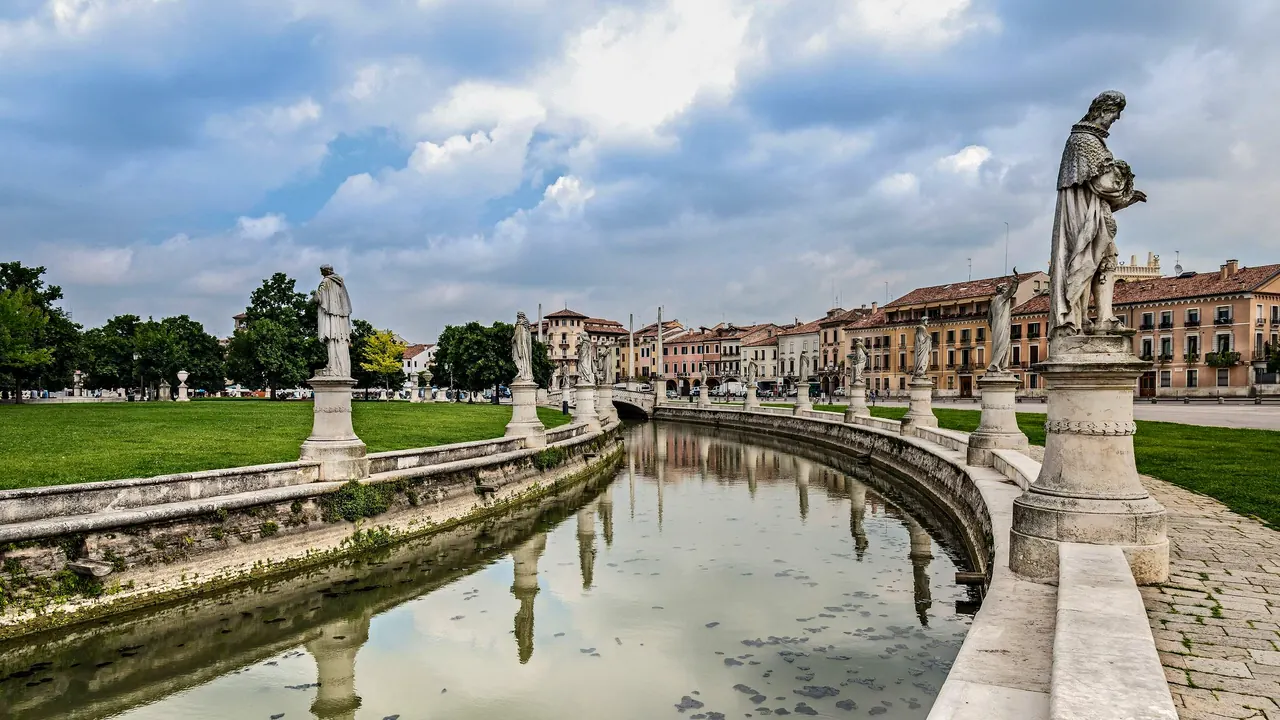
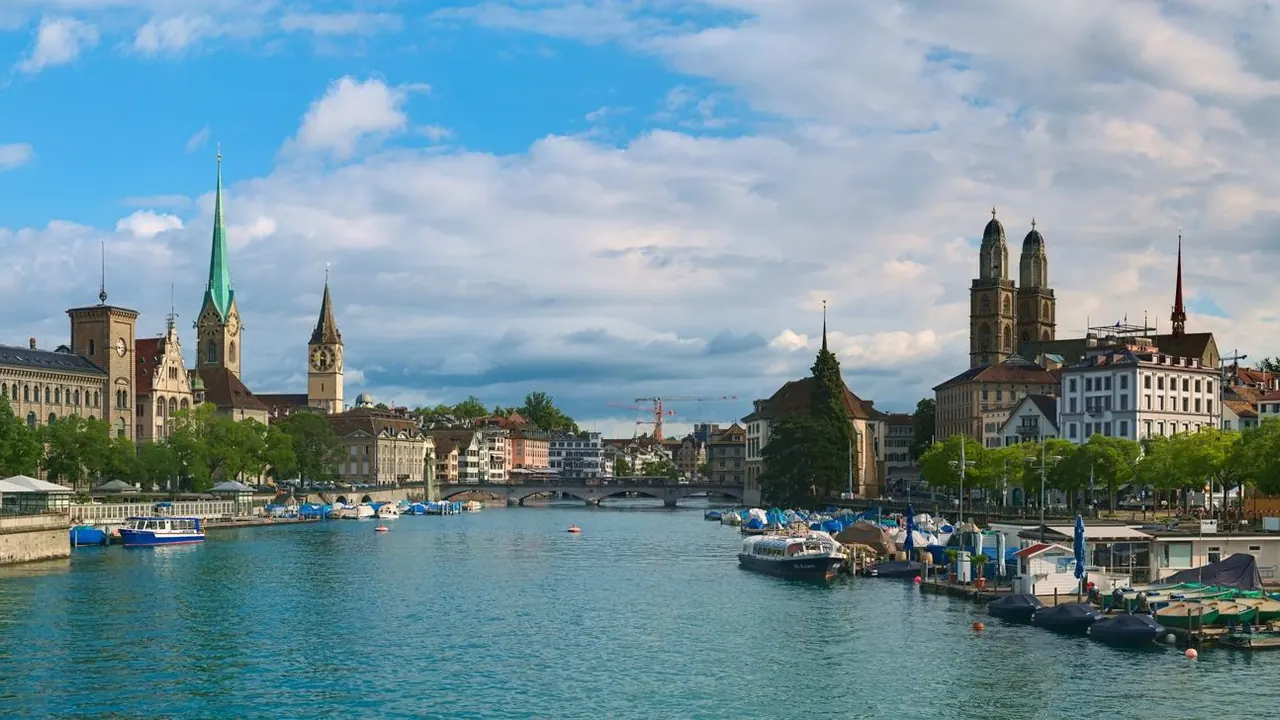
Photos: Padua by Didier Descouens, CC BY-SA 4.0, cropped; Zurich by Daniel Kraft, CC BY-SA 3.0, cropped.
Padua or Zurich?
Our verdict in twelve categories, each scored against the same fixed benchmark cities, and the climate month by month, so you can choose for your trip.
Choose Padua for
- prices
- culture and sights
- day trips
Padua suits travellers who come for great art and want a base for exploring. Giotto's Scrovegni Chapel and the Basilica of Saint Anthony sit in a small, walkable centre, while Venice, Verona and Bologna are short train rides away. Hotels, trattorias and the evening spritz cost far less than in Zurich. Add the thermal pools of Abano Terme and you have an unhurried, well-priced base for northern Italy.
Choose Zurich for
- families
- live music and the arts
- nature and the outdoors
Zurich is the better pick if the lake and the mountains matter more than frescoes, or if you are travelling with children. Lake lidos, the zoo and Alpine hiking within an hour make for active days, getting around takes no effort, and the opera house and techno clubs give the evenings more range. The catch is cost: almost everything is far dearer than in Padua.
Scoreboard
Twelve categories on one fixed scale from 0 to 100. The shaded stretch is the gap between the two.
Your match
Pick a travel style or drag the sliders, and both match scores follow your weighting.
Wins on prices and culture and sights with your weighting.
Wins on families and live music and the arts with your weighting.
What matters to you?
Category by category
What the scores mean for a trip.
Beaches & swimming
Neither city has a beach in the usual sense, but Zurich makes swimming part of city life. There are lawned lidos and wooden bathing houses along the lake shore, and river baths on the Limmat where people drift with the current, all a short walk or tram ride from the sights. The water is clean and pleasantly cool, and you lie on grass or decks, not sand.
From Padua a swim means a day out, about an hour to the sand at Sottomarina or the Lido of Venice. The Adriatic there is warmer, shallow and good for small children, but the beaches are flat rows of umbrellas. It is an excursion rather than an afternoon dip.
Food & drink
Padua eats better for a visitor, and for less. There are the morning markets in Piazza delle Erbe and Piazza della Frutta, bigoli with duck sauce and baccalà alla vicentina. The early-evening spritz with small bites in the squares, often with Euganean wine from just outside town, makes food part of the day's rhythm.
Zurich's cooking is dependable and well made: veal in cream sauce with rösti, and fondue in the old guild houses. Chocolate and confectionery are its real speciality. It has the stronger fine-dining tier and more international choice around Kreis 4 and 5, but few markets, little street food and high bills.
Culture & sights
Padua has the greater artistic weight. Giotto's frescoes in the Scrovegni Chapel changed European painting, and around them sits a UNESCO-listed group of fourteenth-century fresco cycles. Add the Basilica of Saint Anthony with Donatello's bronzes, the world's oldest permanent anatomical theatre and the oldest university botanical garden still in its original place. Plan around the chapel's timed visits.
Zurich's strength is good museums rather than single masterpieces: the Kunsthaus, the Swiss National Museum and the Museum Rietberg. In the old town are the Grossmünster, where the Swiss Reformation began, and Chagall's windows in the Fraumünster. Both centres are compact and can be covered in a few days.
Nightlife
Zurich offers the bigger night out. Electronic music is its speciality, clubs in Kreis 4 and 5 and Zurich West run until morning at weekends, and Langstrasse stays busy late. In summer, drinking moves to bars in the lake bathing houses. The price of a round is what cuts nights short.
Padua's evenings revolve around the aperitivo: students and locals standing with spritz glasses in the squares around the Palazzo della Ragione, then wine bars in the old ghetto. It is sociable and easy-going, but clubs are few and on the edge of town, and the city goes quiet in high summer.
Nature & outdoors
Zurich wins outdoors because the landscape starts in town. There are lakeside promenades, boats to the shore villages and the Uetliberg a short train ride away. Rigi, Pilatus and the Glarus valleys are about an hour off for real mountain hiking in summer, and the ski slopes for a day in winter.
Padua's countryside is gentler and needs a short trip. The Euganean Hills, about 15km away, have vineyard trails and quiet roads for cycling, and the towpaths along the Brenta make flat bike rides past villas. For proper mountains, such as Monte Grappa or the Asiago plateau, you need around an hour and a half by car.
Day trips
Both are fine bases, but Padua's list is richer. Venice is under half an hour by train and Vicenza a quarter of an hour, and Verona, Bologna and Ferrara are each about an hour. The Brenta villas and walled towns such as Montagnana and Este are closer still.
Zurich's trips lean towards scenery and Swiss towns: Lucerne's wooden bridges, Bern's arcaded old town, Basel's museums and the Rhine Falls, all easy by train. The difference is that Padua puts several of Europe's great art cities within reach, rather than lakes and well-kept old towns.
Good for families
Zurich is far easier with children. The zoo with its Madagascar rainforest hall, lake lidos with shallow water and lawns, boat trips and the Technorama science centre in Winterthur fill days without effort, and the trams cope well with buggies.
Padua is safe, flat and welcoming at the table, and Prato della Valle gives children room to run, but the sights are frescoes and churches. Families staying there usually head out to Gardaland and Lake Garda or to the Adriatic to fill the gaps.
Getting around
Both centres are easy on foot, but Zurich's public transport is in another league. Trams, S-Bahn trains, funiculars and lake boats share one ticket, services run on time, and the airport is a short train ride from the main station.
Padua manages with less: a tram from the station through the centre to Prato della Valle, buses and plenty of bicycles. The arcades keep walkers out of the rain and sun. Its real asset is the station, with quick trains in every direction, and a car only helps for the hills and villas.
Shopping & style
Zurich is the better shopping city, mainly at the top end. Bahnhofstrasse runs from the station to the lake past watchmakers, jewellers and long-established department stores, and the viaduct arches in Zurich West hold design shops. Expect high prices throughout.
Padua's arcades have Italian fashion, shoe shops and university bookshops, but its best buys are things to eat and drink. Pick up cheeses, cured meats and Euganean wine from the markets and the delicatessens under the Palazzo della Ragione. The monthly Sunday antiques market in Prato della Valle is worth planning a visit around.
Affordability
This is where the two differ most. Padua costs what a mid-sized northern Italian city usually does. Rooms, trattoria meals and a standing spritz are moderately priced, and many visitors sleep here rather than in Venice for that reason.
Zurich is among the most expensive cities in the world. Simple hotel rooms, casual lunches and drinks all cost far more than elsewhere in Europe. Supermarket picnics by the lake, the free lidos and the visitor card help, but they only narrow the gap a little.
Live music & performing arts
Zurich has far more on stage. The Opernhaus runs a full season of opera and ballet, the Tonhalle Orchestra plays in its restored nineteenth-century hall, and the Schauspielhaus is a leading theatre, though it performs mostly in German. The Rote Fabrik and venues in Kreis 4 and 5 cover jazz, indie and electronic acts.
Padua's programme is smaller: prose theatre and some opera at Teatro Verdi, and chamber concerts in the Sala dei Giganti and the Basilica. Its advantage is being close to the Fenice in Venice and the summer opera in Verona's Arena.
Wellness & relaxation
Padua has the deeper bathing tradition. Abano Terme and Montegrotto Terme, about 12km away, form one of Europe's largest thermal districts, with dozens of spa hotels, hot mineral pools and mud treatments used since Roman times. Many of them welcome day visitors.
Zurich offers city bathing instead: thermal pools and a rooftop pool in the stone vaults of the old Hürlimann brewery, and winter saunas in the wooden lake bathing houses with cold dips between sessions. For hot springs, Baden is about twenty minutes away by train.
When should you go?
Pick your month. The climate figures are measured averages, not a forecast.
Padua in July
Zurich in July
Daytime high, °C
Rainfall in the month, mm
Where the figures come from
Padua's temperatures are measured 35 km from the centre, at Treviso / Istrana.
Padua has no rain gauge within 25 km of the centre, so its rainfall comes from a gridded climate dataset read at the city rather than from a gauge further away.
Padua's sunshine is measured 36 km from the centre, at Treviso / S. Angelo.
Temperature and rainfall are climate normals, averaged over the years shown. Padua: 1991-2020 normals, Treviso / Istrana (35.4 km from centre). Zurich: 1991-2020 normals, Zurich Town / Ville. (2.2 km from centre).
Padua is the warmer of the two all year. It is best for walking the streets in May, June and September. July and August reach 31°C with heavy humidity, which makes sightseeing tiring, but those months bring the longest sunshine and the Adriatic is at its warmest, around 26°C, for a day at the beach. Winters are cool and grey, and November is the wettest month.
Zurich never gets that hot. Summer highs stay around 24°C, so June to September is comfortable for the city and right for lake swimming and mountain walks. The catch is that early summer is Zurich's wettest season, with about 128mm in June, so pack for showers. From November to February the days are short, dull and cold, with highs near 4°C, while Padua stays a few degrees milder.
Which traveller are you?
On a trip on a tight budget, Padua lets the money last. You can eat out every day, sleep in town and still pay for trains to Venice or Verona. In Zurich you watch every bill and picnic more than you would like.
On a family trip with young children, Zurich makes each day simple. Outings are short, transport is calm and predictable, and summer afternoons end in the water. In Padua, days revolve around adult sightseeing, with trips out of town to keep children happy.
For an outdoors trip, choose Zurich. You can be on a forest ridge the first morning, and high Alpine walking or a winter ski day is close enough for a day out. From Padua the outdoors is gentle cycling country, and real mountains need a car.
Before you go
| Measure | Padua | Zurich |
|---|---|---|
| Official language | Italian | French, German, Italian, Romansh |
| Currency | Euro (EUR) | Swiss Franc (CHF) |
| Sockets | CFL230 V, 50 Hz | CJ230 V, 50 Hz |
| Driving side | Right | Right |
| Time zone | UTC+1, UTC+2 in summer | UTC+1, UTC+2 in summer |
| Emergency number | 112 | 112 |
| Elevation | 12 m | 408 m |
| Main airport | Venice Marco Polo Airport (VCE)39 km from centre103 non-stop destinations | Zürich Airport (ZRH)9 km from centre226 non-stop destinations |
| Public holidays this year | 13 days | 10 days |
By the numbers
| Measure | Padua | Zurich |
|---|---|---|
| City population | 206,496 | 440,935 |
| People per km² | 2,220 | 5,016 |
| Museums within 10 km | 29 | 63 |
| UNESCO World Heritage sites within 50 km | 5 | 1 |
| Swim season, months above 21 °C | 4 months | - |
Where else could you go?
Every comparison below shares a destination with this one, so you can follow Padua or Zurich somewhere new.