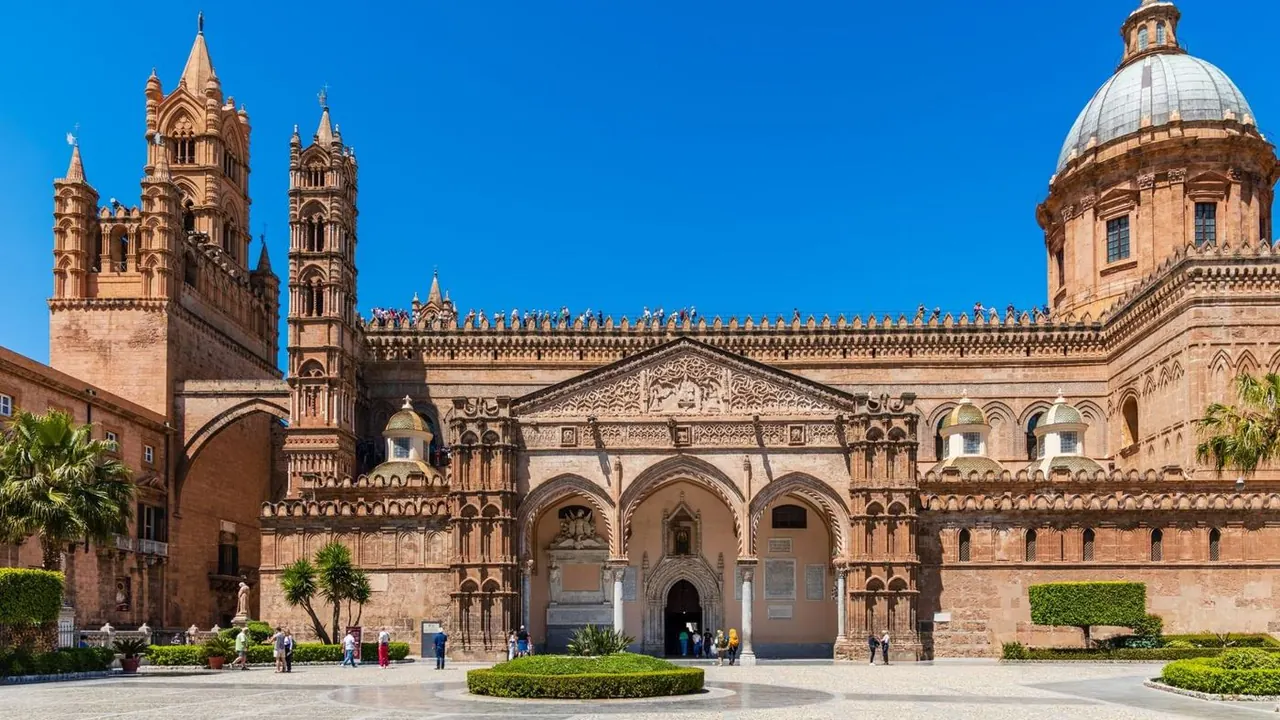
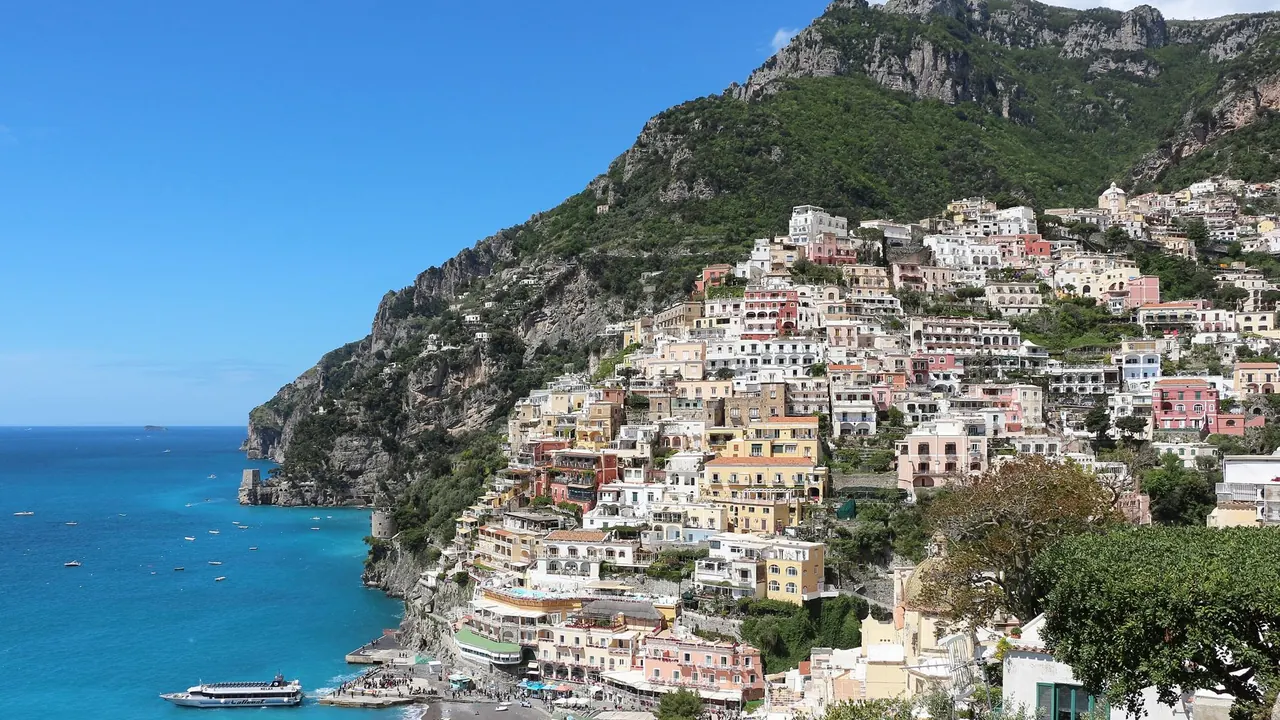
Photos: Palermo by Antonino Giangrasso, Pexels License; Positano by Bernard Gagnon, CC BY 4.0, cropped.
Palermo or Positano?
Our verdict in twelve categories, each scored against the same fixed benchmark cities, and the climate month by month, so you can choose for your trip.
Choose Palermo for
- culture and sights
- prices
- live music and the arts
Choose Palermo for a real city with plenty to fill the days. The Arab-Norman mosaics, the street-food markets of Ballarò and the Capo, the opera at the Teatro Massimo and late evenings out in the Vucciria all sit in a walkable old centre. Costs stay far below the Amalfi Coast, and Mondello's sandy bay is a bus ride away. It suits curious travellers who don't mind noise, traffic and crumbling façades.
Choose Positano for
- wellness
- nature and the outdoors
- day trips
Positano is the slower, costlier and more scenic trip, built around the sea and the cliffs. You spend the days on long terrace lunches, on boats to Capri and the coves, and on the Path of the Gods above the town. There is little to visit and little to do after dinner. It works best for couples and walkers with a generous budget, and badly for anyone with a pushchair.
Scoreboard
Twelve categories on one fixed scale from 0 to 100. The shaded stretch is the gap between the two.
Your match
Pick a travel style or drag the sliders, and both match scores follow your weighting.
Wins on culture and sights and prices with your weighting.
Wins on wellness and nature and the outdoors with your weighting.
What matters to you?
Category by category
What the scores mean for a trip.
Beaches & swimming
The swimming is equally good in both, but the beaches are very different. Palermo has no beach in the centre. Its sand is at Mondello, half an hour away by bus: a pale, shallow, turquoise bay that fills with cabins and local families at weekends. There are flat rocks and ladders into deep water out towards Capo Gallo.
In Positano the beach is right below the town. Spiaggia Grande and Fornillo are coarse dark sand and pebble, and the water gets deep quickly, so water shoes help. Boats run from the harbour to coves such as Arienzo and Laurito.
Food & drink
Palermo is far ahead for food. Its markets fry panelle and arancine all day, vans sell sfincione, and dishes such as pasta con le sarde and caponata carry the island's Arab past in raisins, pine nuts and saffron. Add cannoli, cassata and brioche with granita, and eating becomes a reason to go.
Positano offers beautiful settings more than variety. Lunch on a terrace over the sea means clams, grilled fish and lemon desserts, but the menus repeat themselves, there is no street food or market life, and many kitchens close in winter.
Culture & sights
This is the biggest gap between the two. Palermo has the gold mosaics of the Palatine Chapel and a UNESCO-listed route of Arab-Norman churches. It also has Serpotta's stucco oratories, the Salinas archaeological museum and Antonello da Messina's Annunciata at Palazzo Abatellis.
In Positano the town itself is the sight. You walk its stairways, see the majolica dome of Santa Maria Assunta and visit the painted rooms of the Roman villa buried beneath the church, and a couple of hours covers it. For anything more, people head to Naples.
Nightlife
Palermo gives you a proper evening out, though it happens on the street rather than in clubs. The Vucciria turns into an open-air drinking spot with grills and small bars, and the wine and cocktail bars in the Kalsa stay busy well past midnight on warm nights.
Positano's nights are an aperitivo with a view, a long dinner and, in summer, one dressy club in a cave at the end of the beach. That suits a romantic couple, but there is almost nothing once the season ends.
Nature & outdoors
Positano has the more dramatic landscape and gets you into it more easily. The Path of the Gods runs along the cliffs to Nocelle, just above the town, and steeper trails climb into the woods of the Lattari mountains. You can also kayak to the grottoes and the Li Galli islets.
Palermo has fine landscapes too. Monte Pellegrino rises over the city, Capo Gallo is good for snorkelling, and further out are the coastal path of the Zingaro reserve and the high beech woods of the Madonie. Beyond the city's own mountain, though, most of these places need a car.
Day trips
Both are excellent bases for day trips, and they lead to different kinds of places. From Palermo you can see Monreale's mosaics, Cefalù by train, the lone temple at Segesta, hilltop Erice and, further out, Agrigento's Valley of the Temples. A hire car makes the ancient sites much easier to reach.
From Positano the trips go by boat: Amalfi, Ravello, Capri and Sorrento. Pompeii, Herculaneum and Paestum are also within reach. Most ferries run only from spring to autumn, though.
Good for families
Neither is easy with small children, but Palermo works better. Mondello's shallow, sandy bay is ideal for young children, puppet shows of knights and Saracens appeal to older ones, and families are welcome in restaurants late into the evening. Expect uneven lanes and scooters in the old town.
Positano is built almost entirely of stairs, so a pushchair is useless there. Its pebbly beaches also drop off quickly, so it really suits only older children who love swimming and boats.
Getting around
Palermo is the easier place to get about. The old centre is compact and mostly flat, and you can walk between the main sights along Via Maqueda and Corso Vittorio Emanuele. Regional trains reach Cefalù and Bagheria, though city buses are slow and driving is stressful.
In Positano almost every walk means hundreds of steps. The single road through town is served by a loop bus, coast buses crawl in summer, and the useful ferries mostly run in season.
Shopping & style
Palermo offers a wider spread of shopping, though few people plan a trip around it. Via Libertà and Via Ruggero Settimo have Italian fashion and a few luxury labels. The markets are best for capers, pistachio pesto and almond paste to carry home, and the crafts worth looking for are painted ceramics such as the moor's-head vases, handmade marionettes and coral jewellery. The flea market by the cathedral adds antiques and old odds and ends.
In Positano, shopping is one of the pleasures of the stay, even though it sticks to a single style. The lanes down to the beach are full of loose white linen and brightly printed resort wear, and sandal makers will cut a pair to your feet while you wait. Beyond that look, plus ceramics, lemon soaps and limoncello, there is little else to buy.
Affordability
Palermo costs far less. Market street food, family trattorie, local wine and small church entry fees keep daily spending low, though July and August and a hire car push it up.
Positano is one of the most expensive places to stay in Italy. Summer sea-view rooms, beach loungers, terrace meals and boat transfers all cost a lot. Staying in Praiano or Sorrento, or coming in May or October, saves a great deal.
Live music & performing arts
Palermo has a real programme. The Teatro Massimo runs a full season of opera, ballet and concerts, the Sicilian symphony orchestra plays at the Politeama, and the family puppet theatres stage the Opera dei Pupi, which is well worth an evening.
Positano has only the odd summer concert in a church or square. The nearest serious music is Ravello's summer festival along the coast, and opera means a trip to Naples.
Wellness & relaxation
Positano is better for rest, though mainly through its hotels and its setting. Several hotels have spas and pools cut into the cliff, and an afternoon on a terrace above the sea does the rest. The crowds and stairs of July and August take the edge off, so May, June and late September are calmer.
Palermo is noisy and has only hotel and day spas. Its quiet places are the Orto Botanico, the cloisters and the evening seafront walk, and the nearest thermal waters are at Termini Imerese.
When should you go?
Pick your month. The climate figures are measured averages, not a forecast.
Palermo in July
Positano in July
Daytime high, °C
Rainfall in the month, mm
Where the figures come from
Palermo has no rain gauge within 25 km of the centre, so its rainfall comes from a gridded climate dataset read at the city rather than from a gauge further away.
Palermo's sunshine is measured 67 km from the centre, at Ustica.
Positano's temperatures are measured 25 km from the centre, at Capri.
Positano has no rain gauge within 25 km of the centre, so its rainfall comes from a gridded climate dataset read at the city rather than from a gauge further away.
Positano's sunshine is measured 59 km from the centre, at Grazzanise.
Temperature and rainfall are climate normals, averaged over the years shown. Palermo: 1991-2020 (sunshine 1961-1990) normals, Palermo / Punta Raisi (24.1 km from centre). Positano: 2005-2025 (sunshine 1991-2020, rainfall 1991-2020) normals, Capri (25.3 km from centre).
Both places are warm enough for swimming from June to early October. Palermo's sea is slightly the warmer of the two and reaches 27°C in August. High summer is hot in both, around 30°C in August, so climbing Positano's stairs or walking Palermo's lanes is best left to the morning and evening. Palermo is clearly the drier and sunnier city in summer, with almost no rain in June and July.
The two differ most in the cooler half of the year. Positano is wetter from autumn onwards, with rain building to 127mm in November, and its winter days are a degree or two cooler. Palermo's winter rain is more moderate. For walking and sightseeing without the heat, Palermo is pleasant in April, May and October. Positano is at its best in May, June and late September, before the autumn rains set in.
Which traveller are you?
On a culture and arts trip, Palermo is the clear choice. The Palatine Chapel, the Arab-Norman churches, the Salinas museum, the Teatro Massimo and the puppet theatres could fill a week. Positano offers its painted church dome, a buried Roman villa and not much else.
For a trip on a tight budget, Palermo stretches money much further. A string of market fryers makes a cheap lunch, and guesthouses and trattorie in the old centre are fairly priced. Positano is among Italy's most expensive places to stay, and even the loungers cost dearly.
On a relaxing and wellness trip, Positano is the better fit, especially in May, June or late September. Cliffside hotels with spas and pools, slow lunches over the sea and quiet terraces beat Palermo's scooters, market shouts and traffic.
Before you go
| Measure | Palermo | Positano |
|---|---|---|
| Official language | Italian | Italian |
| Currency | Euro (EUR) | Euro (EUR) |
| Sockets | CFL230 V, 50 Hz | CFL230 V, 50 Hz |
| Driving side | Right | Right |
| Time zone | UTC+1, UTC+2 in summer | UTC+1, UTC+2 in summer |
| Emergency number | 112 | 112 |
| Elevation | 14 m | 142 m |
| Main airport | Falcone–Borsellino Airport (PMO)25 km from centre106 non-stop destinations | Naples International Airport (NAP)33 km from centre131 non-stop destinations |
| Public holidays this year | 13 days | 13 days |
By the numbers
| Measure | Palermo | Positano |
|---|---|---|
| City population | 630,167 | 3,729 |
| People per km² | 3,924 | 429 |
| Museums within 10 km | 42 | 10 |
| UNESCO World Heritage sites within 50 km | 1 | 5 |
| Swim season, months above 21 °C | 5 months | 5 months |
Where else could you go?
Every comparison below shares a destination with this one, so you can follow Palermo or Positano somewhere new.