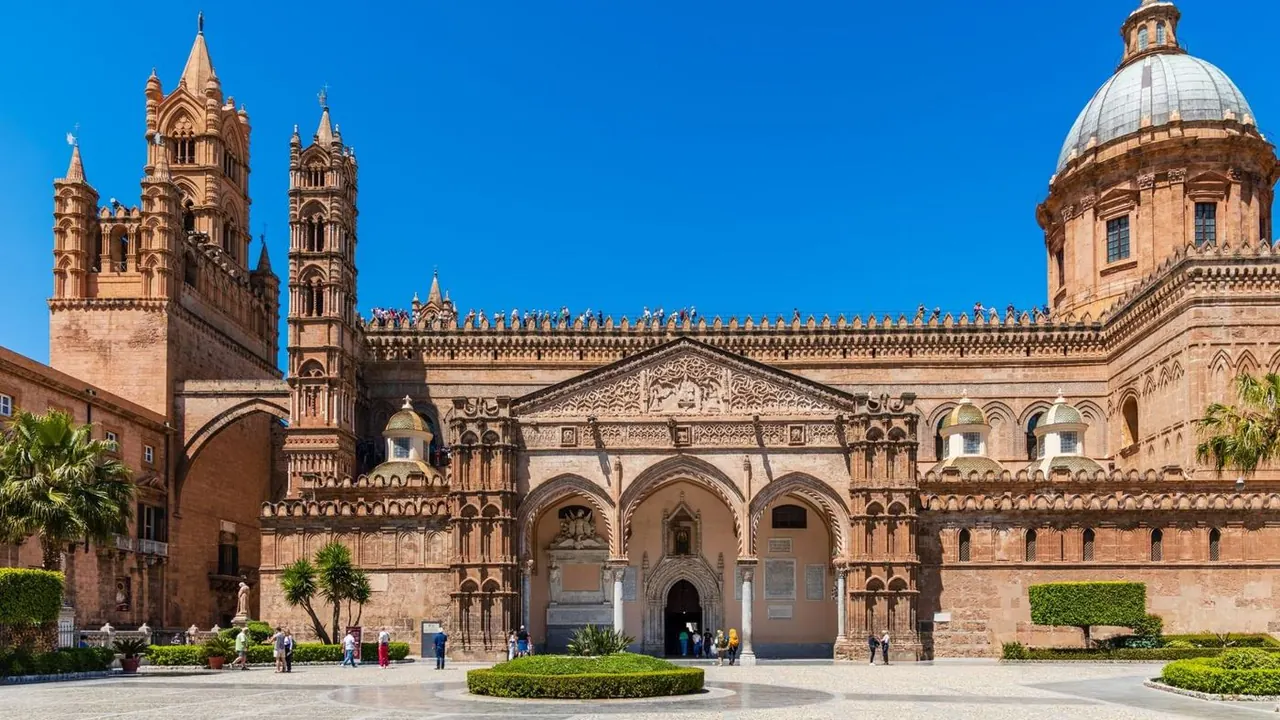
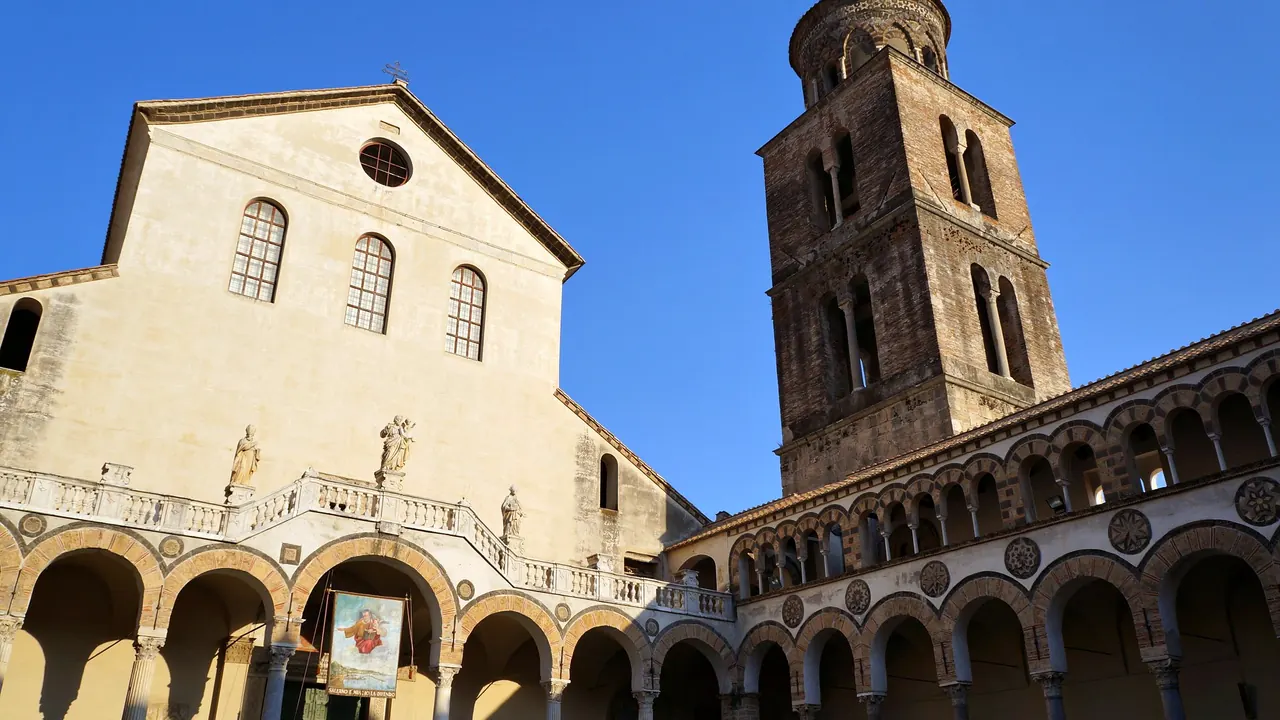
Photos: Palermo by Antonino Giangrasso, Pexels License; Salerno by Leandro Neumann Ciuffo, CC BY 2.0, cropped.
Palermo or Salerno?
Our verdict in twelve categories, each scored against the same fixed benchmark cities, and the climate month by month, so you can choose for your trip.
Choose Palermo for
- culture and sights
- live music and the arts
- nightlife
Palermo is the richer city in its own right. Choose it when the city itself is the point of the trip: the gold mosaics of the Arab-Norman churches, eating your way through the markets of Ballarò and the Capo, a night at the Teatro Massimo and late evenings outdoors in the Vucciria. Mondello is close for swimming, and Monreale and Cefalù make easy days out.
Choose Salerno for
- getting around
- families
- day trips
Salerno works best as a base. Its own sights fill a day or two, but Paestum, Pompeii and the Amalfi Coast ferries are all close, the centre is simple to walk and the flat seafront makes life easier with children. It suits a trip built around excursions, coastal walks and a calm evening stroll more than one spent inside the city.
Scoreboard
Twelve categories on one fixed scale from 0 to 100. The shaded stretch is the gap between the two.
Your match
Pick a travel style or drag the sliders, and both match scores follow your weighting.
Wins on culture and sights and live music and the arts with your weighting.
Wins on getting around and families with your weighting.
What matters to you?
Category by category
What the scores mean for a trip.
Beaches & swimming
Neither city lets you walk out of the hotel onto good sand, but Palermo's swimming is better. Mondello, half an hour away by bus, is a pale sandy bay of shallow turquoise water under Monte Pellegrino, and the rocks towards Sferracavallo and Capo Gallo offer quiet, deep-water swims.
Salerno's grey-sand city beaches are fine for a quick dip, though the water near the port is less clear. Its strength is choice: long sandy lidos backed by pine woods towards Paestum, or a ferry ride to the clear, pebbly coves of the Amalfi Coast.
Food & drink
Palermo has the more distinctive food culture. Its markets at Ballarò, the Capo and the Vucciria turn lunch into a string of fryers and stalls, and the cooking still shows its Arab past in saffron, raisins and sweet-and-sour sauces, with cannoli, cassata and brioche with granita to follow.
Salerno is a good place to eat rather than a reason to come. What it does best is local produce: buffalo mozzarella from the plain towards Paestum, colatura from Cetara and lemons from the coast, all served in plain trattorias and pizzerias. Neither city puts much weight on fine dining.
Culture & sights
The gap here is wide. Palermo has the UNESCO-listed Arab-Norman churches, led by the gold mosaics and carved Islamic ceiling of the Palatine Chapel. Add the baroque oratories, the Quattro Canti and the Salinas and Abatellis museums, and you have far more than a long weekend can hold.
Salerno has a fine Norman cathedral with Saint Matthew's crypt, the medicinal Giardino della Minerva and the Arechi Castle above the gulf. That makes a pleasant day or two in its stepped old town, and the region's great ancient sites all lie outside the city.
Nightlife
In both cities you go out on the street rather than in clubs, but Palermo does it later and with more energy. After dark the Vucciria becomes an open-air bar with smoking grills and music, and the wine and cocktail bars of the Kalsa and the lanes off Via Maqueda stay full past midnight.
Salerno's evenings centre on Largo Campo and Via dei Mercanti, with young locals drinking outside wine bars and pubs at weekends and in summer. Anyone wanting a bigger night heads to Naples.
Nature & outdoors
Both cities sit between limestone mountains and the sea, so the difference is in character. Palermo has Monte Pellegrino right above the streets, cliff paths and snorkelling at Capo Gallo, the Zingaro coastal trail and the high beech woods of the Madonie, though most of it is far easier with a car.
Salerno has the more famous walking: the Path of the Gods and the shaded Valle delle Ferriere above the Amalfi Coast, plus the gorges and headlands of the Cilento. Kayaking and boat trips beneath the cliffs are the classic summer outing.
Day trips
Both are superb bases, but Salerno's excursions are closer and work without a car. Paestum and Pompeii are each about half an hour by train, ferries cross to Amalfi and Positano with Ravello just above, and Naples, Herculaneum and Caserta are simple days out.
Palermo's list is grand too, from Monreale up the hill and Cefalù by train to Segesta, Erice and the Valley of the Temples. The ancient sites are spread across western and southern Sicily, though, and are best reached with a hire car.
Good for families
Salerno is the gentler city with children. Its long seafront is flat and free of traffic, with gardens along the way, and the Luci d'Artista Christmas lights make a winter draw. Its old town is all steps, though, and the coast roads test carsick children.
Palermo has real treats in the Mondello bay and the short puppet shows of knights and Saracens. Away from them, the centre is tiring for families, with uneven stone streets, few attractions built for children and fierce heat from June to September.
Getting around
Salerno's centre is one walkable strip, with the station, the shopping street, the seafront and the old town laid end to end, and that makes it the easier city to get about. Palermo's main sights line up along Via Maqueda and Corso Vittorio Emanuele, close enough to walk between. Off those streets, though, the lanes lack pavements, buses crawl through traffic, and Segesta, Erice and the inland areas really need a car in a city where driving is stressful.
Beyond its strip, Salerno has regional trains running direct to Naples, Pompeii and Paestum, and in the warmer months ferries carry you along the Amalfi Coast, so most visitors never need to drive. Only the castle high above town calls for a bus.
Shopping & style
Neither city is worth travelling to for shopping, and in both the best things to bring home are food and crafts. Palermo has a little more range in town: the fashion shops of Via Libertà, the flea market near the cathedral, puppet-workshop marionettes, coral jewellery and moor's-head vases.
Salerno keeps mostly to Italian chains along Corso Vittorio Emanuele, and its most distinctive buys come from next door: majolica from Vietri, limoncello from the coast and colatura from Cetara.
Affordability
These are two fairly priced southern cities, and both get dearer in July and August. In Palermo the saving is in eating, since a few market stops make a cheap meal, but a hire car for day trips soon adds up.
Salerno's advantage is as an inexpensive base for a costly stretch of coast, with ordinary hotel prices and cheap regional trains. Ferries, lido sunbeds and entry to the big archaeological sites are what mount up there.
Live music & performing arts
Palermo offers more. The Teatro Massimo, one of the largest opera houses in Europe, runs a full season of opera, ballet and concerts, the Politeama is home to the Sicilian symphony orchestra, and the Opera dei Pupi is a living tradition well worth an evening.
Salerno's gilded Teatro Verdi stages a respectable season, and in summer the Ravello Festival's cliff-top concerts are close enough for a special night. Beyond those, the city looks to Naples.
Wellness & relaxation
Salerno's long, palm-lined promenade builds a slow sunset walk past gardens and sea into every day, while Palermo's scooters, market shouts and traffic mean calm is something you have to go looking for. There it lies in the palm-filled Orto Botanico, the cloisters and the Foro Italico at dusk.
For real thermal waters you leave town either way. From Palermo it is Termini Imerese, about forty minutes east by train, and from Salerno the open-air sulphur pools of Contursi Terme, an hour inland. Otherwise both cities offer only hotel spas.
When should you go?
Pick your month. The climate figures are measured averages, not a forecast.
Palermo in July
Salerno in July
Daytime high, °C
Rainfall in the month, mm
Where the figures come from
Palermo has no rain gauge within 25 km of the centre, so its rainfall comes from a gridded climate dataset read at the city rather than from a gauge further away.
Palermo's sunshine is measured 67 km from the centre, at Ustica.
Salerno's temperatures are measured 71 km from the centre, at Grazzanise.
Salerno has no rain gauge within 25 km of the centre, so its rainfall comes from a gridded climate dataset read at the city rather than from a gauge further away.
Temperature and rainfall are climate normals, averaged over the years shown. Palermo: 1991-2020 (sunshine 1961-1990) normals, Palermo / Punta Raisi (24.1 km from centre). Salerno: 1991-2020 normals, Grazzanise (71.3 km from centre).
Both cities are warm enough for the beach from June into early October, and the sea is at its warmest around August. High summer is hot in both, slightly more so in Salerno, where July and August reach 31°C, so sightseeing is best done early and late in the day. Spring, from April to early June, and October are the comfortable months for walking the streets and the coastal paths.
The real difference is rain. Palermo is almost dry in summer and fairly moderate in winter. Salerno gets heavy rain from October to March, peaking at about 154mm in November against roughly 60mm in Palermo. Palermo is also sunnier in almost every month and a couple of degrees milder in winter, at around 15°C in January, so it is the better choice for an off-season trip.
Which traveller are you?
For a culture and arts trip, Palermo is the clear pick. The Palatine Chapel, the Arab-Norman route, Serpotta's stucco oratories and Palazzo Abatellis fill several days, and the Teatro Massimo and puppet theatres take care of the evenings.
On a family trip with children, Salerno is the easier base. Its car-free promenade has playgrounds and gelato stops, and the shallow beaches towards Paestum suit small swimmers. Palermo's pavement-less lanes, scooters and summer heat are harder work.
For a food and nightlife trip, choose Palermo. A morning in its markets means panelle, arancine and sfincione, the pastry shops are serious, and evenings run late in the Vucciria and the Kalsa. Salerno eats honestly but goes out more quietly.
Before you go
| Measure | Palermo | Salerno |
|---|---|---|
| Official language | Italian | Italian |
| Currency | Euro (EUR) | Euro (EUR) |
| Sockets | CFL230 V, 50 Hz | CFL230 V, 50 Hz |
| Driving side | Right | Right |
| Time zone | UTC+1, UTC+2 in summer | UTC+1, UTC+2 in summer |
| Emergency number | 112 | 112 |
| Elevation | 14 m | 4 m |
| Main airport | Falcone–Borsellino Airport (PMO)25 km from centre106 non-stop destinations | Naples International Airport (NAP)46 km from centre131 non-stop destinations |
| Public holidays this year | 13 days | 13 days |
By the numbers
| Measure | Palermo | Salerno |
|---|---|---|
| City population | 630,167 | 127,186 |
| People per km² | 3,924 | 2,123 |
| Museums within 10 km | 42 | 9 |
| UNESCO World Heritage sites within 50 km | 1 | 5 |
| Swim season, months above 21 °C | 5 months | 5 months |
Where else could you go?
Every comparison below shares a destination with this one, so you can follow Palermo or Salerno somewhere new.