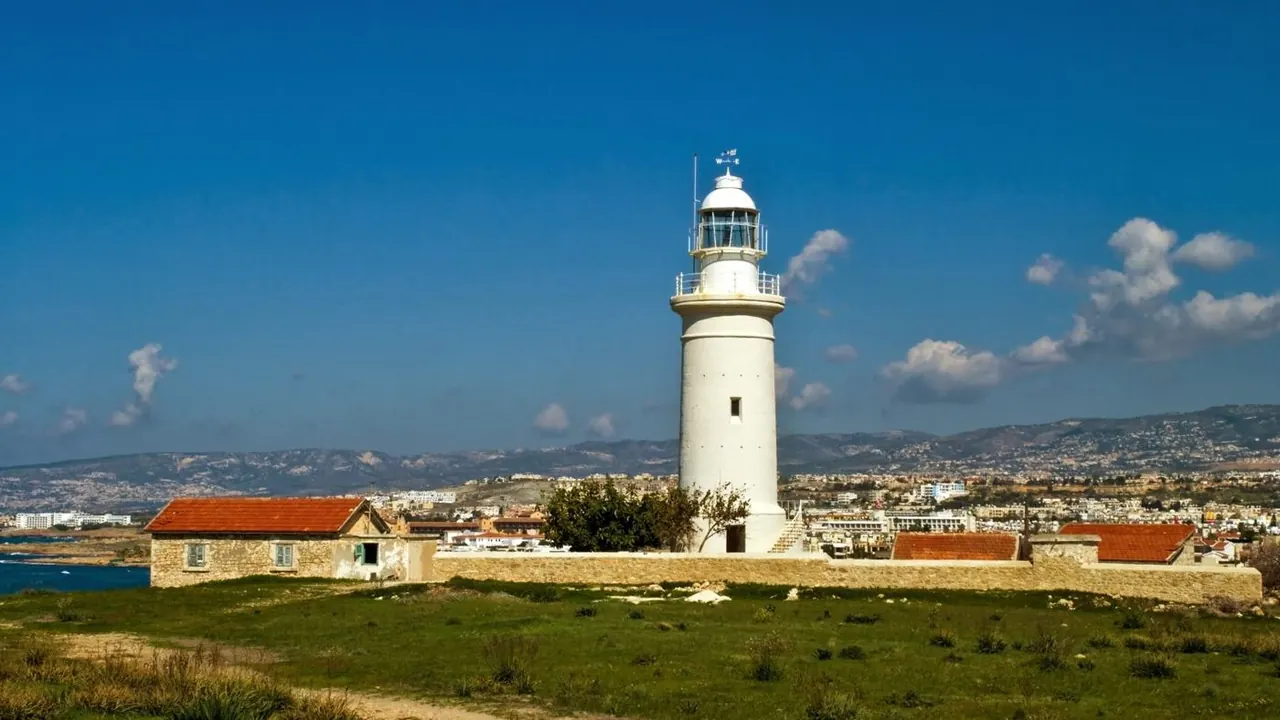
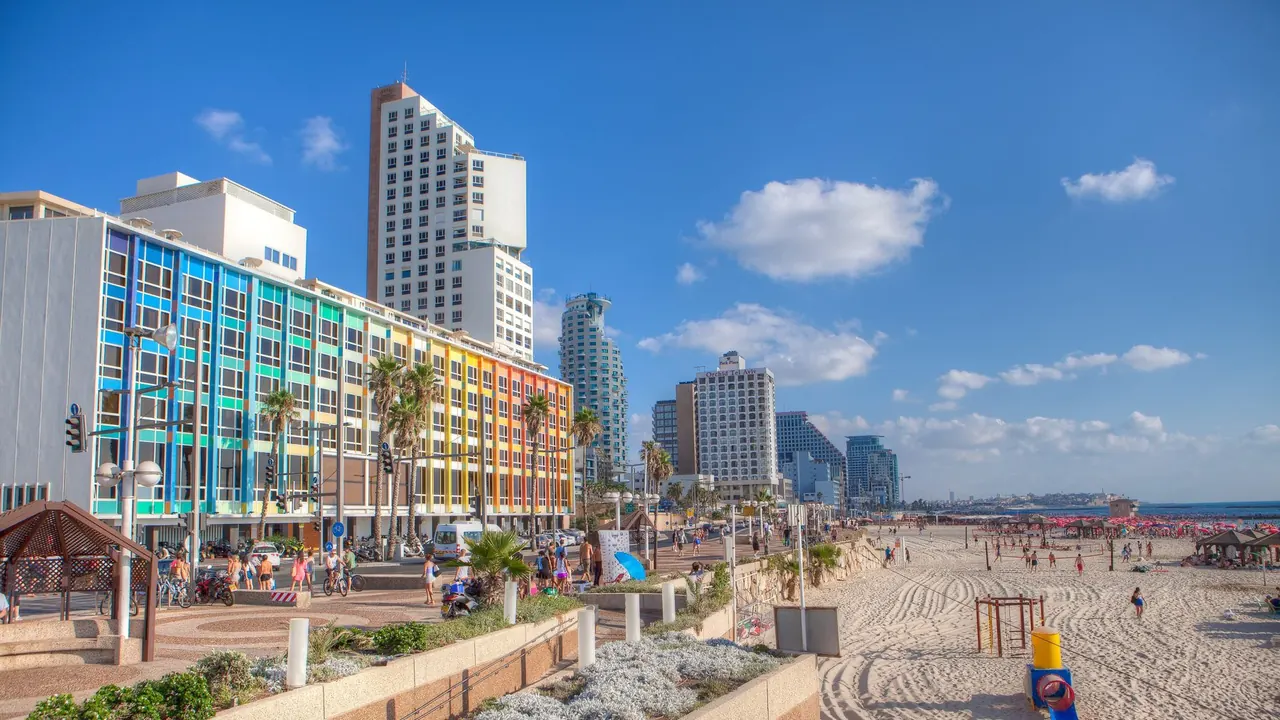
Photos: Paphos by Nikodem Nijaki, CC BY-SA 3.0, cropped; Tel Aviv by israeltourism, CC BY-SA 2.0, cropped.
Paphos or Tel Aviv?
Our verdict in twelve categories, each scored against the same fixed benchmark cities, and the climate month by month, so you can choose for your trip.
Choose Paphos for
- prices
- nature and the outdoors
- wellness
Paphos is the better pick for a slower, more affordable sea vacation built around a hire car. The town itself is small, but the Roman mosaics and rock-cut tombs are a short walk from the harbour, the Akamas coast and the gorges behind it give you real walking, and the best meals are in village tavernas up in the hills. It suits couples and families who want warm water, quiet evenings and a bit of ancient history, and who don't need much city life.
Choose Tel Aviv for
- live music and the arts
- nightlife
- food and drink
Tel Aviv suits travellers who want a city and a beach in the same step. You can walk from your hotel onto the sand, eat very well from market stalls to chef-led dining rooms, stay out until dawn, and take the train to Jerusalem for the day. Concerts and dance add to the evenings. The catch is the cost. This is a far more expensive trip, and it rewards people who will use the food, the nightlife and the day trips rather than just lie on the beach.
Scoreboard
Twelve categories on one fixed scale from 0 to 100. The shaded stretch is the gap between the two.
Your match
Pick a travel style or drag the sliders, and both match scores follow your weighting.
Wins on prices and nature and the outdoors with your weighting.
Wins on live music and the arts and nightlife with your weighting.
What matters to you?
Category by category
What the scores mean for a trip.
Beaches & swimming
Tel Aviv has the better beach for a city stay, because the beach is the city's whole western edge. The fine pale sand runs almost unbroken from the old port down to Jaffa, with breakwaters, lifeguards and a daily routine of sunset swims and paddle-ball games, all within walking distance of the centre.
Paphos is a different kind of beach place. Its town shore is short stretches of sand and shingle with rocky entries, and the good beaches need a bus or a drive. Coral Bay is the sandy family crescent, and Lara Bay on the Akamas coast is wild and undeveloped, a quieter kind of beach that Tel Aviv doesn't offer.
Food & drink
Food is one of the main reasons to choose Tel Aviv. Street food from Yemenite, Iraqi and Bukharan kitchens sits beside a confident chef-driven restaurant scene, Carmel Market and the Levinsky streets are made for grazing, and Jaffa adds fish by the port. Many places close for Shabbat.
Paphos is narrower. The meze is generous and the village tavernas around Ktima and Kathikas are worth the trip, with local Laona wine, but down by the harbour much of the cooking is aimed at package tourists.
Culture & sights
The two are about level on sights but cover different eras. Paphos is about antiquity: the UNESCO-listed Archaeological Park with the House of Dionysus mosaics, the Tombs of the Kings cut into the shore, and St Paul's Pillar, all covered comfortably in two or three days.
Tel Aviv is about the twentieth century. You see it on foot in the Bauhaus streets of the White City and the low houses of Neve Tzedek, and you also have stronger museums to fill a rainy afternoon, including the Tel Aviv Museum of Art and ANU. Jaffa's stone lanes add an older layer.
Nightlife
If going out matters, Tel Aviv is in another league. Evenings start late in the wine and cocktail bars around Rothschild, Lilienblum and Allenby, Thursday runs until dawn, warehouse clubs play house and techno, and the gay scene is among the most open in the region.
Paphos has one strip, Bar Street in Kato Paphos, with pubs, karaoke and a few clubs for summer groups. Otherwise it means a drink by the harbour, and from November to March much of it shuts.
Nature & outdoors
Paphos has the stronger landscape, and most of it is a short drive away. You can walk to sea caves on the protected Akamas peninsula, through the limestone walls of Avakas Gorge, or among cedars in the Paphos Forest, with turtle beaches in summer and wreck dives offshore. The Troodos pine forests are further inland.
Tel Aviv is flat and built up, so its outdoor life is the sea and the riverside: surfing, kitesurfing, and cycling the coast path or Yarkon Park. For real hills you drive to the Carmel ridge or out to the desert canyons of Ein Gedi.
Day trips
Tel Aviv has much the richer range of outings, and many work without a car. Jerusalem's Old City is about half an hour away by fast train, and Caesarea, Haifa's Baha'i Gardens and Crusader Acre lie up the coast. Masada with a float in the Dead Sea makes a long but manageable day. On Saturdays you need a car or a tour, because public transport stops for Shabbat.
From Paphos almost everything is by car. Kourion's cliff-top ruins, the painted Troodos churches and the walled capital of Nicosia make good days out, but they are a quieter set of trips.
Good for families
Both work well with children, and in both cities children are welcome at dinner late into the evening. The kind of trip differs. Paphos is a resort beach week: shallow sand at Coral Bay, hotels with pools and kids' clubs, a water park, and older children can explore the tombs. You will need a car for most outings.
Tel Aviv is a city break with beaches. Lifeguarded sand is in walking distance, the Ramat Gan Safari is just east, and the children's museum in Holon covers a rainy day, all from a flat centre that is easy with a pushchair. In both places midsummer is the hardest time to travel with children.
Getting around
Tel Aviv is far easier without a car. You can walk the compact, flat centre from the port to Jaffa, bikes and scooters fill the cycle lanes, and the light rail and trains reach further out. The one gap is Shabbat, when most buses and trains stop.
In Paphos the promenade is pleasant on foot, but Ktima is a steep climb up, hotels sprawl along the coast, and buses don't reach the gorges and villages. Most visitors hire a car and drive on the left.
Shopping & style
Tel Aviv gives shoppers a lot more to do, mostly in small boutiques of Israeli design on Dizengoff, Sheinkin and in Neve Tzedek. There are also handmade crafts at Nahalat Binyamin and antiques in the Jaffa flea market, though prices are high.
Paphos has the covered market in Ktima and seafront gift shops. The better buys are lace, pottery, honey and wine from the villages where they are made.
Affordability
Paphos is much the cheaper of the two. It costs what you would expect of a eurozone resort, meze dinners give you plenty for the money, and winter is clearly cheaper. Car hire and high-summer seafront hotels push up the total.
Tel Aviv is one of the costliest cities around the Mediterranean, with expensive hotels, meals, drinks and groceries. Hummus, falafel and sabich keep you fed, and the beach and the White City are free, but a tight budget needs careful planning.
Live music & performing arts
Tel Aviv is clearly the place for an evening at a performance. The Israel Philharmonic and the Israeli Opera play long seasons, Habima is the national theatre, and Batsheva and the Suzanne Dellal Centre make contemporary dance the highlight. Clubs in the south add jazz, indie and Mizrahi pop, with outdoor stages in summer.
Paphos has folk dancing at taverna nights and one major event, the open-air Aphrodite Festival opera in front of the harbour castle in early autumn.
Wellness & relaxation
Neither city has its own bathing tradition, and in both the spas are mostly in the big seafront hotels. Paphos is the more restful base because the place itself is slower: long promenade walks, unhurried lunches and quiet villages inland, and an emptier coast outside summer.
Tel Aviv runs loud and fast, with calm mainly when Shabbat empties the streets and on early mornings by the sea. Its real advantage is the mineral pools and mud spas of the Dead Sea, about one and a half hours away.
When should you go?
Pick your month. The climate figures are measured averages, not a forecast.
Paphos in July
Tel Aviv in July
Daytime high, °C
Rainfall in the month, mm
Where the figures come from
Paphos has no rain gauge within 25 km of the centre, so its rainfall comes from a gridded climate dataset read at the city rather than from a gauge further away.
Temperature and rainfall are climate normals, averaged over the years shown. Paphos: 1991-2020 normals, Paphos Airport (8.4 km from centre). Tel Aviv: 1991-2020 normals, Bet Dagan (9.5 km from centre).
Both coasts have the same Mediterranean rhythm: dry summers, wet winters and warm sea from late spring into November. In both cities the water peaks around 28°C in August. Paphos is a little milder. Summer highs there stay near 30°C, so May, June, September and October are comfortable for both the beach and walking, and the sea is still pleasant in November. The rain comes from November to March, heaviest around the turn of the year.
Tel Aviv runs hotter and wetter at the extremes. July and August reach about 32°C, with humidity that makes walking around the city at midday hard going, so spring and autumn are the better seasons for exploring. Winter brings heavier rain than in Paphos, around 140mm in January, though the sea stays slightly warmer through the cool months. From April to October it is almost completely dry.
Which traveller are you?
On a food and nightlife trip, Tel Aviv wins clearly. It has hummus counters, Carmel Market grazing and chef-led kitchens, then bars on Rothschild and techno clubs that run until dawn all year. Paphos offers a good village meze and a seasonal Bar Street.
For a trip on a tight budget, Paphos is far easier. Meze dinners, buses and the archaeological sites are fairly priced, and the off-season is cheap. In Tel Aviv, hotels and sit-down meals rank with the priciest capitals in Europe, so you would be living on street food.
On an outdoors trip, Paphos has the landscape close at hand: the roadless Akamas peninsula, Avakas Gorge, the mouflon of the Paphos Forest and wreck diving offshore. Tel Aviv's outdoor life is mostly sea sports and cycling, and real hiking is an hour or more away.
Before you go
| Measure | Paphos | Tel Aviv |
|---|---|---|
| Official language | Turkish, Greek, Modern Greek | Hebrew |
| Currency | Euro (EUR) | New Israeli Sheqel (ILS) |
| Sockets | G240 V, 50 Hz | CHM230 V, 50 Hz |
| Driving side | Left | Right |
| Time zone | UTC+2, UTC+3 in summer | UTC+2, UTC+3 in summer |
| Emergency number | 112 | Police 100, fire 102 |
| Elevation | 72 m | 5 m |
| Main airport | Paphos International Airport (PFO)8 km from centre58 non-stop destinations | Ben Gurion International Airport (TLV)13 km from centre111 non-stop destinations |
| Public holidays this year | 17 days | - |
By the numbers
| Measure | Paphos | Tel Aviv |
|---|---|---|
| City population | 35,961 | 467,875 |
| People per km² | 1,987 | 8,998 |
| Museums within 10 km | 4 | 98 |
| UNESCO World Heritage sites within 50 km | 2 | 2 |
| Swim season, months above 21 °C | 6 months | 7 months |
Where else could you go?
Every comparison below shares a destination with this one, so you can follow Paphos or Tel Aviv somewhere new.