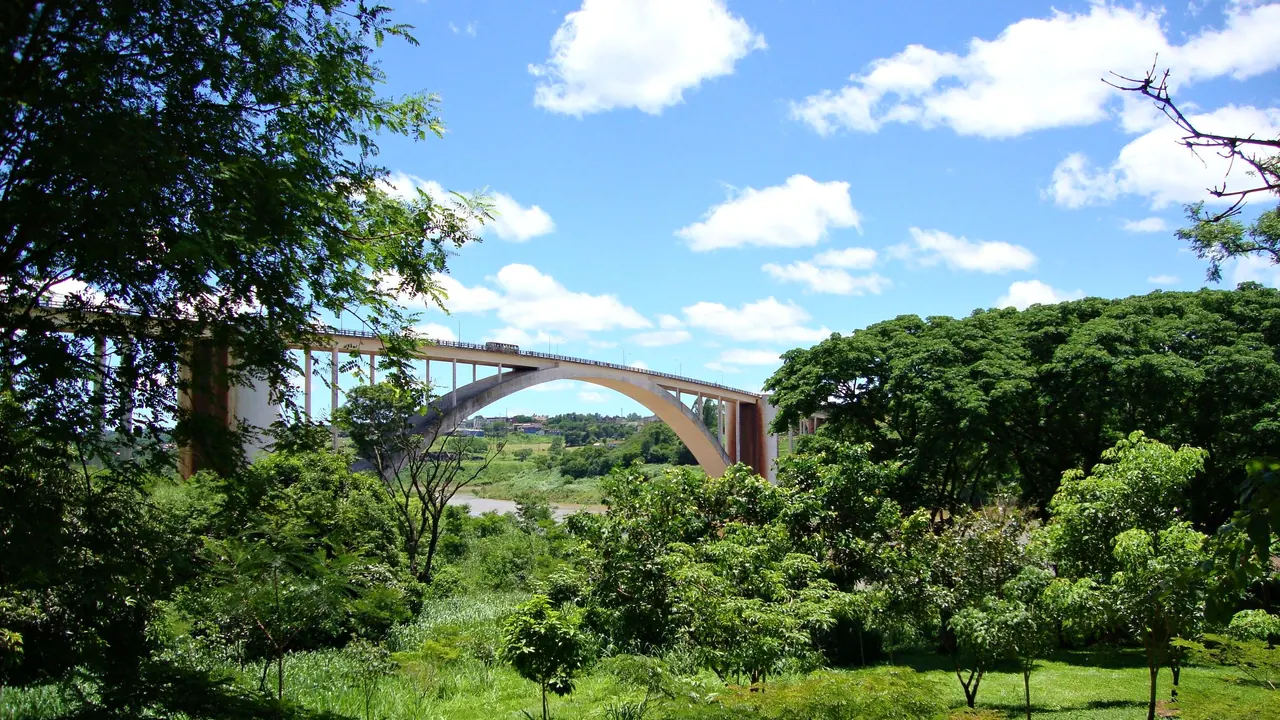
Ciudad del Este
The Friendship Bridge over the Paraná between Ciudad del Este and Brazil
- Affordability80
- Nature & outdoors74
- Shopping58
Match
35
Every category weighted equally
- Beach & sun35
- Culture & arts30
- Food & nightlife31
- Family trip38
- Outdoors42
- Relax & unwind34
- Shopping & style34
- On a budget40
Ciudad del Este in twelve categories
Our verdict on each, scored 0 to 100 against the same fixed benchmark cities, so a score means the same thing on every page.
Beaches & swimming. Scores 10 out of 100.
Food & drink. Scores 36 out of 100.
Culture & sights. Scores 12 out of 100.
Nightlife. Scores 25 out of 100.
Nature & outdoors. Scores 74 out of 100.
Day trips. Scores 42 out of 100.
Good for families. Scores 33 out of 100.
Getting around. Scores 22 out of 100.
Shopping & style. Scores 58 out of 100.
Affordability. Scores 80 out of 100.
Live music & performing arts. Scores 10 out of 100.
Wellness & relaxation. Scores 14 out of 100.
Ciudad del Este category by category
Beaches & swimming
10Ciudad del Este is deep inland, many hundreds of kilometres from the Atlantic, and beach life plays no part in a stay. The Paraná river and the large reservoir behind the Itaipu dam have a few sandy banks where local families bathe on hot summer weekends, but these are simple local spots rather than reasons to come. The lake in the city centre is for strolling, not swimming. On a hot day most visitors make do with a hotel pool.
Food & drink
36Eating here is practical rather than memorable, but it has some character. Paraguayan staples are easy to find: chipa, the cheese and cassava bread sold warm by street vendors, sopa paraguaya, which is a dense cornbread despite the name, mandioca with everything, and generous grilled meat at simple asado restaurants. Tereré, cold yerba mate drunk from a shared guampa, is everywhere you look.
The city's large Lebanese and Chinese communities, together with the Brazilian presence across the river, give it shawarma counters, Arab bakeries, Cantonese and Taiwanese kitchens and Brazilian buffets by weight. Around the shopping district the food is mostly fast lunches for day visitors. There is little fine dining and no wine or coffee culture worth seeking out.
Culture & sights
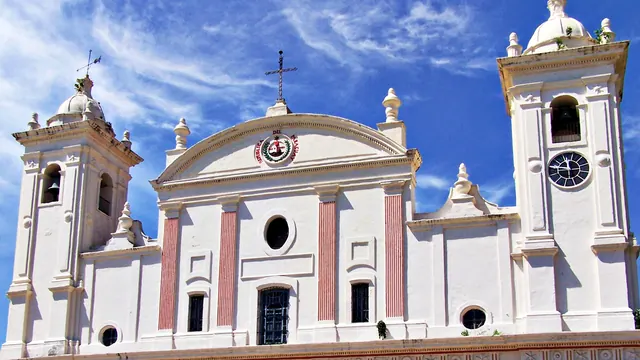
12Ciudad del Este was only founded in 1957, as a frontier trading town, and it has very little in the way of heritage. The modern Cathedral of San Blas, with its sweeping concrete roof, and the Lago de la República with its waterfront promenade are the main things to look at in the city itself. The interest lies in the place as a phenomenon, a sprawling border market town where Paraguayans, Brazilians, Argentines, Lebanese and Chinese all trade side by side. For anything that counts as a sight, visitors head out of town.
Nightlife
25The city lives by day. Once the shops close in the late afternoon the microcentro empties fast, and the streets that were packed at noon are quiet and best avoided on foot. Going out happens in the residential districts and along the main avenues away from the market: a handful of bars and nightclubs that fill up with young locals at weekends, terraces where people drink cold beer and tereré, and the casino. Midweek evenings are quiet. Some visitors staying overnight cross the bridge and go out on the Brazilian side instead.
Nature & outdoors
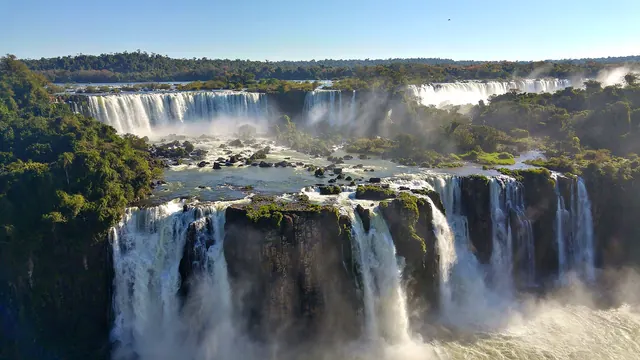
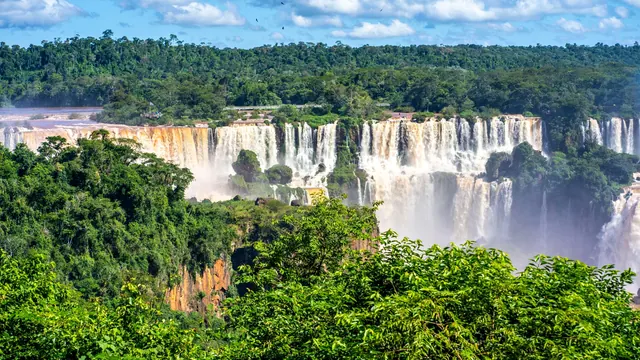
74The reason most people stay here is the water and forest of the triple frontier. The Iguazú Falls lie about 30km away across the Friendship Bridge, a wide crescent of hundreds of cascades that can be seen from catwalks on the Brazilian side and from long walkways right up to the Devil's Throat on the Argentine side. Both national parks protect rich Atlantic forest, with toucans, coatis, butterflies and boat rides into the spray.
Closer to the city, the Saltos del Monday are a tall, powerful waterfall just south of town, and the Itaipu reservoir is ringed by forest reserves with birdwatching. The land itself is flat, red-earthed and green. Summers are hot and humid, so winter is the easier season for walking, while the falls run fullest after heavy rain.
Day trips
42Three countries meet here, which makes for an unusual set of short outings. The Itaipu dam, one of the largest hydroelectric works ever built, is a short drive north at Hernandarias and can be toured from the Paraguayan side, a genuinely striking piece of engineering. Across the bridge, Foz do Iguaçu is a larger Brazilian city with the Three Frontiers landmark where the Paraná and Iguazú rivers meet, and Puerto Iguazú is a small, relaxed Argentine town just beyond.
South of the city, the house and museum of the naturalist Moisés Bertoni sits in forest above the Paraná. Beyond that the list thins. The UNESCO-listed Jesuit missions of Trinidad and Jesús and San Ignacio Miní in Argentina are rewarding but lie further than a comfortable day.
Good for families
33Children can have a wonderful time at the falls, where coatis wander the paths and the boat rides end in a soaking, and the large bird park near the Brazilian falls entrance is a good half day with toucans and macaws in walk-through aviaries. Paraguayans are warm towards children, and hotels with pools help in the heat.
The city itself is another matter. The shopping district is crowded, loud and hard to manage with a pushchair, traffic is heavy, pavements are uneven and there is little made for children beyond the lakeside park. Families usually base themselves for the falls, plan each outing with a driver and keep the shopping trips short.
Getting around
22The commercial centre is compact, but walking it means threading through stalls, touts, motorbikes and crowds on broken pavements, and pickpockets work the busy streets. Local buses exist but are basic and hard for a visitor to use, so most people rely on taxis, ride-hailing or a hired driver. Reaching the falls and Itaipu involves border controls, and traffic on the Friendship Bridge can back up badly at busy times, so allow generous margins. A car or a driver makes the region much easier to see.
Shopping & style
58Shopping is what made Ciudad del Este. Its low import duties draw buyers from Brazil and Argentina by the busload, and the microcentro near the bridge is a dense tangle of multi-storey stores, galleries and street stalls selling electronics, cameras, perfumes, spirits, cosmetics, toys and household goods. A few large department-style stores are calm and air-conditioned; the rest is noisy bargaining.
It suits a visitor hunting a specific gadget or a bottle of perfume, who checks models and warranties carefully, as fakes and grey-market goods are common. It does not suit anyone looking for fashion, design or local crafts: there are no boutique streets, and Paraguayan handicrafts such as ñandutí lace are easier to find elsewhere in the country.
Affordability
80On the Paraguayan side of the border, money goes a long way. Business hotels with pools cost far less than their equivalents across the river, a filling lunch of grilled meat or a set menu is cheap, and street snacks like chipa cost very little. Imported goods are the city's whole reason to exist and are cheaper than in neighbouring countries.
The main costs come from the region rather than the city: entry to the two national parks at the falls is charged on the Brazilian and Argentine sides, and because public transport is weak, taxis and drivers form a large share of the budget.
Live music & performing arts
10There is very little to attend. The city has no opera, regular orchestral season or theatre scene that a visitor would plan around. The live music most visitors meet is Paraguayan harp and guarania or polka paraguaya played at restaurants and during local festivities, which is pleasant and distinctly local but not a programme. Touring concerts appear occasionally, and Foz do Iguaçu across the river adds a little more.
Wellness & relaxation
14This is a city of trade, traffic and noise, and it offers almost nothing for slowing down. There is no bathing or spa tradition, and wellness is limited to hotel pools and the occasional hotel spa. The calmest moments come at the lakeside promenade in the evening, or over a shared tereré in the shade. Travellers who want a restful stay near the falls tend to choose a forest resort on the Brazilian or Argentine side instead.
When should you go?
Pick a month to see what it is like. The climate figures are measured averages, not a forecast.
Ciudad del Este in July
Daytime high, °C
Rainfall in the month, mm
The whole year
Shaded against this destination’s own year: the deepest cell is its best month for that figure and the palest its weakest.
Where the figures come from
Ciudad del Este's sunshine is measured 28 km from the centre, at Iguazu Aerodrome.
Temperature and rainfall are climate normals, averaged over the years shown. Ciudad del Este: 1992-2020 (sunshine 1991-2020, rainfall 1991-2020) normals, Foz Do Iguacu Aeroporto (3.4 km from centre).
Before you go
| Measure | Ciudad del Este |
|---|---|
| Official language | Spanish, Guarani |
| Currency | Guarani (PYG) |
| Sockets | C220 V, 50 Hz |
| Driving side | Right |
| Time zone | UTC-3 |
| Emergency number | 911 |
| Elevation | 185 m |
| Main airport | Guaraní International Airport (AGT)24 km from centre |
| Public holidays this year | 12 days |
By the numbers
| Measure | Ciudad del Este |
|---|---|
| Population | 350,000 |
| People per km² | 2,349 |
| Museums within 10 km | 1 |
| UNESCO World Heritage sites within 50 km | 1 |
Compare Ciudad del Este with
Every comparison with a written verdict behind it.