Puerto Maldonado
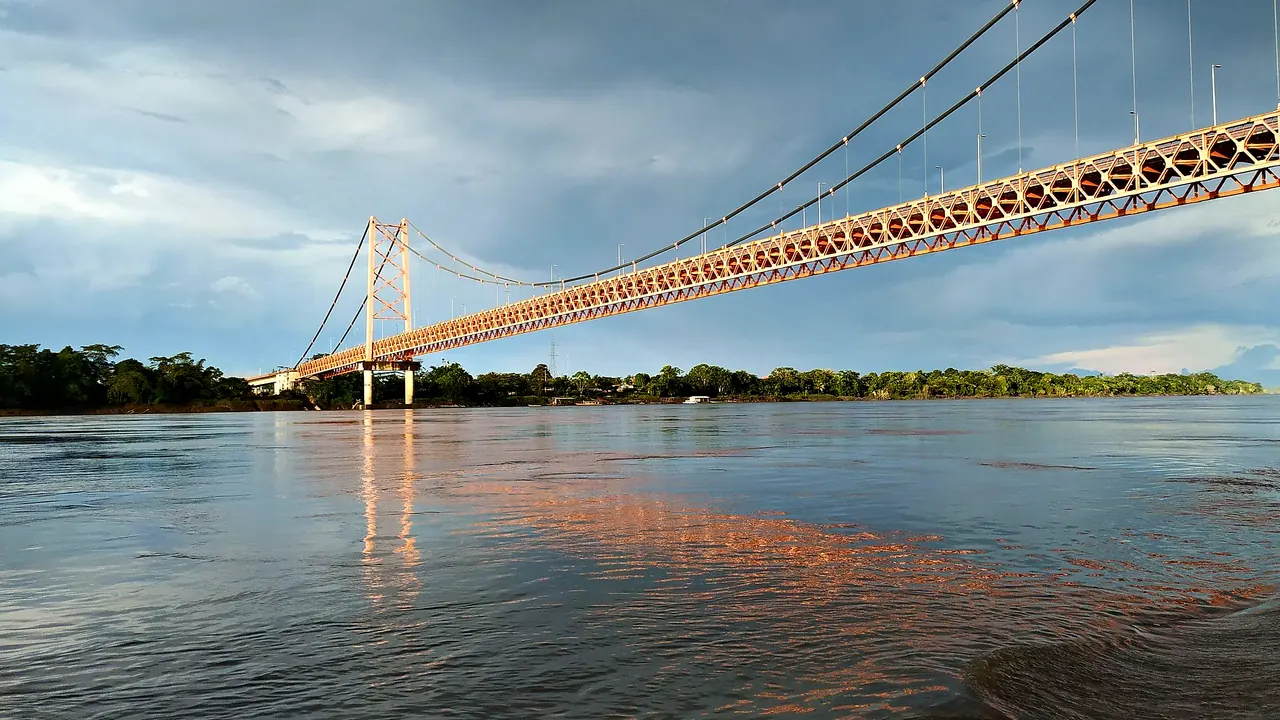
The Billinghurst suspension bridge over the Madre de Dios river at sunset
- Nature & outdoors88
- Affordability60
- Food & drink30
Photo: FERNANDO HUAMANI, Pexels License
Match
25
Every category weighted equally
- Beach & sun28
- Culture & arts21
- Food & nightlife21
- Family trip30
- Outdoors33
- Relax & unwind28
- Shopping & style21
- On a budget29
Puerto Maldonado in twelve categories
Our verdict on each, scored 0 to 100 against the same fixed benchmark cities, so a score means the same thing on every page.
Beaches & swimming. Scores 7 out of 100.
Food & drink. Scores 30 out of 100.
Culture & sights. Scores 10 out of 100.
Nightlife. Scores 15 out of 100.
Nature & outdoors. Scores 88 out of 100.
Day trips. Scores 5 out of 100.
Good for families. Scores 28 out of 100.
Getting around. Scores 25 out of 100.
Shopping & style. Scores 7 out of 100.
Affordability. Scores 60 out of 100.
Live music & performing arts. Scores 5 out of 100.
Wellness & relaxation. Scores 25 out of 100.
Puerto Maldonado category by category
Beaches & swimming
7Puerto Maldonado sits where the Tambopata meets the Madre de Dios, more than 400km from the Pacific, and these are brown, fast rivers with strong currents. Nobody swims from the town. In the dry season the rivers drop and expose sandbanks, and some lodges take guests for a dip in a calm stretch or an oxbow lake when guides judge it safe, but caimans and stingrays mean you go only where they say. For cooling off, the realistic option is a lodge or hotel pool.
Food & drink
30Eating here means the cooking of the Peruvian Amazon. Juane, rice and chicken wrapped and steamed in bijao leaves, turns up everywhere, alongside tacacho, mashed green plantain with smoked cecina pork, and patarashca, river fish grilled in leaves. Paiche and other large river fish are the standard catch, and juice stands press aguaje, camu camu and cocona. Brazil nuts are the local crop, sold raw, candied and in sweets.
The central market is the place to see the fruit and fish, and a few simple restaurants around the Plaza de Armas cover the basics. Beyond that the range is narrow, and most visitors take their meals at jungle lodges where the food is set and plain.
Culture & sights
10This is a working frontier town that grew from rubber, timber, gold and Brazil nuts, and it has few sights of its own. The Plaza de Armas and its modern cathedral, the tall Obelisco viewing tower with its wide look over the rooftops and forest, and the long suspension bridge over the Madre de Dios fill an hour or two. Visitors come for the rainforest, and the town is mostly the place you pass through on the way to it.
Nightlife
15There is a local night out, mostly at weekends: discotecas playing cumbia and reggaeton, karaoke bars and plastic tables of beer around the centre. It is aimed at residents rather than visitors and has little to draw a traveller. Most people staying here are out on the river or at a jungle lodge by evening, where the night means a guided caiman walk and an early bed before a dawn start.
Nature & outdoors
88Puerto Maldonado is a gateway to one of the richest stretches of lowland rainforest on the planet. The Tambopata National Reserve and the larger Bahuaja-Sonene National Park begin upriver, and lodges along the Tambopata and Madre de Dios are reached by motorised canoe in anything from under an hour to half a day. Lake Sandoval, close to town, is known for giant river otters, hoatzins and caimans. Further in, clay licks draw hundreds of macaws and parrots at dawn, and canopy towers lift you above the forest.
The days are spent on guided walks, night walks, catamaran trips on oxbow lakes and birding, with monkeys, capybaras and tapir tracks common. The land is flat, hot and humid. The dry months, roughly May to October, are easiest for trails, while the rains bring higher rivers and mud.
Day trips
5There are no towns, heritage sites or other places to visit within easy reach. The roads run into cattle land and gold-mining country, and the Brazilian and Bolivian borders are hours away. Every excursion from here is into the forest and onto the rivers, so plan the stay around a lodge rather than a series of outings.
Good for families
28For older children with an interest in animals this can be a memorable trip: monkeys in the trees, caimans by torchlight, macaws at the clay lick and tarantulas on night walks. Some lodges welcome families and keep the walks short, and there is a butterfly farm near town.
It is demanding with young children, though. The heat and humidity are constant, insects are everywhere, yellow fever vaccination is advised, dawn starts are the norm and medical care is basic. There is nothing in town built for children, and the boat rides to the better lodges are long.
Getting around
25The town is compact but hot and spread low, and the way around is by mototaxi, which are everywhere and handle any short trip. There are no buses worth using as a visitor. Once you leave town, travel is by river: lodges collect guests at the airport and run them upstream by boat, so nearly every movement is arranged for you. A car is unnecessary, but independent exploring is not really possible.
Shopping & style
7Shopping is limited to Brazil nuts and nut sweets, a few stalls with seed jewellery and wood carvings, and the central market, which is interesting for its produce rather than for anything to take home. Bring what you need for the forest from elsewhere.
Affordability
60The town itself is inexpensive: simple hotels, market meals, juices and mototaxi rides all cost little. The catch is that almost everyone comes to stay in the rainforest, and lodges sell all-inclusive packages covering boats, guides and meals, which cost far more than the town around them. The deeper and more remote the lodge, the higher the price. Budget travellers can keep costs down with lodges nearer town or day trips to Lake Sandoval, but a classic Amazon stay is the main expense of the trip.
Live music & performing arts
5There is no theatre, concert or live-music life to speak of. Local festivals bring folk dancing to the plaza now and then, and some lodges stage a little music, but nobody plans a visit around performances here.
Wellness & relaxation
25There is no spa or bathing tradition here, and the heat, humidity and insects do not make for easy lounging. What the area does offer is quiet: a lodge on the river, with hammocks, no traffic and the sounds of the forest at night, can be deeply restful between early walks. A few lodges offer massages, but anyone wanting real spa treatment will not find it.
When should you go?
Pick a month to see what it is like. The climate figures are measured averages, not a forecast.
Puerto Maldonado in July
Daytime high, °C
Rainfall in the month, mm
The whole year
Shaded against this destination’s own year: the deepest cell is its best month for that figure and the palest its weakest.
Temperature and rainfall are climate normals, averaged over the years shown. Puerto Maldonado: 1963-2025, 28 years observed (rainfall 1981-2010) normals, Puerto Maldonado (4.1 km from centre).
Before you go
| Measure | Puerto Maldonado |
|---|---|
| Official language | Spanish, Aymara, Quechua |
| Currency | Sol (PEN) |
| Sockets | ABC220 V, 60 Hz |
| Driving side | Right |
| Time zone | UTC-5 |
| Emergency number | 111 or 911 |
| Elevation | 183 m |
| Main airport | Padre Aldamiz International Airport (PEM)5 km from centre2 non-stop destinations |
| Public holidays this year | 17 days |
By the numbers
| Measure | Puerto Maldonado |
|---|---|
| Population | 85,024 |
| Museums within 10 km | 0 |
| UNESCO World Heritage sites within 50 km | 0 |
Compare Puerto Maldonado with
Every comparison with a written verdict behind it.