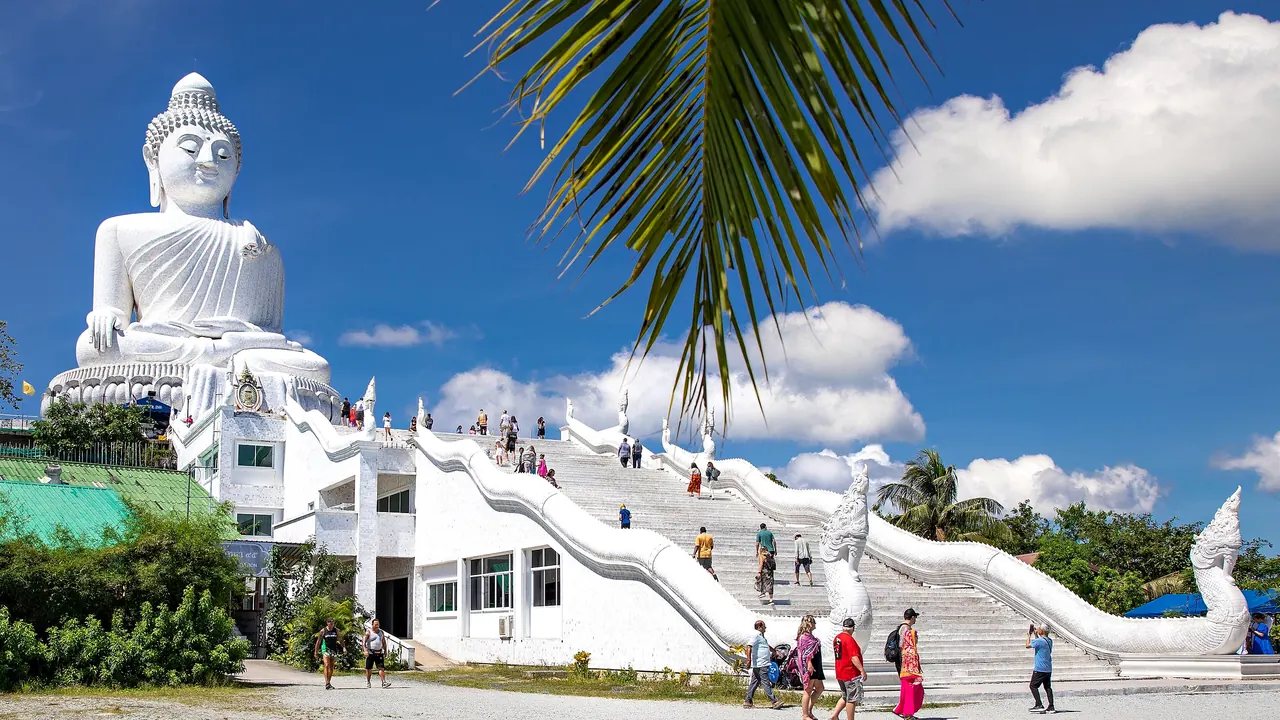
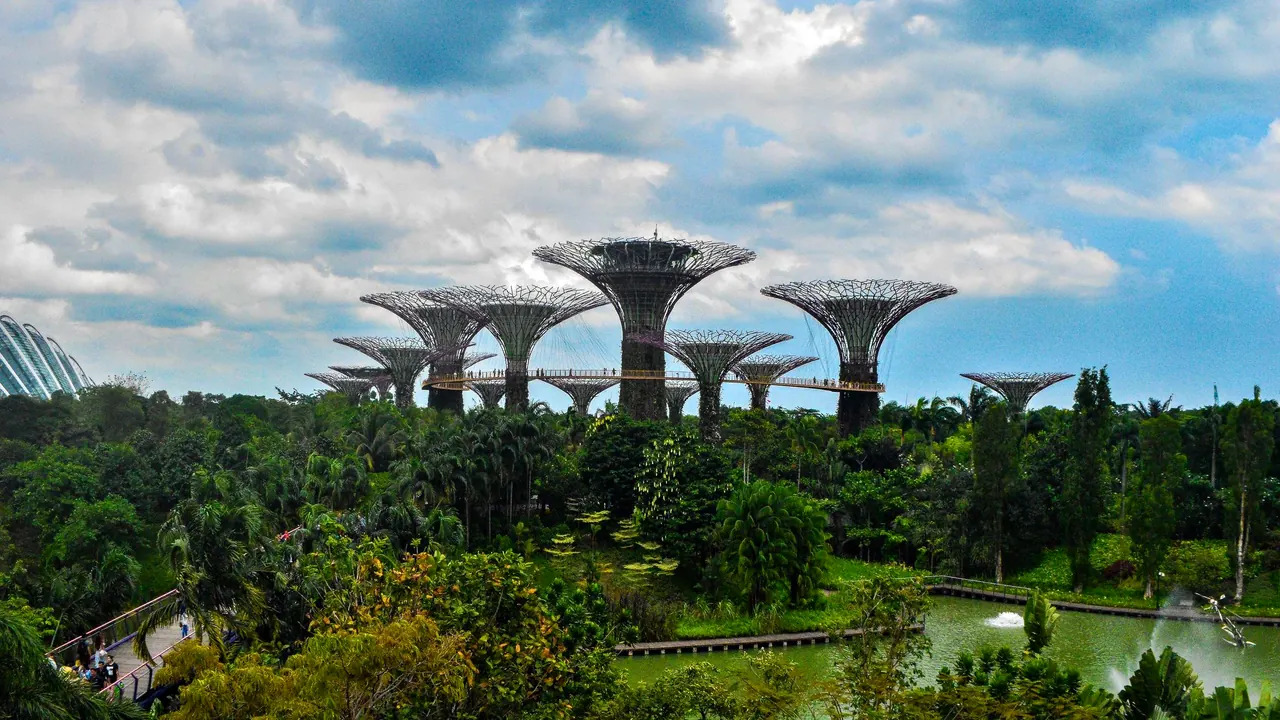
Photos: Phuket by Mussi Katz, CC0; Singapore by Kai Kai, Pexels License.
Phuket or Singapore?
Our verdict in twelve categories, each scored against the same fixed benchmark cities, and the climate month by month, so you can choose for your trip.
Choose Phuket for
- beaches
- wellness
- prices
Phuket suits a vacation built around the sea. It has a long string of sandy bays on the west coast, boat days out to limestone islands and coral reefs, and massage and retreats at every level. Patong adds a loud party street for anyone who wants one. It costs a good deal less than Singapore. In return you rely on taxis and boats to get about, and beyond Phuket Town's old quarter there is little culture.
Choose Singapore for
- getting around
- shopping
- live music and the arts
Travellers who care most about eating, museums and moving around without effort will be happier in Singapore. The hawker centres alone justify the trip, the Civic District and the ethnic quarters fill two or three days, and the MRT takes you almost anywhere. Children are well catered for at the Mandai wildlife parks and on Sentosa, and Orchard Road keeps shoppers busy. What you give up is a cheap room and a beach you would actually choose to swim from.
Scoreboard
Twelve categories on one fixed scale from 0 to 100. The shaded stretch is the gap between the two.
Your match
Pick a travel style or drag the sliders, and both match scores follow your weighting.
Too close to call, 2 points apart
Wins on beaches and wellness with your weighting.
Wins on getting around and shopping with your weighting.
What matters to you?
Category by category
What the scores mean for a trip.
Beaches & swimming
Phuket has the beaches that Singapore lacks. Its west coast runs from busy Patong through broad Kata and Karon to small coves such as Nai Harn and Freedom Beach, with longer, quieter sand at Bang Tao and Mai Khao in the north. The catch is the monsoon: from May to October, red flags and rip currents limit swimming.
Singapore's sea is just as warm but serves a different purpose. The Sentosa beaches are man-made, protected by breakwaters and safe, but the water is cloudy and the ships of the port line the horizon. Most visitors swim in a hotel pool instead, or take a ferry out to St John's or Lazarus for a quieter lagoon.
Food & drink
Singapore is the stronger city for eating, and for many visitors it is the main event. The hawker centres at Maxwell, Lau Pa Sat, Tekka and Old Airport Road put Chinese, Malay, Indian and Peranakan cooking side by side. There is a fine-dining tier above that, and good food is easy to find at almost any hour.
Phuket shares the Hokkien and Peranakan roots but has a narrower table. The real local cooking is in Phuket Town: yellow Hokkien noodles, crab curry with rice noodles for breakfast, and dim sum in old shophouses. On the beaches, menus are mostly written for visitors, and the fresh seafood at Rawai is the high point.
Culture & sights
Singapore has far more to see. The National Gallery holds the best collection of Southeast Asian art anywhere, and the Asian Civilisations and Peranakan museums are nearby. Chinatown, Little India and Kampong Glam each have their own temples and mosques, and the Marina Bay skyline and the UNESCO-listed Botanic Gardens round it off.
In Phuket, culture is a half day off the beach. The pastel Sino-Portuguese shophouses of the old town around Thalang Road are the highlight. Beyond those, there is Wat Chalong, the Big Buddha above Chalong Bay and a museum on the Burmese siege of 1785.
Nightlife
Phuket goes out harder. Bangla Road in Patong becomes a long, loud strip of neon bars, go-go bars and big clubs every night of the high season, running into the small hours. Away from it, there are sunset beach clubs on the west coast and live-music bars in Phuket Town's shophouses.
Singapore is orderly rather than wild. Its strength is the craft of its bars: rooftop terraces over Marina Bay and serious cocktail bars in Keong Saik and Telok Ayer. The clubs at Clarke Quay are few, and heavily taxed alcohol makes a long night costly.
Nature & outdoors
Phuket's outdoors is mostly at sea, and it is on a far larger scale. You can paddle a sea kayak through caves into hidden lagoons among the limestone towers of Phang Nga Bay, or dive the Similan and Racha islands among reef sharks and rays. On land there is rainforest with gibbons at Khao Phra Thaeo.
Singapore offers a few well-kept patches of green that are quickly done. There is real rainforest at Bukit Timah and on the MacRitchie treetop walk, birds and the odd crocodile at Sungei Buloh, and mangroves to cycle through on Pulau Ubin. Both places are too hot for hiking much after early morning.
Day trips
From Phuket, most days out are by boat. Phi Phi is the classic trip, while Koh Panyee's stilt village under a cliff and the rural Koh Yao islands show a slower side of Phang Nga Bay. By road, Krabi and Ao Nang are two to three hours away. Many tours repeat the same stops, though.
Singapore is boxed in by the border and the sea. Johor Bahru is just across the causeway, but the queues can take up much of the day. Bintan and Batam are mostly resort stays rather than places to explore, and Malacca really needs a night.
Good for families
Singapore is the easier city with children. The zoo, Night Safari, bird park and river park with pandas at Mandai are a highlight, and Sentosa adds Universal Studios and an aquarium. The city is safe and clean, with lifts and air conditioning everywhere, so the only real strain is the heat.
Phuket works well if you pick your base carefully. The big resorts at Kata, Karon and the northern beaches have lagoon pools and kids' clubs, and the dry-season water is gentle. On the other hand, the roads have few pavements, the monsoon surf is dangerous, and Patong is no place for young children.
Getting around
Singapore's MRT is the reason it is so easy to get around. It is air-conditioned and step-free, and it runs from the airport to Chinatown, Orchard Road and the edge of the rainforest reserves. You can tap a bank card at the gates, and nobody needs a car.
Phuket has no rail, and its songthaew buses only run out from Phuket Town to the beaches. The fixed-fare taxis and tuk-tuks are expensive, the hilly roads clog in high season, and scooters are risky for anyone inexperienced. Most visitors stay at one beach and book transport for each outing.
Shopping & style
Shopping in Singapore is a pastime in its own right. Orchard Road's long line of malls and the designer flagships at Marina Bay cover every brand. Haji Lane and Tiong Bahru have small boutiques, bookshops and design stores, and Little India sells gold and saris.
Phuket's shopping is more practical. It has a couple of large malls, beachwear stalls, and tailors who will make a suit in a few days. Its most characterful buys come from Phuket Town's Sunday walking street and old-town boutiques, plus pearls from nearby farms.
Affordability
Phuket stretches a budget much further, even though it is dear by Thai standards. The street food and guesthouses in Phuket Town, Kata and Karon are cheap. The costs come from boat trips, beachfront dining and the December to March peak.
In Singapore, the room is the problem: even plain mid-range hotels are among the costliest in Asia. Entry to the wildlife parks and Sentosa is steep, and drinks are expensive. Hawker meals, cheap trains and the free gardens soften the bill, but they cannot close the gap.
Live music & performing arts
Neither is a place to travel for the stage, but Singapore has a proper programme. The Esplanade's concert hall and theatre hold regular events, and its free outdoor shows run by the bay. The Singapore Symphony Orchestra plays a regular season, and Marina Bay Sands hosts touring musicals.
Phuket's evenings out are tourist entertainment: cabaret revues in Patong, a cultural theme-park show with elephants, Thai boxing nights and cover bands in the bars.
Wellness & relaxation
Phuket is built for unwinding. Thai massage of good quality is easy to find, from beach-road shopfronts to open-air resort pavilions. Around Chalong there are detox, yoga and Muay Thai retreats, and the green, quiet bays at Mai Khao, Bang Tao and Nai Harn set a slow pace.
Singapore offers treatments rather than a retreat. It has polished hotel spas with skyline pools, foot reflexology and Chinese medicine in Chinatown, and Ayurveda in Little India. The city itself stays fast and work-minded, and its most restful corners are the Botanic Gardens and the reservoir paths early in the day.
When should you go?
Pick your month. The climate figures are measured averages, not a forecast.
Phuket in July
Singapore in July
Daytime high, °C
Rainfall in the month, mm
Where the figures come from
Phuket's temperatures are measured 27 km from the centre, at Phuket Airport.
Temperature and rainfall are climate normals, averaged over the years shown. Phuket: 1991-2020 (sunshine 1961-1990, rainfall 1981-2010) normals, Phuket Airport (26.9 km from centre). Singapore: 1991-2020 (rainfall 1961-1990) normals, Singapore / Changi Airport (17 km from centre).
Both places are hot all year, with daytime highs in the low thirties every month and a sea of around 29°C. Neither ever gets cool, so in both the streets are best walked in the morning and evening. The real difference is the rain. Phuket has a sharp dry season from December to March, with only 16mm in February and the most sunshine of either place. From May to October the southwest monsoon brings heavy rain, peaking at 373mm in September, along with the dangerous west-coast surf.
Singapore has no true dry season. Showers come in every month, and even the drier stretch from February to September brings around 140mm or more a month. The wettest and greyest months are November to January, with 333mm in December. The two run roughly opposite: when Singapore's rain is at its heaviest, Phuket is in its best beach weather, and through Phuket's monsoon Singapore is at its steadiest.
Which traveller are you?
On a beach and sun trip, Phuket is the clear choice. It has sandy bays from Kata to Mai Khao, calm, clear water from November to April, and boat trips to Phi Phi and the Similans. Singapore's imported-sand beaches on Sentosa look out at tankers.
For a shopping trip, Singapore is the place. It has Orchard Road's long run of malls, designer flagships at Marina Bay, and independent boutiques in Kampong Glam and Tiong Bahru. Phuket offers tailors, malls and the Sunday walking street, but little real style.
On a relaxing and wellness trip, choose Phuket. Thai massage is on every beach road, resort spas sit over the sea, and Chalong has detox, yoga and fitness retreats. The quiet northern beaches are made for slowing down. Singapore is calm but busy and work-focused.
Before you go
| Measure | Phuket | Singapore |
|---|---|---|
| Official language | Thai | English, Tamil, Malay, Standard Chinese |
| Currency | Baht (THB) | Singapore Dollar (SGD) |
| Sockets | ABCF220 V, 50 Hz | G230 V, 50 Hz |
| Driving side | Left | Left |
| Time zone | UTC+7 | UTC+8 |
| Emergency number | Police 191, ambulance 1669, fire 199 | Police 999, ambulance 995, fire 995 |
| Elevation | - | 21 m |
| Main airport | Phuket International Airport (HKT)85 non-stop destinations | Singapore Changi Airport (SIN)17 km from centre168 non-stop destinations |
| Public holidays this year | - | 11 days |
By the numbers
| Measure | Phuket | Singapore |
|---|---|---|
| Population | 77,610 | 5,866,139 |
| People per km² | 6,468 | 8,158 |
| Museums within 10 km | - | 40 |
| UNESCO World Heritage sites within 50 km | - | 1 |
| Swim season, months above 21 °C | 12 months | 12 months |
Where else could you go?
Every comparison below shares a destination with this one, so you can follow Phuket or Singapore somewhere new.
- Koh Phi Phivs Phuket
- Krabivs Phuket
- Koh Lantavs Phuket
- Koh Lipevs Phuket
- Malaccavs Singapore
- Langkawivs Phuket