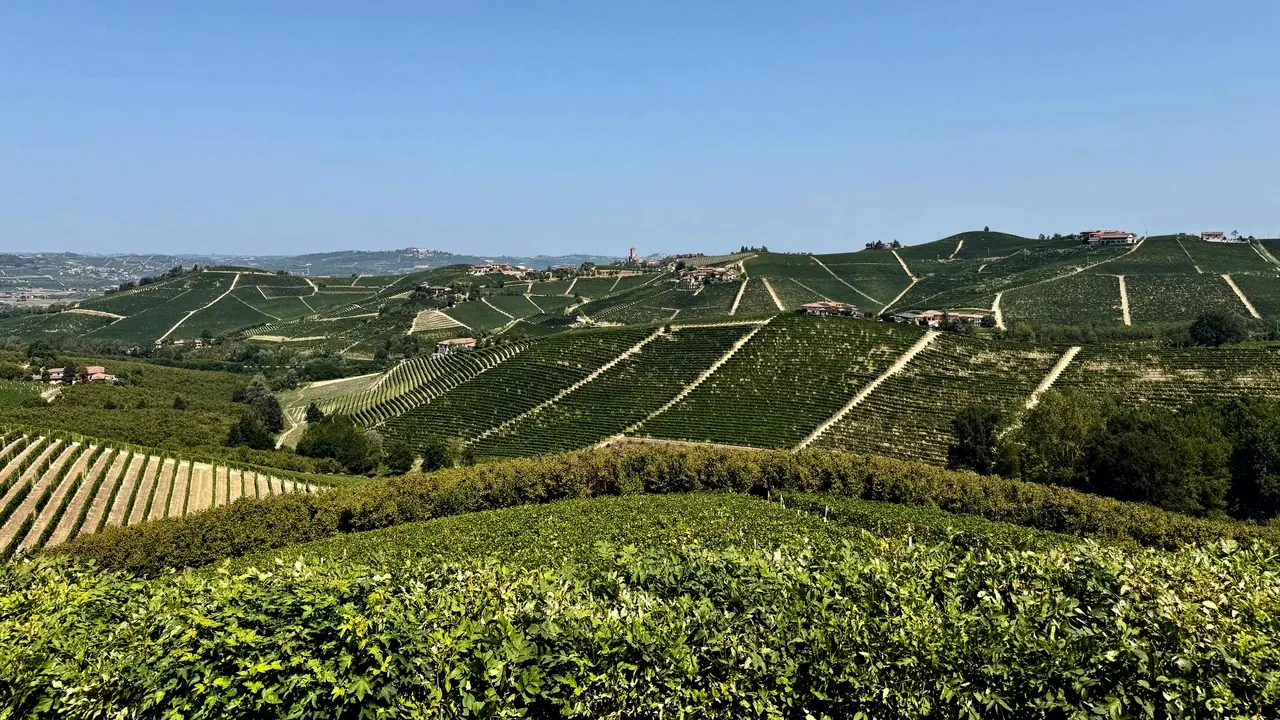
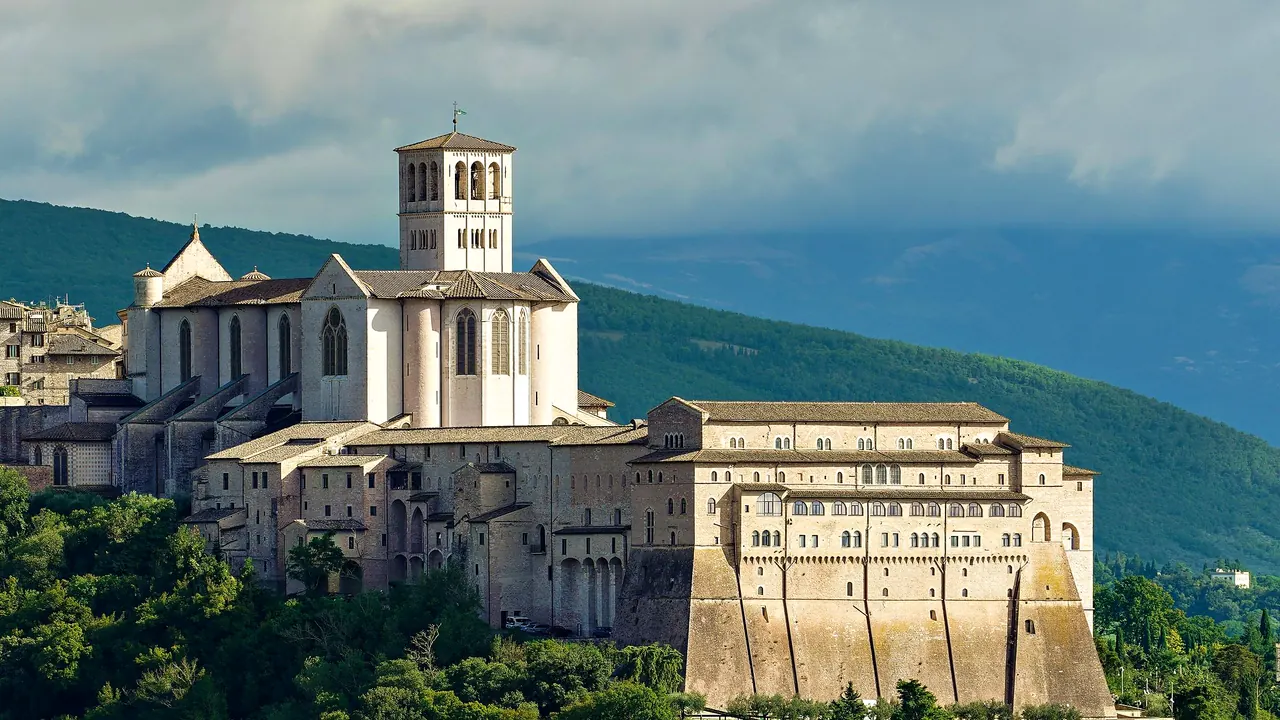
Photos: Piedmont by Martina Amaro, Pexels License; Umbria by Tagooty, CC BY-SA 4.0, cropped.
Piedmont or Umbria?
Our verdict in twelve categories, each scored against the same fixed benchmark cities, and the climate month by month, so you can choose for your trip.
Choose Piedmont for
- food and drink
- nightlife
- shopping
Piedmont suits travellers who want range from one region: a proper city in Turin, serious Alpine mountains, and wine country around Alba that ranks among Italy's great places to eat. It is the better choice for food and wine lovers, for walkers and skiers, and for anyone who wants museums, opera and a night out alongside the countryside. The price is distance, since the city, the hills, the lakes and the peaks each want their own base.
Choose Umbria for
- culture and sights
- day trips
- prices
Umbria is for a slower, tighter trip built around medieval hill towns and the painting inside their churches. Giotto in Assisi, Signorelli in Orvieto and a fresh walled town each day all sit within short drives of one farmhouse base, with Tuscany over the border. It gives up nightlife, big-city shopping and Alpine scenery in return for quiet evenings and a compact, uniform landscape of olive groves and stone.
Scoreboard
Twelve categories on one fixed scale from 0 to 100. The shaded stretch is the gap between the two.
Your match
Pick a travel style or drag the sliders, and both match scores follow your weighting.
Wins on food and drink and nightlife with your weighting.
Wins on culture and sights and day trips with your weighting.
What matters to you?
Category by category
What the scores mean for a trip.
Beaches & swimming
Neither region has a coast, so this is lake swimming either way, and Piedmont's is better. Lake Maggiore's western shore around Stresa and Baveno has lidos, pebble beaches and bathing platforms against a mountain backdrop, and Lake Orta has quieter grassy spots. The Ligurian sea is also within reach of Turin as a day out.
Umbria's Lake Trasimeno is warmer and shallow enough for paddling children, but often cloudy, with reeds and a muddy bottom in places. Most visitors there end up swimming in a farmhouse pool, and the sea is a long drive away.
Food & drink
Piedmont is one of Italy's great food destinations, and here it is well ahead. The Langhe and Roero give Barolo and Barbaresco, autumn brings the white truffle, and the cooking runs from carne cruda to agnolotti del plin. Turin adds historic cafés, bicerin, gianduiotti and vermouth at aperitivo.
Umbria eats honestly and well, on a narrower base: black truffle over strangozzi, Norcia's pork, porchetta from market vans, Castelluccio lentils and Sagrantino from Montefalco. It is satisfying country cooking, but with less range and fewer standout tables than Alba and Turin.
Culture & sights
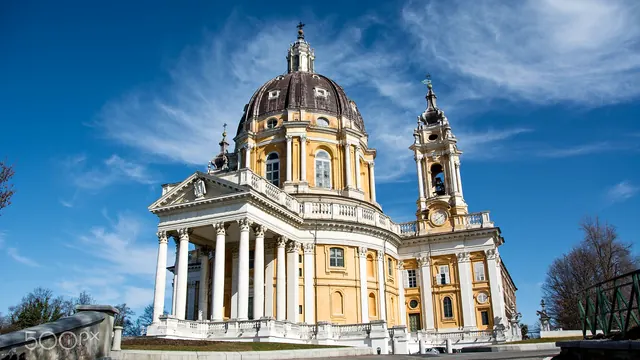
Both are rich, and the difference is in kind. Piedmont's culture is that of a royal capital: Turin's Egyptian Museum, the Baroque squares, the Royal Palace and the Savoy residences out to Venaria Reale, plus the Sacra di San Michele on its crag and the Borromean palaces on Lake Maggiore.
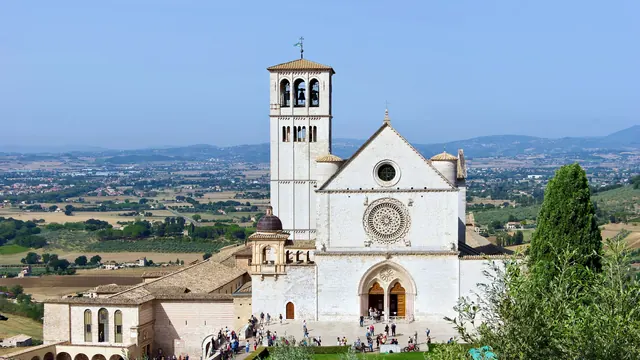
Umbria has few big museums, and the towns themselves are the sights. Giotto and Cimabue in Assisi's basilica, Signorelli's Last Judgement in Orvieto, Perugino in Perugia's gallery and smaller fresco cycles in Spello and Montefalco reward anyone who comes for medieval and Renaissance painting.
Nightlife
Piedmont has a real night out, and it is all in Turin: aperitivo first, then the pavement bars of San Salvario and Vanchiglia, the Po riverside in summer and some clubs and late bars. Umbria's version is Perugia's cathedral steps and student wine bars, with no clubs at all. Outside those two cities, both regions go quiet after dinner.
Nature & outdoors
Piedmont has true high mountains. Monte Rosa above Alagna and Macugnaga, Gran Paradiso's ibex, the wild Val Grande and the Olympic ski slopes of the Via Lattea give it a winter season and serious summer hiking, with Lake Maggiore and the vineyard hills for sailing and cycling below.
Umbria is softer: olive groves, oak woods and river valleys until the Monti Sibillini in the east. The flowering plain of Castelluccio, rafting in the Valnerina and the Marmore Falls are memorable, but there is no skiing to speak of and nothing on Piedmont's Alpine scale.
Day trips
Both make excellent bases, but they work differently. Piedmont is larger and outings fan out in different directions: Milan by fast train, Genoa and Aosta, the Barolo villages from Turin, or boats across Lake Maggiore to the Swiss shore. Where you stay decides which of these is easy.
Umbria is compact, so a single base near Perugia or Spoleto puts a new hill town within reach every day, from Gubbio to Todi and Norcia. Cortona, Montepulciano and Siena lie over the Tuscan border, and Rome is a straightforward train ride from Orvieto.
Good for families
Piedmont gives children more to do. Turin's mummies and the Cinema Museum's tower, island boats and peacock gardens on Lake Maggiore, ski schools in the Via Lattea and summer meadows in the valleys make an easy mix of city and outdoors.
Umbria works for a calm farmhouse stay with a pool, Trasimeno's shallows, the Marmore Falls and an amusement park near Perugia. Beyond that the treats are frescoed churches and steep cobbled towns that are hard going with a pushchair.
Getting around
In both regions a car opens up the countryside, and the difference lies in the towns. Turin is flat and arcaded, with trams and a metro, and trains reach Alba, Asti and the Lake Maggiore shore, though the Langhe hilltops and the Alpine valleys really need a car.
Umbria's driving is short and easy, but hill-town centres are closed to visitors' cars, so you park below the walls and ride up by escalator, lift or funicular. One regional rail line links Perugia, Assisi and Spoleto, and Orvieto sits on the Rome to Florence line.
Shopping & style
For anything beyond food and crafts, Turin gives Piedmont the edge. Its arcaded Via Roma and pedestrian Via Garibaldi, the vast Porta Palazzo market and the Saturday Balon flea market sit alongside chocolates, vermouth, cellar-door Barolo and Biella's cashmere mills.
Umbria's shopping is about craft and pantry: Deruta's painted majolica, hand-loomed linen from Montefalco and Bevagna, Norcia's hams and Sagrantino from the estates. There are no luxury streets, and Assisi's centre leans to souvenirs.
Affordability
Costs are much the same, with both regions cheaper than Italy's best-known areas. In Piedmont they rise in the Langhe during truffle season, at the Lake Maggiore resorts in summer and in the ski resorts, while Turin and farm stays keep a trip moderate.
Umbria undercuts nearby Tuscany on farmhouse rooms, and most of its sights are churches that cost little. Its unavoidable extra is a hire car, plus summer rooms in Assisi and Orvieto.
Live music & performing arts
Piedmont has a year-round stage in Turin: opera and ballet at the Teatro Regio, the RAI National Symphony Orchestra and drama at the historic Teatro Carignano, with the Stresa festival on Lake Maggiore in summer.
Umbria's music comes in bursts. Umbria Jazz fills Perugia's streets in July and the Festival dei Due Mondi takes over Spoleto in early summer, both memorable, but outside the festivals its small theatres stage only occasional performances.
Wellness & relaxation
Hot springs are what set Piedmont apart. At Acqui Terme the Bollente spring rises steaming in the middle of town, there are mountain baths at Valdieri and Vinadio, and many Langhe wine resorts have their own spas.
Umbria offers rest through quiet rather than bathing: slow farmhouse days, yoga or massage by the pool, and the hermitages on Monte Subasio above Assisi. Its spa towns are modest, and visitors who want hot springs cross into Tuscany.
When should you go?
Pick your month. The climate figures are measured averages, not a forecast.
Piedmont in July
Umbria in July
Daytime high, °C
Rainfall in the month, mm
Where the figures come from
Piedmont has no weather station within reach, so its figures come from a gridded climate model rather than a measured record, and read a broad area rather than one spot.
Umbria's temperatures are measured 53 km from the centre, at Frontone.
Umbria has no rain gauge within 25 km of the centre, so its rainfall comes from a gridded climate dataset read at the destination rather than from a gauge further away.
Temperature and rainfall are climate normals, averaged over the years shown. Piedmont: 1991-2020 normals, TerraClimate 4 km grid at the town, no weather station within 90 km. Umbria: 1991-2020 normals, Frontone (52.9 km from centre).
The two regions follow a similar curve. July and August peak at about 29°C to 30°C where most visitors stay, warm enough for lake swimming from June into early September, but heavy for walking Turin's streets or climbing hill towns at midday. Late May, June and September are the comfortable months for touring in both. December and January bring cold single-figure highs in each, and Umbria stays a shade colder, still in single figures through February, while Piedmont is already milder by then.
Rain is where they part. Piedmont stays fairly dry into September, and its wet spell is concentrated in October and November, peaking around 89mm, while its winter months are dry. Umbria turns wet earlier and stays wet longer, from September through December, with November near 97mm. Autumn touring there carries more risk of grey days, so late spring is its most reliable season.
Which traveller are you?
On a food and nightlife trip, Piedmont is the clear choice. Barolo cellars and white truffle tables around Alba, Turin's coffee houses and serious aperitivo, then the bar streets of San Salvario, give far more than Umbria's long dinners and Perugia's student lanes.
For an outdoors trip, Piedmont's Alps settle it: high trails under Monte Rosa, ibex on Gran Paradiso, skiing in the Via Lattea and the wild Val Grande. Umbria's Sibillini and Valnerina are lovely for walking and rafting, but gentler and smaller.
On a culture and arts trip centred on painting and medieval towns, Umbria edges ahead, with Assisi's frescoes, Orvieto's cathedral and a chain of intact hill towns. Choose Piedmont instead if great museums, royal palaces and a year-round opera season matter more.
Before you go
| Measure | Piedmont | Umbria |
|---|---|---|
| Official language | Italian | Italian |
| Currency | Euro (EUR) | Euro (EUR) |
| Sockets | CFL230 V, 50 Hz | CFL230 V, 50 Hz |
| Driving side | Right | Right |
| Time zone | UTC+1, UTC+2 in summer | UTC+1, UTC+2 in summer |
| Emergency number | 112 | 112 |
| Main airport | Turin Airport (TRN)65 non-stop destinations | Perugia San Francesco d'Assisi – Umbria International Airport (PEG)17 non-stop destinations |
| Public holidays this year | 13 days | 13 days |
By the numbers
| Measure | Piedmont | Umbria |
|---|---|---|
| Population | 4,341,375 | 852,085 |
| People per km² | - | 101 |
| Swim season, months above 21 °C | 4 months | - |
Where else could you go?
Every comparison below shares a destination with this one, so you can follow Piedmont or Umbria somewhere new.
- Tuscanyvs Umbria
- Lake Maggiorevs Piedmont
- Cinque Terrevs Piedmont
- French Rivieravs Piedmont
- French Alpsvs Piedmont
- Elbavs Umbria