Photos: Pigeon Forge by NealVickers, CC BY-SA 4.0, cropped; Savannah by Chris M Morris, CC BY 2.0, cropped.
Pigeon Forge or Savannah?
Our verdict in twelve categories, each scored against the same fixed benchmark cities, and the climate month by month, so you can choose for your trip.
Choose Pigeon Forge for
- nature and the outdoors
- families
- prices
Pigeon Forge suits a family driving in for rides, shows and mountains. Dollywood and its water park, the dinner theatres on the Parkway and a big hillside cabin with a hot tub are all a short drive from the Great Smoky Mountains, so the days split easily between roller coasters and waterfall trails. Expect a strip built for entertainment, with simple food and early nights, and keep the car.
Choose Savannah for
- culture and sights
- beaches
- getting around
Savannah is the better choice for adults who like to explore on foot. Its old town of shaded squares, Lowcountry cooking, cocktails carried along the street and a beach day on Tybee Island give a slower, more grown-up stay with far more history to it. It has less to keep young children busy and costs more per night, but walking its streets is free.
Scoreboard
Twelve categories on one fixed scale from 0 to 100. The shaded stretch is the gap between the two.
Your match
Pick a travel style or drag the sliders, and both match scores follow your weighting.
Wins on nature and the outdoors and families with your weighting.
Wins on culture and sights and beaches with your weighting.
What matters to you?
Category by category
What the scores mean for a trip.
Beaches & swimming
Pigeon Forge is far from any coast. Swimming there means Douglas Lake, the boulder pools in mountain streams or the water park beside Dollywood.
Savannah is not on the sea either, but Tybee Island is about half an hour's drive away. It has wide, flat sand and warm Atlantic water through the summer. The sea is a marshy green-brown rather than clear, but for a lazy beach afternoon Savannah is the only one of the two that can offer it.
Food & drink
Pigeon Forge eats for volume. It has pancake houses serving breakfast all morning, fried chicken buffets, and barbecue and family steakhouses among the chains, with moonshine tastings and fudge as the local touches. Anyone who wants an ambitious meal drives to Knoxville or Asheville.
Savannah has a cuisine of its own and is the better place to eat. Shrimp and grits, she-crab soup, Lowcountry boil and fire-roasted oysters come to the table in family-style dining rooms. A small group of chef-led restaurants fills restored townhouses and warehouses around the historic district and in the streets south of Forsyth Park, so a good dinner is usually a short walk from your bed.
Culture & sights
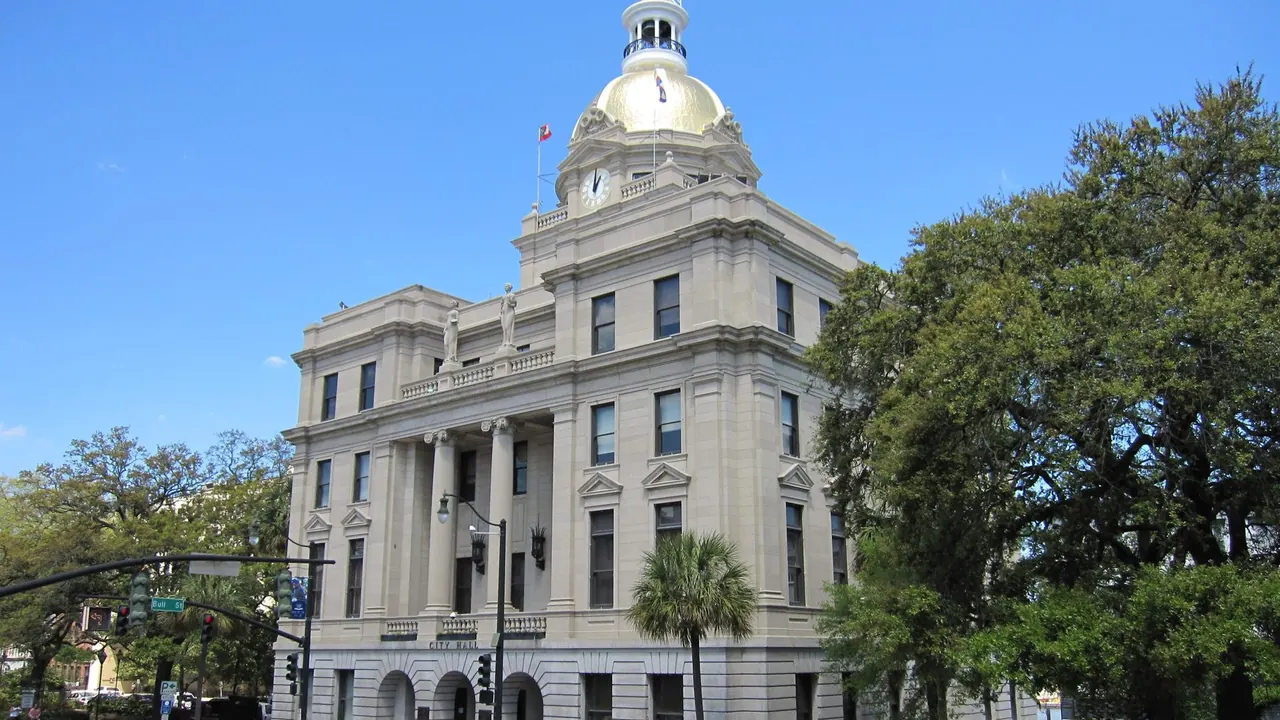
The difference here is large. Savannah's 1733 town plan survives with its squares of live oaks and Federal and Greek Revival houses. Add the Telfair Museums, the Owens-Thomas House and the old cotton warehouses of Factors Walk, and simply walking around becomes the main attraction.
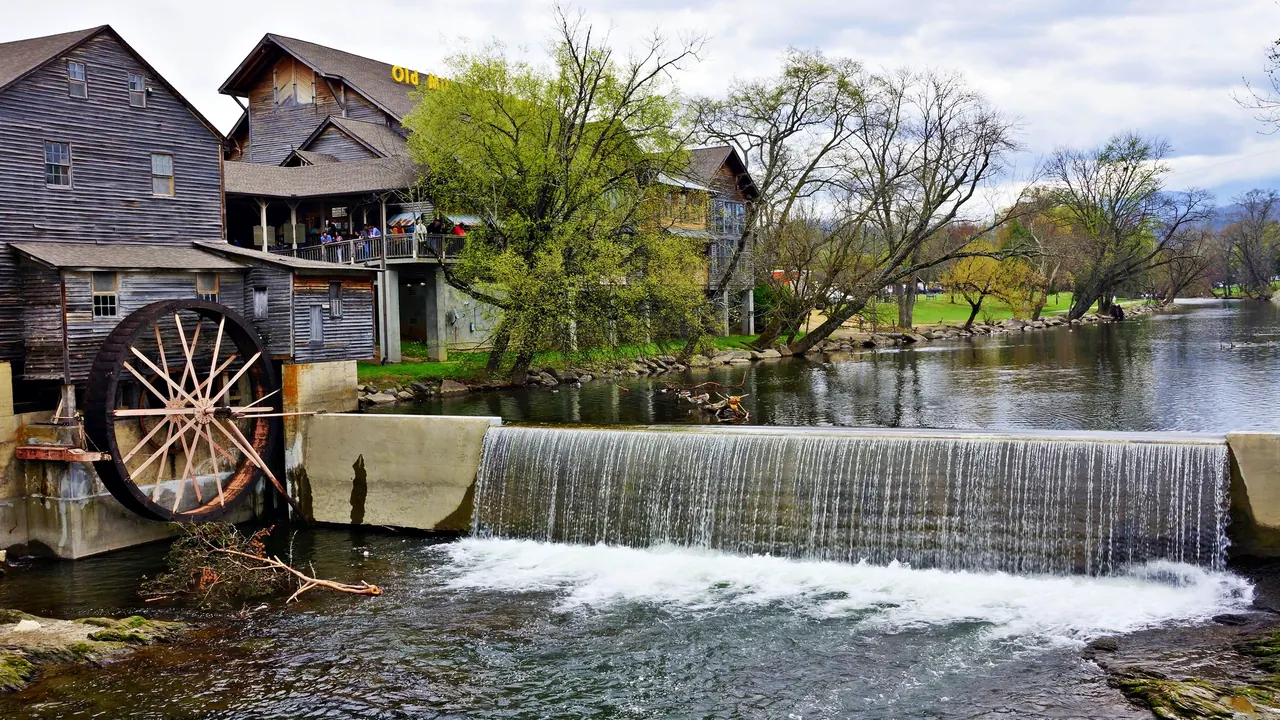
Pigeon Forge offers a half-scale Titanic, illusion museums and car collections. Its one genuine landmark is the Old Mill, a water-powered gristmill from 1830, and for mountain history you head to the log cabins and churches in the national park.
Nightlife
In Savannah you can carry a drink in a to-go cup between the cobbled bars of River Street, the taverns around City Market and quiet cocktail rooms in old townhouses, and art students fill a few dive bars. It is sociable rather than late, and loud at weekends with bachelorette groups.
Pigeon Forge's evenings mean dinner shows and go-kart tracks that wind down around ten. After that there are sports bars and moonshine rooms, or the drive to Gatlinburg.
Nature & outdoors
Pigeon Forge sits at the door of the Great Smoky Mountains, with forested ridges above 2,000m, the climb up Alum Cave to Mount LeConte and the Appalachian Trail along the crest. Black bears graze in Cades Cove, and October turns the hardwoods red and gold.
Savannah's landscape is flat and wet: salt marsh, tidal creeks and barrier islands, best seen from a kayak or a dolphin-watching boat, with the oak avenue at Wormsloe for a gentler outing. It is pleasant in spring and autumn, but insects and humidity make summer outings hard work.
Day trips
Savannah has more to choose from along the coast. Charleston is about two hours north, Beaufort and Hilton Head are each about an hour, Fort Pulaski makes a half day, and Jekyll and St Simons islands lie to the south.
From Pigeon Forge the best trip is Asheville and the Biltmore Estate, about an hour and three-quarters away. Knoxville's Market Square, Gatlinburg's craft studios and the Cherokee museum over Newfound Gap make shorter outings. From either town you will need a car.
Good for families
Pigeon Forge exists for families. Dollywood combines roller coasters with craft demonstrations and seasonal festivals, and the Parkway adds mountain coasters, zip lines and mini-golf. Cabins and water-park hotels are built for groups, though traffic between stops can be slow in the busy weeks.
Savannah works best with older children, who enjoy ghost walks, the forts, the free river ferry and the Girl Scouts founder's birthplace. Tybee adds a sea-turtle centre, but there is no zoo, aquarium or theme park.
Getting around
Savannah's historic district is flat and compact, laid out as a grid of squares, so most hotels, restaurants and sights are a short stroll apart. A free shuttle and the river ferry cover the rest. You only need wheels for Tybee, Wormsloe or Bonaventure.
In Pigeon Forge you need a car from the moment you arrive. The town is a multi-lane strip with a slow trolley, and the trailheads and hillside cabins can only be reached by road.
Shopping & style
Savannah has a slight edge for browsing. Broughton Street's restored shopfronts hold independent boutiques, shops selling art by students and graduates of the art school, and antique dealers among the squares.
Pigeon Forge is about outlet malls of American mid-market brands towards Sevierville, plus pottery, quilts and cornmeal at the Old Mill and the broom and basket studios above Gatlinburg. Neither town has luxury shopping.
Affordability
Pigeon Forge is cheaper to sleep in. With thousands of motels and rental cabins, a large cabin shared between families costs little per head, and buffets keep meals cheap. The money goes on Dollywood tickets, dinner shows and paid attractions.
Savannah's historic-district inns charge weekend-destination rates, and more in spring. Its best sights are free, though: the squares, Forsyth Park and the cemeteries.
Live music & performing arts
Both towns put on plenty of shows, but of very different kinds. Pigeon Forge's Parkway theatres run most evenings, with country and gospel revues, Southern comedy, magic and dinner shows with horses or pirate ships. Dollywood adds bluegrass and gospel on its stages. It is broad family fun, and you can usually drop in without planning.
Savannah's strength is the spring Savannah Music Festival, with chamber music, jazz and blues in historic theatres and churches. A philharmonic orchestra and an autumn jazz festival in Forsyth Park add to it, but if you arrive between festivals there may be little to attend.
Wellness & relaxation
Pigeon Forge has no bathing tradition and only a few spas, so how calm your stay is depends on where you sleep. A cabin high on the ridge, with a porch, a fireplace and a private hot tub, is genuinely quiet, but down on the Parkway the neon and traffic undo it.
Savannah is the more restful stay, because the town itself moves slowly. Its spas are just as few, but the historic district never hurries, and benches under the oaks, inn courtyards and shaded porches make doing very little easy. Pick an inn on a quiet southern square and come midweek in spring or autumn, as River Street weekends and summer humidity are less soothing.
When should you go?
Pick your month. The climate figures are measured averages, not a forecast.
Pigeon Forge in July
Savannah in July
Daytime high, °C
Rainfall in the month, mm
Where the figures come from
Pigeon Forge's temperatures are measured 38 km from the centre, at McGhee Tyson Airport.
Pigeon Forge has no rain gauge within 25 km of the centre, so its rainfall comes from a gridded climate dataset read at the city rather than from a gauge further away.
Temperature and rainfall are climate normals, averaged over the years shown. Pigeon Forge: 1991-2020 normals, McGhee Tyson Airport (37.9 km from centre). Savannah: 1991-2020 normals, Savannah Airport (9.9 km from centre).
Pigeon Forge has real seasons. Winter highs sit around 9°C, so January is cold for the trails, while July and August reach the low thirties and make the strip heavy going. Rain falls steadily all year, and October is the driest month at 64mm. That makes late spring and October the best months for walking in the park, and summer is the season for the lake, the river and the water park.
Savannah is warmer all year and wetter in summer. Midsummer highs climb to 34°C, and June brings the most rain, around 169mm, mostly in thunderstorms. The sea is warm enough for swimming from May to October and reaches 29°C in August, but it is too cool for most people from December to March. For walking the squares, March to May and late October to November are the best months, and its mild winters are easier than the cold Tennessee foothills.
Which traveller are you?
On a family trip with children, Pigeon Forge wins easily. Dollywood, its summer water park, mountain coasters and go-karts are all on one road, and the large cabins sleep several families. Savannah offers trolley rides and ghost walks but has no theme park.
For an outdoors trip, Pigeon Forge is the base. The Great Smoky Mountains start half an hour away, with ridge trails, waterfall walks and bears in Cades Cove. Savannah's flat salt marsh is good for kayaking and birding but has no hills.
For a culture and arts trip, Savannah is the clear choice. Oglethorpe's grid of garden squares, the Telfair Museums, the Owens-Thomas House and Bonaventure Cemetery fill several days. Pigeon Forge's sights are replicas and novelty museums, with little history beyond the Old Mill.
Before you go
| Measure | Pigeon Forge | Savannah |
|---|---|---|
| Currency | US Dollar (USD) | US Dollar (USD) |
| Sockets | AB120 V, 60 Hz | AB120 V, 60 Hz |
| Driving side | Right | Right |
| Time zone | UTC-5, UTC-4 in summer | UTC-5, UTC-4 in summer |
| Emergency number | 911 | 911 |
| Elevation | 305 m | 15 m |
| Main airport | McGhee Tyson Airport (TYS)39 km from centre34 non-stop destinations | Savannah Hilton Head International Airport (SAV)12 km from centre39 non-stop destinations |
| Public holidays this year | 13 days | 12 days |
By the numbers
| Measure | Pigeon Forge | Savannah |
|---|---|---|
| City population | 6,343 | 147,780 |
| People per km² | 185 | 524 |
| Museums within 10 km | 7 | 19 |
| UNESCO World Heritage sites within 50 km | 1 | 0 |
| Swim season, months above 21 °C | - | 6 months |
Where else could you go?
Every comparison below shares a destination with this one, so you can follow Pigeon Forge or Savannah somewhere new.