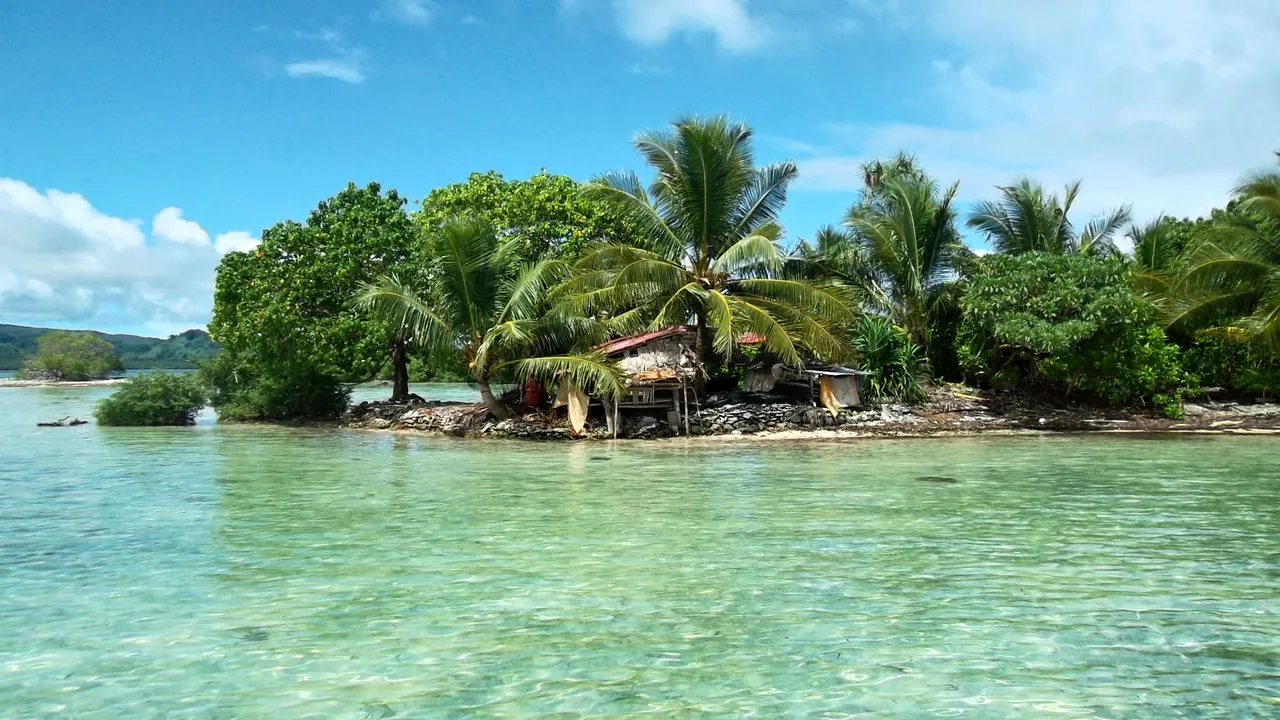
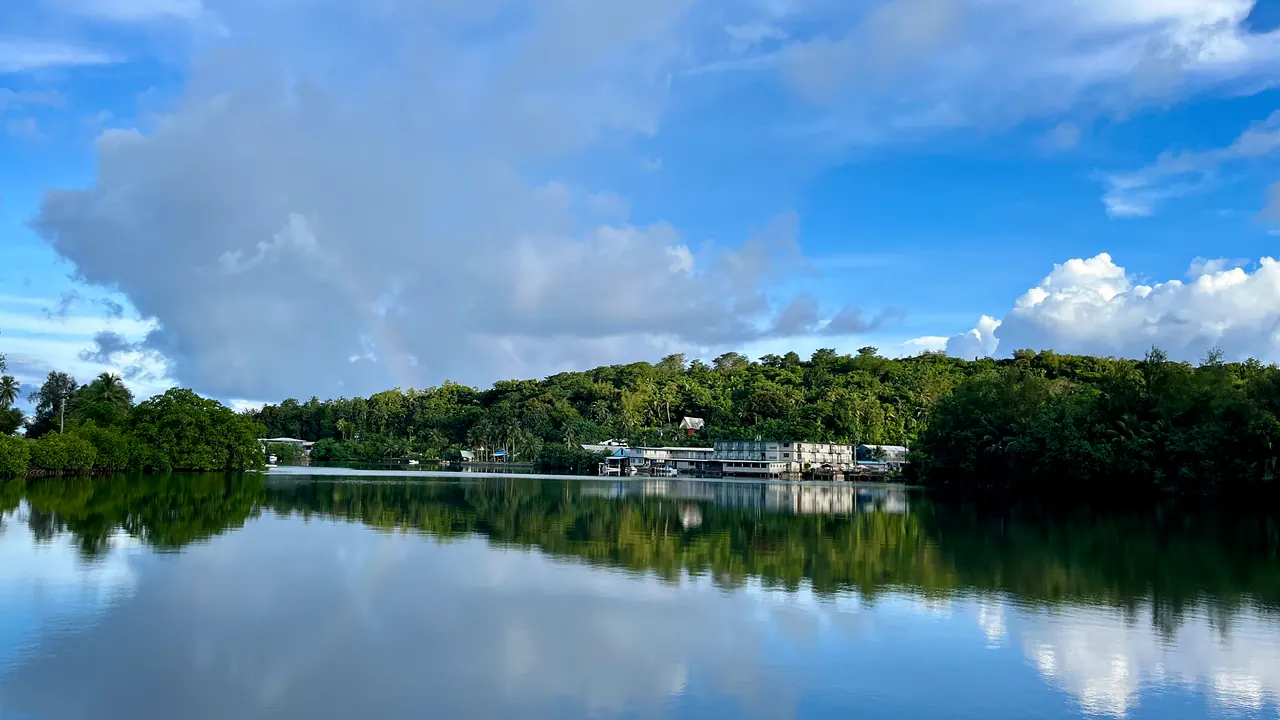
Photos: Pohnpei by Patrick Nunn, CC BY-SA 4.0, cropped; Yap by W1K1L1By4N, CC BY-SA 4.0, cropped.
Pohnpei or Yap?
Our verdict in twelve categories, each scored against the same fixed benchmark cities, and the climate month by month, so you can choose for your trip.
Choose Pohnpei for
- prices
- food and drink
- families
Pohnpei is the better choice if you want a tropical island with plenty to do on land as well as at sea. It has cloud forest, waterfalls you can walk to, the climb up Sokehs Rock, the basalt ruins of Nan Madol and a serious surf break, as well as manta rays and atoll reefs offshore. It is also the easier of the two on the budget and has a little more to eat, so it suits active travellers who want variety and can live with almost constant rain.
Choose Yap for
- live music and the arts
- beaches
Yap is for travellers who come for the reef and for a culture that is still lived rather than displayed. Mantas glide through its channels in every month, and the stone money banks and village dances show a society that keeps its customs close. Land is gentler and the stay is simpler and dearer, but anyone happy to dive by day and respect village rules will find a quieter, more traditional island than Pohnpei.
Scoreboard
Twelve categories on one fixed scale from 0 to 100. The shaded stretch is the gap between the two.
Your match
Pick a travel style or drag the sliders, and both match scores follow your weighting.
Wins on prices and food and drink with your weighting.
Wins on live music and the arts and beaches with your weighting.
What matters to you?
Category by category
What the scores mean for a trip.
Beaches & swimming
Neither island is a beach destination, but they fall short in different ways. On Pohnpei, swimming means booking a boat across the lagoon to sandy reef islets or out to Ant and Pakin atolls. Those are half-day outings, with clear water and nobody else on the sand.
Yap has small sandy stretches on the main island, mostly in the north around Maap and Bechiyal, so you can reach them by road. But the reef flats make for a long wade at low tide, and because each beach belongs to a village, you ask permission and pay a customary fee before going down to the water.
Food & drink
Pohnpei eats noticeably better. Kolonia's simple restaurants serve fish caught that day, with yellowfin sashimi as the highlight, and dishes shaped by the Japanese era. The island's own black pepper is something to look out for.
On Yap you will eat mostly in hotel restaurants and a few places in Colonia, and the menu depends on what the supply ships bring. Traditional taro, breadfruit and fish are cooked in the villages rather than served in restaurants. The local habits also differ: Pohnpei shares sakau in the evening, while on Yap people chew betel nut throughout the day.
Culture & sights
These are two very different kinds of heritage, each worth a day or two. Pohnpei's draw is Nan Madol, a deserted city of basalt islets and channels on the southeast reef, half taken over by mangrove. Around Kolonia and Sokehs Island there are smaller traces of Spanish, German and Japanese rule.
Yap's heritage is still in use. You see it in the stone money discs standing along village paths, the thatched men's houses and the stone-paved forest trails of Kadai, Okau and Gachpar. You come to Pohnpei to explore a ruin, and to Yap to visit, on arranged and respectful terms, a way of life that continues.
Nightlife
Both islands are asleep early, but Pohnpei has a little more going on after dark. It has a few bars in Kolonia and, above all, the roadside sakau bars where locals sit and pass coconut shells of kava. On Yap, an evening out means a drink and some dive talk at a hotel bar in Colonia.
Nature & outdoors
Both islands have superb reefs with manta rays, but Pohnpei has a far richer interior. It is a high volcanic island with cloud forest, the Kepirohi and Sahwartik waterfalls, and the view from Sokehs Rock. Experienced surfers also come for the reef break at Palikir Pass.
Yap is lower and gentler, with red-earth hills, mangrove channels you can kayak and palm-forest paths for short walks. Underwater it is outstanding: resident mantas visit the cleaning stations in Mi'l and Goofnuw channels, and few other divers are there to share them.
Day trips
On both islands you spend the stay where you land. Pohnpei can at least offer a half-day on Sokehs Island and boat runs to Ant and Pakin atolls. Yap's outer atolls such as Ulithi lie hundreds of kilometres away, so the sightseeing stays in the villages of the main island.
Good for families
Pohnpei is the more workable of the two with children, though both suit older and adventurous children best. Pohnpei has more for them to do: a dip in a waterfall pool, a calm boat trip in the lagoon, snorkelling off an atoll.
Yap offers the same welcome to children and the same basic healthcare, but its few shallow beaches and quiet days mostly suit children who already dive or snorkel well.
Getting around
You will need a car, taxi or boat on both islands, but distances differ. Pohnpei has a single paved road around the whole island, and Nan Madol is about an hour from Kolonia. Its main outings, to the reef islets, atolls and surf break, all depend on boats booked around weather and tides.
Yap is more compact, and the drive from Colonia to the northern villages takes well under an hour, though many side roads are rough. The extra rule on Yap is custom: village land is private, so you cannot simply wander off the road.
Shopping & style
Neither island is a place to shop, so bring what you need. Each has one souvenir that is truly local. On Pohnpei it is the island's prized black and white pepper, along with woven baskets and carvings. On Yap it is small carved replicas of stone money, sold with woven bags and lava-lavas at hotels and cultural centres.
Affordability
Pohnpei is clearly the cheaper of the two, though neither is a budget island and both are expensive to reach. On Pohnpei, shared taxis, simple local meals and free waterfall walks help balance the cost of guesthouses and boat trips.
Yap gives you fewer ways to save. Its small hotels charge dive-resort rates, most food is imported, and village visits and beach access come with customary fees on top of the diving.
Live music & performing arts
Yap is the better place to see performance, because its traditional dance is still a living practice. There are standing, sitting and bamboo dances with chants that carry history, and villages gather to perform them in Colonia on Yap Day in early March. Hotels can sometimes arrange a village dance at other times.
On Pohnpei, dance and chanting appear only when a feast or church celebration happens to coincide with your stay. You cannot plan for it.
Wellness & relaxation
Neither island has a spa or bathing tradition, so on both rest comes from quiet and slow days rather than treatments. The mood differs a little. On Pohnpei the day follows the tides and the rain and often ends at a slow, numbing sakau session. Yap is simply very still, with days between dives and village evenings that are over soon after dinner.
When should you go?
Pick your month. The climate figures are measured averages, not a forecast.
Pohnpei in July
Yap in July
Daytime high, °C
Rainfall in the month, mm
Temperature and rainfall are climate normals, averaged over the years shown. Pohnpei: 1991-2020 normals, Pohnpei Island, Pohnpei Int. Airp. (2.2 km from centre). Yap: 1991-2020 normals, Yap Island, Yap Int. Airp. (6.1 km from centre).
Both islands are hot all year, with daytime highs of about 30°C to 32°C and lagoon water close to 29°C, so the sea is always warm enough to swim. What separates them is rain. Pohnpei is wet in every month. February is its least rainy, but even then the island takes far more rain than most places do in their wettest month, and from March to May the rain only gets heavier. It also gets little sunshine, with the clearest skies around July and the greyest in December and January.
Yap has a real drier season. From February to April it gets about 140mm a month, and walking between villages and planning boat days is at its easiest. The rain builds from May, and June to October is about as wet as Pohnpei. If your dates are flexible, early in the year is the time for Yap. Pohnpei has no clear best season, so for its waterfalls and forest you simply bring rain gear.
Which traveller are you?
On a trip on a tight budget, Pohnpei is the better bet. Neither island is cheap, but Pohnpei has free waterfall walks, shared taxis around Kolonia and simple local meals. On Yap, dive-resort hotels and village fees leave you far fewer ways to save.
On a family trip with children, Pohnpei works better, though only with older and adventurous ones. Waterfall pools, calm lagoon outings and the Sokehs Rock climb give children things to do. Yap offers little beyond snorkelling for children who are already confident in the water.
For a culture and arts trip, Yap has the edge. Stone money still stands in its village banks, men's houses sit on their stone platforms, and real village dances can be seen at Yap Day in early March. Pohnpei has one great ruin but almost no living performance.
Before you go
| Measure | Pohnpei | Yap |
|---|---|---|
| Official language | English | English |
| Currency | US Dollar (USD) | US Dollar (USD) |
| Sockets | AB120 V, 60 Hz | AB120 V, 60 Hz |
| Driving side | Right | Right |
| Time zone | UTC+11 | UTC+10 |
| Emergency number | 911 | 911 |
| Main airport | Pohnpei International Airport (PNI)7 non-stop destinations | Yap International Airport (YAP)4 non-stop destinations |
| Public holidays this year | 8 days | 8 days |
By the numbers
| Measure | Pohnpei | Yap |
|---|---|---|
| Population | 26,102 | 6,000 |
| People per km² | 70 | 107 |
| Swim season, months above 21 °C | 12 months | 12 months |
Where else could you go?
Every comparison below shares a destination with this one, so you can follow Pohnpei or Yap somewhere new.