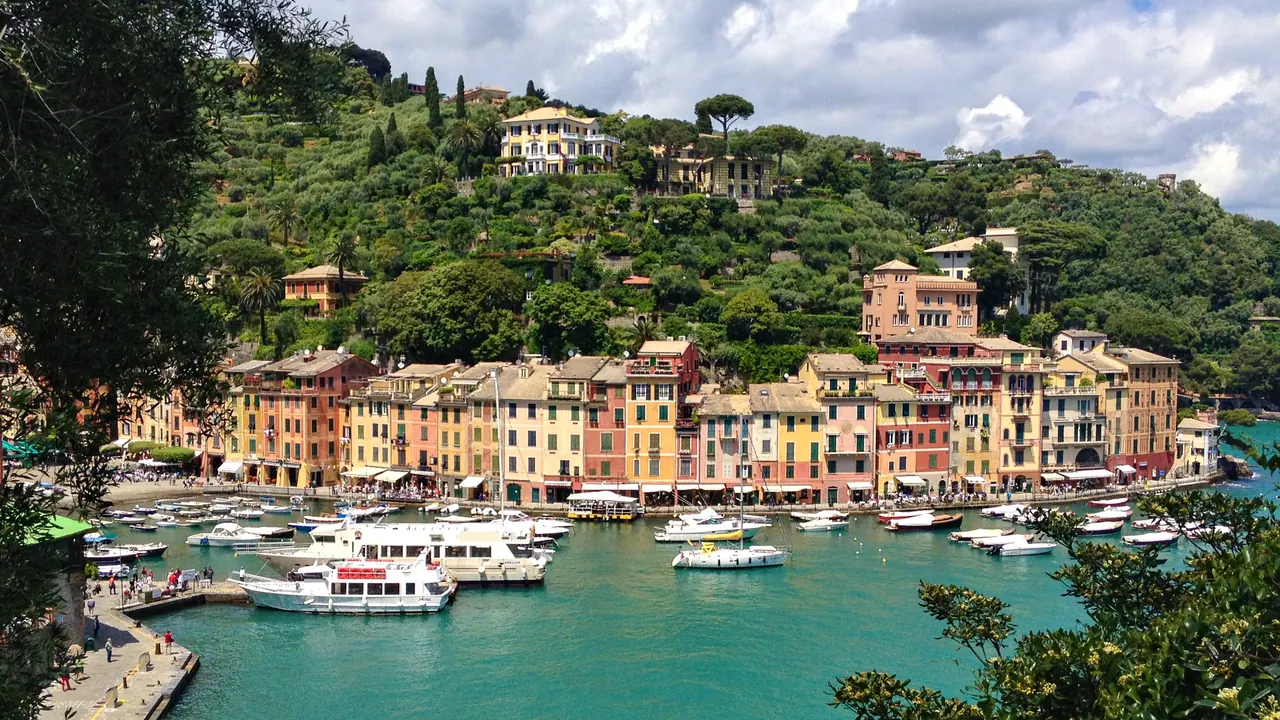
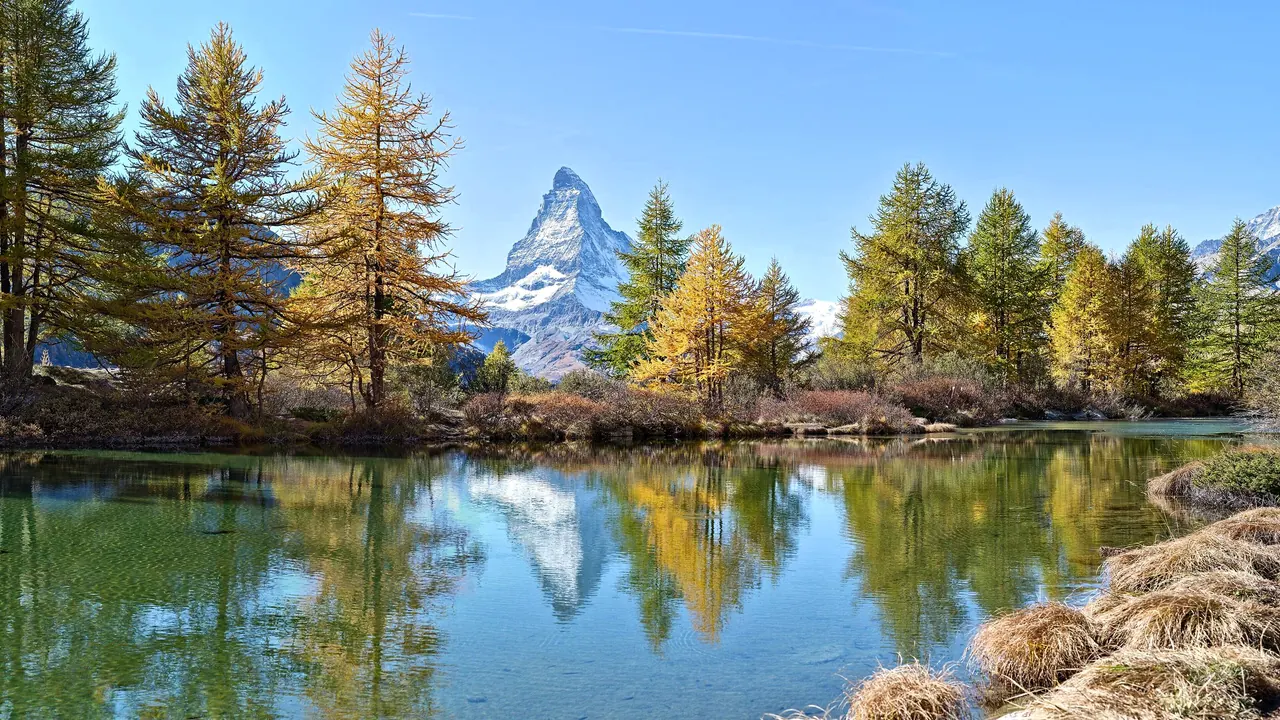
Photos: Portofino by Michal Osmenda, CC BY 2.0, cropped; Zermatt by Roy Egloff, CC BY-SA 4.0, cropped.
Portofino or Zermatt?
Our verdict in twelve categories, each scored against the same fixed benchmark cities, and the climate month by month, so you can choose for your trip.
Choose Portofino for
- beaches
- day trips
- prices
Portofino is for travellers who want the Mediterranean at its most polished: swimming off clear rocks, boat rides to San Fruttuoso and the Cinque Terre, coastal paths across a protected headland, and long lunches facing the harbour. It suits a slow, scenic stay with easy outings along the Riviera di Levante and into Genoa. It is not the place for nights out or a full programme of sights.
Choose Zermatt for
- getting around
- nature and the outdoors
- families
Choose Zermatt if the mountains are the whole point. The Matterhorn, glacier lifts and a huge network of trails and pistes all start at the edge of a car-free village. That also makes it the easier choice with children and the livelier one after dark in ski season. It has no sea and few towns nearby worth the long train ride, so the trip is about what you do outdoors each day.
Scoreboard
Twelve categories on one fixed scale from 0 to 100. The shaded stretch is the gap between the two.
Your match
Pick a travel style or drag the sliders, and both match scores follow your weighting.
Too close to call, 1 point apart
Wins on beaches and day trips with your weighting.
Wins on getting around and nature and the outdoors with your weighting.
What matters to you?
Category by category
What the scores mean for a trip.
Beaches & swimming
Here the gap is total. Portofino has no sand of its own, but swimmers climb into very clear, deep water from the rock platforms on the way to the lighthouse. Paraggi's small bay, the pebble cove at San Fruttuoso and the beaches around Camogli are all easy to reach. The spots are small and crowded in summer, but swimming is a real part of a stay.
Zermatt is at the head of an Alpine valley with no sea or bathing lake, and its tarns stay icy even in August. A hotel pool is the only place to swim.
Food & drink
Neither is a place to travel for the food, and they are close, but the cooking could hardly be more different. Portofino serves Ligurian seaside dishes such as trofie with pesto, fritto misto, anchovies and Recco's cheese focaccia, on terraces facing the yachts where you pay more for the setting than for the cooking. People who care about food head for Camogli or the trattorie in the hills.
In Zermatt the best meals are up the mountain, in chalets around Findeln, Furi and Zum See, where a long raclette or fondue lunch comes with a Matterhorn view and good Valais wine. The village adds a few ambitious fine-dining kitchens, though many places close between seasons.
Culture & sights
A seaside village and a climbing town offer two very different kinds of heritage, and neither takes long to see. Portofino's main sight is the village itself, with its horseshoe of ochre and terracotta houses around the harbour. Above it are the church of San Giorgio and Castello Brown, and round the headland the medieval abbey of San Fruttuoso sits in a cove that no road reaches. It makes a slow day of wandering, with the views doing most of the work.
Zermatt tells one story, the story of mountaineering. The underground Matterhorn Museum covers the first ascent of 1865, climbers lie in the cemetery by the parish church, and the dark larch barns of the Hinterdorf show the farming village that came before. The Gornergrat railway, running since 1898, adds a ride through history. Together they fill a morning.
Nightlife
Zermatt has the better night out, but only in winter. Après-ski fills the bars on the slopes from late afternoon, and on busy weekends a few bars and small clubs on the main street stay open past midnight. In summer the hikers go to bed early.
An evening in Portofino means an aperitivo and a dressed-up dinner beside the yachts, and then it is over. There are no clubs, and anyone who wants more goes along the coast to Santa Margherita or Rapallo, or into Genoa.
Nature & outdoors
Both are excellent outdoors, but Zermatt is in another league. The Matterhorn rises over the village and lifts climb to over 3,800m at the Matterhorn Glacier Paradise. Between the trail network, the summer glacier skiing and guided ascents of four-thousanders, you could spend weeks here.
Portofino's strength is where the land meets the sea. The protected headland has exposed paths with chains over Monte di Portofino to San Fruttuoso, and the marine reserve offers divers red coral walls and the Christ of the Abyss. It is wonderful for a few days of hiking, kayaking and diving, but on a much smaller scale.
Day trips
Portofino is far better placed for days out. Santa Margherita, Rapallo and Camogli are a short bus or boat ride away, and Genoa's medieval centre and the palaces of the Strade Nuove are under an hour off. In summer, ferries go to the Cinque Terre and Portovenere, and the boat ride is part of the fun.
From Zermatt every outing starts with the long train down the valley. Sion's castle hills and Brig's Stockalper Palace are pleasant, but most visitors spend their spare days higher up in the mountains.
Good for families
Zermatt is the more practical choice with children. With no cars there is no traffic to watch out for, and the ski school and nursery slopes at Sunnegga are close by. Summer adds marmots, easy lake walks and the novelty of cog railways, though rainy days and the thin air at the top viewpoints are harder.
Portofino is safe and calm, and children enjoy the boats and the castle. But the steep steps rule out pushchairs and the little sand there is lies in paid beach clubs. Families usually stay in Rapallo or Santa Margherita and make a trip to Genoa's aquarium.
Getting around
Zermatt is much easier to get around. You arrive by train via Täsch, the village is a compact walk, and small electric taxis reach the lift stations further out. The cog railway, the Sunnegga funicular and the gondolas all start within walking distance, and connections into the Swiss rail network are smooth.
Portofino is tiny on foot, but getting there is the problem. One narrow coastal road runs from Santa Margherita, about 5km away, parking is scarce and the summer buses are crowded. Ferries help from spring to autumn, and a car is more of a burden than a help.
Shopping & style
Both offer a short stretch of luxury shops rather than a reason to come. Portofino's lanes behind the piazzetta hold fashion and jewellery houses, resort linen and swimwear for the yacht crowd, plus a little Ligurian lace and pesto, all seen in under an hour.
Zermatt's main street leans towards Swiss watches and good ski and mountaineering outfitters, which are useful if you need gear. For a market or a longer browse, Portofino at least has Chiavari's arcades and Genoa nearby.
Affordability
Both are among the costliest places to stay in their countries, and Zermatt is the dearer of the two. In Portofino you pay heavily for the setting, from the few luxury hotels above the harbour to drinks on the piazzetta and loungers at Paraggi. Walking the headland and riding the local bus cost little, and a bed in Santa Margherita, Rapallo or Camogli cuts the bill considerably.
Zermatt is expensive across the board, even in plain hotels and mountain terraces. The lifts and cog railways that bring you to the mountains add a large cost every day. Self-catering, supermarket picnics and a room down the valley in Täsch help, but this is not the place for a tight budget.
Live music & performing arts
Zermatt has the edge thanks to two festivals. Zermatt Unplugged brings acoustic sets on mountain stages in spring, and a late-summer chamber music festival fills the village church. Outside those weeks, live music means a band in an après-ski bar.
Portofino has only the odd summer concert in the piazzetta or at the castle. For opera or theatre you spend the evening in Genoa, at the Teatro Carlo Felice.
Wellness & relaxation
Neither has thermal springs, so in both places wellness means hotel spas. Zermatt has more of them and better ones, a few open to day visitors, along with car-free streets and clear mountain air. The mood is active, though, and peak weeks are busy.
In Portofino the calm comes from the pace: long lunches by the water and shaded paths with only birdsong. It is best early or late in the day, or outside high summer, when tour boats crowd the harbour at midday.
When should you go?
Pick your month. The climate figures are measured averages, not a forecast.
Portofino in July
Zermatt in July
Daytime high, °C
Rainfall in the month, mm
Where the figures come from
Portofino's temperatures are measured 31 km from the centre, at Genova / Sestri.
Portofino has no rain gauge within 25 km of the centre, so its rainfall comes from a gridded climate dataset read at the city rather than from a gauge further away.
Zermatt has no weather station within reach, so its figures come from a gridded climate model rather than a measured record, and read a broad area rather than the city itself.
Temperature and rainfall are climate normals, averaged over the years shown. Portofino: 1991-2020 normals, Genova / Sestri (31 km from centre). Zermatt: 1991-2020 normals, TerraClimate 4 km grid at the town, no weather station within 90 km.
Portofino is a summer and shoulder-season place. From June to September the days are warm, reaching about 28°C in August. July is the driest month, and from June into early October the sea is warm enough to swim, peaking near 25°C. Midsummer heat makes the exposed hillside trails hard work, so April, May and late September are better for walking. From October the rain sets in properly, and autumn is by far the wettest part of the year. Winter is mild but damp.
Zermatt follows a different calendar. From December to March daytime highs stay around or below freezing, which is the ski season. June to September brings mild hiking weather that rarely goes above 14°C in the village and is much colder at the high viewpoints. Rain is spread fairly evenly through the year, and November is the wettest month. The two cities hardly overlap: midsummer favours Portofino for the sea, and winter favours Zermatt for snow.
Which traveller are you?
For a beach and sun trip, Portofino is the only real choice. Zermatt has no sea or bathing lake. Portofino has clear, deep water off the rocks, the sheltered bay at Paraggi and boat rides to pebble coves, though the spots are small and busy.
On an outdoors trip, Zermatt goes further. Lifts and cog railways take you straight onto glaciers and four-thousand-metre peaks, with long marked trails in summer and skiing in winter. Portofino's headland paths and marine reserve are lovely but smaller in scale.
On a family trip with children, Zermatt is the easier base. Car-free streets, nursery slopes, marmots and cog railways keep young children happy. Portofino's steep steps, paid beach clubs and lack of playgrounds suit adults much better.
Before you go
| Measure | Portofino | Zermatt |
|---|---|---|
| Official language | Italian | French, German, Italian, Romansh |
| Currency | Euro (EUR) | Swiss Franc (CHF) |
| Sockets | CFL230 V, 50 Hz | CJ230 V, 50 Hz |
| Driving side | Right | Right |
| Time zone | UTC+1, UTC+2 in summer | UTC+1, UTC+2 in summer |
| Emergency number | 112 | 112 |
| Elevation | 20 m | 1,624 m |
| Main airport | Genoa Cristoforo Colombo Airport (GOA)32 km from centre25 non-stop destinations | Geneva International Airport (GVA)128 km from centre150 non-stop destinations |
| Public holidays this year | 13 days | 9 days |
By the numbers
| Measure | Portofino | Zermatt |
|---|---|---|
| City population | 355 | 6,023 |
| People per km² | 142 | 25 |
| Museums within 10 km | 14 | 2 |
| UNESCO World Heritage sites within 50 km | 2 | 2 |
| Swim season, months above 21 °C | 4 months | - |
Where else could you go?
Every comparison below shares a destination with this one, so you can follow Portofino or Zermatt somewhere new.
- Genoavs Portofino
- La Speziavs Portofino
- Chamonixvs Zermatt
- Interlakenvs Zermatt
- Luganovs Zermatt
- Lausannevs Zermatt