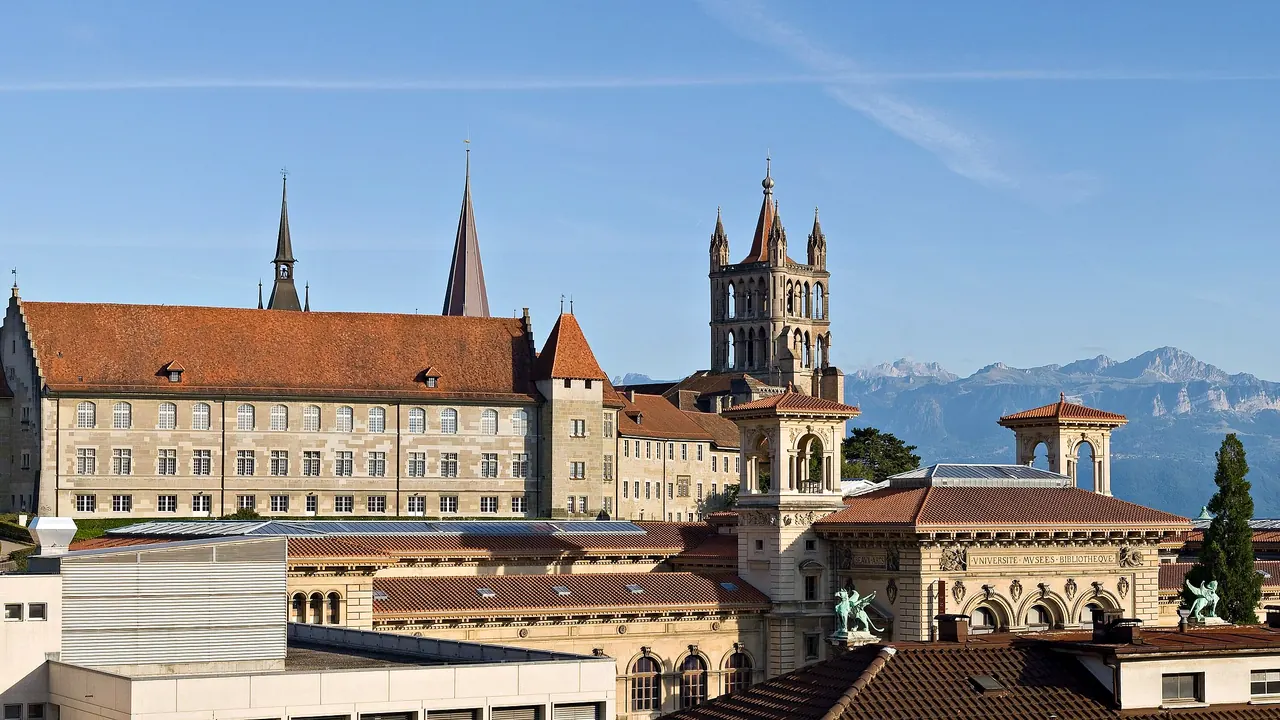
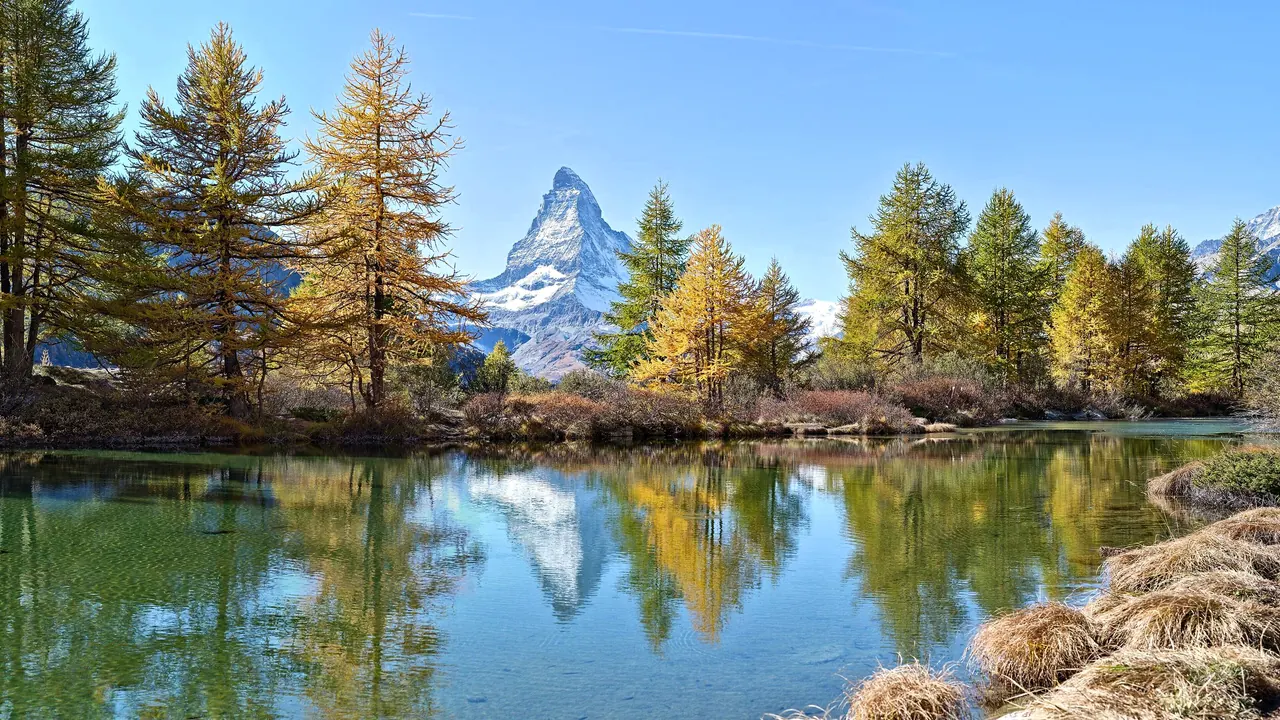
Photos: Lausanne by Christian Mehlführer, CC BY-SA 3.0, cropped; Zermatt by Roy Egloff, CC BY-SA 4.0, cropped.
Lausanne or Zermatt?
Our verdict in twelve categories, each scored against the same fixed benchmark cities, and the climate month by month, so you can choose for your trip.
Choose Lausanne for
- day trips
- live music and the arts
- culture and sights
Lausanne suits travellers who want the Alps on the horizon rather than underfoot. The cathedral quarter, the museums and a serious dance and theatre scene fill the evenings and the rainy days. In summer the lake doubles as a swimming spot, and trains put Geneva, Bern, Gruyères and Montreux within easy reach. It is the better base for a varied trip, and the easier one with children.
Choose Zermatt for
- nature and the outdoors
Zermatt is for people who come to be in the mountains and want little else. The Matterhorn stands over a car-free village, lifts climb to glaciers and high ridges, and the skiing and hiking are among the finest in the Alps. Sights, shops and nightlife are thin, and any outing to another town starts with a long train ride down the valley. On a ski week or a walking vacation, though, that hardly matters.
Scoreboard
Twelve categories on one fixed scale from 0 to 100. The shaded stretch is the gap between the two.
Your match
Pick a travel style or drag the sliders, and both match scores follow your weighting.
Wins on day trips and live music and the arts with your weighting.
Wins on nature and the outdoors with your weighting.
What matters to you?
Category by category
What the scores mean for a trip.
Beaches & swimming
Lausanne at least has a swimming season. From late June to early September Lake Geneva is warm enough to swim from the lawns and pebble shores at Vidy, Bellerive and towards Lutry, and the old Bellerive lido makes an easy afternoon.
Zermatt has no water to swim in. Its tarns are meltwater, lovely with the Matterhorn reflected in them but far too cold, so swimming means a hotel pool. Neither is a beach destination, but only Lausanne lets you fit a summer swim into the day.
Food & drink
Both serve Swiss Alpine classics such as fondue and raclette, with good local white wine. Lausanne has more range: lake perch, papet vaudois, the Saturday market around Riponne, Chasselas poured by the growers in the Lavaux caveaux, and some of the country's most celebrated tables close by.
Zermatt's best meals are up the mountain: long terrace lunches in chalets at Findeln, Furi or Zum See, with Valais wines and the Matterhorn in view. Down in the village there is less choice, and many kitchens close between seasons.
Culture & sights
Lausanne has a city's worth of sights. There is the Gothic cathedral with its night watchman, the steep lanes and covered stairways of the old town, the Olympic Museum at Ouchy, the museum cluster at Plateforme 10 and the unusual Art Brut collection, which together fill two or three days.
Zermatt's heritage is almost all about mountaineering. The Matterhorn Museum, the climbers' cemetery and the old larch barns of the Hinterdorf take a morning, and after that the mountains are the attraction.
Nightlife
Neither is a party destination, but Lausanne has a proper district for going out. Students fill the clubs and late bars in the Flon's old warehouses at weekends, and in summer the Ouchy waterfront stays lively into the evening.
Zermatt's nights are mostly winter après-ski: loud bars at the bottom of the slopes from late afternoon, then a few late bars along the main street. In summer the hikers and climbers are in bed early.
Nature & outdoors
Lausanne's setting is superb. The French Alps rise across the lake, the Lavaux terraces make a fine walk, and the Vaud Alps and the Jura are about an hour away. Zermatt, though, is in the high Alps.
From the village, lifts climb past 3,800m to the Matterhorn Glacier Paradise, among dozens of four-thousand-metre peaks, with skiing linked into Italy and on the glacier in summer. From Lausanne the mountains are a day out. In Zermatt they start at the end of the street.
Day trips
Lausanne is one of the best bases in Switzerland. Montreux and Chillon, Geneva, Bern, Fribourg and Gruyères are all easy by train, boats cross to Évian, and you need no car for any of them.
From Zermatt, every outing starts with more than an hour on the train down the valley. Sion with its two castle hills is worth the trip, and Brig and Saas-Fee are possible, but most visitors spend their spare days up in the mountains instead.
Good for families
Lausanne has more aimed at children: the Olympic Museum, the aquarium-vivarium, Sauvabelin's animal park and wooden lookout tower, paddle steamers on the lake and summer pools at Ouchy and Bellerive. The steep streets are the main nuisance with a pushchair.
Zermatt's strengths are its car-free streets, its children's ski schools and the gentle nursery slopes at Sunnegga. Beyond skiing, marmots and cog railways there is little for children, rainy days are hard to fill, and the highest viewpoints can be too thin-aired and cold for small children.
Getting around
Both are easy without a car, for different reasons. Lausanne's challenge is the climb. The m2 metro handles it, rising from Ouchy through the station to the upper town, while buses, lake boats and fast trains cover the rest.
Zermatt is car-free by design. You arrive by train via Täsch, walk the compact village and ride the cog railway, funicular and gondolas into the mountains. The drawback is the valley itself: leaving it takes far longer than leaving Lausanne.
Shopping & style
Shopping is a side activity in both, but Lausanne has more to browse. Rue de Bourg has watchmakers, jewellers and chocolatiers, the streets around Saint-François have the international names, the Flon adds a few design shops, and on market days cheese and crafts fill the old town squares.
Zermatt is a single main street of watch boutiques, souvenir shops and very good ski and climbing outfitters. Come for gear, not for browsing.
Affordability
Neither suits a tight budget, as both are among the most expensive places you can visit in Europe. The difference is where the money goes. In Lausanne the cost is hotels, meals and wine, while the lakeside promenades, the parks and a supermarket picnic cost nothing extra.
In Zermatt, lift and cog railway tickets come on top of steep room rates in season, and you pay them for the very thing you came to do. Self-catering, or sleeping down the valley in Täsch, is the main way to save.
Live music & performing arts
Lausanne has a stage life that many larger cities lack, and dance leads it. There is the Béjart Ballet Lausanne, the Prix de Lausanne, contemporary productions at the Théâtre de Vidy, a full opera season and a respected chamber orchestra. The Montreux Jazz Festival in July is a short ride along the lake.
Zermatt has no theatre or concert hall. Zermatt Unplugged in spring and a chamber music festival in late summer are the exceptions. The rest of the year, live music means a band in an après-ski bar.
Wellness & relaxation
Lausanne's calm lies on its edges, away from the steep, busy centre: the Ouchy promenade, the parks and the lanes through the Lavaux vines. It is also the one with real thermal water close by, with warm springs at Yverdon-les-Bains and Lavey-les-Bains, each a short train ride away.
In Zermatt the quiet is part of the village itself. Car-free streets and clear air make evenings after skiing very still, and the hotel spas have pools that look out at the peaks, with a few open to non-residents. Lausanne's grand lakeside hotels have extensive spas too, but in Zermatt's peak weeks the mood is active rather than slow.
When should you go?
Pick your month. The climate figures are measured averages, not a forecast.
Lausanne in July
Zermatt in July
Daytime high, °C
Rainfall in the month, mm
Where the figures come from
Lausanne's temperatures are measured 40 km from the centre, at Payerne.
Lausanne has no rain gauge within 25 km of the centre, so its rainfall comes from a gridded climate dataset read at the city rather than from a gauge further away.
Zermatt has no weather station within reach, so its figures come from a gridded climate model rather than a measured record, and read a broad area rather than the city itself.
Temperature and rainfall are climate normals, averaged over the years shown. Lausanne: 1991-2020 (sunshine 1961-1990) normals, Payerne (39.7 km from centre). Zermatt: 1991-2020 normals, TerraClimate 4 km grid at the town, no weather station within 90 km.
Lausanne is at its best from June to early September. Highs reach about 26°C in July, the lake is warm enough for swimming and the long days bring the most sun, around 240 hours in July. Rain falls all through the year and is actually heaviest in the summer months, so expect some wet days even then. From November to February the city is cold and dull with very little sunshine, though snow and mountain air are only a short train ride away.
Zermatt has two clear seasons. In winter, highs sit around -2°C from December to February, which makes it cold enough for skiing and too cold for much else. Summer is for hiking, and even in July and August the village only reaches about 14°C, so it is never hot. November is the wettest and dreariest month, with about 130mm. Lausanne is the warmer and milder of the two in every month. Zermatt is the one to pick when you want snow underfoot or cool mountain air in high summer.
Which traveller are you?
On a culture and arts trip, Lausanne is the clear choice. A single day can run from a gallery to a cathedral lane to a seat at the ballet or theatre, and rain never spoils the plan. Zermatt's mountaineering history fills only a morning.
For an outdoors trip, Zermatt wins. There is no journey to reach the mountains: you wake under the Matterhorn and can be high above the treeline by mid-morning. Lausanne suits those who prefer vineyard paths and lake views.
On a family trip with children, Lausanne offers more. Whether it is a rainy morning or a tired afternoon, there is always an easy fallback indoors or by the lake, which matters most with young children. Zermatt suits families who already ski or hike together.
Before you go
| Measure | Lausanne | Zermatt |
|---|---|---|
| Official language | French, German, Italian, Romansh | French, German, Italian, Romansh |
| Currency | Swiss Franc (CHF) | Swiss Franc (CHF) |
| Sockets | CJ230 V, 50 Hz | CJ230 V, 50 Hz |
| Driving side | Right | Right |
| Time zone | UTC+1, UTC+2 in summer | UTC+1, UTC+2 in summer |
| Emergency number | 112 | 112 |
| Elevation | 495 m | 1,624 m |
| Main airport | Geneva International Airport (GVA)52 km from centre150 non-stop destinations | Geneva International Airport (GVA)128 km from centre150 non-stop destinations |
| Public holidays this year | 9 days | 9 days |
By the numbers
| Measure | Lausanne | Zermatt |
|---|---|---|
| City population | 144,873 | 6,023 |
| People per km² | 3,499 | 25 |
| Museums within 10 km | 31 | 2 |
| UNESCO World Heritage sites within 50 km | 3 | 2 |
Where else could you go?
Every comparison below shares a destination with this one, so you can follow Lausanne or Zermatt somewhere new.
- Genevavs Lausanne
- Chamonixvs Zermatt
- Chamonixvs Lausanne
- Interlakenvs Zermatt
- Bernvs Lausanne
- Annecyvs Lausanne