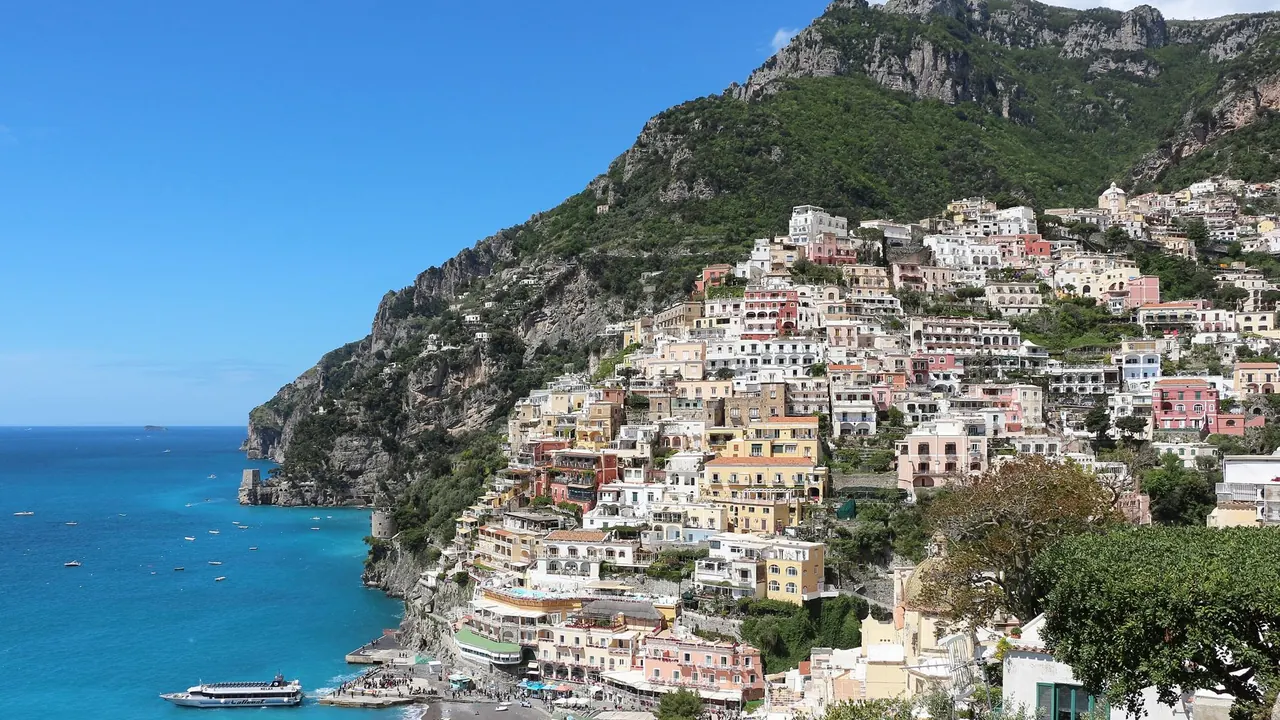
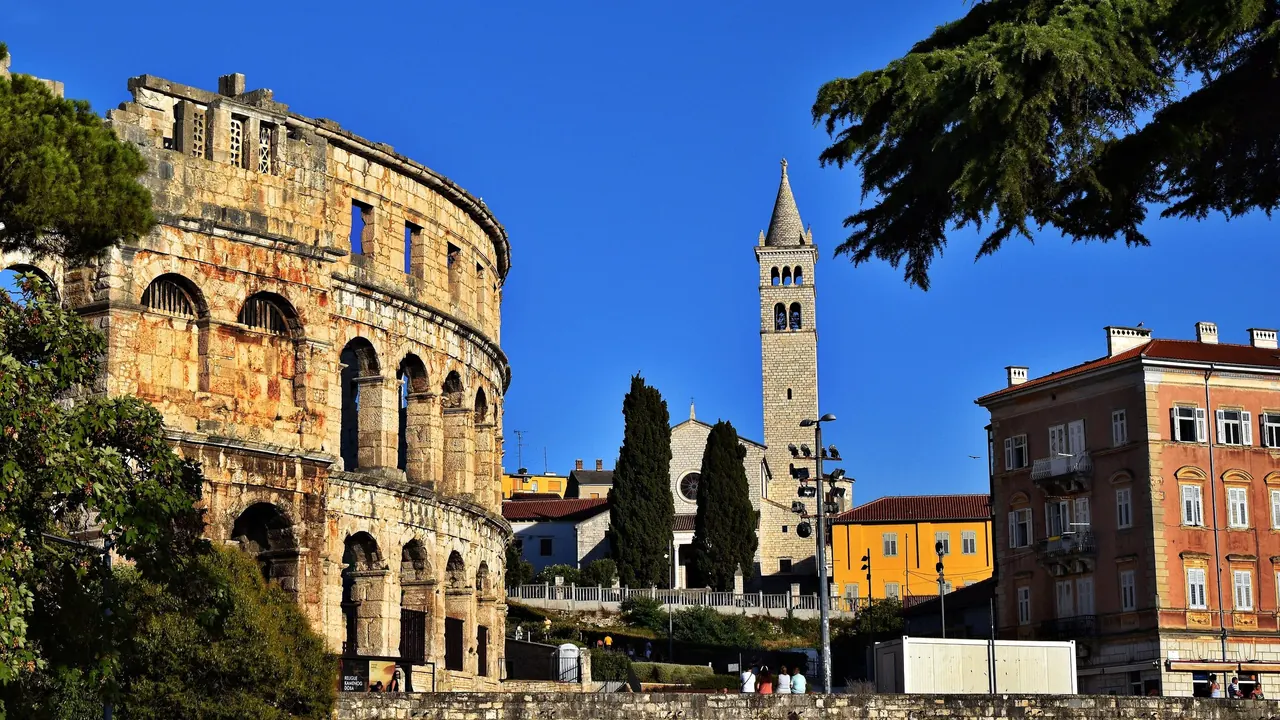
Photos: Positano by Bernard Gagnon, CC BY 4.0, cropped; Pula by Miroslav.vajdic, CC BY-SA 4.0, cropped.
Positano or Pula?
Our verdict in twelve categories, each scored against the same fixed benchmark cities, and the climate month by month, so you can choose for your trip.
Choose Positano for
- nature and the outdoors
- shopping
- wellness
Positano is the pick for a short, scenic, splurge-level stay built around the sea and the cliffs. It suits couples and walkers who want the Path of the Gods above them, boats to Capri and Amalfi from the beach, and long lunches on a terrace. They have to be happy to pay heavily for it, climb stairs all day and find little to do after dark.
Choose Pula for
- prices
- culture and sights
- families
Pula rewards travellers who want more than a view. It has a Roman amphitheatre and forum in the middle of town, Istrian truffles and wine on the table, and a coast of pine-shaded coves at a far gentler price. Families, history lovers and anyone touring by car will find it easier, more varied and much better value, as long as they accept rocks instead of a postcard beach.
Scoreboard
Twelve categories on one fixed scale from 0 to 100. The shaded stretch is the gap between the two.
Your match
Pick a travel style or drag the sliders, and both match scores follow your weighting.
Wins on nature and the outdoors and shopping with your weighting.
Wins on prices and culture and sights with your weighting.
What matters to you?
Category by category
What the scores mean for a trip.
Beaches & swimming
These two are about level for swimming, but the shore is very different. Positano has a proper town beach: Spiaggia Grande, a broad curve of dark sand and pebbles packed with loungers, with Fornillo a cliff walk away and boats out to coves and Capri. It is steep and crowded in high summer, but it is the classic Amalfi Coast scene.
Pula has no town beach at all. You swim off rocks, platforms and pebble coves on the Verudela and Stoja peninsulas, or drive to the wild ledges of Cape Kamenjak. Pine shade and space are easier to find there, and the Medulin bays offer the shallow water Positano lacks.
Food & drink
Pula eats better and more widely. Istrian cooking brings fuži with truffle, scampi buzara, pršut and local Malvazija and Teran, and the market hall shows what is in season. The best meals are often in hinterland taverns a short drive away.
Positano's terrace lunches of clams, grilled fish and lemon desserts are lovely, but the menus repeat themselves, there is almost no everyday or market eating, and many kitchens shut through the winter.
Culture & sights
The gap here is wide. Pula is a Roman city in its own right: the amphitheatre stands with its full outer ring above the harbour, the Temple of Augustus survives on the Forum, and a Venetian fortress and Habsburg naval buildings add later layers.
Positano's culture is mostly the town itself, its stacked pastel houses and the majolica dome of Santa Maria Assunta, plus the Roman villa beneath the church. For anything more, visitors leave town.
Nightlife
Neither is a party place, but Pula offers more of an evening. Drinks around the Forum lead on to beach bars on Verudela and Medulin, a few small clubs fill on summer weekends, and students keep some pubs going off-season. Positano's evenings are aperitivo, dinner and the one cave club at Spiaggia Grande, and that is a dressed-up, couples' scene that disappears after the season.
Nature & outdoors
Positano has the more dramatic landscape: the Lattari mountains drop sheer into the sea, the Path of the Gods runs high over terraced lemon groves, and wooded trails climb to ridges above 1,000m. The walking here is steep and spectacular.
Pula's southern Istria is low and stony, with macchia and olive groves. Cape Kamenjak is a fine car-free headland for easy walking and cycling, and wreck diving and windsurfing are easy to arrange. Real mountains are an hour and a half away at Učka.
Day trips
Positano has the richer set of outings: Amalfi, Ravello, Capri and Sorrento by ferry, Pompeii and Herculaneum within a day, and Paestum's Greek temples further south. The catch is that ferries are mostly seasonal and the coast road is slow.
Pula's range is broad too, covering Rovinj, the Euphrasian Basilica at Poreč, the hill towns of Motovun and Hum, and the Brijuni islands. With a car you can reach Piran or Trieste, but buses are thin, so you will need to drive.
Good for families
Pula is far easier with children. The sheltered Medulin and Premantura bays suit small swimmers, the aquarium sits inside an old fort, kids can explore the Arena's underground passages, and a dinosaur park and water park are within an hour.
Positano is a town of stairs where pushchairs are useless, the pebbly beaches shelve quickly, and nothing is aimed at children beyond the sea. Older children who love boats will cope best.
Getting around
Pula's flat, compact centre puts the Arena, Forum, market and harbour minutes apart, and city buses reach Verudela and the south. For the wider coast you need a car or scooter, but at least driving there is practical.
In Positano every walk means hundreds of steps, regional buses crawl in summer and a car is more trouble than it is worth. Seasonal ferries from the beach do the real work.
Shopping & style
Positano has a style of its own and the shopping to match. White linen and printed resort wear known as moda Positano fill the lanes, along with made-to-measure sandals, hand-painted ceramics and lemon goods. It is one look, but a strong one.
Pula's best buys are things to eat and drink: olive oil, truffles, wine and pršut from the market or the producers themselves. Beyond that there are only chain stores and souvenirs.
Affordability
This is the sharpest difference between them. Positano is among the costliest places to sleep in Italy, and the sea views, loungers, boat trips and transfers all cost extra. Many visitors save by staying in Praiano or Sorrento.
Pula is mid-priced, with private apartments, simple konobas and cheap buses and sights. Only July and August push rooms and harbour-side tables up towards Western European levels.
Live music & performing arts
Pula has the edge thanks to one remarkable venue. In summer the Roman Arena hosts pop and rock tours, classical galas and the long-running film festival, and the Istrian National Theatre plays the rest of the year. Positano itself offers only occasional church concerts, and the nearest real draw is the Ravello Festival up the coast, with Naples for opera.
Wellness & relaxation
Positano is the better place to be looked after. Neither town has a bathing tradition, so the difference lies in the hotels and where they sit. Positano's upscale hotels put their spas and pools on the cliff edge, so a massage or a swim comes with the whole coast in view. Pula's spas belong to large resort hotels on Verudela and in Medulin, comfortable but with nothing about them you would not find on any resort coast. Positano's calm depends on timing, though. High summer fills its lanes and beaches, and the town is at its most restful in May, June and late September.
Pula's restfulness is plainer but easier to find. Outside July and August the whole town slows down rather than just its hotels, and with a flat centre and low coastal ground, an idle day takes no effort at all. It suits travellers who want to switch off without a treatment menu, while those who want a spa to be the highlight of the stay should choose Positano.
When should you go?
Pick your month. The climate figures are measured averages, not a forecast.
Positano in July
Pula in July
Daytime high, °C
Rainfall in the month, mm
Where the figures come from
Positano's temperatures are measured 25 km from the centre, at Capri.
Positano has no rain gauge within 25 km of the centre, so its rainfall comes from a gridded climate dataset read at the city rather than from a gauge further away.
Positano's sunshine is measured 59 km from the centre, at Grazzanise.
Pula's temperatures are measured 87 km from the centre, at Trieste.
Pula has no rain gauge within 25 km of the centre, so its rainfall comes from a gridded climate dataset read at the city rather than from a gauge further away.
Temperature and rainfall are climate normals, averaged over the years shown. Positano: 2005-2025 (sunshine 1991-2020, rainfall 1991-2020) normals, Capri (25.3 km from centre). Pula: 1991-2020 normals, Trieste (87 km from centre).
Both are summer places, with June to September warm enough for swimming in each. Positano runs a little warmer at both ends of the season. Its sea is still about 24°C in September and stays pleasant into October, while Pula's water cools sooner after August. Positano's summers are also very dry and sunnier, but from October the rain comes in hard and peaks in November at 127mm. Pula's rain is spread more evenly through the year, with a smaller wet spell in autumn.
Winter separates them more clearly. Positano stays mild, with daytime highs around 13°C, which is fine for walking even though much of the town shuts. Pula drops to about 9°C, grey and quiet. For walking or hiking without the midday heat, May and late September are the best months in both.
Which traveller are you?
On a culture and arts trip, Pula wins easily. The Arena, the Temple of Augustus and the Arch of the Sergii fill a day or two, and summer concerts happen inside the amphitheatre itself. Positano's sights take a couple of hours.
For an outdoors trip, Positano is the stronger choice. The Path of the Gods and the ridge trails climb above 1,000m straight from the sea, and kayaks follow the cliffs to grottoes. Pula's low headlands are gentler, better for cycling than real hiking.
For a trip on a tight budget, Pula is the realistic option. Private apartments, simple konobas and cheap city buses keep costs down, especially outside July and August. Positano ranks among Italy's priciest stays, and even a lounger or a view at lunch adds up.
Before you go
| Measure | Positano | Pula |
|---|---|---|
| Official language | Italian | Croatian |
| Currency | Euro (EUR) | Euro (EUR) |
| Sockets | CFL230 V, 50 Hz | CF230 V, 50 Hz |
| Driving side | Right | Right |
| Time zone | UTC+1, UTC+2 in summer | UTC+1, UTC+2 in summer |
| Emergency number | 112 | 112 |
| Elevation | 142 m | 5 m |
| Main airport | Naples International Airport (NAP)33 km from centre131 non-stop destinations | Pula Airport (PUY)7 km from centre34 non-stop destinations |
| Public holidays this year | 13 days | 14 days |
By the numbers
| Measure | Positano | Pula |
|---|---|---|
| City population | 3,729 | 52,220 |
| People per km² | 429 | 971 |
| Museums within 10 km | 10 | 4 |
| UNESCO World Heritage sites within 50 km | 5 | 1 |
| Swim season, months above 21 °C | 5 months | 4 months |
Where else could you go?
Every comparison below shares a destination with this one, so you can follow Positano or Pula somewhere new.