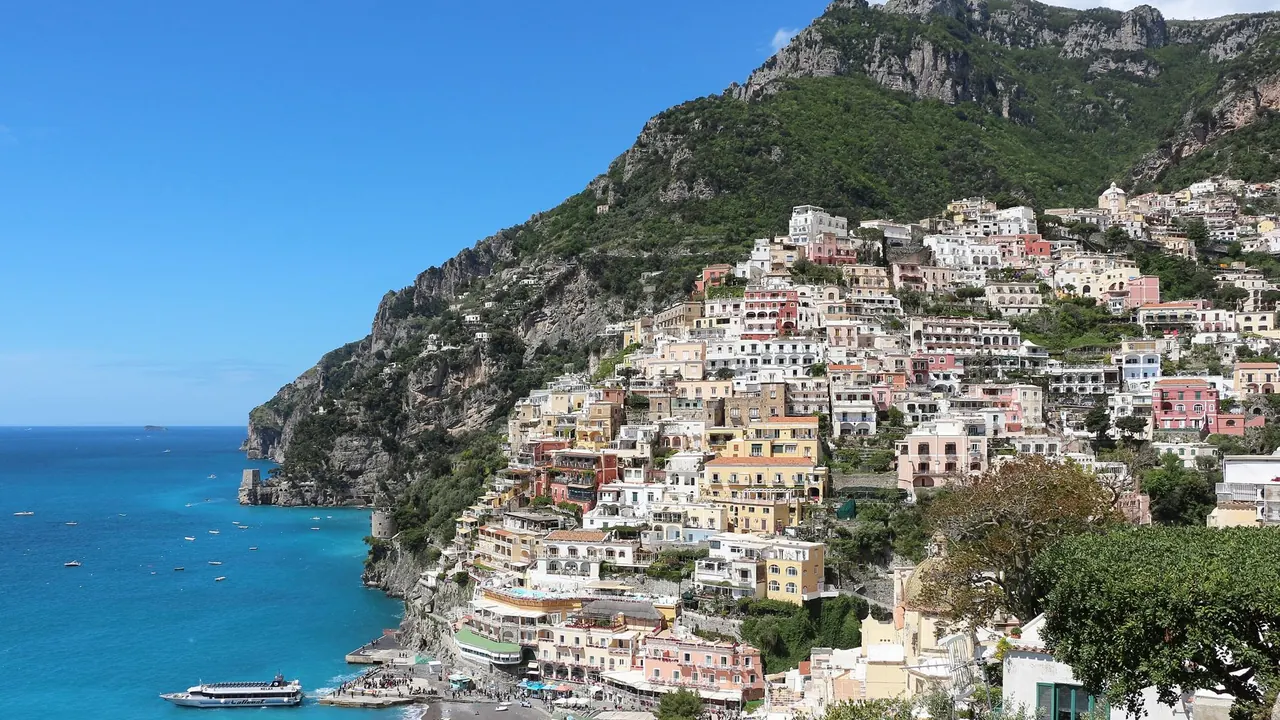
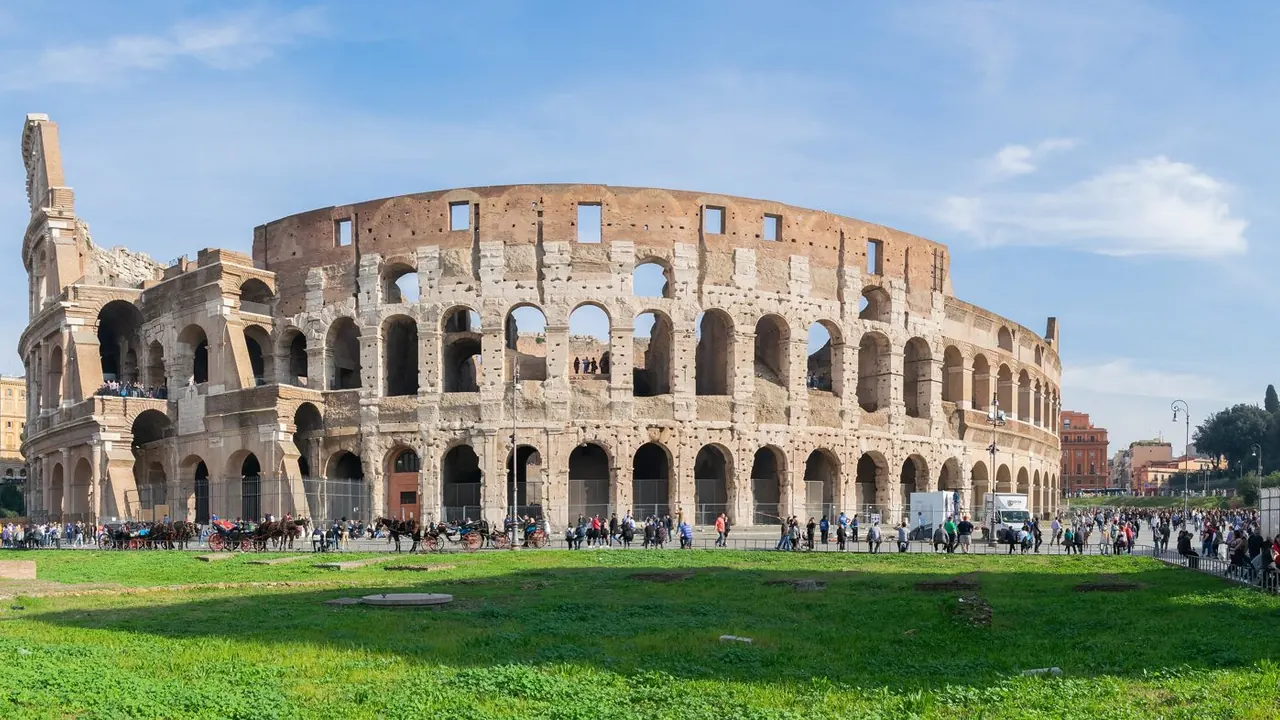
Photos: Positano by Bernard Gagnon, CC BY 4.0, cropped; Rome by Tournasol7, CC BY-SA 4.0, cropped.
Positano or Rome?
Our verdict in twelve categories, each scored against the same fixed benchmark cities, and the climate month by month, so you can choose for your trip.
Choose Positano for
- beaches
- nature and the outdoors
- wellness
Positano is for the traveller who wants the sea and the cliffs and little else to think about. Days go on swimming off the pebble beaches, taking boats to coves and Capri, walking the Path of the Gods and lingering over long lunches on a terrace. It suits couples and slow-paced trips best, as long as the budget can take some of Italy's steepest prices and the legs can take endless stairs.
Choose Rome for
- culture and sights
- live music and the arts
- food and drink
Rome wins for anyone who wants a city to explore rather than a view to sit in front of. Ancient monuments, the Vatican and Baroque churches fill a week without effort, trattorias and street food make every meal worth planning, and evenings carry on outdoors in Trastevere and Monti. The sea is a train ride away, but most people come for the history and the food, and the city costs noticeably less to stay in than the coast.
Scoreboard
Twelve categories on one fixed scale from 0 to 100. The shaded stretch is the gap between the two.
Your match
Pick a travel style or drag the sliders, and both match scores follow your weighting.
Wins on beaches and nature and the outdoors with your weighting.
Wins on culture and sights and live music and the arts with your weighting.
What matters to you?
Category by category
What the scores mean for a trip.
Beaches & swimming
Swimming is a large part of a trip to Positano. Spiaggia Grande and Fornillo are a walk from your room, and boats carry you to Arienzo, Laurito and coves further along. The water is clear and deep, though the shore is steep and pebbly and gets packed in high summer.
Rome's sea means a half-hour train to Ostia, where the dark sand is mostly divided into paid lidos, or a trip north to Fregene's calmer shore. The water is warm in summer but seldom clear, so a swim there is an escape from the city's heat rather than a reason to come.
Food & drink
Rome is one of Italy's great places to eat. It has its own pasta canon, fried artichokes from the Ghetto, the offal dishes of Testaccio, pizza al taglio and supplì in the street, and neighbourhood markets, as long as you walk away from the menus near the big sights.
Positano offers something narrower: seafood pasta, grilled fish and lemon desserts eaten on terraces above the sea. The setting is unforgettable, but menus repeat one another, there is almost no street food or market life, and many kitchens close in winter.
Culture & sights
In Positano the sight is the town itself: stacked pastel houses, the majolica dome of Santa Maria Assunta and the painted rooms of a Roman villa beneath it. A morning covers it.
Rome is the reverse, with the Forum, the Pantheon, St Peter's, the Sistine Chapel and Caravaggios in side chapels all inside one walkable centre. A week there still leaves things unseen, so anyone travelling for history and art should choose Rome.
Nightlife
Neither is a clubbing destination, but Rome gives you far more to do after dinner. Trastevere's lanes stay crowded with wine bars until late, Monti has small cocktail bars, and San Lorenzo and Pigneto add student and arty crowds.
Positano's evening is aperitivo with a view, a long dinner and perhaps the cave club at the end of the main beach. That suits a couple in summer and goes quiet once the season ends.
Nature & outdoors
Positano sits in far wilder country. The Lattari mountains drop straight into the sea, and the Path of the Gods runs high above terraced lemon groves, with steeper trails to ridges over 1,000m and kayaks along the cliffs to grottoes and the Li Galli islets.
Rome's outdoors is gentler and more spread out: villa parks such as Borghese and Pamphili, a bike ride down the Appian Way past tombs and aqueducts, and the crater lakes of the Alban Hills. The Apennines are a longer trip away.
Day trips
Both make excellent bases, but the trips are different in character. From Positano most outings go by boat, to Capri, Amalfi, Ravello and Sorrento, with Pompeii and Paestum further off. The catch is that most ferries stop in winter and the coast road crawls in summer.
From Rome, trains and short drives lead to Ostia Antica, Tivoli's villas, Etruscan tombs, Orvieto and the Castelli Romani. High-speed lines put Florence and Naples within reach, and they run all year.
Good for families
Rome is the easier of the two with children, though it is not built around them. Villa Borghese has a zoo, rowing boats and space to run, there is a children's museum, and gladiators and catacombs hold young interest between gelato stops.
Positano is mostly stairs, which rules out pushchairs, and has nothing for children beyond the sea. Older children who love swimming and boats do well there, but toddlers really don't.
Getting around
Positano is small enough to cross on foot, but nearly every walk is a climb, and the stairs tire you more than the distances do. Beyond the town you depend on slow, crowded coast buses or on ferries that mostly stop outside the season, so even a short trip along the coast needs planning.
Rome is the easier place to get around because most of the sights are close enough together to reach on foot, and you can walk from the ancient ruins to the Baroque squares and across the Tiber in a morning without a ticket. Public transport is still weak. The metro mostly skirts the old centre and buses get stuck in traffic, so cobbles and summer heat will tire your feet. Even so, it asks far less of you than Positano's steps and ferry timetables.
Shopping & style
Positano sells one look and does it well: loose white linen, printed resort wear, sandals cut to fit and painted ceramics along the lanes to the beach. Beyond that look there is little to buy.
Rome covers much more ground, from the fashion houses around Via Condotti and the chains on Via del Corso to Monti's independent and vintage boutiques, the antique dealers of Via dei Coronari and the sprawling Porta Portese flea market.
Affordability
Positano is among the most expensive places to stay in Italy. Sea-view rooms, loungers, terrace dinners and boat transfers all cost a lot, and many visitors save by sleeping in Praiano or Sorrento.
Rome is far from cheap, with costly central rooms and high museum fees, but everyday life is kinder. Standing espresso, pizza by weight, trattoria lunches, free fountain water and free churches full of art keep daily costs well below the coast's.
Live music & performing arts
Rome has a proper classical calendar. You get winter opera and ballet at the Teatro dell'Opera, summer performances among the ruins of the Baths of Caracalla, the Santa Cecilia orchestra at the Auditorium Parco della Musica, and jazz clubs and church concerts as well.
Positano itself offers only the odd summer concert. Its best musical evening means travelling along the coast to Ravello's festival terrace above the sea.
Wellness & relaxation
Rest feels different in each, though neither town has a bathing culture of its own. Positano relies on cliffside hotel spas, pools and the plain calm of a terrace over the sea, best in May, June or late September, when the lanes are quieter.
Rome is noisier day to day, but it has more ways to unwind: hammam-style day spas in the city, the thermal pools of Bagni di Tivoli and the free hot springs near Viterbo. The Aventine and the villa gardens offer quiet in the centre.
When should you go?
Pick your month. The climate figures are measured averages, not a forecast.
Positano in July
Rome in July
Daytime high, °C
Rainfall in the month, mm
Where the figures come from
Positano's temperatures are measured 25 km from the centre, at Capri.
Positano has no rain gauge within 25 km of the centre, so its rainfall comes from a gridded climate dataset read at the city rather than from a gauge further away.
Positano's sunshine is measured 59 km from the centre, at Grazzanise.
Rome's sunshine is measured 31 km from the centre, at Vigna Di Valle.
Temperature and rainfall are climate normals, averaged over the years shown. Positano: 2005-2025 (sunshine 1991-2020, rainfall 1991-2020) normals, Capri (25.3 km from centre). Rome: 1991-2020 normals, Roma / Ciampino (15.1 km from centre).
Positano is a summer resort. The sea is warm enough for swimming from June to early October and reaches about 26°C in August, while the hot months are dry and long on sunshine. Rain arrives with autumn and is heaviest in November at around 127mm. In winter many kitchens and ferries stop, so the cool, wet months from November to March are the town at its quietest. May, June and late September are the most comfortable for walking the cliff paths.
Rome is hotter in midsummer, with highs of about 31°C in July and August that make sightseeing on foot a slog in the middle of the day. Its best months for walking the streets are April, May, late September and October, before the autumn rains build towards November. Winters are mild enough for museums and churches, which makes Rome a far better choice than Positano from November to March.
Which traveller are you?
On a beach and sun trip, Positano is the clear pick. Its clear, deep blue water and boat-reached coves sit right below your room, whereas in Rome you need a train to Ostia's crowded lidos, and the water there is rarely clear.
For a culture and arts trip, Rome has no rival here. The Colosseum, the Vatican Museums, the Borghese Gallery and summer opera at the Baths of Caracalla fill a week, while Positano's church and Roman villa take a couple of hours.
On a food and nightlife trip, Rome serves far better. Its classic pastas, Jewish-style artichokes and Testaccio's market come before late evenings in Trastevere's wine bars. In Positano you get the same few coastal dishes and an evening scene that fades after summer.
Before you go
| Measure | Positano | Rome |
|---|---|---|
| Official language | Italian | Italian |
| Currency | Euro (EUR) | Euro (EUR) |
| Sockets | CFL230 V, 50 Hz | CFL230 V, 50 Hz |
| Driving side | Right | Right |
| Time zone | UTC+1, UTC+2 in summer | UTC+1, UTC+2 in summer |
| Emergency number | 112 | 112 |
| Elevation | 142 m | 21 m |
| Main airport | Naples International Airport (NAP)33 km from centre131 non-stop destinations | Rome–Fiumicino Leonardo da Vinci International Airport (FCO)23 km from centre242 non-stop destinations |
| Public holidays this year | 13 days | 13 days |
By the numbers
| Measure | Positano | Rome |
|---|---|---|
| City population | 3,729 | 2,748,109 |
| People per km² | 429 | 2,135 |
| Museums within 10 km | 10 | 178 |
| UNESCO World Heritage sites within 50 km | 5 | 7 |
| Swim season, months above 21 °C | 5 months | 5 months |
Where else could you go?
Every comparison below shares a destination with this one, so you can follow Positano or Rome somewhere new.