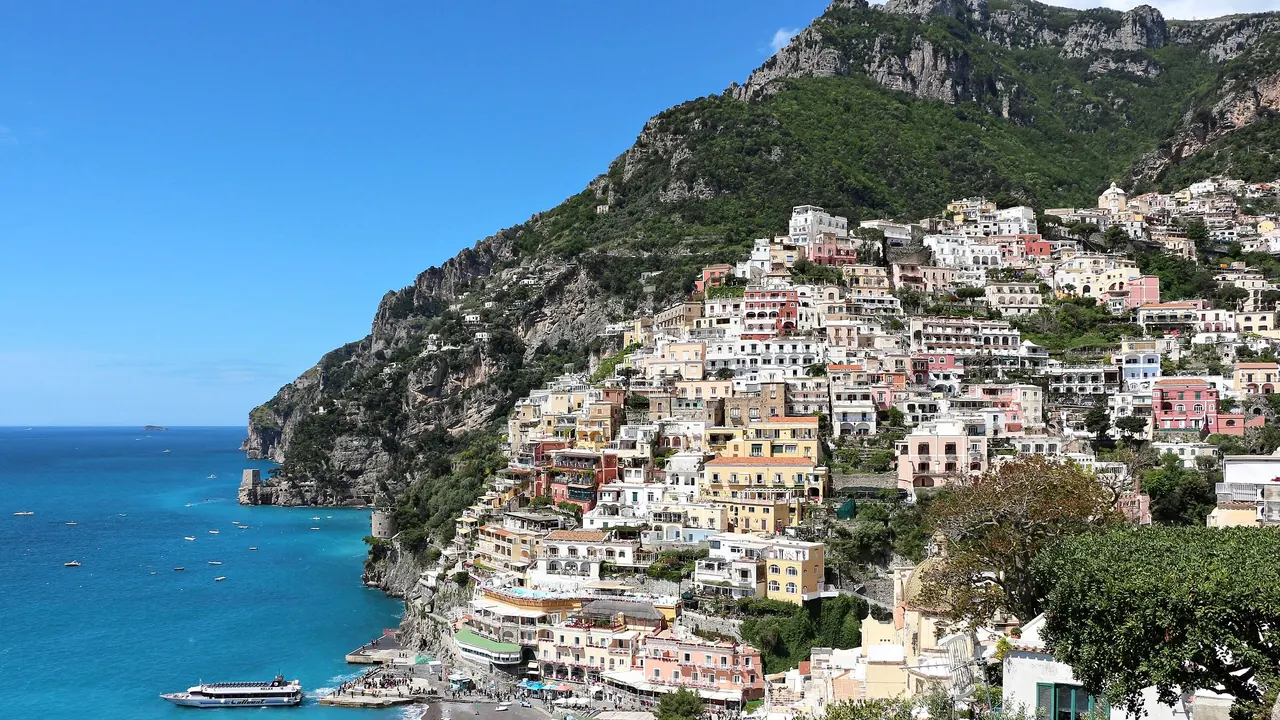
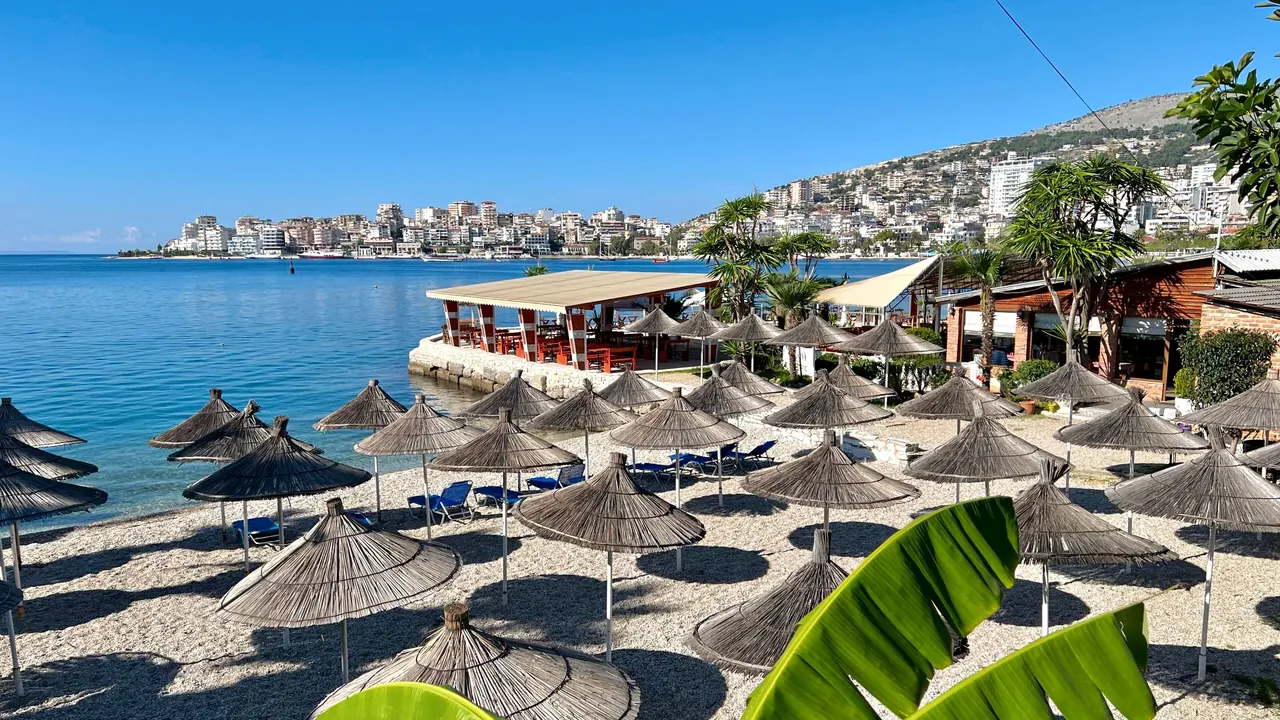
Photos: Positano by Bernard Gagnon, CC BY 4.0, cropped; Saranda by Sharon Hahn Darlin, CC BY 2.0, cropped.
Positano or Saranda?
Our verdict in twelve categories, each scored against the same fixed benchmark cities, and the climate month by month, so you can choose for your trip.
Choose Positano for
- shopping
- wellness
- nature and the outdoors
Positano is for the traveller who wants the Amalfi Coast at its most theatrical and can pay for it. The cliffs, the Path of the Gods and the boats to Capri, Amalfi and Ravello make it the stronger base for walking and day trips. Its spa hotels and terraces over the sea suit a slow, romantic stay, and its linen and sandal shops are a reason to visit in themselves. Leave the pushchair at home and expect the stairs and the bills to shape every day.
Choose Saranda for
- prices
- nightlife
- families
Saranda gives you a comparable sea for a fraction of the cost. The Ksamil coves, Butrint and the Blue Eye all sit within an easy ride, and a long, level promenade makes it easier with children and livelier after dark in summer. Choose it if your budget matters, if you want warm-water swimming without the glamour, or if you like the idea of adding Corfu and an Ottoman hill town to a beach week.
Scoreboard
Twelve categories on one fixed scale from 0 to 100. The shaded stretch is the gap between the two.
Your match
Pick a travel style or drag the sliders, and both match scores follow your weighting.
Too close to call, 1 point apart
Wins on shopping and wellness with your weighting.
Wins on prices and nightlife with your weighting.
What matters to you?
Category by category
What the scores mean for a trip.
Beaches & swimming
Both towns are built around the sea, and both have clear water at about 25°C in August, so the difference lies in the shore. Positano offers dark grey sand and pebble at Spiaggia Grande and Fornillo, steep and coarse, with water shoes advisable and boats to coves further along the cliffs.
Saranda's own pebble beaches are only a quick dip. The draw lies twenty minutes south at Ksamil, where pale coves and small islets give a lighter, lagoon-like look, and longer, quieter bays such as Borsh line the Riviera to the north.
Food & drink
Neither town offers much range, but the meals differ in tone. Positano is about long terrace lunches of clams, scialatielli and lemon desserts, with a few hotel dining rooms aiming at fine dining and the view priced into everything. Many of its kitchens close over the winter.
Saranda eats more simply and more locally: mussels from the Butrint lagoon, morning byrek, stuffed peppers, and back-street family taverns that often beat the promenade terraces.
Culture & sights
In neither town will sightseeing fill more than a morning. Positano's sight is the town itself, a ravine of pastel houses under the majolica dome of Santa Maria Assunta, with a Roman villa preserved by Vesuvius beneath the church. Saranda is a modern town, and its pieces of the past, a mosaic-floored synagogue and stretches of old wall, sit between apartment blocks, while Lekuresi Castle is visited more for the view of Corfu than for itself.
Nightlife
Saranda has more going on after dark. In July and August the promenade moves from family strolls to loud cocktail bars past midnight, and beach clubs at Ksamil run later with DJs, mostly for a young Albanian and Kosovar crowd.
Positano's evenings are aperitivo with a view and a long dinner, with one dressed-up cave club at the end of the main beach. That suits couples, not anyone wanting a proper night out.
Nature & outdoors
Positano has the more spectacular landscape, the Lattari mountains dropping straight into the sea. The Path of the Gods runs along the cliffs above the lemon terraces, steeper trails climb through chestnut woods to ridges over 1,000m, and kayaks follow the rock to grottoes and the Li Galli islets.
Saranda's setting is gentler and more varied: the lagoon and reed beds of Butrint for birdwatching, the startling spring of the Blue Eye inland, and largely unmarked trails above the Riviera villages.
Day trips
Positano has the richer list: Amalfi and Ravello along the coast, Capri half an hour by boat, Pompeii and Herculaneum via Sorrento, and the Greek temples of Paestum further south. Most ferries run only in season, and winter outings mean slow buses.
Saranda's list is shorter but strong. Butrint's layered ancient city lies half an hour away, Gjirokaster's stone tower houses are a little over an hour inland, and Corfu's Venetian old town is less than an hour by ferry.
Good for families
Saranda is the easier choice with children, though neither has attractions built for them. The calm coves at Ksamil suit small swimmers and the evening promenade with rides and ice cream is a family occasion. Patchy pavements and summer traffic argue for a pool hotel in June or September.
Positano is almost all stairs, so pushchairs are no use, and its beaches shelve quickly. Older children who love boats will be happy, toddlers far less so.
Getting around
Saranda is easier on foot, with a long level promenade linking beaches, restaurants and the port, and buses running to Ksamil and Butrint, even if you have to ask locals when. For the Blue Eye or the Riviera, a hire car or taxi is the practical answer.
In Positano nearly every walk means hundreds of steps, coast buses crawl in summer, and a car is more burden than help. Seasonal ferries from the main beach are the most comfortable way out.
Shopping & style
Positano is a destination for shopping in its own right, thanks to one distinctive look: loose white linen and printed resort wear in the lanes down to the beach, sandals cut to fit while you wait, and hand-painted ceramics.
Saranda has beachwear and souvenirs along the promenade. The things worth taking home are edible: olive oil, mountain honey, raki and dried herbs. For crafts, go to the old bazaar in Gjirokaster.
Affordability
This is where the two differ most. Saranda is cheap by European standards for most of the year, from family hotels to grilled fish and taxis, though Ksamil sunbeds and seafront rooms climb in July and August.
Positano is one of Italy's most expensive stays, with sea-view rooms, loungers, terrace meals and boat transfers all priced for the setting. Staying in Praiano or Sorrento, or going in May or October, softens the cost.
Live music & performing arts
Neither town is somewhere to plan a trip around music, but Positano has a far better evening within reach. Its own offering is little more than an occasional summer concert in a church or piazza. A little way along the coast, though, Ravello hosts a classical music festival every summer, with the orchestra playing in the gardens of Villa Rufolo high above the sea, and it makes an easy night out from a Positano base. For opera at the Teatro di San Carlo, Naples is close enough for a day.
Saranda has nothing to compare. Live music there comes by chance: a summer stage on the seafront, sometimes a performance in Butrint's ancient theatre, or a band playing Albanian songs in a full restaurant. The south's own musical tradition, its unaccompanied multi-part singing, belongs to the towns and villages inland, not the coast.
Wellness & relaxation
Positano unwinds more gracefully, with spa hotels and cliffside pools and a setting made for doing very little. Even so, its July crowds and stairs wear on you.
Saranda has hotel spas and beach massages but little else, and in high summer its nights are loud. Both towns are at their calmest in May, June and late September, and that matters more in Saranda.
When should you go?
Pick your month. The climate figures are measured averages, not a forecast.
Positano in July
Saranda in July
Daytime high, °C
Rainfall in the month, mm
Where the figures come from
Positano's temperatures are measured 25 km from the centre, at Capri.
Positano has no rain gauge within 25 km of the centre, so its rainfall comes from a gridded climate dataset read at the destination rather than from a gauge further away.
Positano's sunshine is measured 59 km from the centre, at Grazzanise.
Saranda's temperatures are measured 30 km from the centre, at Kerkyra Airport.
Saranda has no rain gauge within 25 km of the centre, so its rainfall comes from a gridded climate dataset read at the destination rather than from a gauge further away.
Temperature and rainfall are climate normals, averaged over the years shown. Positano: 2005-2025 (sunshine 1991-2020, rainfall 1991-2020) normals, Capri (25.3 km from centre). Saranda: 1991-2020 normals, Kerkyra Airport (29.8 km from centre).
Positano's summer is warm rather than fierce, about 30°C in August, with little rain from June to August and a sea warm enough to swim from June into early October, reaching 26°C at its peak. The stairs and trails are heavy going at midday in high summer, so May, June and late September suit walking better. Rain starts to build in September and is heaviest from October to December. Positano's winters are no warmer than Saranda's, but they are much drier.
Saranda is hotter and sunnier in July and August, near 32°C, which makes midday walks around town tiring. Its sea warms and cools almost exactly in step with Positano's. The real difference comes in the wet half of the year. September is already rainy, at around 109mm, and the totals climb to about 234mm in December, more than twice Positano's. Saranda is at its best from late May to early September.
Which traveller are you?
On a trip on a tight budget, Saranda is the clear choice. Rooms off the seafront, grilled fish, byrek and local buses all cost little, while Positano is among Italy's most expensive places to sleep, eat and even rent a lounger.
For a relaxing and wellness trip, Positano does it better. Its upscale hotels have spas and pools cut into the cliff, and a slow lunch over the sea is the town's natural pace. Saranda's promenade is loud with music and traffic well into summer nights.
On a family trip with children, Saranda is easier. The sheltered, shallow-looking coves at Ksamil suit young swimmers, and the flat promenade has ice cream and rides in the evening. Positano's endless stairs rule out pushchairs, and its pebbly beaches shelve steeply.
Before you go
| Measure | Positano | Saranda |
|---|---|---|
| Official language | Italian | Albanian |
| Currency | Euro (EUR) | Lek (ALL) |
| Sockets | CFL230 V, 50 Hz | CF220 V, 50 Hz |
| Driving side | Right | Right |
| Time zone | UTC+1, UTC+2 in summer | UTC+1, UTC+2 in summer |
| Emergency number | 112 | 112 |
| Elevation | 142 m | 0 m |
| Main airport | Naples International Airport (NAP)33 km from centre131 non-stop destinations | Corfu Ioannis Kapodistrias International Airport (CFU)32 km from centre88 non-stop destinations |
| Public holidays this year | 13 days | 14 days |
By the numbers
| Measure | Positano | Saranda |
|---|---|---|
| Population | 3,729 | 22,613 |
| People per km² | 429 | 383 |
| Museums within 10 km | 10 | 0 |
| UNESCO World Heritage sites within 50 km | 5 | 3 |
| Swim season, months above 21 °C | 5 months | 5 months |
Where else could you go?
Every comparison below shares a destination with this one, so you can follow Positano or Saranda somewhere new.
- Sorrentovs Positano
- Amalfivs Positano
- Caprivs Positano
- Salernovs Positano
- Corfuvs Saranda
- Naplesvs Positano