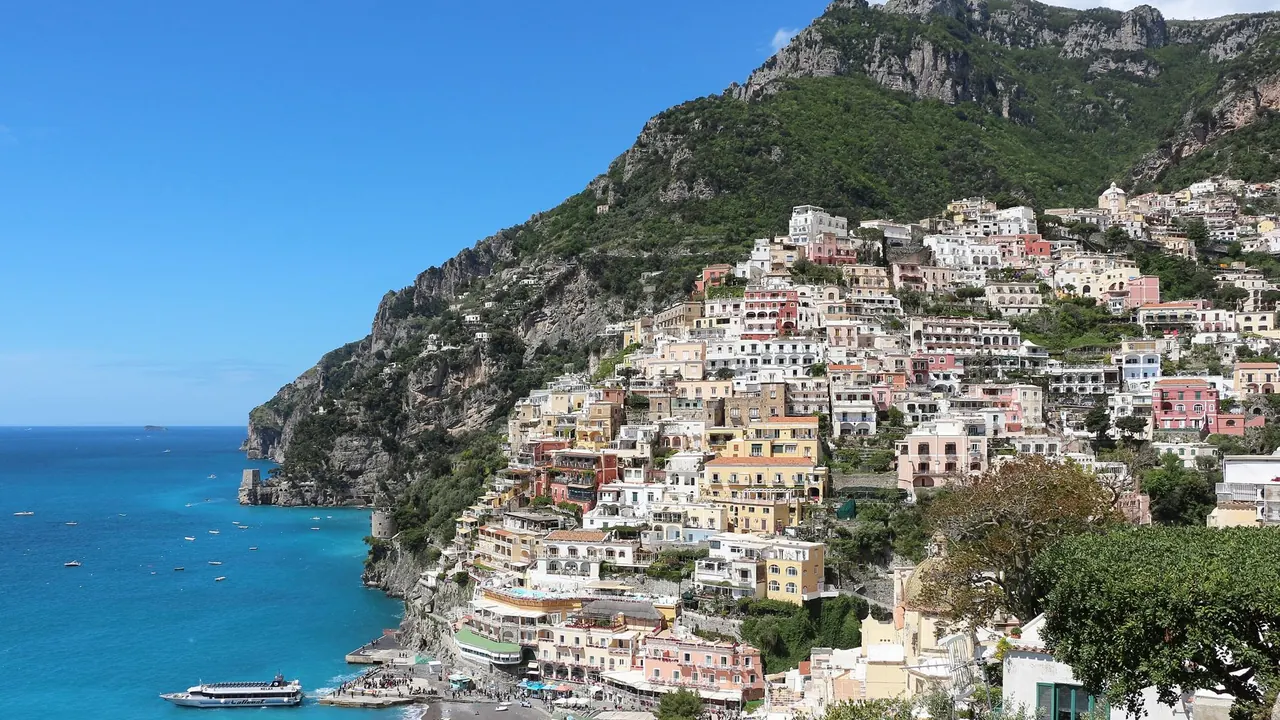
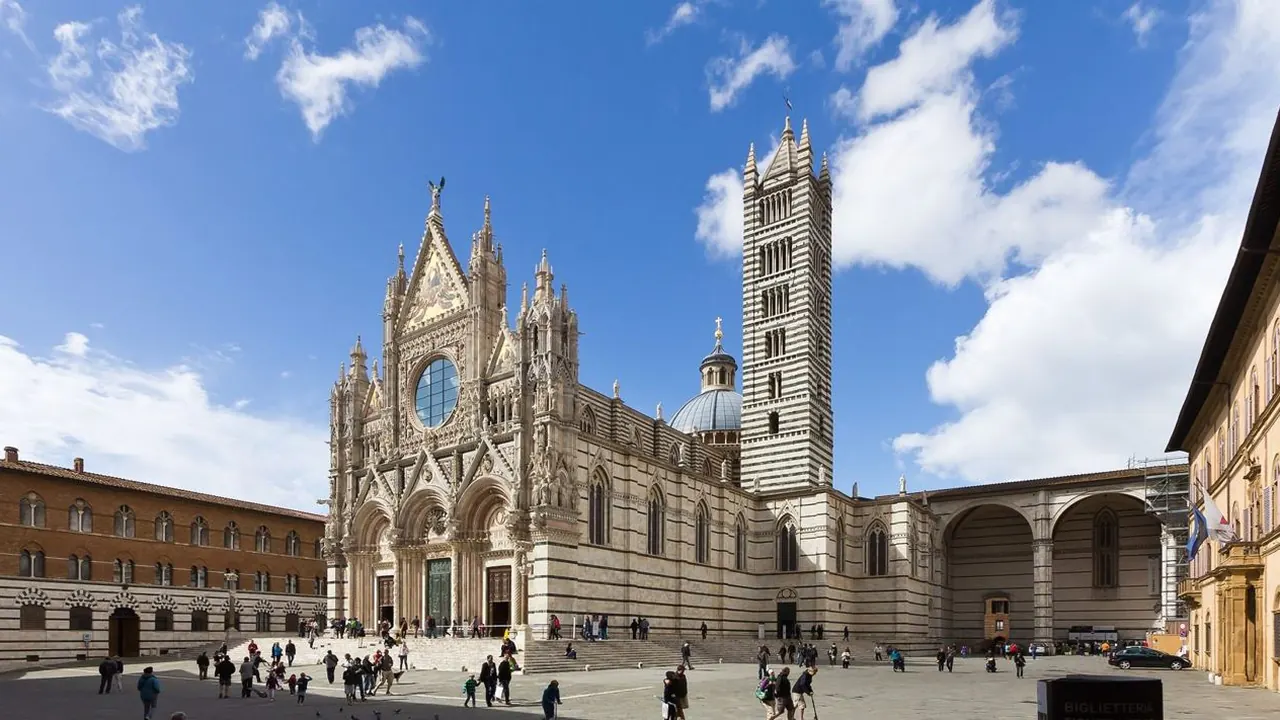
Photos: Positano by Bernard Gagnon, CC BY 4.0, cropped; Siena by Raimond Spekking, CC BY-SA 4.0, cropped.
Positano or Siena?
Our verdict in twelve categories, each scored against the same fixed benchmark cities, and the climate month by month, so you can choose for your trip.
Choose Positano for
- beaches
- nature and the outdoors
- shopping
Positano is the choice for a trip built around the sea: swimming off its dark pebble beaches, boats to Capri and the grottoes, and the Path of the Gods along the cliffs above. It suits couples who want slow lunches over the water and a striking setting more than sights or variety. They also need to accept endless stairs and some of the highest prices in Italy.
Choose Siena for
- culture and sights
- prices
- getting around
For art, history and food, Siena gives far more. Its medieval centre, the Duomo and Lorenzetti's frescoes fill two or three days, the osterie and the wines of Chianti and Montalcino are a real reason to come, and the hill towns, abbeys and thermal pools of southern Tuscany lie all around. It costs less and is easier to walk, but it has no sea at all.
Scoreboard
Twelve categories on one fixed scale from 0 to 100. The shaded stretch is the gap between the two.
Your match
Pick a travel style or drag the sliders, and both match scores follow your weighting.
Wins on beaches and nature and the outdoors with your weighting.
Wins on culture and sights and prices with your weighting.
What matters to you?
Category by category
What the scores mean for a trip.
Beaches & swimming
Here Positano has what Siena entirely lacks. Spiaggia Grande and the quieter Fornillo sit right below the town, Arienzo and Laurito are a stairway or a boat ride away, and the water is deep, clear and warm from June into October. The shore is steep, coarse pebble and sand, so water shoes help, and in summer it fills by mid-morning.
Siena is inland, and the nearest good beaches, on the Maremma coast, are well over an hour away by car. A swim there takes a full day out. Otherwise swimming means a hotel or farmhouse pool.
Food & drink
Siena eats better and more widely. It has a working local kitchen of hand-rolled pici, ribollita, cinta senese pork and wild boar. Its bakeries still make panforte and ricciarelli, and the enoteche pour Chianti Classico and Brunello from vineyards close by. The best meals are in the family osterie on the side streets of the contrade.
Positano's strength is the setting: seafood pasta, grilled fish and lemon desserts on a terrace above the water. The menus repeat one another, everyday eating and markets are scarce, and many kitchens close over the winter.
Culture & sights
Here Siena has its greatest advantage. The whole centre is UNESCO-listed. The Campo and the Palazzo Pubblico, with Lorenzetti's frescoes of Good and Bad Government, are only the start, followed by the striped Duomo with its inlaid floor and the museums of Santa Maria della Scala and the Pinacoteca. Seeing them properly takes two or three days.
Positano is a place to look at rather than a place of sights. There are the pastel houses stacked up the ravine, the majolica dome of Santa Maria Assunta and the Roman villa beneath the church. A morning covers it, and for serious museums you go to Naples.
Nightlife
Neither town suits a real night out, and in both an evening means dinner and a glass of wine. What differs is the character. Positano has a summer-only scene of cocktail bars by the beach and a dressy club in a cave, and almost all of it closes when the season ends.
Siena keeps a small year-round student life of pubs and wine bars. It also comes alive on the Palio nights, when the contrade hold long dinners outdoors until late.
Nature & outdoors
Positano has the more dramatic landscape. The Lattari mountains drop straight into the sea, the Path of the Gods follows the cliffs high above it, and steeper trails climb through woods to ridges over 1,000m. On the water, kayaks and boats reach grottoes and the Li Galli islets.
Siena's countryside is gentler and best seen by bike: the bare clay hills of the Crete Senesi, the Val d'Orcia, and the white gravel strade bianche running straight from town. It has no coast and no high mountains.
Day trips
Both towns are superb bases, and Siena is slightly ahead for range. From Siena you can reach Florence, San Gimignano, Volterra, the Chianti villages, Montalcino, Pienza and the abbeys of Sant'Antimo and San Galgano, though the hill towns are far easier with a car.
Positano's day trips mostly go by sea, with ferries to Amalfi and Ravello and Capri about half an hour away. Pompeii and Herculaneum are reached by way of Sorrento. Most boats run only from spring to autumn, so winter trips are slow.
Good for families
Neither is easy with small children, but Siena copes better. Its centre is safe and mostly free of cars. Older children enjoy climbing the Torre del Mangia and watching the contrada drummers, and a farmhouse with a pool outside town fills the afternoons.
Positano is built almost entirely of stairs, which rules out pushchairs, and the sea is its only attraction for children. Older children who like swimming and boat trips do well there, but it is hard work with toddlers.
Getting around
Siena is the simpler place to get about. The centre is closed to most traffic, the main sights are minutes apart and escalators climb up from the station. The ridges are still steep, and the countryside still calls for a hire car.
In Positano almost every walk involves hundreds of steps. The road through town and the coast road crawl in summer traffic, and parking is scarce. Ferries are the easiest way to the next town, but mostly in season.
Shopping & style
Positano gives shopping more of a purpose. Its lanes down to the beach are lined with boutiques selling white linen and printed resort wear, and sandal makers will cut a pair to fit while you wait, though it is all one look.
Siena's shopping is broader but plainer: Italian clothing and leather on Banchi di Sopra, majolica and contrada scarves, and panforte and pecorino to take home. There is also a large weekly market around the Fortezza Medicea.
Affordability
Siena is much easier on the wallet. Rooms inside the walls are in demand, especially around the Palio, but an osteria meal with house wine is good value and the centre is free to walk.
Positano is among the most expensive places to stay in Italy, and the view is priced into everything: rooms, loungers, terrace tables and boat trips. Sleeping in Praiano or Sorrento, or coming in May or October, lowers the cost considerably.
Live music & performing arts
Siena has much more to attend. The Accademia Chigiana fills palaces and churches with summer concerts and masterclasses, and Siena Jazz adds concerts of its own. In winter the Teatro dei Rinnovati and the Teatro dei Rozzi stage drama and music.
Positano offers little beyond occasional summer concerts in churches and squares. Ravello's classical festival, on a terrace above the sea, is within reach for an evening.
Wellness & relaxation
Siena has the edge thanks to its hot springs. Rapolano Terme is about half an hour away. Further south are the steaming medieval pool at Bagno Vignoni and the free limestone pools of Bagni San Filippo, which go well with a few nights at a rural spa hotel.
Positano has no bathing tradition. Its calm comes from hotel spas, pools cut into the cliff and long afternoons on a terrace. It is most restful in May, June and late September, when the lanes are quieter.
When should you go?
Pick your month. The climate figures are measured averages, not a forecast.
Positano in July
Siena in July
Daytime high, °C
Rainfall in the month, mm
Where the figures come from
Positano's temperatures are measured 25 km from the centre, at Capri.
Positano has no rain gauge within 25 km of the centre, so its rainfall comes from a gridded climate dataset read at the city rather than from a gauge further away.
Positano's sunshine is measured 59 km from the centre, at Grazzanise.
Siena's temperatures are measured 45 km from the centre, at Arezzo.
Siena has no rain gauge within 25 km of the centre, so its rainfall comes from a gridded climate dataset read at the city rather than from a gauge further away.
Temperature and rainfall are climate normals, averaged over the years shown. Positano: 2005-2025 (sunshine 1991-2020, rainfall 1991-2020) normals, Capri (25.3 km from centre). Siena: 2006-2017 (rainfall 1991-2020) normals, Arezzo (45 km from centre).
Positano is a summer place. The sea reaches about 23°C in June and 26°C in August, so swimming is comfortable from June to early October. July and August bring long sunny days and very little rain. May and late September are better for the cliff paths and stairs, when the midday heat is milder. From October the rain builds to 127mm in November, and the winter is mild but wet and grey.
Siena is best in spring and autumn. April, May, September and early October are warm enough for long days on foot. July and August reach 31°C, hotter than the coast and hard going on the steep streets at midday. Winter is noticeably colder than in Positano, about 9°C in January, though drier, and November is the wettest month in both towns.
Which traveller are you?
On a beach and sun trip, Positano is the clear pick. Siena is well over an hour from any sea, while Positano has Spiaggia Grande and Fornillo at its feet, clear warm water all summer and boats to coves and Capri.
For a culture and arts trip, Siena wins by a distance. The Campo, the Duomo, Duccio's Maestà and the Sienese painters in the Pinacoteca fill several days, and the Accademia Chigiana adds summer concerts. Positano's sights take a couple of hours.
On a trip with a tight budget, Siena is far kinder. Its rooms cost much less than Positano's sea-view hotels, an osteria lunch with house wine is good value, and the centre is walkable. Positano charges for every view, lounger and boat ride.
Before you go
| Measure | Positano | Siena |
|---|---|---|
| Official language | Italian | Italian |
| Currency | Euro (EUR) | Euro (EUR) |
| Sockets | CFL230 V, 50 Hz | CFL230 V, 50 Hz |
| Driving side | Right | Right |
| Time zone | UTC+1, UTC+2 in summer | UTC+1, UTC+2 in summer |
| Emergency number | 112 | 112 |
| Elevation | 142 m | 322 m |
| Main airport | Naples International Airport (NAP)33 km from centre131 non-stop destinations | Florence Airport, Peretola (FLR)55 km from centre46 non-stop destinations |
| Public holidays this year | 13 days | 13 days |
By the numbers
| Measure | Positano | Siena |
|---|---|---|
| City population | 3,729 | 52,812 |
| People per km² | 429 | 446 |
| Museums within 10 km | 10 | 30 |
| UNESCO World Heritage sites within 50 km | 5 | 5 |
| Swim season, months above 21 °C | 5 months | - |
Where else could you go?
Every comparison below shares a destination with this one, so you can follow Positano or Siena somewhere new.