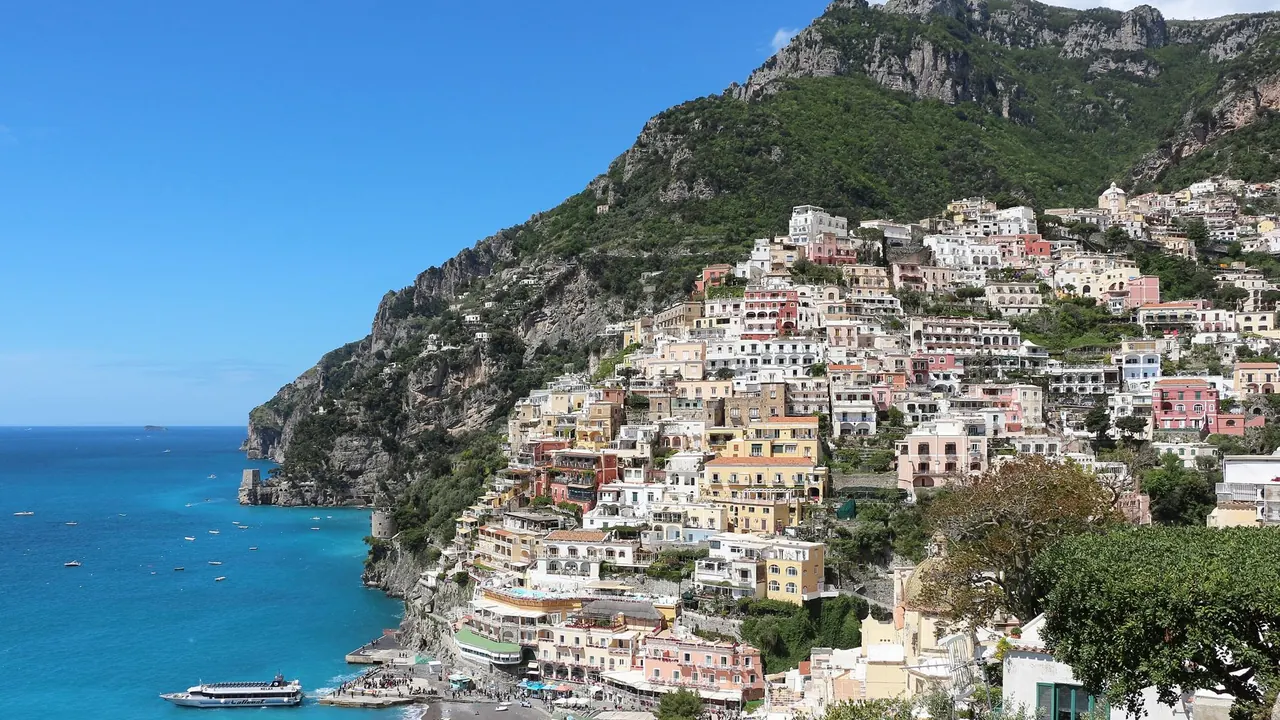
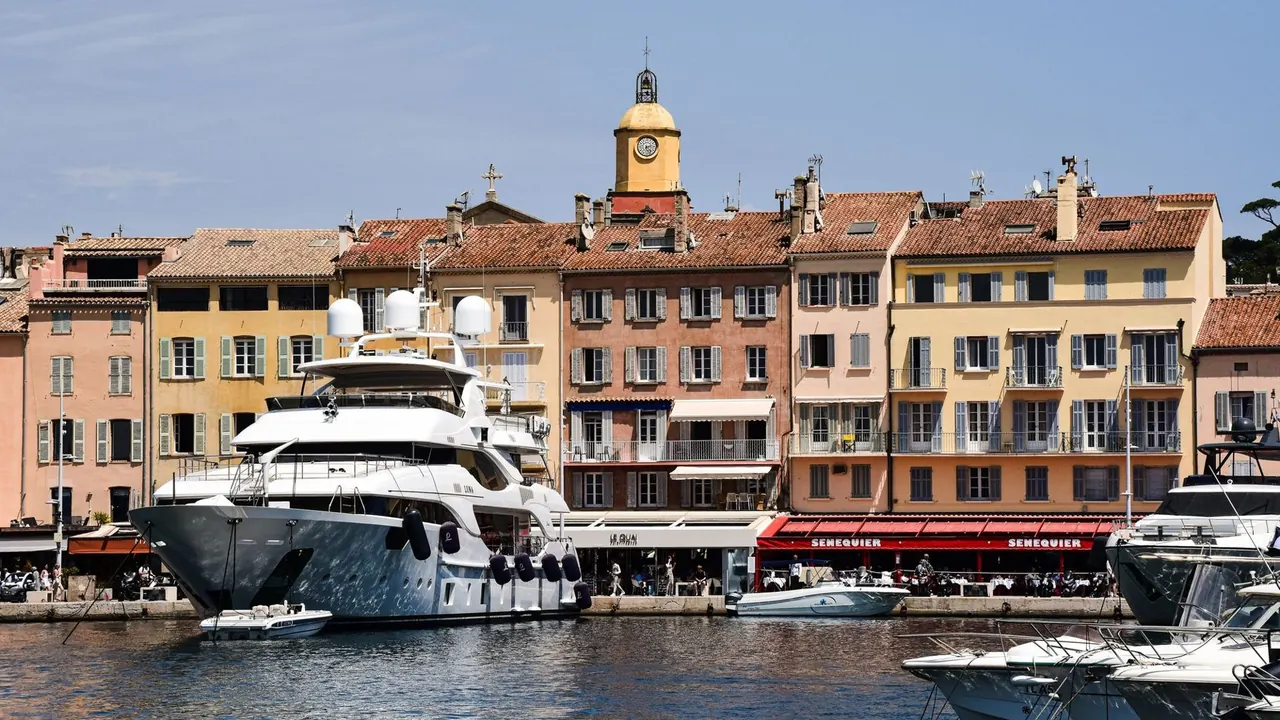
Photos: Positano by Bernard Gagnon, CC BY 4.0, cropped; Saint-Tropez by AXP Photography, Pexels License.
Positano or Saint-Tropez?
Our verdict in twelve categories, each scored against the same fixed benchmark cities, and the climate month by month, so you can choose for your trip.
Choose Positano for
- day trips
- wellness
- nature and the outdoors
Positano suits travellers who want the landscape to be the trip: a town stacked above the sea, the Path of the Gods over it, and boats below to Capri, Amalfi and Ravello. It is the better base for walking and for day trips. Its quiet, romantic evenings suit couples who would rather linger over dinner than go out.
Choose Saint-Tropez for
- nightlife
- shopping
- families
Choose Saint-Tropez for a summer built around long sandy beaches, the market and boutiques of the old town, and nights that move from beach-club afternoons to harbour terraces to clubs. It is also easier with small children, thanks to the gently shelving sand at Pampelonne, though neither place is kind to a budget.
Scoreboard
Twelve categories on one fixed scale from 0 to 100. The shaded stretch is the gap between the two.
Your match
Pick a travel style or drag the sliders, and both match scores follow your weighting.
Wins on day trips and wellness with your weighting.
Wins on nightlife and shopping with your weighting.
What matters to you?
Category by category
What the scores mean for a trip.
Beaches & swimming
The real difference is sand against shingle, and swimming in town against swimming out of town. In Positano you swim right below the houses. Spiaggia Grande and Fornillo are dark grey sand and pebble that drop steeply into deep, clear water, and Arienzo, Laurito and further coves are reached by long stairways or by boat.
Saint-Tropez's real beach is Pampelonne, about 5km of fine pale sand on the Ramatuelle side, with public stretches between the beach clubs and wilder coves at Escalet and Cap Taillat beyond. The sand is softer underfoot and gentler to wade into, but getting there means a drive or a ride, because only small beaches such as Les Graniers are close to the town.
Food & drink
Neither is a place for eating widely, but Saint-Tropez gives you more to work with. Its Provençal table of bouillabaisse, aïoli and rosé from the surrounding vineyards is backed by the Place des Lices market and the tarte tropézienne, so there is local food life beyond the restaurant terraces.
Positano offers memorable long lunches over the sea, with clams, scialatielli and lemon desserts. But the menus repeat from one terrace to the next, and there is little market or street food to vary them.
Culture & sights
Saint-Tropez has more reason to step indoors. The Musée de l'Annonciade holds pointillist and Fauvist paintings from the years when Signac painted the harbour, and the maritime museum in the citadel adds to it. With a walk through the lanes of La Ponche, these fill a worthwhile day.
In Positano the sight is the townscape itself, along with the majolica dome of Santa Maria Assunta and the painted Roman villa beneath it, and a couple of hours covers them. The coast's major monuments and museums lie further round the bay.
Nightlife
This is where the two differ most. In summer Saint-Tropez has a famous and moneyed party circuit: afternoon parties at the Pampelonne beach clubs, champagne on the harbour, then clubs with dress codes and table service until dawn.
Positano's evenings are aperitivo with a view and a long dinner, with a few bars and a single cave club at the end of Spiaggia Grande. That suits couples, not anyone wanting a real night out. Both towns go quiet once the season ends.
Nature & outdoors
Both have fine coastal walking, but Positano's setting is the more dramatic. The Path of the Gods runs high above the sea to Nocelle, and steeper trails climb through chestnut woods to ridges over 1,000m. Kayaks and boats explore the grottoes and the Li Galli islets below.
Saint-Tropez's Sentier du Littoral is gentler, following pine-backed coves to the capes of Camarat and Taillat, with the Massif des Maures inland. Its strength is on the water: sailing on the gulf, diving off the rocky points and the national park islands of Port-Cros and Porquerolles. In summer, the risk of forest fires can close trails.
Day trips
Positano has far more within a day. Capri is half an hour by boat, Amalfi and Ravello are a ferry ride along the coast, and Pompeii, Herculaneum and the Greek temples of Paestum are all within reach. These are places of real historic weight, though most ferries stop outside the season.
Saint-Tropez's outings are pleasant rather than major: the hilltop villages of Ramatuelle and Gassin, Grimaud's ruined castle, the canals of Port Grimaud and tastings at the wine estates, with Porquerolles or Fréjus for a fuller day. The roads jam badly in summer, which makes every one of these trips slower.
Good for families
Saint-Tropez is the easier of two difficult choices. Pampelonne and Gigaro have sandy, gently shelving water that suits small children, and the old town is flat, small and safe to walk, even if little else is aimed at children.
Positano is built of stairs, which rules out pushchairs, and its pebbly beaches drop off quickly. It works best with older children who love swimming and boat trips.
Getting around
Both towns are small enough to walk and awkward to leave. Positano's problem is height: walks involve hundreds of steps, a loop bus serves the single road, and in season the ferries from the beach do most of the work, so a car is more of a burden than a help.
Saint-Tropez is flat and compact, but its main beaches are several kilometres out and there is no railway. Most visitors drive, ride a scooter or take taxis, and the gulf road jams in July and August. The passenger boats from Sainte-Maxime and Port Grimaud are the calmer way in.
Shopping & style
Saint-Tropez is the better place to shop. The big fashion houses keep summer boutiques in the lanes behind the port, alongside swimwear and jewellery. There are also hand-stitched Tropézienne sandals from old-town workshops, and linen, baskets and pottery at the Place des Lices market.
Positano has a style of its own: loose white linen, printed resort wear, sandals cut while you wait, ceramics and lemon soaps. It is all one look, though, with no markets or wider fashion beyond it.
Affordability
Both are among the most expensive places on the Mediterranean, and the quieter months only soften the cost. The way to save differs. From Positano, staying in Praiano or Sorrento and coming in by bus or ferry saves a great deal, and May and October are noticeably kinder.
In Saint-Tropez, taxis and parking add to the cost of rooms and harbour terraces. Travellers on a budget stay inland or across the gulf, picnic from the market and swim from the public stretches of Pampelonne.
Live music & performing arts
Neither town has much to attend. Serious opera or theatre means going to Naples from Positano, or a long drive to Toulon or Nice from Saint-Tropez. The difference is in the summer extras. Positano is within an evening's reach of Ravello's classical festival on its terrace over the sea, while Saint-Tropez has open-air concerts at the citadel and the Bravade each May, a centuries-old costumed procession with muskets.
Wellness & relaxation
Positano is the more restful of the two, largely because the setting does the work: hotel pools cut into the cliff, slow lunches on terraces and the sea below. It is calmest in May, June and late September, while the stairs and the summer crowds are the drawbacks.
Saint-Tropez also relies on hotel spas aimed at guests, and its high summer is louder, with evenings shaped by the party scene. Outside the peak it slows down to games of pétanque under the plane trees and morning walks up to the citadel.
When should you go?
Pick your month. The climate figures are measured averages, not a forecast.
Positano in July
Saint-Tropez in July
Daytime high, °C
Rainfall in the month, mm
Where the figures come from
Positano's temperatures are measured 25 km from the centre, at Capri.
Positano has no rain gauge within 25 km of the centre, so its rainfall comes from a gridded climate dataset read at the city rather than from a gauge further away.
Positano's sunshine is measured 59 km from the centre, at Grazzanise.
Saint-Tropez has no rain gauge within 25 km of the centre, so its rainfall comes from a gridded climate dataset read at the city rather than from a gauge further away.
Saint-Tropez's sunshine is measured 62 km from the centre, at Nice.
Temperature and rainfall are climate normals, averaged over the years shown. Positano: 2005-2025 (sunshine 1991-2020, rainfall 1991-2020) normals, Capri (25.3 km from centre). Saint-Tropez: 1999-2020 (sunshine 1991-2020, rainfall 1991-2020) normals, Le Luc (24.2 km from centre).
Both are summer places with wet winters, but their calendars differ a little. Positano's sea is the warmer of the two. It is good for swimming from June into early October and reaches 26°C in August. Saint-Tropez's water peaks a couple of degrees lower and cools sooner after September. On land Saint-Tropez runs hotter, with July and August afternoons around 32°C that make the coast path and the lanes hard work in the middle of the day. In Positano's high summer, the heat makes its stairs tiring too.
For walking and a gentler stay, May, June and September are the best months in both places, with long sunny days and warm afternoons. Rain arrives in October and peaks in November, more heavily in Saint-Tropez at about 155mm. From then until spring, both towns are cool and damp.
Which traveller are you?
For a food and nightlife trip, Saint-Tropez is the clear pick. Afternoons at the beach clubs lead to harbour terraces and then to clubs that stay open until dawn. The Place des Lices market and Provençal cooking give more variety than Positano's repeated coastal menus and quiet evenings.
On an outdoors trip, Positano wins. The Path of the Gods and the ridge trails above the town are more dramatic than Saint-Tropez's coast path, and boats to the grottoes, Capri and Amalfi add days at sea to the walking.
On a family trip with young children, Saint-Tropez is the easier base. The gently shelving sand at Pampelonne suits toddlers and the old town is flat. In Positano, the stairs make pushchairs useless and the pebbly beaches drop away quickly.
Before you go
| Measure | Positano | Saint-Tropez |
|---|---|---|
| Official language | Italian | French |
| Currency | Euro (EUR) | Euro (EUR) |
| Sockets | CFL230 V, 50 Hz | CE230 V, 50 Hz |
| Driving side | Right | Right |
| Time zone | UTC+1, UTC+2 in summer | UTC+1, UTC+2 in summer |
| Emergency number | 112 | 112 |
| Elevation | 142 m | 0 m |
| Main airport | Naples International Airport (NAP)33 km from centre131 non-stop destinations | Nice-Côte d'Azur Airport (NCE)64 km from centre130 non-stop destinations |
| Public holidays this year | 13 days | 11 days |
By the numbers
| Measure | Positano | Saint-Tropez |
|---|---|---|
| City population | 3,729 | 3,582 |
| People per km² | 429 | 320 |
| Museums within 10 km | 10 | 4 |
| UNESCO World Heritage sites within 50 km | 5 | 0 |
| Swim season, months above 21 °C | 5 months | 3 months |
Where else could you go?
Every comparison below shares a destination with this one, so you can follow Positano or Saint-Tropez somewhere new.