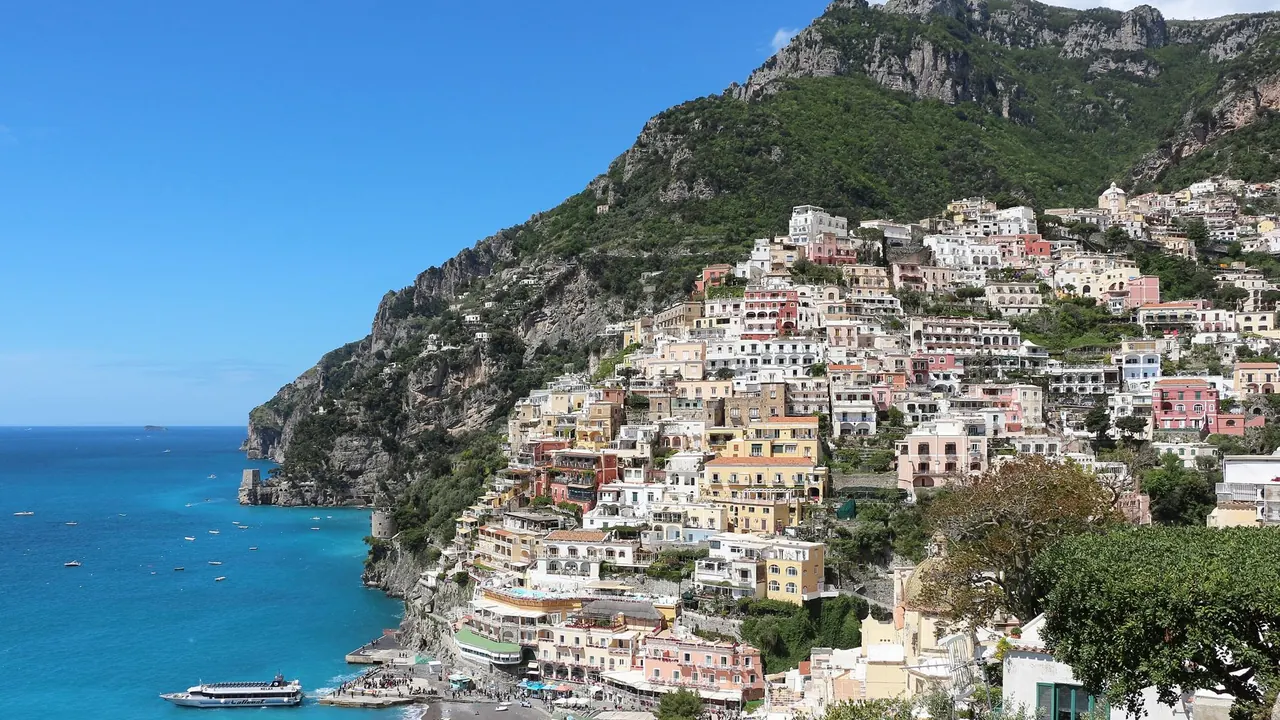
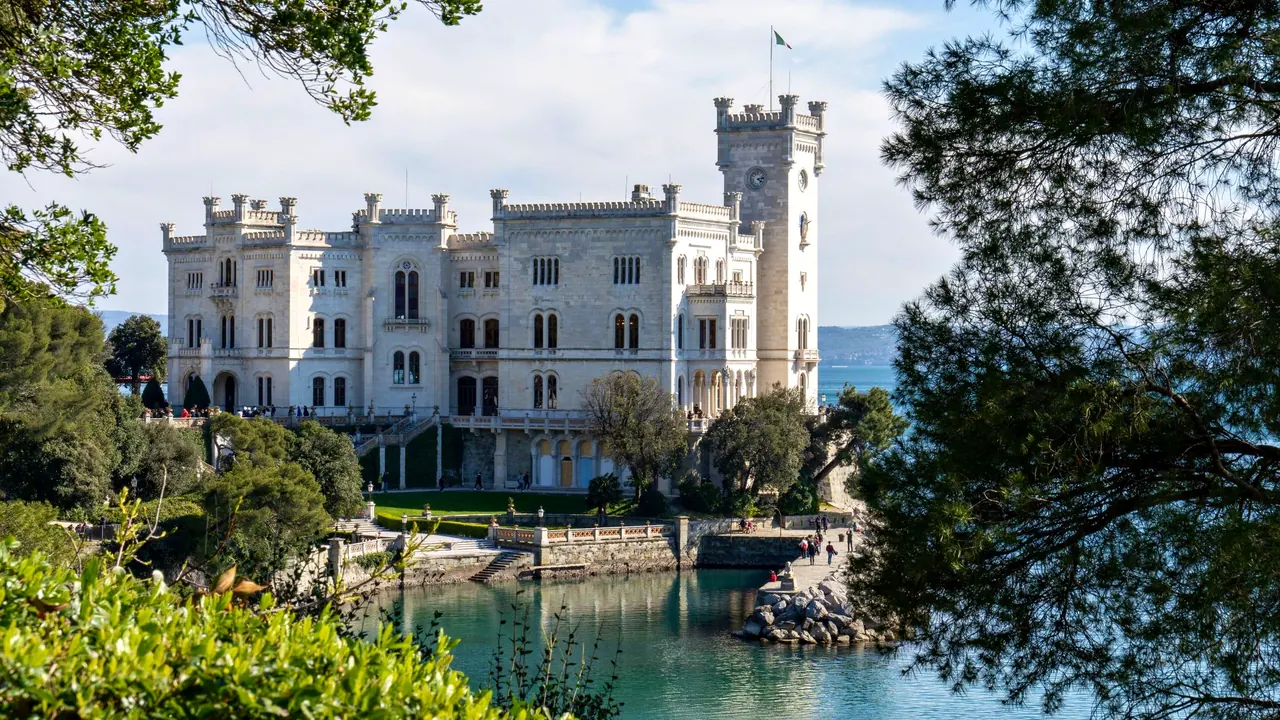
Photos: Positano by Bernard Gagnon, CC BY 4.0, cropped; Trieste by Tibor Szabo, Pexels License.
Positano or Trieste?
Our verdict in twelve categories, each scored against the same fixed benchmark cities, and the climate month by month, so you can choose for your trip.
Choose Positano for
- beaches
- nature and the outdoors
- day trips
Positano suits couples and friends whose vacation is about the sea and the scenery. You get real beaches, boats to Capri and the coves, the Path of the Gods above the lemon terraces and a string of famous day trips along the coast. It pays off best in summer or the shoulder months, for travellers who can afford it, who are happy on stairs and who need little in the way of museums or nightlife.
Choose Trieste for
- prices
- culture and sights
- live music and the arts
Trieste is the better pick for anyone who wants a proper city with the sea on its doorstep. Habsburg squares and palaces, coffee houses, buffet lunches, opera at the Teatro Verdi and day trips into Slovenia and Friuli fill a trip that costs far less, works in any season and is easy to get around on foot. The swimming is off rocks at Barcola rather than from a beach, which is the main thing you give up.
Scoreboard
Twelve categories on one fixed scale from 0 to 100. The shaded stretch is the gap between the two.
Your match
Pick a travel style or drag the sliders, and both match scores follow your weighting.
Wins on beaches and nature and the outdoors with your weighting.
Wins on prices and culture and sights with your weighting.
What matters to you?
Category by category
What the scores mean for a trip.
Beaches & swimming
Positano is the better place to swim. Spiaggia Grande and Fornillo are real beaches of dark sand and pebble, and boats run to Laurito, Arienzo and coves further along the coast. The water is a touch warmer at the height of summer too, though the shore is steep and every spot is taken by mid-morning.
Trieste's sea is just as clear, but you get into it differently. You lay a towel on the concrete steps or the pine-shaded lawns at Barcola and climb down a ladder, or use one of the old bathing establishments with changing cabins. The pebble coves at Sistiana and Duino are prettier, but neither city offers soft sand or shallow water for small children.
Food & drink
Trieste gives a curious eater much more to try. There are buffets carving boiled pork with horseradish and sauerkraut, jota and sardoni, presnitz and strudel, and a coffee culture with its own vocabulary, all showing a city where Italy meets Austria and the Slavic world. Up on the Karst, the osmize add farmhouse wine and cured meats.
Positano's cooking is lovely but repetitive: clams, grilled fish, scialatielli and lemon desserts on a terrace over the sea, then a limoncello. There is little everyday eating or market life, and many kitchens close from November to Easter.
Culture & sights
Trieste is the place for sightseeing, while Positano's main sight is the town itself. Its pastel houses climb a ravine to the sea around the green and gold majolica dome of Santa Maria Assunta. Beneath the church lie the rooms of a Roman villa whose painted walls survived Vesuvius. A morning covers it, and for museums you go to Naples.
Trieste has far more to see. Piazza Unità opens onto the sea, the Borgo Teresiano runs along the Canal Grande past the domes of San Spiridione, and San Giusto hill carries a mosaic-lined cathedral and a castle above a Roman theatre. Add Miramare Castle, the Revoltella museum, the great synagogue and the Risiera di San Sabba memorial, and several days are filled.
Nightlife
Neither suits a big night out, but Trieste has a little more going on, and it lasts all year: aperitivo around Piazza Unità and in Cavana, student wine bars and pubs, and kiosks along Barcola on summer nights. Positano's evenings are a drink with a view, a long dinner and one dressed-up cave club at the end of Spiaggia Grande, and even that fades when the season ends.
Nature & outdoors
Positano has the more dramatic landscape. The Lattari mountains fall straight into the sea, the Path of the Gods runs high above terraced lemon groves, and kayaks follow the cliffs to grottoes and the Li Galli islets.
Trieste's outdoors are gentler but more varied. You can walk the Strada Napoleonica and the Rilke Path along the Karst edge, climb in Val Rosandra, go down into the Grotta Gigante, sail on the gulf or snorkel in the Miramare marine reserve. The Julian Alps are within reach for longer days, though the winter Bora can keep you indoors.
Day trips
Positano edges ahead because its excursions are among the best known in Italy: Capri, Amalfi, Ravello, Sorrento, Pompeii, Herculaneum and Paestum. The catch is that most ferries stop outside the season and the coast road crawls in summer traffic.
Trieste's day trips spread across three countries rather than along one coastline. There are Aquileia's mosaic floor and Palmanova's star-shaped fortress in Friuli, Piran and Ljubljana in Slovenia, Istrian towns in Croatia, and Venice by train. None of it depends on a ferry timetable.
Good for families
With children, Positano asks a lot more of a family than Trieste does. Getting to the beach and back means long flights of steps, with a child carried rather than pushed, and the shore drops off quickly, even if the summer sea is usually calm and warm. Trieste's waterfront centre is flat, so you can push a pushchair along it, and the aquarium and the hands-on science centre are there for a rainy day.
The outings differ too. Positano's best moments for children are on the water, such as a boat to the coves or across to Capri, which suits confident swimmers of school age. Trieste spreads its outings across land and sea: the gardens at Miramare, the vast chamber of the Grotta Gigante and summer afternoons among local families on the Barcola promenade. Toddlers are hard work in both because of the stairs and steep streets, but older children get more variety in Trieste.
Getting around
Trieste is far simpler to move around. The main sights sit close together on flat ground by the sea, a dense bus network reaches Barcola, Miramare and the Karst, and boats cross the bay to Muggia. Only the climb up to San Giusto takes real effort.
In Positano almost every walk means hundreds of steps. Buses on the single road fill up and crawl in summer, and the ferries that make life easy run mainly in season. A car is little help in either town.
Shopping & style
Positano is the better place to shop, though only for one look. Its lanes are full of white linen and printed resort wear in the moda Positano style, sandal makers will cut a pair to fit while you wait, and there are hand-painted ceramics and lemon soaps.
Trieste has ordinary Italian clothing shops around Corso Italia, and more character in the antique and second-hand shops of the old town. Its best things to take home are edible: coffee from the city's roasters, Karst wine and honey, and presnitz.
Affordability
In Positano the cost starts with the bed. A sea-view room in summer costs more than in most European capitals, and loungers on Spiaggia Grande, transfers and boat trips keep adding to the bill. The real way round it is to sleep in Praiano or Sorrento and come in by bus or ferry, or to go in May or October, when prices ease.
Trieste is fairly priced rather than cheap. Seafood dinners and smarter hotels cost what they would in any Italian city, and rooms get scarcer around the Barcolana regatta and in high summer. Day to day, though, coffee at the bar and everyday meals keep spending low, so a modest budget goes a long way without having to stay out of town.
Live music & performing arts
Trieste has a real stage life. The Teatro Verdi on the waterfront runs a season of opera and ballet, the city keeps up a Habsburg love of operetta that is rare in Italy, and there are the Politeama Rossetti, a Slovenian-language theatre and summer concerts in the castle courtyard on San Giusto.
Positano offers only occasional summer concerts in churches and squares. For its best evening of music you go along the coast to Ravello's classical festival on a terrace above the sea.
Wellness & relaxation
The two are close here, and neither has thermal baths, but the calm comes in different forms. In Positano it comes from cliffside hotel spas and pools and slow afternoons on a terrace above the sea. It is at its best in May, June and late September, because July and August bring crowds and the stairs tire you out.
Trieste offers the pace of the city rather than pampering, with only a few hotel and day spas. Instead there are long sittings in old coffee houses and sunset walks on the Molo Audace, and that quiet lasts all year.
When should you go?
Pick your month. The climate figures are measured averages, not a forecast.
Positano in July
Trieste in July
Daytime high, °C
Rainfall in the month, mm
Where the figures come from
Positano's temperatures are measured 25 km from the centre, at Capri.
Positano has no rain gauge within 25 km of the centre, so its rainfall comes from a gridded climate dataset read at the city rather than from a gauge further away.
Positano's sunshine is measured 59 km from the centre, at Grazzanise.
Temperature and rainfall are climate normals, averaged over the years shown. Positano: 2005-2025 (sunshine 1991-2020, rainfall 1991-2020) normals, Capri (25.3 km from centre). Trieste: 1991-2020 normals, Trieste (1.6 km from centre).
Positano has the longer, sunnier season. The sea is warm enough to swim from June to early October and reaches about 26°C in August, and high summer is almost dry, with around 19mm of rain in August. July and August are hot for the stairs and the cliff paths, so walkers do better in May, June and late September. Rain sets in from October and is heaviest in November, but winter days stay mild enough for strolling, at about 13°C in January.
Trieste's summer is much the same, with the sea warm enough for swimming from June to September. Outside summer it is cooler and greyer, around 9°C in January, and the winter Bora adds a sharp chill. Its rain is spread more evenly, with showers even in midsummer, and autumn is the wettest stretch, at over 110mm in both September and October. Late spring and early summer are the best time for walking the city.
Which traveller are you?
On a beach and sun trip, Positano is the clear choice. It has proper beaches at Spiaggia Grande and Fornillo, boats out to coves and Capri, slightly warmer water and a drier, sunnier summer than Trieste's swimming platforms at Barcola.
For a culture and arts trip, choose Trieste. Piazza Unità, San Giusto, Miramare Castle, the Revoltella museum and an opera and ballet season at the Teatro Verdi offer days of sights and evenings of performances. Positano's sights take a couple of hours.
On a trip on a tight budget, Trieste wins easily. Rooms are reasonable, buses and buffet lunches are cheap, and the waterfront, the Karst walks and the swimming are free. In Positano, beds, loungers, dinners and boats are all priced for the view.
Before you go
| Measure | Positano | Trieste |
|---|---|---|
| Official language | Italian | Italian |
| Currency | Euro (EUR) | Euro (EUR) |
| Sockets | CFL230 V, 50 Hz | CFL230 V, 50 Hz |
| Driving side | Right | Right |
| Time zone | UTC+1, UTC+2 in summer | UTC+1, UTC+2 in summer |
| Emergency number | 112 | 112 |
| Elevation | 142 m | 2 m |
| Main airport | Naples International Airport (NAP)33 km from centre131 non-stop destinations | Trieste Airport (TRS)31 km from centre32 non-stop destinations |
| Public holidays this year | 13 days | 13 days |
By the numbers
| Measure | Positano | Trieste |
|---|---|---|
| City population | 3,729 | 198,417 |
| People per km² | 429 | 2,332 |
| Museums within 10 km | 10 | 33 |
| UNESCO World Heritage sites within 50 km | 5 | 5 |
| Swim season, months above 21 °C | 5 months | 4 months |
Where else could you go?
Every comparison below shares a destination with this one, so you can follow Positano or Trieste somewhere new.
- Sorrentovs Positano
- Amalfivs Positano
- Salernovs Positano
- Naplesvs Positano
- Rovinjvs Trieste
- Ljubljanavs Trieste