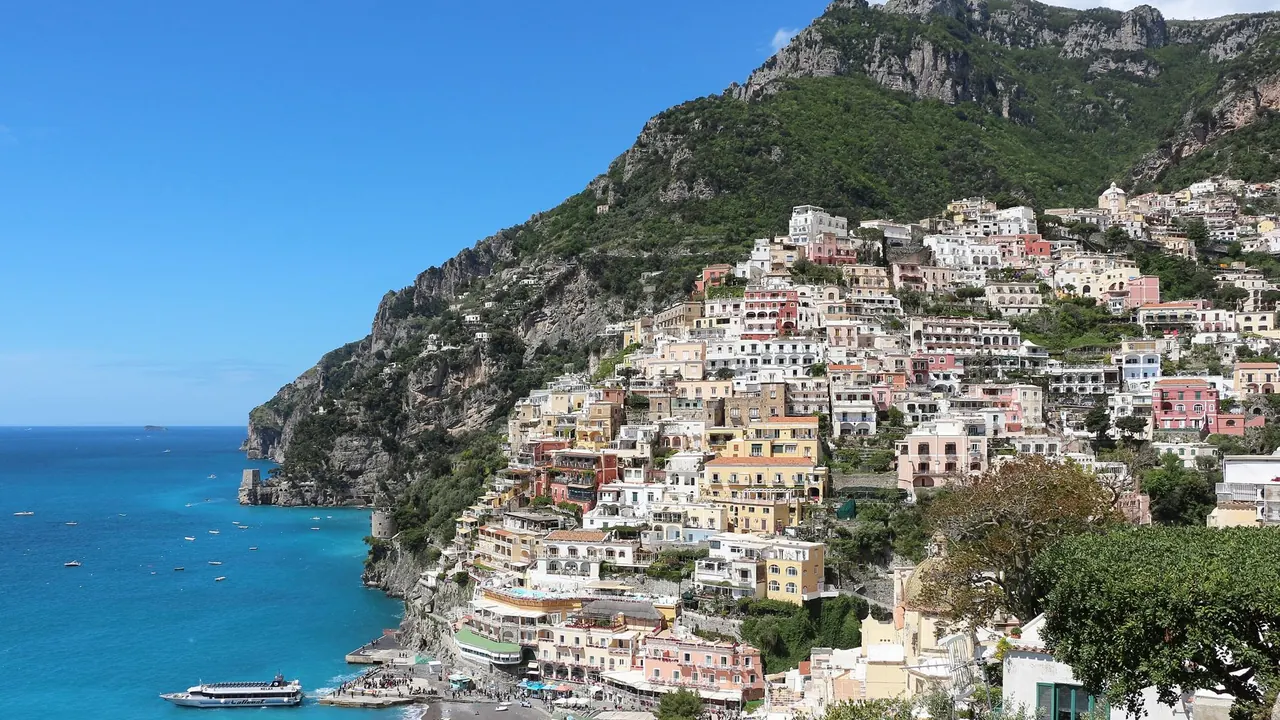
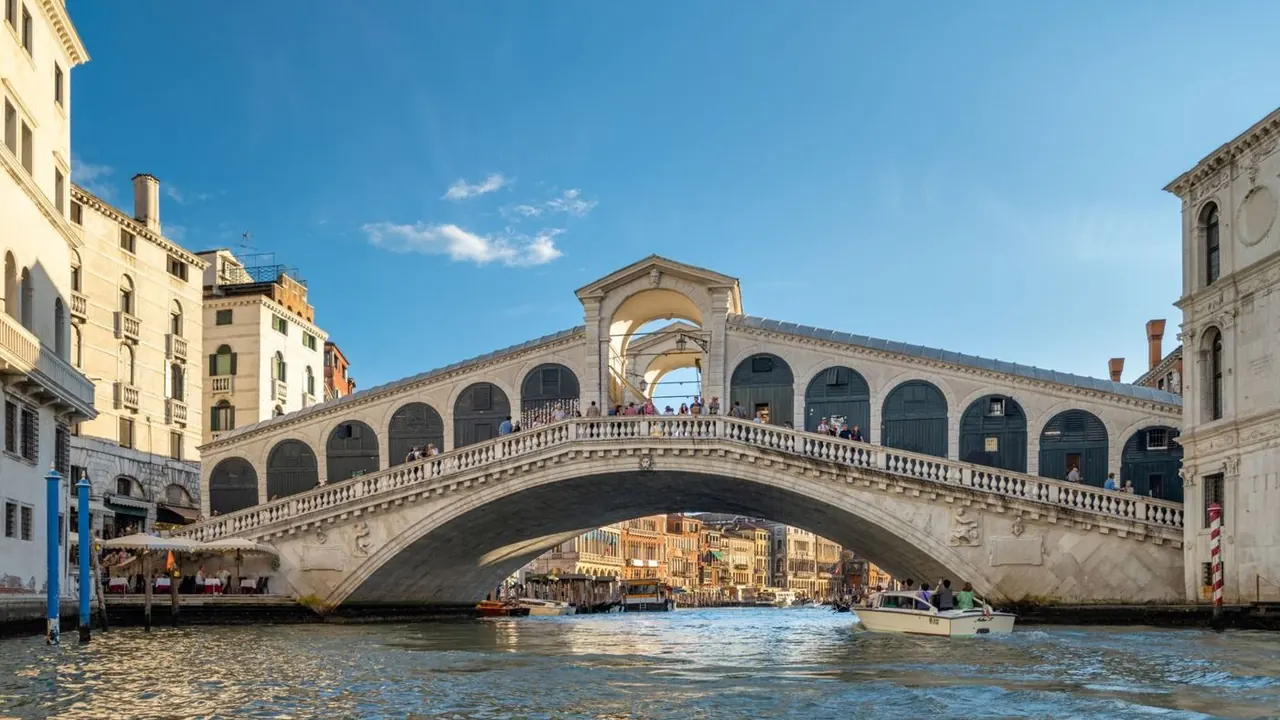
Photos: Positano by Bernard Gagnon, CC BY 4.0, cropped; Venice by David Vives, Pexels License.
Positano or Venice?
Our verdict in twelve categories, each scored against the same fixed benchmark cities, and the climate month by month, so you can choose for your trip.
Choose Positano for
- nature and the outdoors
- beaches
- wellness
Positano is for a slow summer by the sea: swimming off steep pebble beaches, taking boats to coves and Capri, and walking high above the water on the Path of the Gods. It suits couples and active adults who want scenery more than sights. They also need to accept endless stairs, a short list of coastal dishes and some of the steepest prices in Italy.
Choose Venice for
- culture and sights
- live music and the arts
- getting around
Travellers who come to look and listen will get more from Venice. Its palaces, churches and paintings can fill a week, La Fenice and the church concerts fill the evenings, and the bacari make eating on foot a pleasure. It is easier to reach and to get around, it holds up well outside summer, and it suits families with older children better than a town built on cliff stairs.
Scoreboard
Twelve categories on one fixed scale from 0 to 100. The shaded stretch is the gap between the two.
Your match
Pick a travel style or drag the sliders, and both match scores follow your weighting.
Wins on nature and the outdoors and beaches with your weighting.
Wins on culture and sights and live music and the arts with your weighting.
What matters to you?
Category by category
What the scores mean for a trip.
Beaches & swimming
Positano is built around its beaches. Spiaggia Grande and Fornillo lie right below the houses, Arienzo, Laurito and other coves are reached by stairway or boat, and the water is clear and deep. The drawback is the shore itself: coarse, steep pebbles that call for water shoes and are fully taken by mid-morning in high summer.
In Venice the beach means a trip out to the Lido. It has long stretches of fine sand and shallow water that suits small children far better than Positano's sudden drop-offs. The sea there is greenish, though, and most visitors give it one hot afternoon rather than plan a stay around it.
Food & drink
Positano's strength is the setting. You get long seafood lunches on terraces above the sea, scialatielli and clams, desserts made with the local lemons and limoncello to finish. Beyond that the menus repeat, there is little casual eating or market life, and many kitchens close through the winter.
Venice gives you more to eat and more ways to eat it. You can stand at a bacaro counter with cicchetti and a spritz, then sit down to a lagoon dish from the Rialto market such as cuttlefish risotto blackened with its ink. That everyday food culture is what Positano lacks, though in Venice you find it in the quieter sestieri, away from the picture menus around San Marco.
Culture & sights
The gap here is enormous. Venice is one of the great art cities of Europe. It has the Basilica and the Doge's Palace, the Accademia, the Frari, San Rocco, modern art at the Guggenheim and Punta della Dogana, and masterpieces tucked into small churches across town.
Positano's culture is the town itself: pastel houses stacked up the ravine, the majolica dome of Santa Maria Assunta and the Roman villa excavated beneath it. That fills a pleasant morning, and anyone wanting more heads to Naples or along the coast.
Nightlife
Neither place is made for late nights, and both are at their best in the early evening. In Venice that means the aperitivo crowd in the bacari around the Rialto and along the Fondamenta della Misericordia, with student bars in Campo Santa Margherita staying open a little longer, all year round.
Positano has the more glamorous single option, a club in a cave at the end of Spiaggia Grande, plus a few bars near the beach. It is a summer scene, though, and it disappears once the season ends.
Nature & outdoors
Positano has by far the more spectacular outdoors. Here the mountains drop straight into the sea. The Path of the Gods runs along the clifftops with views to Capri, wooded trails climb past Montepertuso to ridges over 1,000m, and kayaks and boats reach the grottoes below.
Venice's nature is the lagoon: quiet marshes around Torcello and Sant'Erasmo with egrets and flamingos, kayaking or rowing in the Venetian style, and flat cycling on the Lido and Pellestrina. It is gentle and rewarding, but serious walking means a long trip to the Dolomites.
Day trips
Both make excellent bases, but in different ways. From Positano the day trips go mostly by boat, to Amalfi, Ravello, Capri and Sorrento, with Pompeii, Herculaneum and Paestum further off. That means ancient sites and coastal scenery, but also ferries that run mostly in season and a slow coast road.
From Venice, fast trains do the work: Padua, Vicenza and Verona for art and architecture, with Bologna and Trieste further out. Murano, Burano and Torcello are just across the lagoon, and all of this is easy in any month.
Good for families
Venice is the easier of the two with children, though neither is simple. Boats instead of buses, car-free alleys, glass-blowing on Murano, dinosaurs at the natural history museum and the shallow Lido give children plenty to enjoy, even if the bridges make pushchairs a struggle.
Positano is mostly stairs, with nothing made for children beyond the sea and beaches that shelve steeply. Older children who swim well and love boats will be happy, but families with toddlers are better off elsewhere.
Getting around
Venice is much easier to move around. You can cross the centre on foot in under an hour, vaporetti link the Grand Canal with the Lido and the islands, and trains and buses arrive right at the edge of the historic city. The main nuisances are stepped bridges and crowded boats.
In Positano every walk means hundreds of steps, the coast road is narrow and slow, and the buses fill up in summer. Ferries are the best link to neighbouring towns but mostly run only in season, and a car is more trouble than it is worth.
Shopping & style
Venice offers more range. Its crafts include Murano glass, Burano lace, papier-mâché masks, marbled paper and furlane slippers, and there are real workshops in Dorsoduro and Castello. The big fashion names are near San Marco. The skill is telling true craft from imported copies on the main routes.
Positano does one thing well. Its lanes are given over to moda Positano linen and resort wear, sandals made to fit while you wait, ceramics and lemon goods. It makes a pleasant browse, but everything shares the same look.
Affordability
Both are among the most expensive places to stay in Italy, but Venice gives a little more room to save. Eating cicchetti at the counter, staying in the quieter sestieri or across in Mestre, and visiting in winter outside carnival can bring costs down a good deal.
Positano is harder on the wallet, with sea-view rooms, beach loungers, terrace meals, boats and transfers all adding up. The main ways round it are to stay in Praiano or Sorrento and come in by bus or ferry, or to visit in May or October.
Live music & performing arts
Venice has a real stage. La Fenice runs a full season of opera, ballet and concerts, and the Teatro Goldoni puts on drama. The Biennale brings contemporary music and dance, and Vivaldi concerts in churches fill most evenings, though their quality varies.
Positano has only the odd summer concert in a church or square. Its best musical evening is a trip to Ravello's summer festival, with concerts on a terrace above the sea.
Wellness & relaxation
Neither has a bathing tradition, and in both the spas belong to hotels. In Positano, rest means a terrace, a pool cut into the cliff and the sea below. It is best in May, June and late September, when the crowds are thinner and the stairs are less tiring in the heat.
Venice's calm is the quiet of a city without traffic, found early and late in Castello, Cannaregio and on Giudecca. It also has a real thermal option within reach: the hot mud and pools of Abano Terme, about an hour away.
When should you go?
Pick your month. The climate figures are measured averages, not a forecast.
Positano in July
Venice in July
Daytime high, °C
Rainfall in the month, mm
Where the figures come from
Positano's temperatures are measured 25 km from the centre, at Capri.
Positano has no rain gauge within 25 km of the centre, so its rainfall comes from a gridded climate dataset read at the city rather than from a gauge further away.
Positano's sunshine is measured 59 km from the centre, at Grazzanise.
Venice has no rain gauge within 25 km of the centre, so its rainfall comes from a gridded climate dataset read at the city rather than from a gauge further away.
Venice's sunshine is measured 26 km from the centre, at Treviso / S. Angelo.
Temperature and rainfall are climate normals, averaged over the years shown. Positano: 2005-2025 (sunshine 1991-2020, rainfall 1991-2020) normals, Capri (25.3 km from centre). Venice: 1991-2020 normals, Venezia / Tessera (6.7 km from centre).
Positano is a summer place. June to August are hot and nearly dry, with August highs around 30°C, and the sea is warm enough to swim from June into early October. Rain returns in September and builds through a wet late autumn, peaking in November at about 127mm, though the winters stay mild. Midday heat makes the climbs hard work in July and August, so walkers do better in April, May or late September.
Venice has a shorter and cooler year. Summer highs are much the same, and the water off the Lido reaches about 26°C in August. Winter is far colder, though, with January highs near 7°C against 13°C on the Amalfi coast. Venice has no real dry season. Rain is spread fairly evenly through the year, so its summers are wetter than Positano's, and it gets noticeably less sunshine. Spring and early autumn are the most comfortable times for long days in the alleys.
Which traveller are you?
On a beach and sun trip, Positano is the stronger choice. Its clear, deep-blue water, boats to coves along the coast and long dry summers beat a greenish afternoon at the Lido, even though the shore is pebbly and steep.
For a culture and arts trip, Venice is in another league. The Accademia, Titian in the Frari, Tintoretto at San Rocco and the Biennale give you days of looking, and La Fenice adds opera. Positano's sights take a couple of hours.
On an outdoors trip, Positano wins clearly. The Path of the Gods, steep wooded trails to ridges above 1,000m and kayaking to grottoes and the Li Galli islets outdo Venice's flat lagoon, which offers birdwatching and rowing but little real walking.
Before you go
| Measure | Positano | Venice |
|---|---|---|
| Official language | Italian | Italian |
| Currency | Euro (EUR) | Euro (EUR) |
| Sockets | CFL230 V, 50 Hz | CFL230 V, 50 Hz |
| Driving side | Right | Right |
| Time zone | UTC+1, UTC+2 in summer | UTC+1, UTC+2 in summer |
| Emergency number | 112 | 112 |
| Elevation | 142 m | 2 m |
| Main airport | Naples International Airport (NAP)33 km from centre131 non-stop destinations | Venice Marco Polo Airport (VCE)7 km from centre103 non-stop destinations |
| Public holidays this year | 13 days | 13 days |
By the numbers
| Measure | Positano | Venice |
|---|---|---|
| City population | 3,729 | 250,369 |
| People per km² | 429 | 602 |
| Museums within 10 km | 10 | 52 |
| UNESCO World Heritage sites within 50 km | 5 | 5 |
| Swim season, months above 21 °C | 5 months | 4 months |
Where else could you go?
Every comparison below shares a destination with this one, so you can follow Positano or Venice somewhere new.